If your puppy suddenly forgets everything they ever learned about potty training the moment it rains, welcome to the club. Cold wind, wet paws, scary puddles, dark mornings, and that weird crunch of snow can turn a previously reliable pup into a tiny drama student who “simply cannot” go outside.
The good news is that you do not need to wait for spring. With the right setup and a consistent routine, most puppies can learn to potty outside in nasty weather without a daily standoff on the porch.
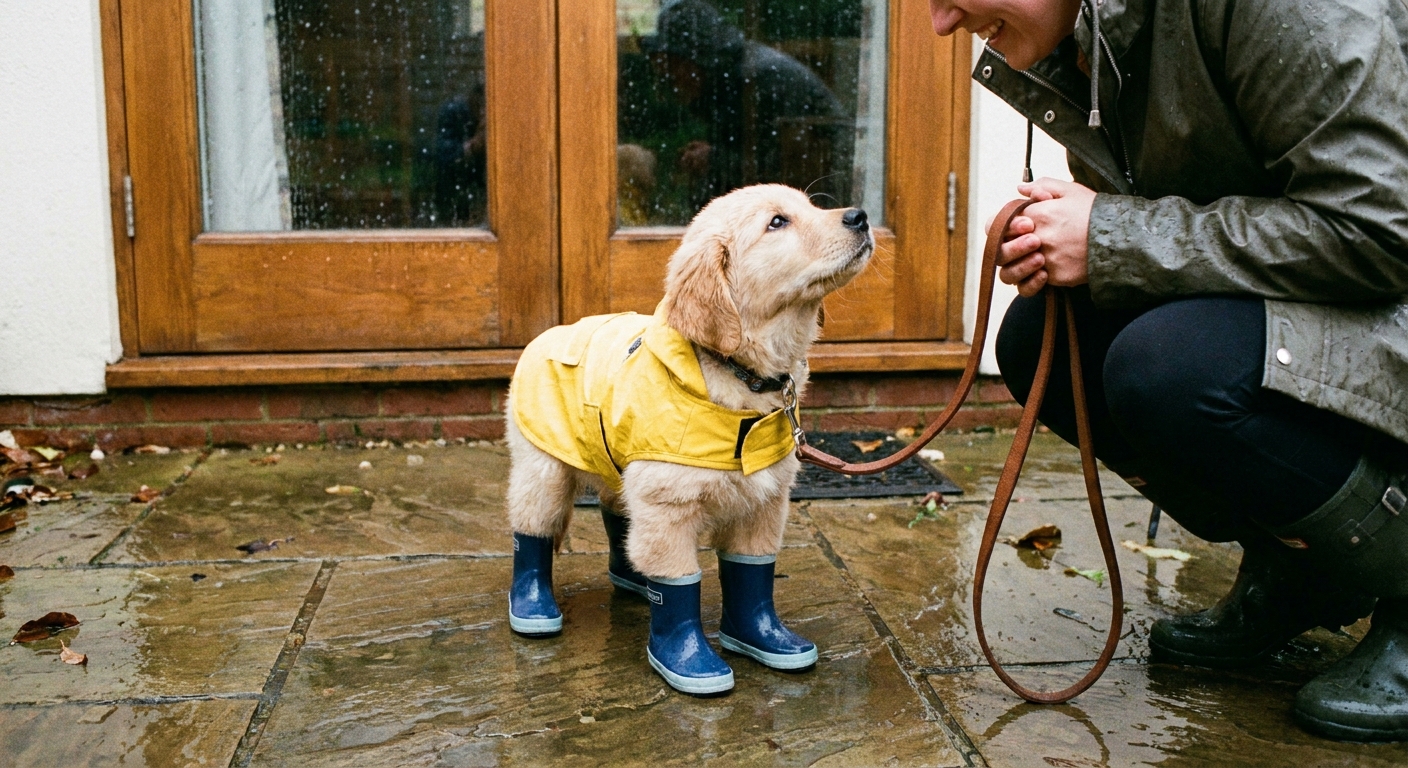
Why rain and cold make puppies refuse to potty
Puppies are not being stubborn for fun. Most weather resistance comes from a few normal puppy things:
- Sensory overload: rain hits their face, wind whistles, snow squeaks, ice is slippery, and everything smells different.
- Cold discomfort: puppies have less body mass and get chilled quickly, especially short-haired and small breeds.
- Bad footing: slick steps, frozen grass, and crunchy snow can feel unsafe.
- They want back inside fast: if you rush them, they learn “outside is stressful,” which can delay pottying.
- You unintentionally trained a shortcut: one or two indoor accidents during a storm can become a new habit if the schedule slips.
The goal is to make the outdoor potty spot predictable, quick, and worth it.
Winter-proof potty routine
In bad weather, potty training is less about willpower and more about logistics. If you can make potty trips shorter and more consistent, your puppy will cooperate faster.
1) Tighten the schedule for a few days
When the weather turns, go back to “training wheels.” Even if your puppy was doing great, temporarily increase potty breaks to prevent accidents while they adjust.
- First thing in the morning
- After every meal
- After waking from a nap
- After playtime or zoomies
- Right before bedtime
- Overnight for very young puppies (often needed for many pups under about 12 to 16 weeks, but it varies)
If your puppy is hesitating outside, shorten indoor freedom until they successfully go. More freedom comes after success.
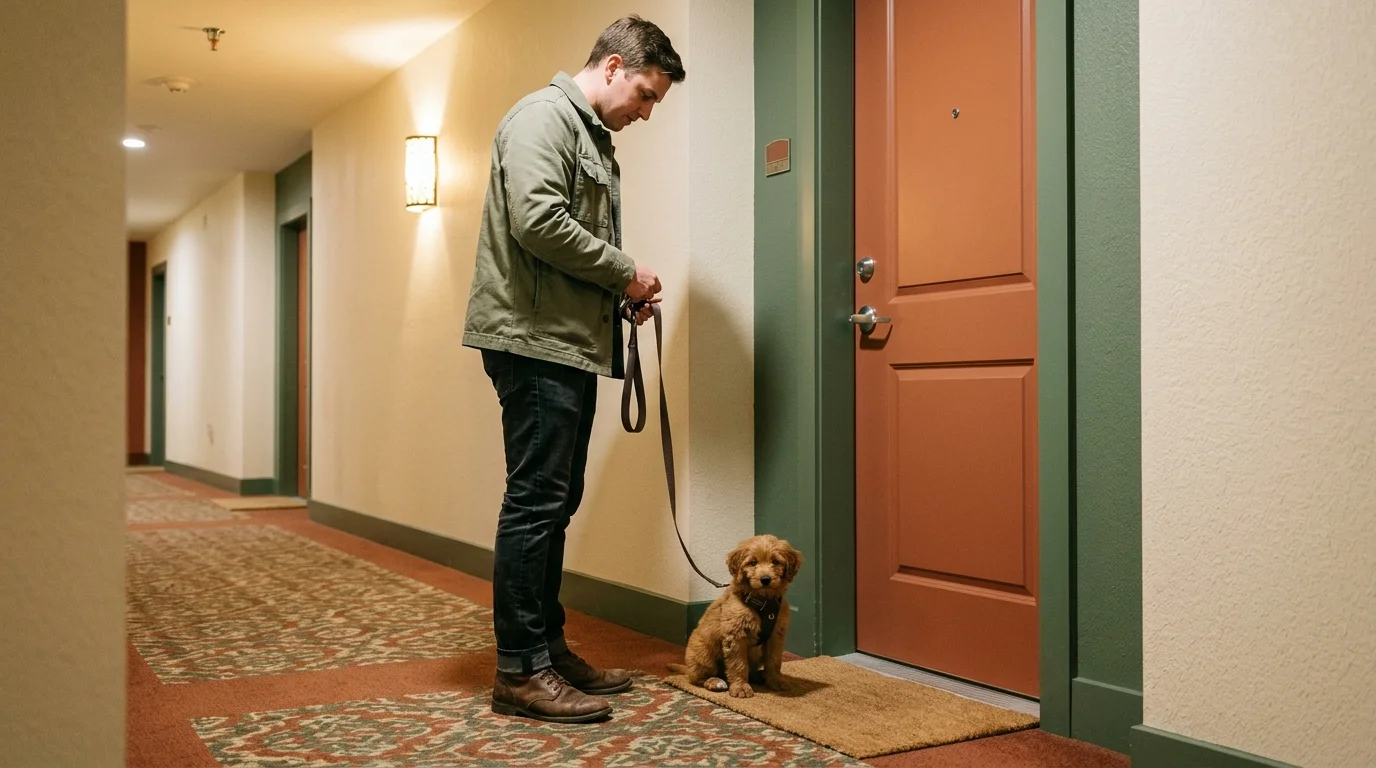
2) Use the same door, same path, same spot
Stormy weather is confusing. A consistent routine lowers the mental load.
- Pick one door for potty breaks and stick to it.
- Walk the same short path to the potty area.
- Keep your puppy on leash so they do not wander and forget why they are outside.
3) Add a clear potty cue
Choose a cue like “Go potty” or “Do your business.” Say it once or twice, then be boring. Your job is to be a steady presence, not an entertainment committee.
4) Reward like you mean it
When your puppy finally pees or poops in the rain, pay them like they just did something heroic. Use:
- High-value treats: tiny bits of chicken, cheese, or freeze-dried liver
- Immediate delivery: reward right as they finish or within a couple seconds
- Warm praise: upbeat, but not so excited they get distracted mid-task
In foul weather, your puppy is doing something hard. Pay them accordingly.
Make the potty spot the easy choice
Training matters, but in winter your setup matters just as much. If the potty spot is the fastest, least awful place to stand, your puppy will get on board a lot sooner.
If it is cold and wet, your puppy will choose the quickest option. Make sure the quickest option is the potty area.
Clear a small potty lane
Shovel or stomp down a short path to a designated spot. A small, consistent patch is less intimidating than a whole snowy yard.
- Keep it about leash-length from the door if possible.
- Pick a spot away from heavy wind, like near a fence or shrub line.
- Avoid icy slopes and slick decking.
Consider cover
A simple awning, patio umbrella, or covered porch corner can be a game changer. Puppies hate rain in the face. Even partial cover helps.
Use texture to your advantage
Some puppies refuse soggy grass but will use:
- a small patch of gravel
- mulch
- artificial turf
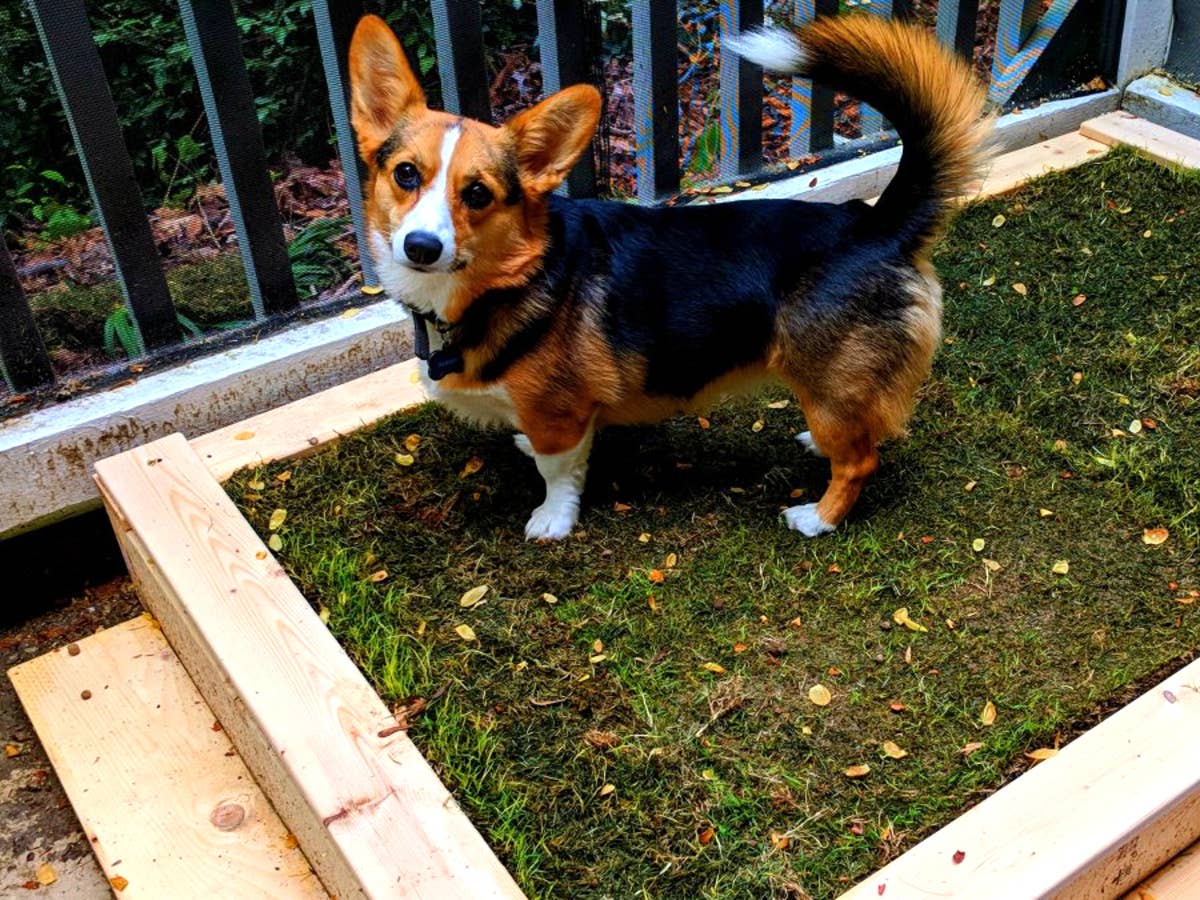
For apartment life or extreme storms, a real grass patch on a balcony can help bridge the gap, but keep working toward outdoor ground pottying so you do not create a permanent indoor-style potty station.
Cold-weather gear that helps
Not every puppy needs clothing, but weather-sensitive pups often do better when they are not freezing.
Keep it simple: one layer, good fit
- Rain: a light raincoat that covers the back and chest can reduce the “cold drizzle” misery.
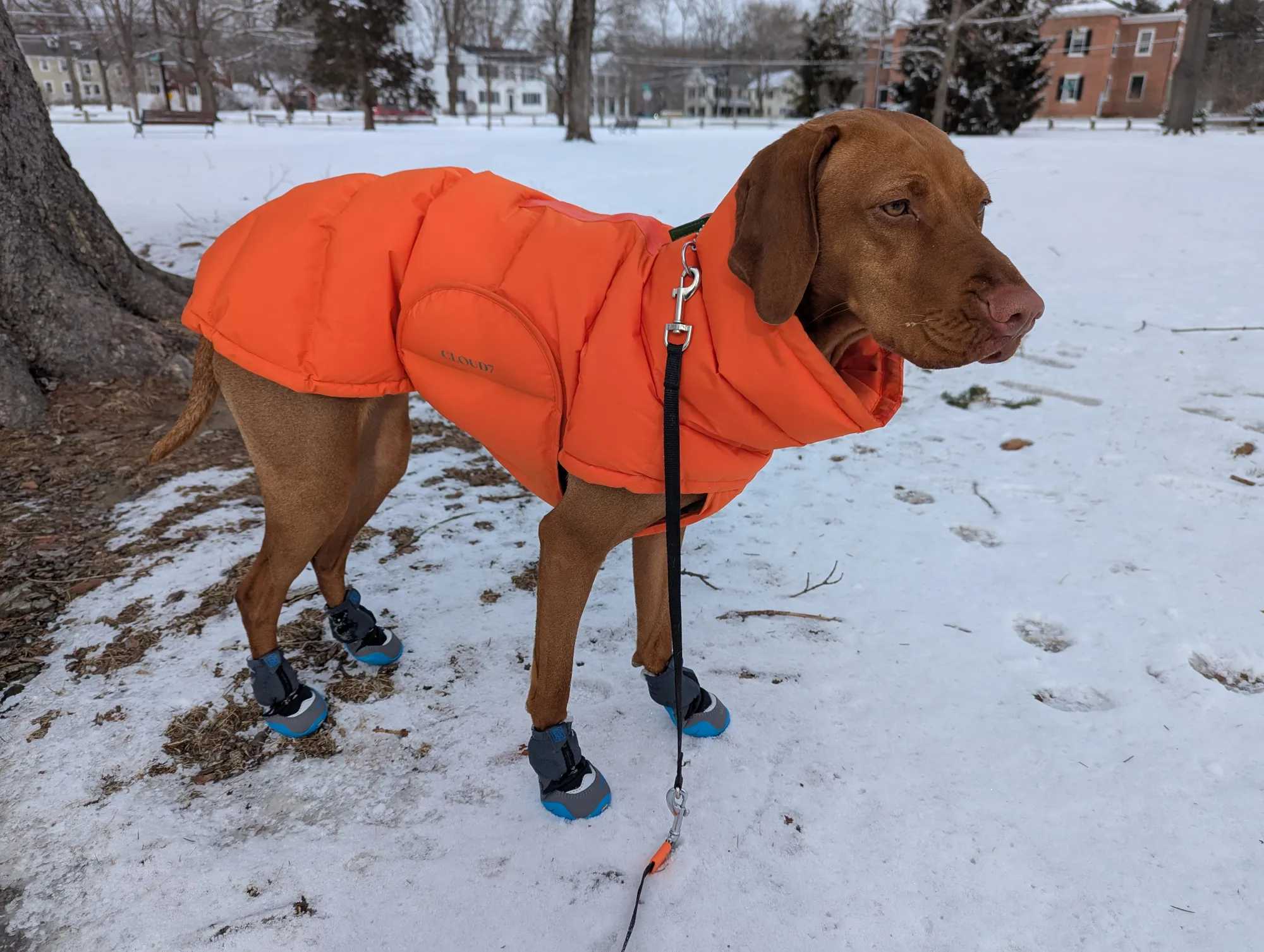
- Cold: a warm coat or sweater helps short-haired breeds and tiny puppies.
Fit matters. If it pinches the armpits, rides up, or restricts movement, your puppy may stand still and refuse to walk.
Booties: helpful for salt and ice
Booties can protect paws from ice melt and sharp crusty snow, but many puppies hate them at first. If you use them:
- Practice indoors with short sessions and treats.
- Put them on right before going out, then take them off immediately when you come in.
- Some pups tolerate starting with just the front paws, but plan to transition to all four as they accept them so their gait and traction stay comfortable.
If booties are a no-go, wipe paws after and use a pet-safe paw balm before walks to reduce cracking.
Do not forget the human gear
This sounds silly, but it matters. If you are warm and dry, you are more patient. If you are miserable, you rush your puppy, and rushing creates more refusals.
What to do when they refuse
When your puppy plants their feet and gives you the “absolutely not” look, you need a plan that does not accidentally teach them that refusing works.
The 5-minute rule (my foster-house staple)
- Go out on leash to the potty spot.
- Stand quietly for up to 5 minutes.
- If they go, reward and head inside.
- If they do not go, go back inside and put them in the crate or a small puppy-proof area for 10 to 15 minutes.
- Try again.
This prevents two common problems: indoor accidents and puppies learning that dragging you back inside is a fun game.
Quick crate note: the crate should be appropriately sized (enough to stand up, turn around, and lie down) and positively conditioned. The crate is a calm reset, not a punishment.
Keep play separate from potty trips
If potty time turns into a snow-romp every time, your puppy may hold it so they can keep exploring. In bad weather, keep potty trips boring and fast. Fun play can happen later during a separate outing once they have emptied the tank.
If your puppy is scared of rain or wind
Fear looks like freezing, shaking, trying to bolt, or refusing to step off the porch. Go slowly:
- Start with very short, calm exposures near the doorway with treats.
- Use a raincoat to reduce the sensation of drops on the body.
- Choose quieter times if storms are intense. Some puppies do better before the worst of the weather hits.
- Do not drag them. Encourage with a happy voice and tiny steps.
If there is lightning, do not linger outside trying to “wait it out.” Use an indoor backup briefly and resume outdoor practice when it is safe.
Accidents happen in winter
Winter potty training setbacks are common because everyone wants to stay inside longer. If you get an accident, focus on prevention and cleanup, not guilt.
Clean like you mean it
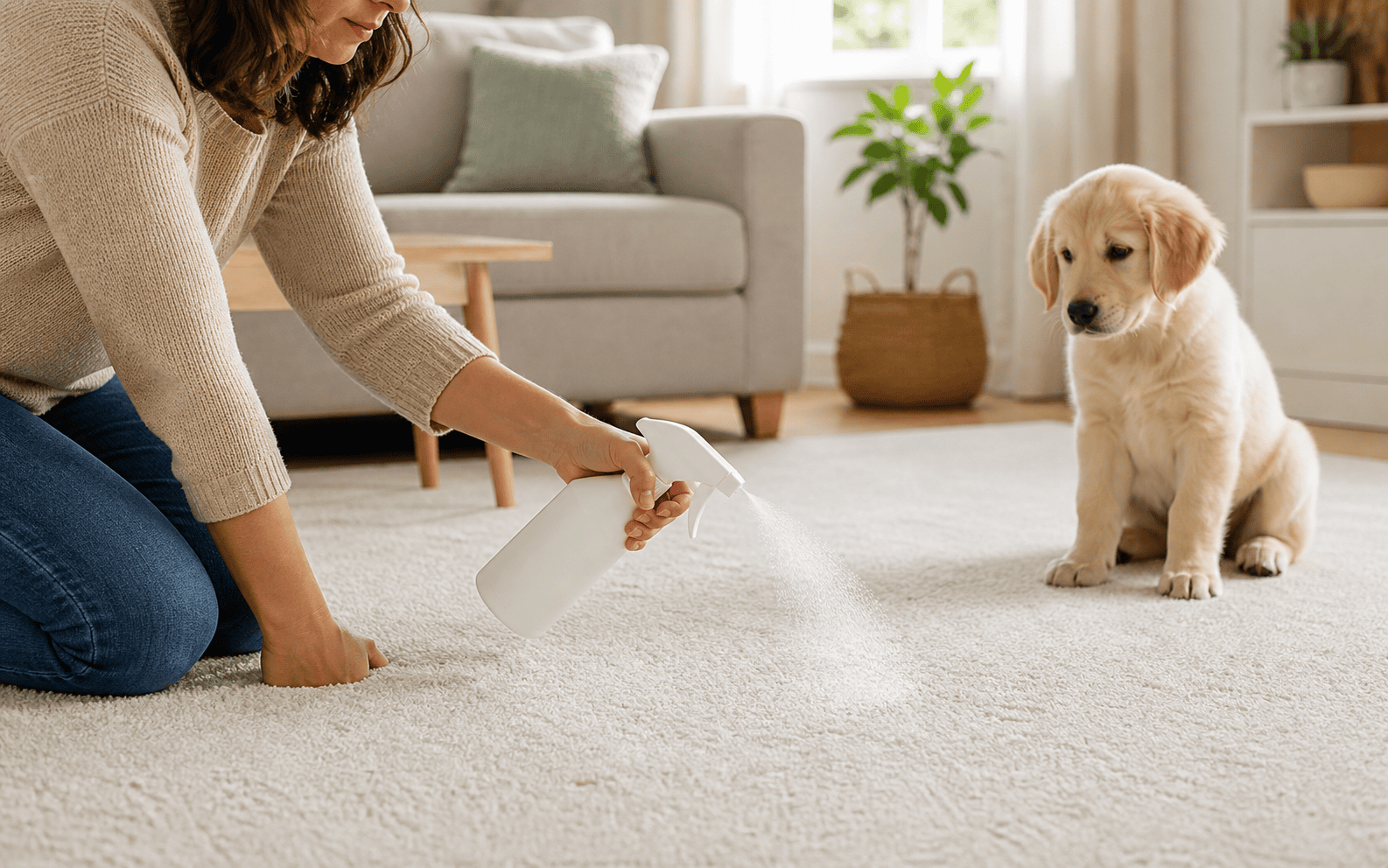
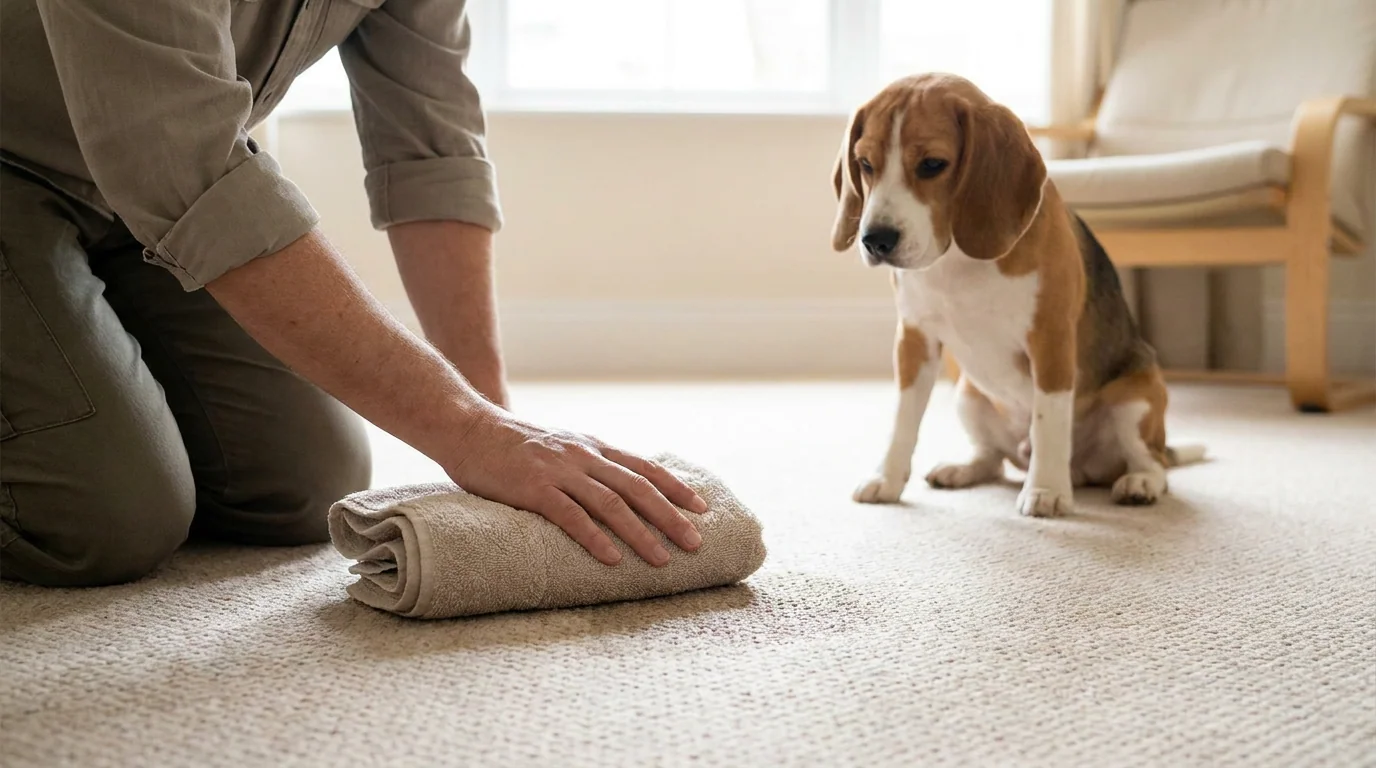
Use an enzymatic cleaner (not just soap and water) so the scent does not linger and invite repeat accidents.
Watch for almost-potty signals
In winter, puppies often signal more subtly because they would rather not go out. Common clues:
- suddenly wandering away from you
- sniffing and circling briefly
- pausing play and staring into space
- heading toward the usual accident corner
If you see any of these, take them out immediately, even if it is sleeting sideways.
Use confinement strategically
If your puppy is having more accidents during storms, reduce unsupervised freedom for a few days. A crate, playpen, or tether to your belt can save your floors and speed up training.
Night and early morning: make it fast
Dark, cold potty trips are where training goes to die if you are not prepared. Make it efficient.
- Stage supplies: leash, coat, poop bags, and treats by the door.
- Keep lights low: bright lights can wake puppies fully and turn the trip into playtime.
- Carry tiny puppies: if your pup is small and the ground is icy, carry them to the potty spot, then set them down to do their business.
- Keep it simple: cue, wait, reward, back inside.
Snow and ice safety tips
Skip sidewalk salt when you can
Ice melt can irritate paws and can be dangerous if licked. Choose pet-safe products, but know that “pet-safe” does not mean “snack-safe.” Even those can irritate skin or cause stomach upset if ingested, so wiping paws still matters.
Check paws and belly
Snow clumps can form between toes and on belly fur, especially on fluffier pups. A quick wipe with a warm, damp cloth can prevent redness and itching.
Watch for shivering and paw lifting
Those are your puppy saying, “I am too cold.” Keep potty trips short and consider a coat or booties if it happens regularly.
When an indoor backup makes sense
I am pro-outdoor potty training, but I am also pro-real life. There are situations where a short-term backup is reasonable:
- dangerously cold wind chills
- your puppy is very young and struggling to regulate body temperature
- you live in a high-rise and cannot get outside quickly enough
- a medical issue makes frequent trips urgent
- lightning or severe storms make it unsafe to stay outdoors
If you use a temporary indoor option, choose one place only (like a grass patch or a specific tray), keep it far from food and sleep areas, and continue practicing outdoor pottying whenever conditions allow. The goal is “backup plan,” not “new permanent bathroom.”
If your puppy is not fully vaccinated yet, follow your vet’s guidance about parvo risk and shared outdoor areas. Many owners use a private, low-traffic potty spot or a clean grass patch option temporarily until it is safe to use public ground.
Troubleshooting
My puppy will pee outside but will not poop
Pooping takes longer and feels more vulnerable, especially in wind. Try:
- adding 2 to 3 extra minutes of quiet waiting after the pee
- taking a short leash walk after they pee to get things moving
- going out after meals at the times they usually poop
My puppy goes out, then comes inside and has an accident
This usually means they did not fully empty, got distracted, or were rushed. Use the 5-minute rule and reduce freedom indoors until you get a successful potty. If they did not go, crate for 10 to 15 minutes and try again.
My puppy only wants to potty on the porch
Porches feel safer and drier. Block access if you can, and lead them to the designated spot on leash. Reward heavily when they go in the correct place. If the porch is the only dry area, create a small covered potty patch nearby so you can transition gradually.
My puppy bites the leash or plays in puddles instead
Use a short leash, stand still, and be boring. If leash-biting is intense, bring a small treat lure to guide their nose down to sniff the ground, then stop talking and let them focus. After they potty, you can offer a brief reward play moment indoors instead.
When to call your vet
If potty avoidance is sudden or extreme, do not assume it is just weather. Contact your vet if you notice:
- straining to pee or very frequent tiny pees
- blood in urine or stool
- diarrhea lasting more than a day (or sooner for very young puppies)
- crying during potty attempts
- lethargy, vomiting, or refusing food
Cold weather can also make stiffness or discomfort more obvious, especially if your puppy has an injury, an orthopedic issue, or is recovering from a rough growth spurt. If they seem painful, get them checked.
A quick pep talk
Potty training in rain and winter weather is not a test of who is more stubborn, you or the puppy. It is mostly a test of preparation and consistency.
Make the potty spot easy to reach, keep trips calm and predictable, reward generously, and use a simple repeatable plan when they refuse. Most pups adjust faster than you think once they realize the new rule is still the rule, even when the sky is being dramatic.
FAQ
How cold is too cold for a puppy to potty outside?
It depends on age, size, coat type, and wind. Very young puppies and small or short-haired breeds chill quickly. If your puppy is shivering, lifting paws, or trying to bolt back inside immediately, keep trips very short, consider a coat, and ask your vet about safe cold limits for your specific pup.
Should I carry my puppy outside in winter?
For small puppies, yes, especially at night or if the ground is icy. Carrying them to the potty spot can prevent accidents on the way and reduces exposure time. Put them down at the potty area so the actual potty still happens outside.
Will a pee pad confuse my puppy?
It can, because it teaches “soft indoor surfaces are bathrooms.” If you need a backup, a real grass patch in one consistent location is usually less confusing, and it works best as a short-term option while you keep practicing outdoors when conditions allow.
How long should I wait outside in the rain?
Usually 5 minutes is enough for a focused potty attempt. If your puppy is just standing there, go back in, use the crate or a small area for 10 to 15 minutes, and try again. Waiting outside for 20 minutes often turns into everyone getting frustrated and still having an accident indoors.