Potty training at 8 to 16 weeks is basically you becoming a very loving, very alert bathroom dispatcher. The good news is that puppies thrive on predictable routines. If you give them frequent, boring potty trips (plus huge praise for success), most pups catch on faster than you think.
This guide lays out exactly how often to take your puppy out by age, and gives you sample daily schedules you can tweak for your own home.
The simple rule that works
If you only remember one thing, make it this:
- Take your puppy out after every transition. Sleep to awake, crate to freedom, play to calm, food to finished, water to done.
- Plain English version: Any time the activity changes, go outside.
- When in doubt, go out. You are building a habit, not proving a point.
And here are the “big five” moments that cause most accidents:
- Right after waking up (morning and naps)
- Right after eating
- 5 to 30 minutes after drinking a lot of water
- After excited play or zoomies
- Right after coming out of the crate or playpen
How often puppies need breaks
These are typical ranges for healthy puppies. Some can hold it longer, some need more frequent trips, especially tiny breeds, high-energy pups, and newly adopted puppies who are still settling in.
| Age | When awake | After naps | After meals | Overnight expectation |
|---|---|---|---|---|
| 8 weeks | Every 30 to 60 minutes | Immediately | Within 5 to 30 minutes | Often 0 to 3 trips (varies a lot) |
| 9 weeks | Every 45 to 60 minutes | Immediately | Within 5 to 30 minutes | Often 0 to 2 trips |
| 10 weeks | Every 45 to 75 minutes | Immediately | Within 5 to 30 minutes | Often 0 to 2 trips |
| 11 weeks | Every 60 to 90 minutes | Immediately | Within 10 to 30 minutes | Often 0 to 1 trip |
| 12 weeks | Every 60 to 90 minutes | Immediately | Within 10 to 30 minutes | Often 0 to 1 trip (varies) |
| 13 to 14 weeks | Every 90 to 120 minutes | Immediately | Within 10 to 30 minutes | Many pups make it through, some need 1 |
| 15 to 16 weeks | Every 2 to 3 hours | Immediately | Within 10 to 30 minutes | Often sleeping through (not always) |
A quick reality check: “Can hold it” and “will choose to hold it” are not the same thing at this age. Your schedule is about preventing mistakes so your puppy builds the right habit faster.
Poop timing matters too
Pee gets all the attention, but poop has its own schedule. Many young puppies poop 2 to 5 (or more) times a day, especially when they are eating three to four meals.
- Most common poop window: 5 to 30 minutes after meals
- Also common: right after waking up, and after a big play session
If poop accidents are your main struggle, tighten the “after meals” potty trip and stay out an extra minute or two. Poop urgency is real.
The daily rhythm
Puppies do best when the day follows a pattern. Here is the rhythm I use with fosters because it is simple and repeatable:
- Wake up → potty
- Breakfast → potty
- Play or short training → potty
- Crate nap → potty
- Repeat all day
- Last call potty → into the crate for the night
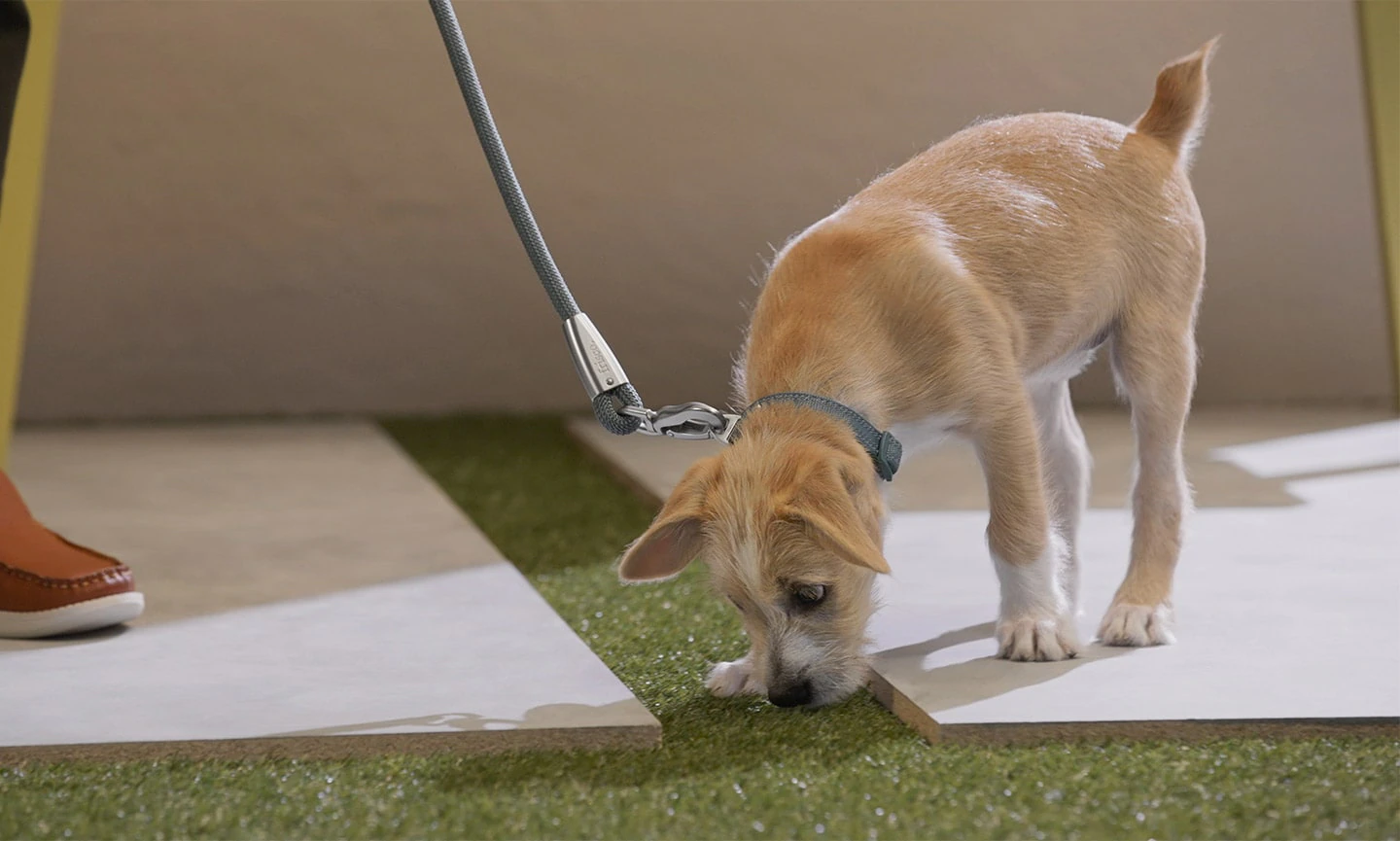
Notice what is missing: long stretches of “free roaming.” At 8 to 16 weeks, freedom is earned in tiny pieces. It is not mean. It is how you prevent accidents and protect your sanity.
Sample schedules by age
Use these as plug-and-play examples. Shift the times to match your household, but keep the spacing between potty trips.
8 to 9 weeks
At this age, your puppy’s bladder is basically a leaky little water balloon with opinions.
- 6:00 wake up → potty
- 6:10 breakfast
- 6:25 potty
- 6:30 to 7:00 play, gentle training
- 7:00 potty
- 7:10 to 8:30 crate nap
- 8:30 potty (carry them if needed)
- 9:00 potty (yes, again)
- Midday repeat the same cycle with lunch if you are feeding 3 to 4 meals
- Evening play → potty every 30 to 60 minutes while awake
- 10:00 last call potty → crate
- Overnight as needed, typically 0 to 3 calm potty trips (no play, no party)
Tip from the trenches: If your puppy pees and then pees again 3 minutes later, that is not spite. That is a baby bladder. Stay outside a little longer and give them time to fully empty.
10 to 12 weeks
Many pups can stretch closer to 60 to 90 minutes while awake, especially if they are on a solid nap routine.
- 6:00 wake up → potty
- 6:10 breakfast
- 6:30 potty
- 6:30 to 7:15 play or short walk in a safe area → potty
- 7:30 to 9:00 crate nap
- 9:00 potty
- Every 60 to 90 minutes while awake potty
- After each meal potty within 5 to 30 minutes
- 10:00 last call potty → crate
- Overnight often 0 to 2 trips, depending on the puppy
This is also when many puppies start showing clearer “I need to go” signals. Celebrate that. That is communication, and it is gold.
13 to 16 weeks
Your puppy is still a toddler, but the schedule can usually loosen a bit.
- 6:00 wake up → potty
- 6:15 breakfast
- 6:35 potty
- Morning potty every 90 to 120 minutes while awake
- After naps and after meals always potty
- Evening potty every 2 hours, plus after big play
- 10:00 last call potty → crate
If accidents are still happening daily at 15 to 16 weeks, it usually means one of three things: too much freedom too soon, missed transitions, or a puppy who needs a vet check for urinary issues.
How to stretch the time
Once you are getting a clean streak, you can lengthen the time between trips slowly.
- Rule: If you are accident-free for 3 to 4 days, add 10 to 15 minutes to your “when awake” interval.
- If an accident happens, tighten the schedule again for a few days and try later.
This is not linear. Some weeks you will feel like a genius. Some weeks your puppy will humble you. Both are normal.
What “right after” means
For many puppies, “right after” is not a figure of speech. Here are common timing windows:
- After waking up: within 1 to 3 minutes
- After eating: usually 5 to 30 minutes
- After a big drink: often 5 to 30 minutes
- After play: immediately, or the moment they disengage and start sniffing
If your puppy tends to poop after meals, log it for 2 to 3 days. Most pups have patterns, and once you spot the pattern, you can look like a potty training wizard.
Crate and playpen help
I love freedom. Puppies also love freedom. Unfortunately, freedom is where couches go to die.
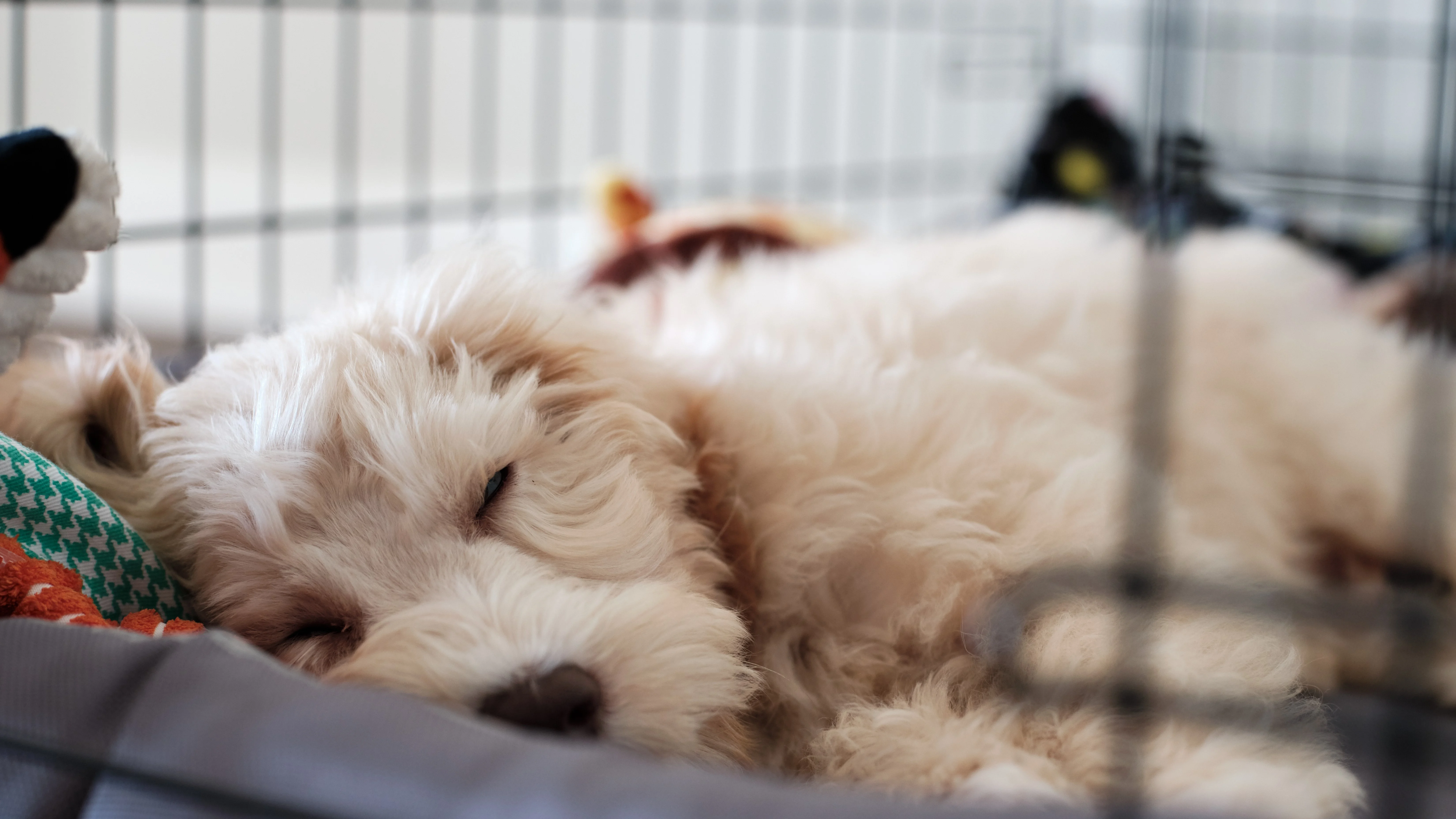
Crates and playpens help because they:
- Prevent sneaky corner accidents you find 2 hours later
- Teach your puppy to rest (overtired puppies can have more accidents)
- Make your potty schedule predictable
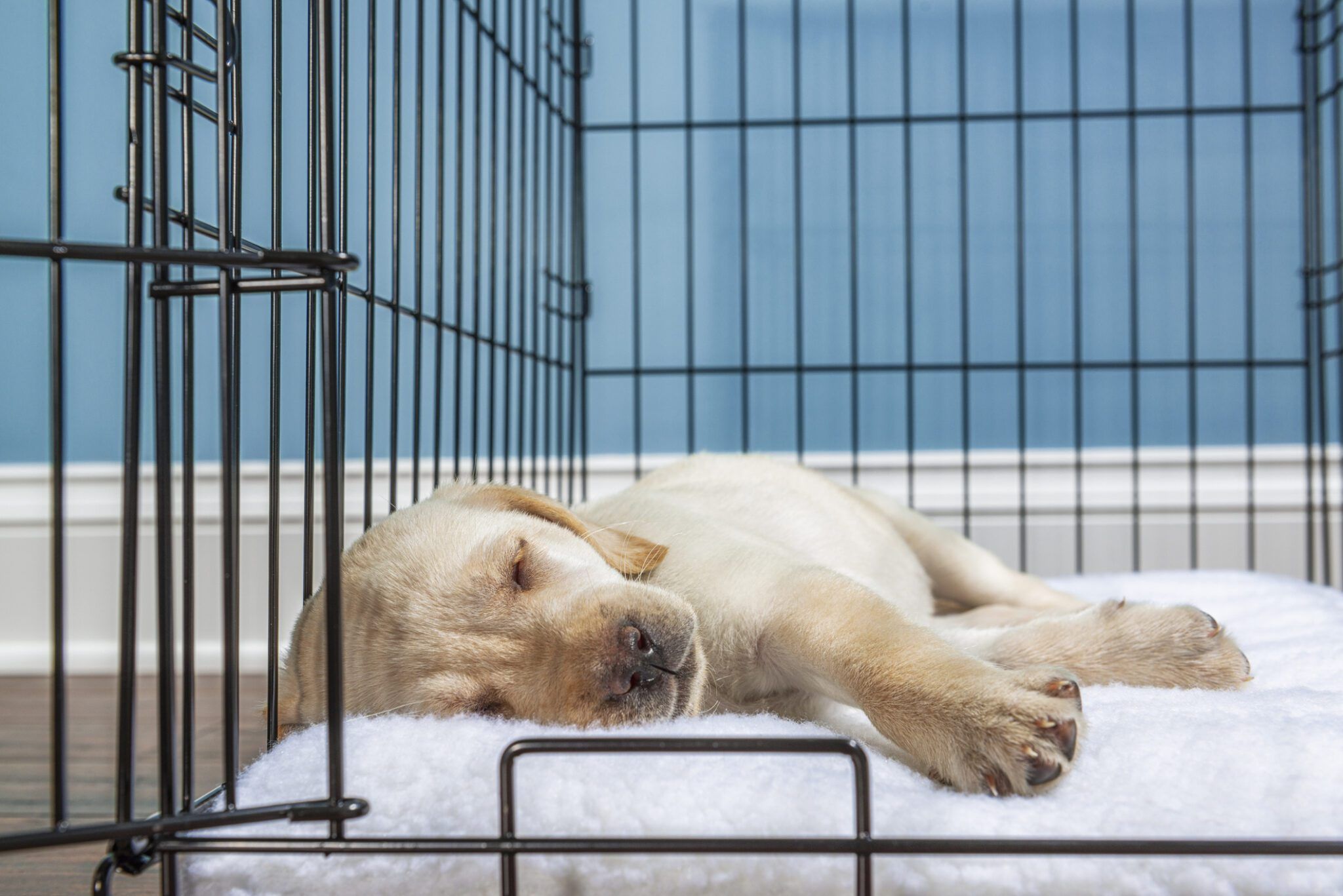
Important: The crate is not a storage unit for puppies. It is a safe nap spot between potty breaks, play, training, and cuddles.
Night potty plan
Night potty trips should be calm and boring. You want your puppy to think, “Oh, we do business and go back to bed.” Not, “It is 2 AM and mom is hosting a pajama rave.”
- Keep lights low
- Carry your puppy if they are likely to pee on the way out
- Go to the same potty spot
- Stand still, say your cue once, and wait
- Quiet praise, then straight back to the crate
If your puppy wakes and fusses, take them out first at this age. If they do not potty within a few minutes, back in the crate. No scolding, no bargaining.
Bad weather plan
Rain and cold are where good potty routines go to get weird. The goal is not comfort. The goal is consistency.
- Go out on leash for a quick, focused potty trip (2 to 5 minutes)
- Use an umbrella, raincoat, or a covered spot if you have one
- Pick one “default” potty area so your puppy is not wandering in a storm
- If they refuse, go back inside for 5 minutes of supervision, then try again
Do not start indoor free-for-all play right after a failed rainy potty trip. Your puppy will learn a very convenient new strategy.
Cues and rewards
Pick a cue phrase and keep it consistent. My go-to is “Go potty.” Some people prefer “Hurry up” or “Do your business.” Your puppy does not care, as long as you always use the same words.
- Say the cue once when your puppy starts to sniff or circle
- The moment they finish, praise like they just solved a crime
- Give a tiny treat immediately (within a few seconds of finishing)
Yes, you can absolutely fade treats later. For now, you are paying for the behavior you want.
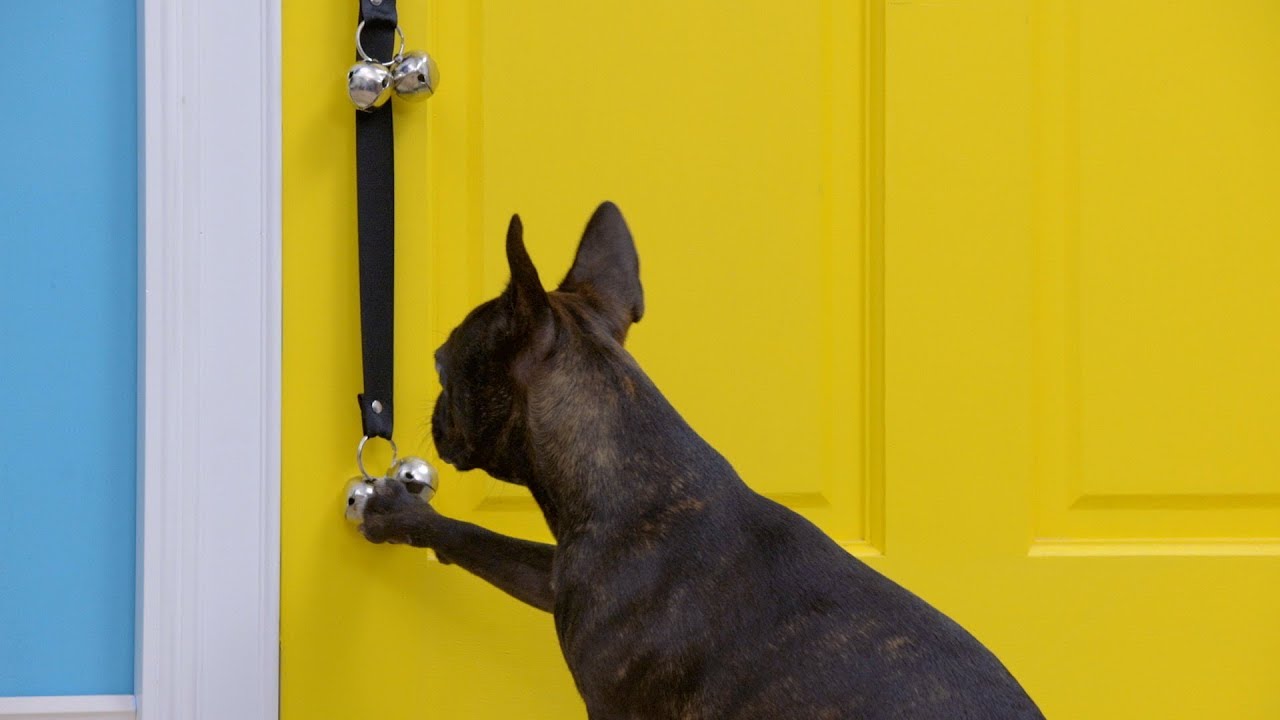
Signs your puppy needs to go
- Sudden sniffing spree like they are tracking a squirrel detective novel
- Circling or pacing
- Wandering away mid-play
- Heading to a corner or behind furniture
- Looking back at you, then moving away (the “I feel weird” face)
- Whining right after waking up
Pro tip: The sign many owners miss is “stops playing.” If your puppy disengages and gets floaty, scoop them up and head out.
If your puppy has an accident
Accidents are information, not a moral failing. Yours or your puppy’s.
Do this
- Interrupt gently if you catch them mid-stream (a quick clap or “uh-oh”), then go outside
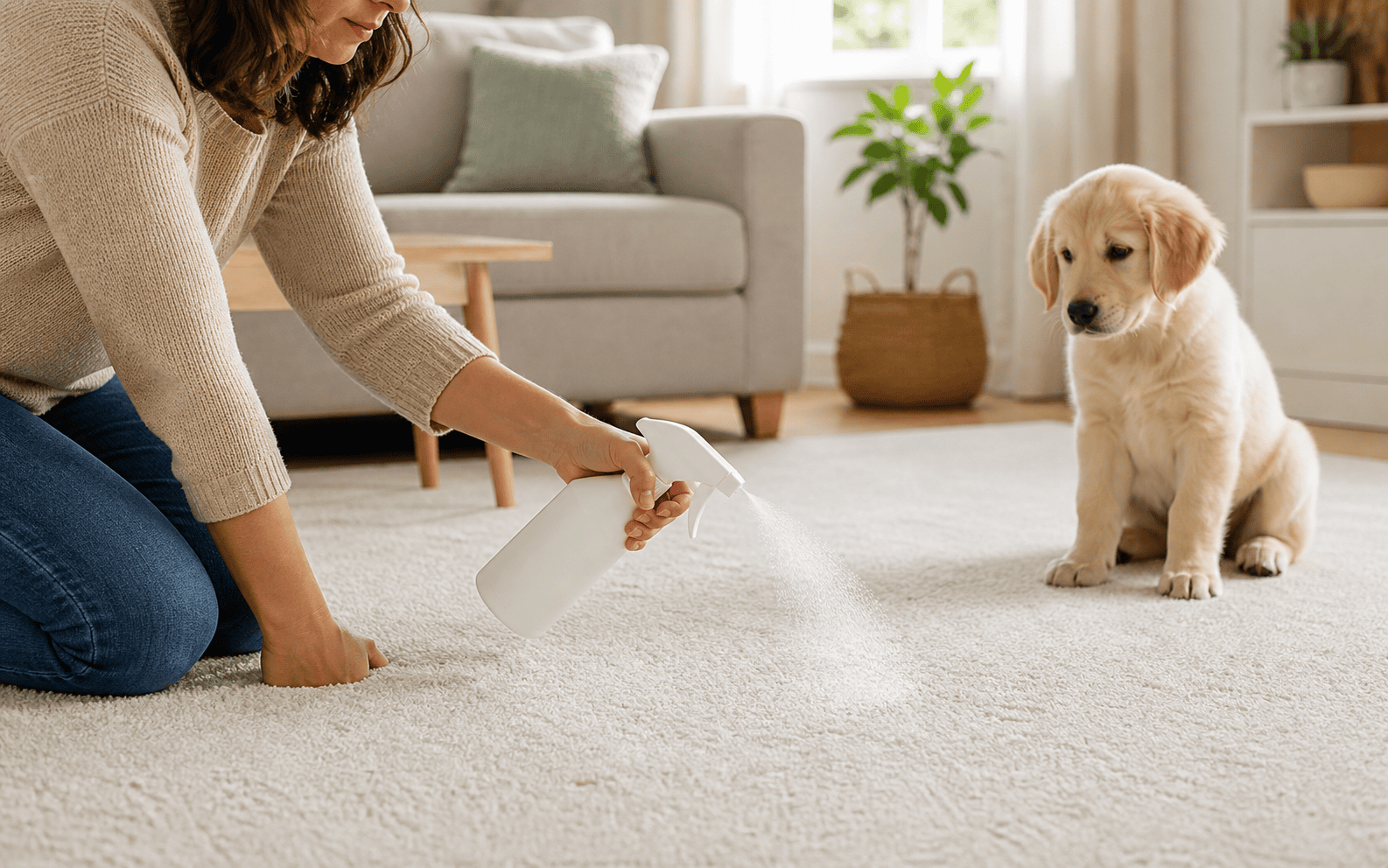
- Clean thoroughly with an enzymatic cleaner
- Avoid ammonia-based cleaners, which can smell like urine to dogs
- Adjust the schedule: go out more often for a few days
- Reduce freedom: more leash time indoors, more pen time, more supervision
Skip this
- Rubbing their nose in it (it teaches fear, not potty training)
- Yelling (it teaches them to hide)
- Assuming “they know better” at 10 weeks (they do not)
Special cases
Toy breeds and tiny puppies
Smaller puppies have smaller bladders. Many need more frequent breaks than the table suggests, especially at 8 to 12 weeks.
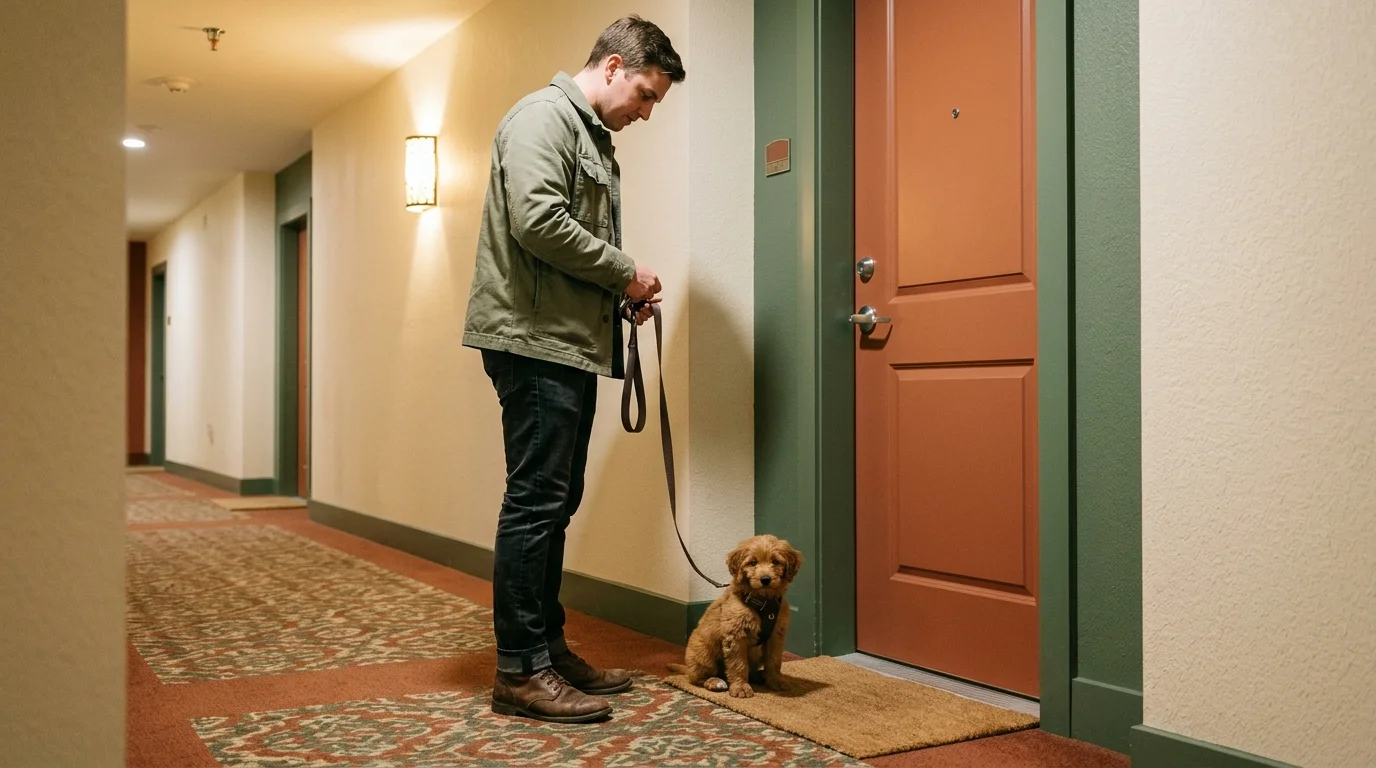
Apartment puppies
If you have stairs, elevators, or a long hallway, your biggest challenge is travel time. A few options:
- Carry your puppy to the potty spot at first
- Use a close, consistent outdoor spot
- If your vet recommends it for your area and your puppy is still finishing vaccines, consider an indoor potty option temporarily and train it like a real potty spot
Quick caution: Indoor potty options can create a preference for peeing on indoor substrates. If you use one, plan a transition: slowly move the pad or tray closer to the door, then outside, and heavily reward outdoor wins.
Newly rescued or stressed puppies
Stress can cause more frequent urination, looser stools, or weird timing. Tighten the schedule for the first week, then loosen slowly as your puppy settles.
Possible medical issues
Check with your vet if you notice straining, blood in urine, frequent tiny pees, excessive thirst, or accidents that suddenly start after a stretch of progress.
Quick FAQ
How long can an 8 week old puppy hold their pee?
Some can make it about an hour when awake, but many cannot. Plan for 30 to 60 minutes while awake, plus immediately after naps and meals.
Should I wake my puppy up to pee at night?
Usually no, unless your vet has told you to for a medical reason. Many people do better by setting an alarm for one scheduled trip early on, then gradually phasing it out as the puppy starts sleeping longer.
My puppy pees outside and then pees inside 10 minutes later. Why?
Common reasons: they did not fully empty, they got distracted outside, they drank right after coming in, or you gave too much freedom too quickly. Try a longer wait outside, a calmer potty spot, and a quicker return to supervision indoors.
When will my puppy be fully potty trained?
Many puppies are doing really well by 4 to 6 months with consistent routines, but reliability varies by puppy and household. Think of 8 to 16 weeks as the foundation phase. Your job is repetition, supervision, and lots of rewards.
One plan for tomorrow
If you feel overwhelmed, start here: Set a timer, take your puppy out after every wake-up and every meal, and supervise like it is your side hustle. Do that for a week, and you will be shocked how much clearer it gets.
You have got this. And if you are currently reading this at 2 AM in sweatpants while holding a tiny puppy who refuses to potty, I see you.