What a good crate setup does
A crate is not a puppy jail. It is a safe little den that helps your puppy sleep, settle, and learn one of the biggest life skills: holding it until you take them out. When the crate is set up well, it supports potty training and prevents the “I had to go so I went” habit from forming in a corner.
When the crate is set up poorly, it can do the opposite. Too much space invites accidents. Too much fluff invites chewing. Too much freedom can turn rest time into restlessness when your puppy should be napping.
Let’s build a crate setup that grows with your puppy without turning your living room into a constant game of “What did you just swallow?”
Choosing the right crate size
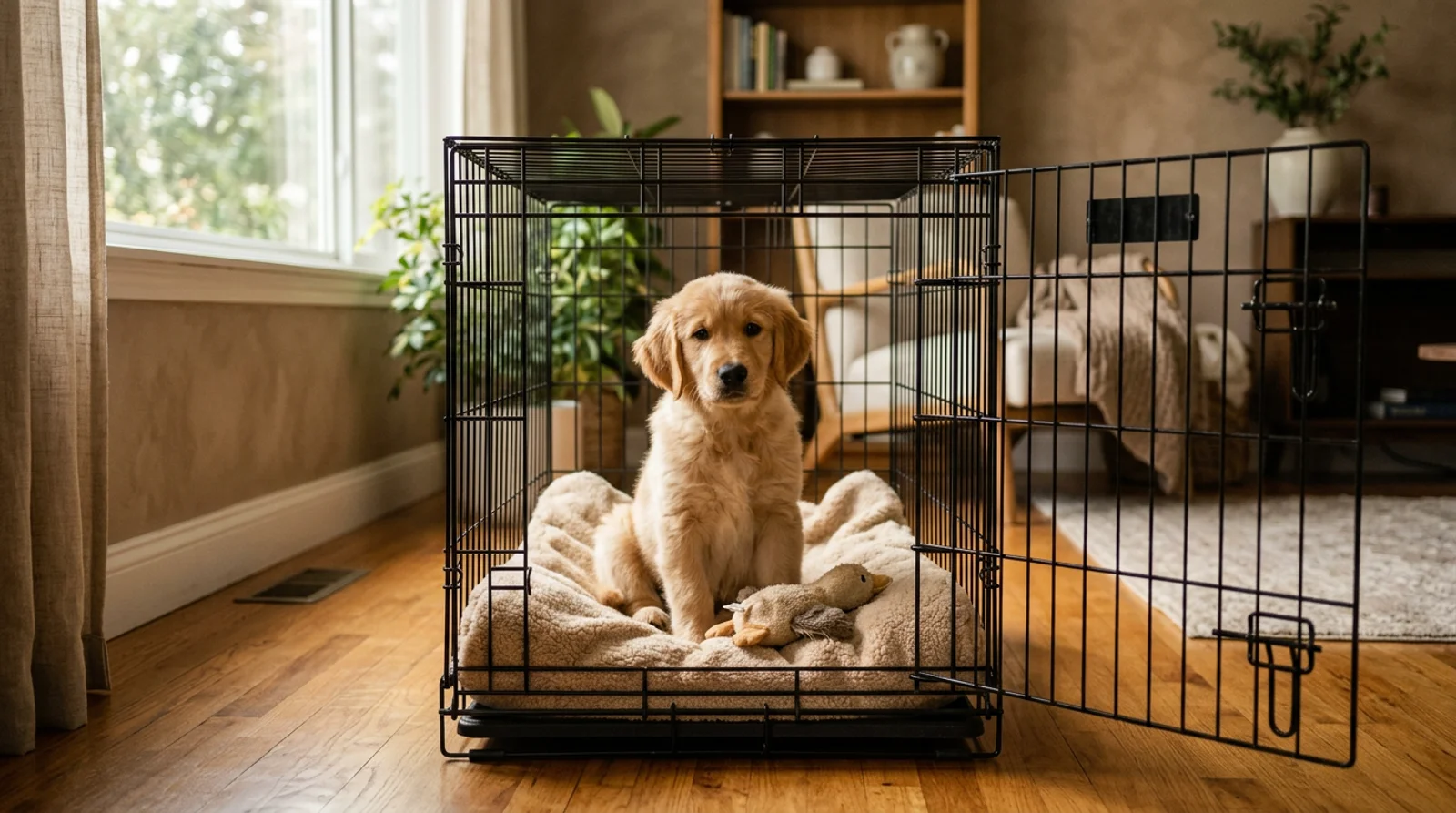
Your goal is simple: your puppy should be able to stand up, turn around, and lie down comfortably, and that is it. Not a studio apartment. Not a penthouse. Just enough room to be comfy and reposition.
The stand-turn-lie test
- Stand: Your puppy should stand without ducking their head or scraping their ears.
- Turn: They should be able to turn around smoothly, not shuffle sideways like they are in a tight elevator.
- Lie down: They should be able to stretch out in their normal sleeping position.
Measure your puppy
You can get a good measurement in about 30 seconds with a tape measure and a treat.
- Length: Tip of nose to base of tail (not the tail tip). Add about 2 to 4 inches, and sanity-check it against the stand-turn-lie fit.
- Height: Floor to top of head or top of ears, whichever is higher when they stand naturally. Add about 2 to 4 inches.
Long-bodied, deep-chested, and leggy puppies sometimes need a little more room in one dimension than the “add a couple inches” rule suggests, so use the fit test and the crate manufacturer’s sizing guidance as your final answer.
If your puppy is between sizes, I usually prefer sizing up only if you plan to use a divider. Without a divider, bigger is not better for potty training.
If your puppy will be a large adult
For medium and large breeds, most families do best buying the adult-size crate right away and using a divider panel to shrink the usable space. This saves money and keeps training consistent.
For toy breeds and very tiny puppies, a huge adult crate can feel intimidating even with a divider. In those cases, starting with a smaller crate and upgrading later can make the transition smoother.
Wire, plastic, or soft crate
There is no single perfect crate, but there is usually a best match for your puppy’s personality and your daily routine.
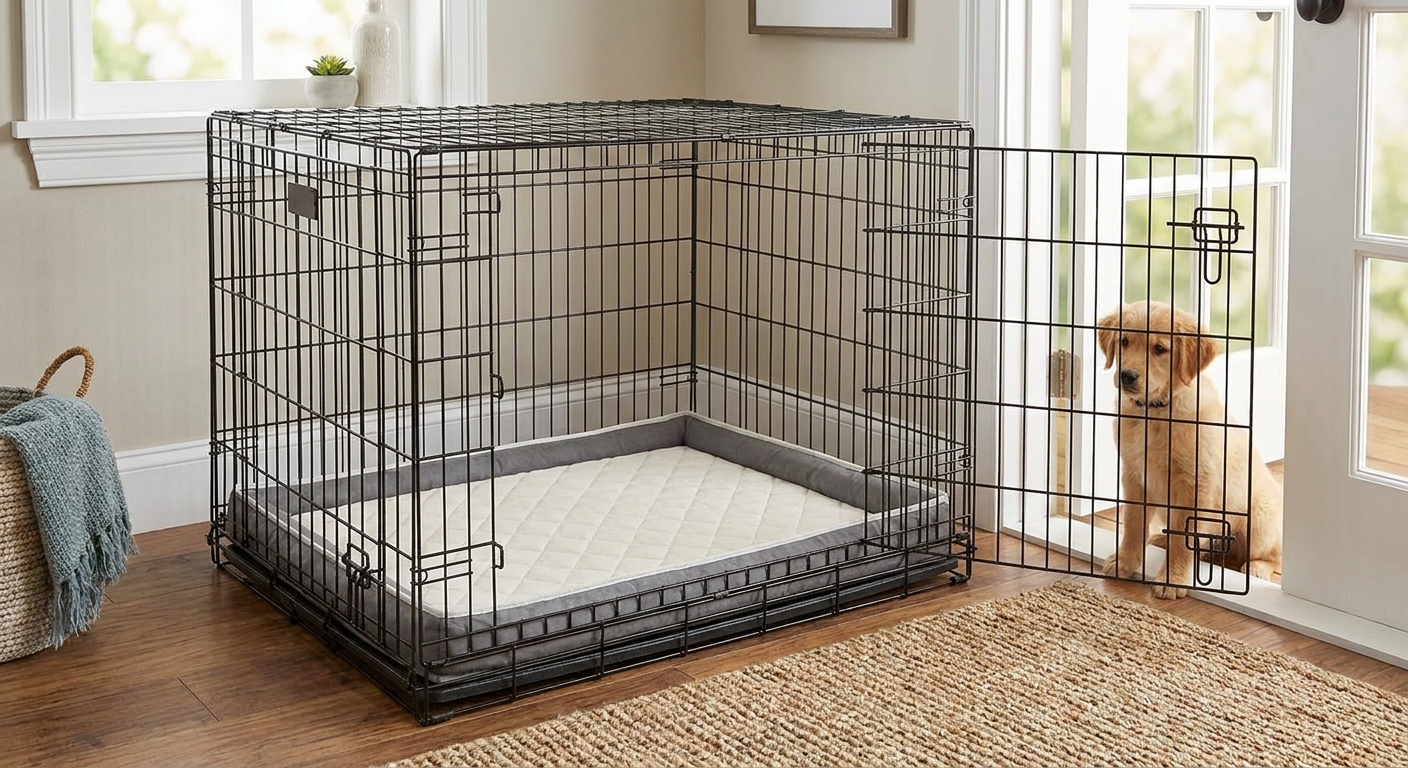
Wire crates
These are my most common foster-home pick, especially for potty training.
- Pros: Great airflow, easy to see your puppy, usually come with divider panels, easy to clean with a tray.
- Watch-outs: Some pups get distracted by everything they can see. A simple crate cover or blanket over three sides can help.
- Safety tip: Check for bent wires, rough spots, or broken welds that could snag a toenail. Replace damaged crates.
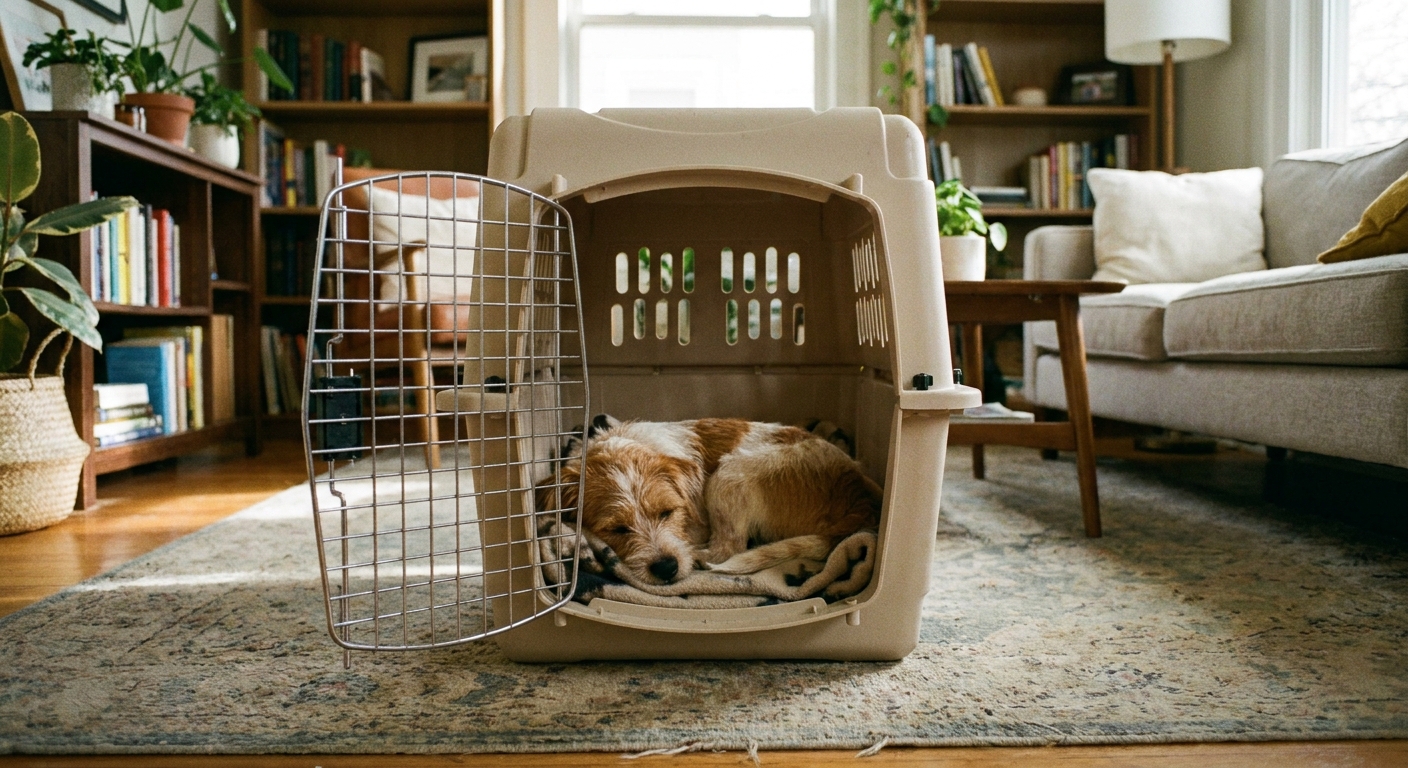
Plastic “airline-style” crates
These can feel cozy and den-like, which is great for some puppies.
- Pros: More enclosed and calming, helpful for travel, reduces visual stimulation.
- Watch-outs: Divider options vary, and some are harder to fully deep-clean if you get a messy accident.
Soft-sided crates
These are best for already crate-trained dogs, not brand-new puppies.
- Pros: Lightweight, convenient for travel and shows, cozy for calm dogs.
- Watch-outs: Many puppies can chew or scratch right through them. Also, they are not ideal for accidents.
Divider panels for potty training
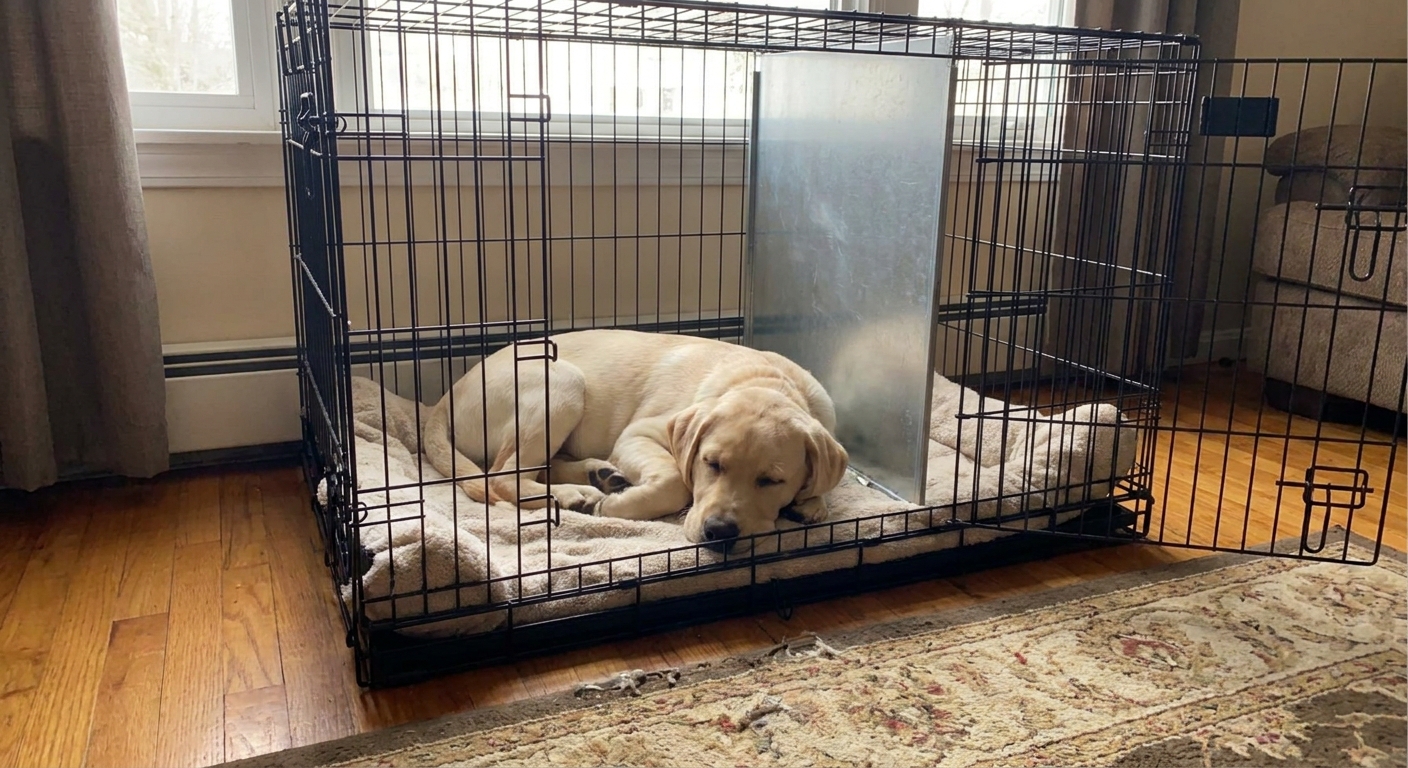
If you take nothing else from this guide, take this: a divider keeps your puppy from using one end as a bathroom and the other end as a bed. Many puppies have a natural preference to stay clean where they sleep, but it is not a magic rule. Very young pups, anxious pups, pups with diarrhea or parasites, and puppies who have learned to live around mess (common in puppy mill backgrounds) may not show that instinct reliably, so do not assume your puppy is “bad” if accidents happen.
Set the divider
Set the space so your puppy can do the stand-turn-lie test, and not much more. If your puppy can pace laps or drag toys to a back corner to potty, the space is probably too big.
When to expand
- Expand a notch when your puppy looks cramped while turning or stretching out.
- Expand after a solid stretch of dry crate time (think a week or two of no accidents), especially overnight.
- If you expand and accidents start, do not assume your puppy is being “stubborn.” Shrink the space back down and review your potty schedule.
If you do not have a divider
Some crates come divider-ready, some do not. If you need a temporary fix, look for crate-specific divider panels sold separately. If you must improvise, make sure whatever you use is sturdy, has no sharp edges, and cannot be chewed into pieces. Cardboard and flimsy plastic are basically a snack invitation.
Bedding that is safe and simple
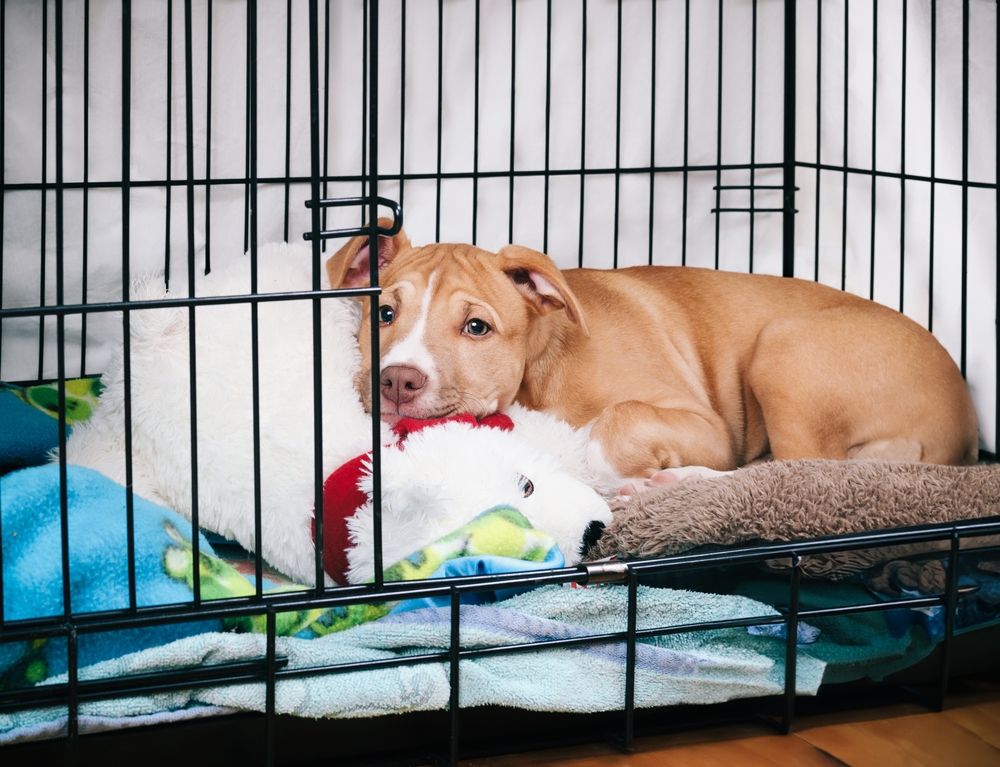
New puppy owners often assume a crate must have a plush bed. Sometimes it can, but you earn that privilege with good choices and supervision. The safest bedding is the kind that keeps your puppy comfortable without turning into stuffing confetti at 2 AM.
My “start here” bedding
- First week or two: A flat, washable crate pad or a folded fleece blanket.
- If accidents are still happening: Go simpler. A towel or even a bare crate tray (briefly) can be kinder than repeatedly washing a bulky bed.
- Once chewing is under control: Upgrade to a tougher, well-fitted crate mat or bed.
What to avoid
- Overstuffed beds that are easy to shred.
- Loose blankets piled high for puppies who dig and mouth fabric.
- Foam beds for dedicated chewers (foam chunks are a common “why are we at the vet?” moment).
Safety notes
- If your puppy is chewing bedding, remove it and try again later with a tougher option.
- For very young puppies who still have occasional accidents, choose bedding that can handle frequent hot washes.
- If your puppy is prone to overheating, skip thick beds and use a breathable pad.
Where to put the crate
Crate training goes smoother when the crate is part of real life. Puppies are social. If the crate is parked in an isolated corner, many pups panic because it feels like being left behind.
Good spots
- Daytime: A living area where your puppy can see you, but not in the middle of constant foot traffic.
- Nighttime: Near your bed at first. This helps you hear when your puppy needs a potty break, and it helps them feel secure.
Spots to avoid
- Direct sun or next to heating vents.
- Noisy laundry rooms if the sounds startle your pup.
- Right by the front door if your puppy reacts to every delivery and squirrel.
Inside setup basics
A calm crate looks almost boring, and that is the point. Your puppy’s job inside the crate is to rest, not to throw a one-dog party.
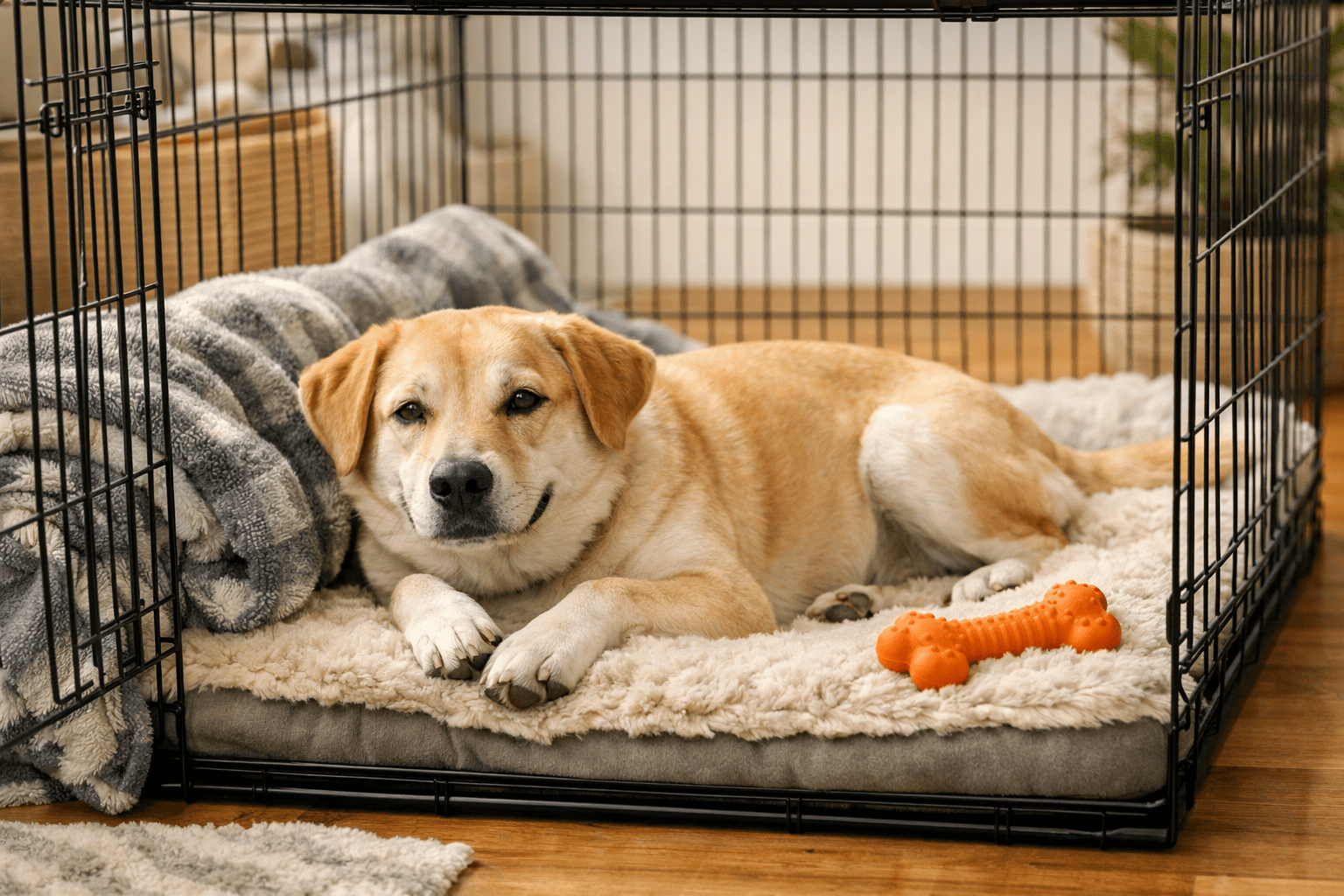
A solid starter setup
- Divider set to the right size
- One flat piece of bedding (or none if chewing or accidents are frequent)
- One safe chew (only if you are confident your puppy will not shred and swallow it)
Chew safety in one paragraph
Whatever chew you choose, supervise at first and remove it if it starts breaking into chunks. Avoid giving anything that turns into swallowable pieces fast. If you are unsure what is appropriate for your puppy’s age and teeth, your vet is a great tiebreaker.
Food and water in the crate
Meals in the crate can be a wonderful way to build positive feelings. Water is more situational. For short crate times (often about 1 to 2 hours in a cool, comfortable space), many puppies do fine without a water bowl, and this is not meant as a training tactic. For longer stretches, hot weather, or puppies who seem thirstier than expected, offer water sooner and talk with your vet, especially for very young puppies. If you do use water, choose a spill-resistant option that attaches to the crate, and expect a learning curve.
Crate training ground rules
A good setup helps, but a good introduction is what makes the crate feel safe. Keep the door open at first, toss treats in, feed a few meals in the crate, and build up crate time gradually. And as tempting as it is in a chaotic moment, do your best not to use the crate as punishment. You want “crate” to mean relax, not “you are in trouble.”
How long is too long?
The crate is a management tool, not a lifestyle. Puppies need frequent potty breaks, movement, training, and social time. A common rule of thumb is about one hour of bladder-holding per month of age (up to around 8 hours for many adult dogs), but individuals vary and sleep time is usually easier than awake time. If your puppy is having accidents, panicking, or chewing the crate, it is often a schedule problem, not a crate problem.
Common sizing mistakes
Mistake: Buying a crate that is too big
Fix: Use a divider or exchange the crate. If your puppy can potty on one side and sleep on the other, you are making potty training harder than it needs to be.
Mistake: Overpadding the crate
Fix: Start simple. You can always add comfort later. It is much harder to un-teach “bedding is for shredding.”
Mistake: Ignoring signs the crate is too small
Fix: If your puppy cannot turn easily or is constantly pressed against the sides, it is time to expand the divider or move up a size.
Mistake: Leaving a collar on in the crate
Fix: Many trainers recommend removing collars during crate time to reduce snag risks. If you keep a collar on, make sure it fits properly and cannot catch on wires or hardware.
Crate size cheat sheet
These are common adult crate lengths you will see. Individual dogs vary a lot, so use the stand-turn-lie test as your final answer.
One quick note: crate “length” is usually the long-side exterior measurement, and interior space can vary by brand, so always check the interior dimensions if your puppy is close to the line.
| Crate length | Often fits | Best tip |
|---|---|---|
| 24 inch | Toy breeds, very small dogs | Prioritize low step-in height for tiny pups |
| 30 inch | Small dogs, some small-medium mixes | Use a divider for potty training |
| 36 inch | Medium dogs | Great “buy once” size for many rescues with unknown adult size |
| 42 inch | Large dogs | A divider is strongly recommended for most puppies |
| 48 inch | Giant breeds | Measure carefully and confirm door height |
FAQ
My puppy cries in the crate. Is it the wrong size?
Not necessarily. Crying is often about adjustment, needing a potty break, or being overtired. A too-small crate can cause discomfort, but a too-big crate can also create restlessness. Check the stand-turn-lie fit, then focus on a consistent routine: potty first, calm entry, short sessions that gradually lengthen.
Can I use puppy pads inside the crate?
I do not recommend it for most puppies. Pads inside the crate can teach “it’s fine to potty where you sleep,” and some puppies shred and swallow them. If your puppy has a medical reason they cannot hold it, work with your vet and set up a safe confinement area that is not the sleeping space.
Should the crate be covered?
It depends on the puppy. Many settle faster with a cover over three sides because it reduces distractions. If your puppy chews fabric through the bars, skip it or use a fitted crate cover designed for that purpose.
How often should I resize the divider?
As needed. Some puppies need an adjustment every couple of weeks during growth spurts. Let your puppy’s comfort and accident-free progress guide you.
A calm crate now pays off
Crate setup is one of those “small” choices that affects everything: sleep, potty training, your sanity, and your puppy’s ability to settle. Keep the space right-sized with a divider, keep bedding simple and safe, and place the crate where your puppy feels included.
And if you are currently reading this on two hours of sleep because your puppy woke up at 2 AM to yell at the universe, I see you. This part gets easier. The right crate setup helps.