If your puppy has been faithfully using pee pads, you have already taught an important skill: where to go. Now you are changing the location, not starting from scratch. And yes, there may be a few “I thought the rug was the pad” moments along the way. That is normal. You can make this transition smoother with clear steps, a predictable routine, and rewards that actually feel worth it to your puppy.
Before you start
Outdoor potty training is a great goal, but it only works if the setup is safe and realistic.
- Vet clearance: If your puppy is still finishing vaccines and you live in a high-parvo risk area, ask your vet where it is safe to potty. In many cases, a private yard or a low-traffic, controlled potty spot is safer than busy public areas.
- Avoid high-dog-traffic areas: Until your vet says otherwise, skip places like dog parks, pet store sidewalks, shared relief areas, and any spot where lots of unknown dogs potty.
- Weather plan: Rain, snow, or apartment life can slow progress. That does not mean you cannot do it. It just means you will rely more on leash trips and a very consistent potty spot.
- Supplies ready: Leash, treats, poop bags, enzymatic cleaner, and either a crate or small playpen area for supervision.
The goal
Your puppy needs to learn two things:
- Potty happens outside.
- Going outside makes good things happen. Treats, praise, freedom to play, your happy voice.
To get there, you will slowly shrink the role of pads while increasing successful outdoor trips.
Step-by-step plan
Step 1: Pick one door and one spot
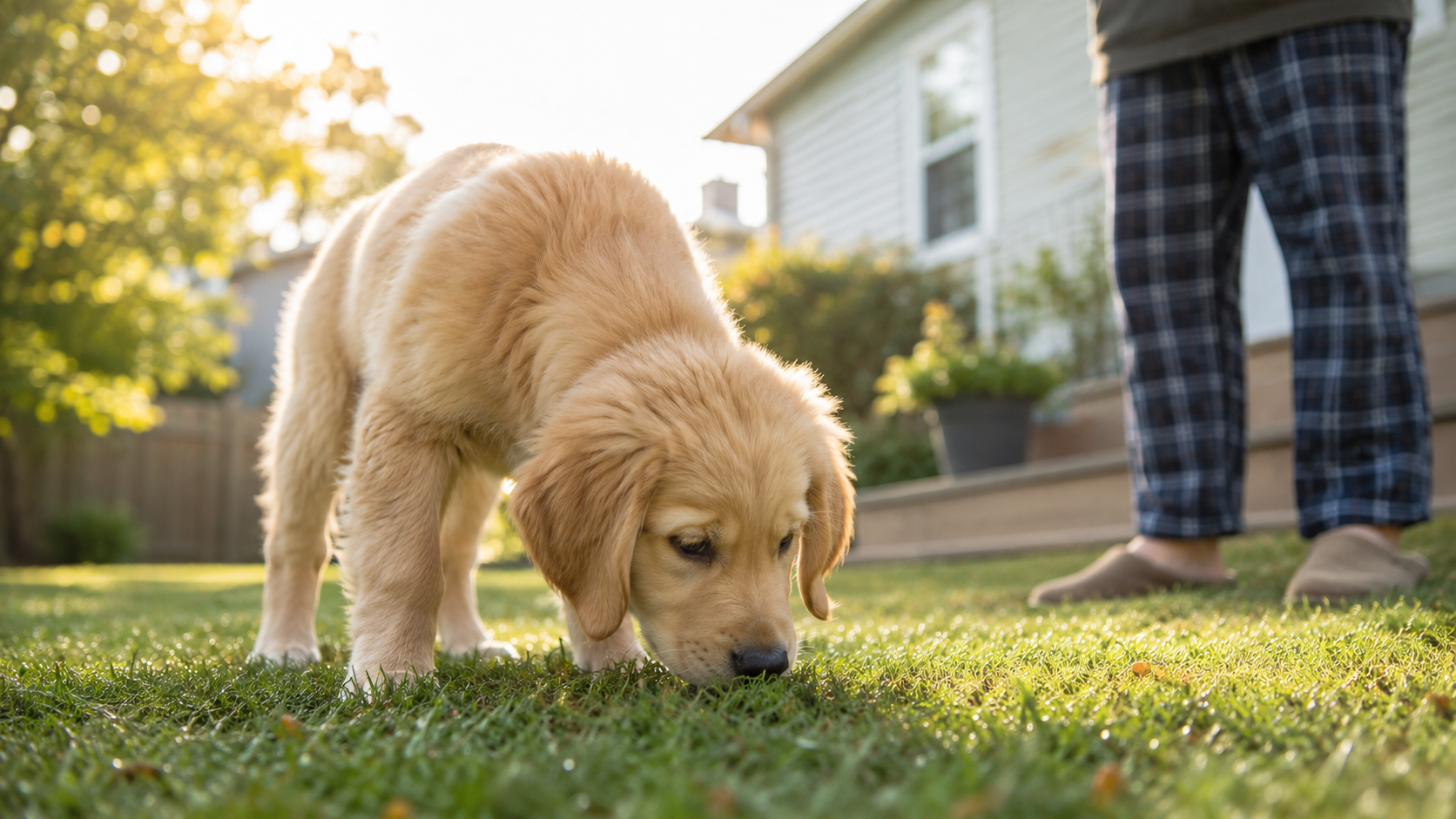
Puppies learn patterns. Use the same exit every time, and pick a specific area outside, like a corner of the yard, a mulch strip, or a small patch of grass. The more consistent you are, the faster the “Ohhhh, we are doing the bathroom thing” lightbulb turns on.
Step 2: Put pads on a schedule
When pads are available 24/7, some puppies decide that “inside is a bathroom.” That is the habit you are trying to retire.
- If your puppy currently has pads in multiple rooms, reduce to one pad location.
- Place the pad in an easy-to-clean area, away from food and sleep spots.
- Start offering the pad only when you cannot supervise, for example overnight for very young pups, or during a meeting if needed. Otherwise, the default becomes: outside first.
Step 3: Increase outdoor trips (at least a week)
The fastest way to ditch pads is to rack up a bunch of outdoor wins. For most puppies, the highest-success timing looks like this:
- First thing in the morning
- After every meal
- After every nap
- After play sessions or zoomies
- After a big drink of water
- Right before bed
- Plus “just because” trips every 60 to 120 minutes, depending on age
Helpful rule of thumb: many puppies can sometimes hold it up to about one hour per month of age, but that is not a reliable schedule for every puppy (or every situation). Excitement, recent water intake, stress, and new environments can shorten the window, so when in doubt, take them out sooner.
Some puppies are ready for the next step in a week. Others need two or three weeks of frequent trips before the habit feels solid. The calendar matters less than the streak of successes.
Step 4: Use a cue and be boring
Take your puppy out on leash, walk to the potty spot, stand still, and say your cue one time, like “Go potty.” Then wait. No chatting, no games, no scrolling. You are a polite statue.
When they go, reward big.
Step 5: Reward fast, then add a bonus
Timing matters. Treats should happen immediately after they finish, while you are still at the potty spot. Then give a “life reward” too: a short sniff walk, a minute of play, or freedom in the yard. This helps your puppy learn that potty does not end the fun, it starts it.
- High value treats: tiny pieces of chicken, cheese, or a training treat your puppy loves.
- Praise: warm and specific, like “Good potty outside!”
Step 6: Move the pad toward the door
If your puppy is very pad-attached, transition in smaller steps:
- Move the pad a few feet closer to the door every 1 to 2 days.
- Once the pad is right by the door, place it outside the door (patio, balcony, or just outside the threshold) for a few days.
- Then place it directly on the outdoor potty spot.
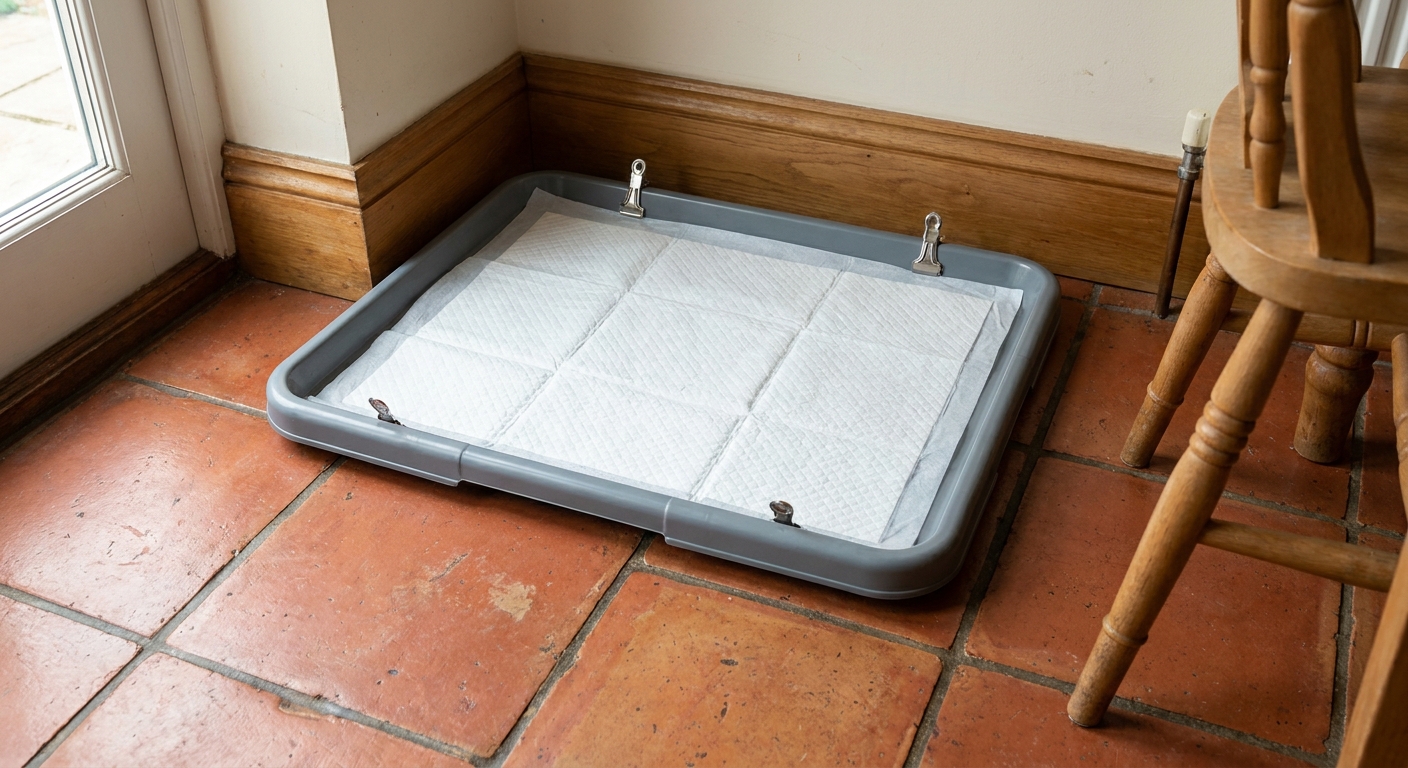
- Gradually reduce the pad area by folding, trimming, or swapping to a smaller pad. If your puppy shreds pads, use a holder or tray and avoid loose pieces.
This method is slower, but it works well for puppies who struggle when the “bathroom” disappears overnight.
Step 7: Remove pads once outside wins are steady
When your puppy is choosing outside most of the time for several days in a row, it is time to commit.
- Pick up the pads.
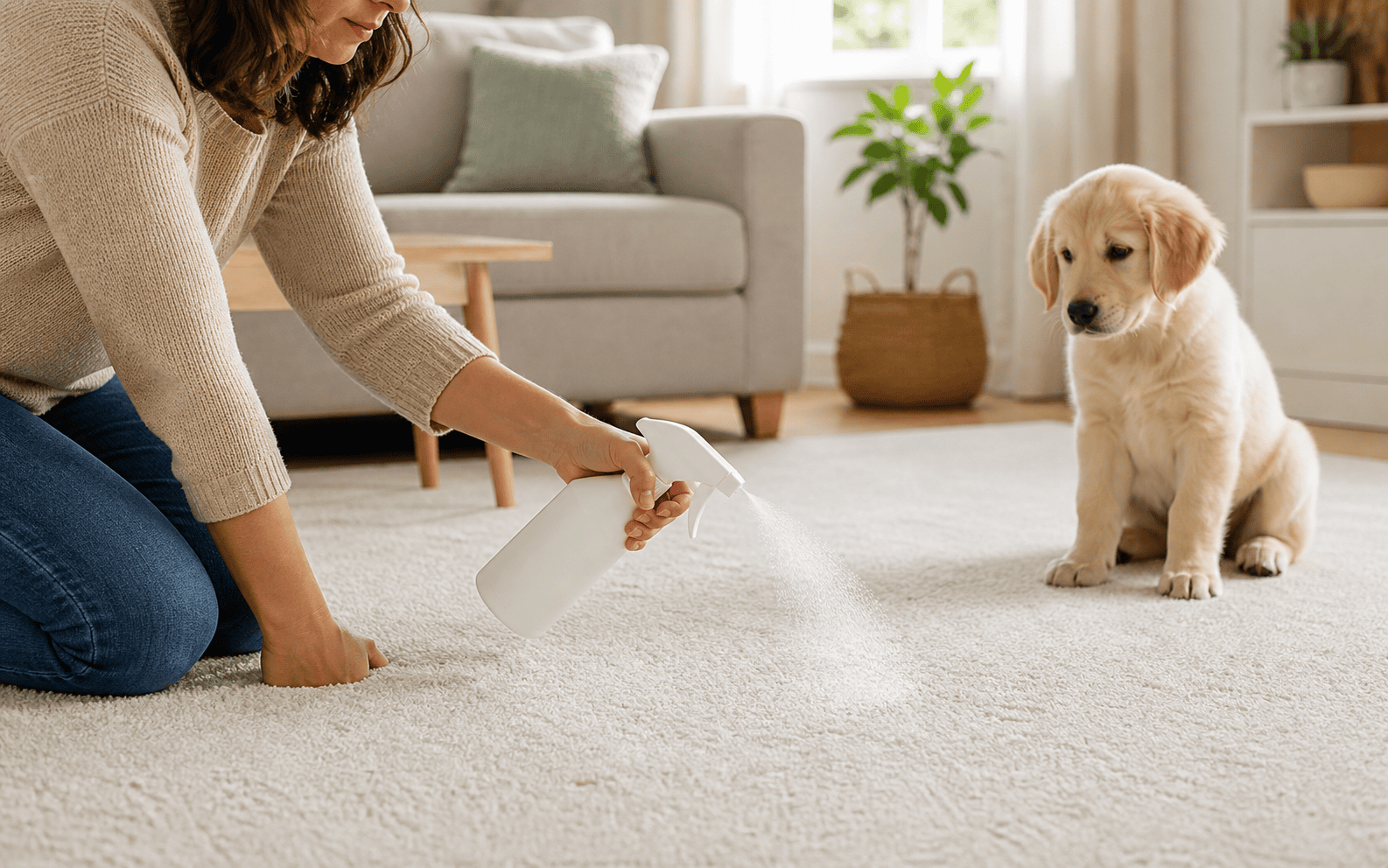
- Deep clean any previous indoor potty spots with an enzymatic cleaner (regular cleaners often leave behind scent cues).
- Increase supervision for a few days so your puppy does not go looking for the old option.
Outdoor scent help
If your puppy seems unsure what the outdoor spot is for, a little scent can help connect the dots.
- Keep the spot consistent: Same patch of grass or mulch each time helps the smell build up naturally.
- Optional boost: For the first few days, you can place a small piece of soiled paper towel from a cleaned-up accident (or a tiny pad scrap) on the outdoor potty spot, then remove it after your puppy sniffs and goes. Wash your hands and dispose of it safely. Skip this if you cannot do it hygienically, or if your puppy will eat it.
- Do not overclean outdoors: You do not need to sanitize the potty patch. You want it to smell like the bathroom.
Sample daily schedule
Here is a sample rhythm for a typical puppy day. Adjust to your life, but keep the pattern consistent.
- Wake up: straight outside (carry if you must)
- Breakfast: eat, then outside 5 to 10 minutes later
- Play: 10 to 20 minutes, then outside
- Nap: outside immediately after waking
- Afternoon: outside every 60 to 120 minutes, plus after water chugging
- Dinner: outside afterward
- Evening: outside after play, after training, and before bed
If you are crate training, the crate helps a lot here because it prevents sneaky corner accidents and encourages pups to hold it until you can take them out.
Common hiccups
They hold it outside, then pee inside
- Stay outside a little longer, but keep it boring.
- If they do not go within 5 to 10 minutes, bring them in for 2 to 3 minutes of supervised time, then go right back out.
- Use the crate for a short reset (5 to 10 minutes), then try again. This prevents an indoor “oops” between attempts.
They keep going where the pad was
- Enzymatic clean that spot thoroughly.
- Block access temporarily with a gate, furniture, or a playpen.
- Add an extra potty trip right around the time accidents usually happen.
They shred pads
- Switch to a pad holder or tray so it is harder to shred.
- Offer appropriate chew options and rotate them.
- Supervise when the pad is available, or skip pads and use a crate and outdoor trips instead if safe for your situation.
Apartment life makes timing hard
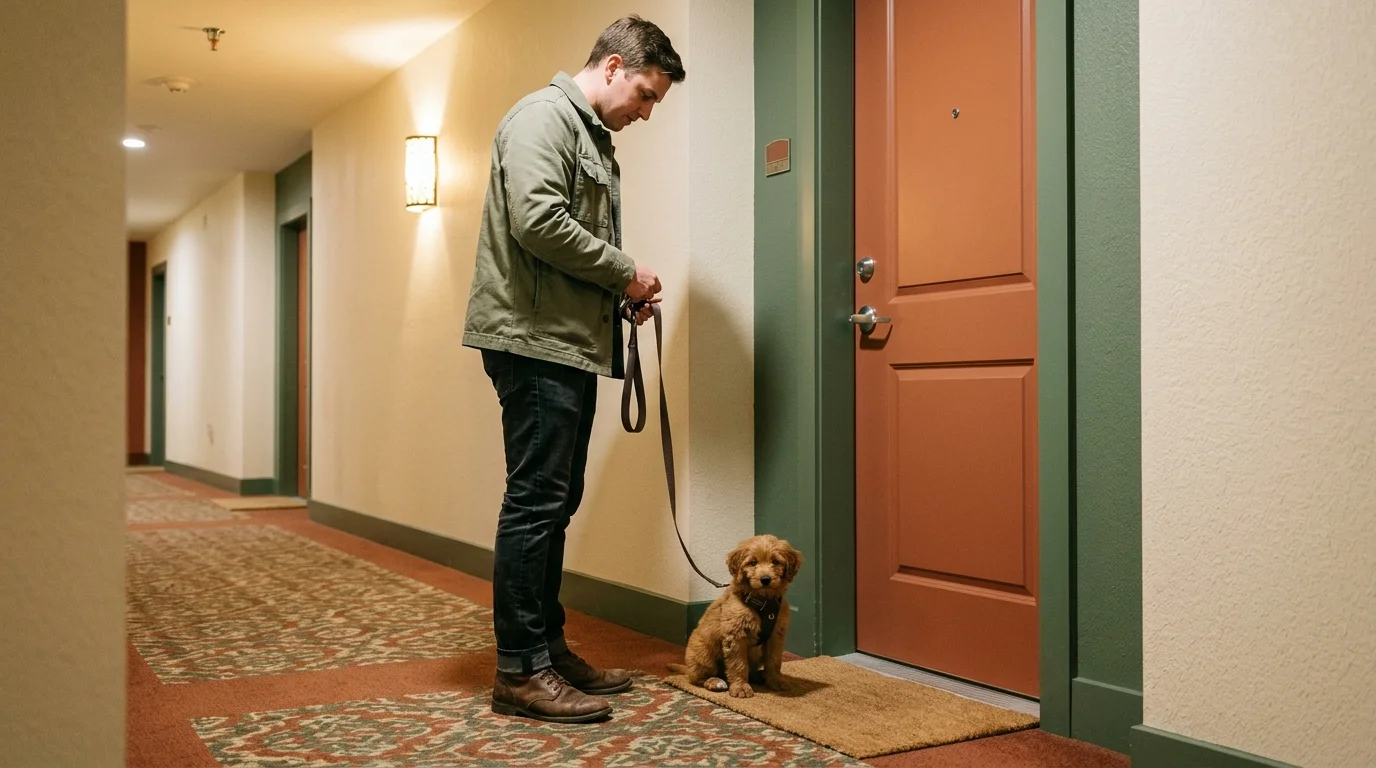
- Practice “potty sprints” with leash, keys, and treats staged by the door.
- Carry small puppies to the potty spot to prevent accidents in the hallway or elevator.
- Pick one outdoor spot and make it the bathroom, even if it is not glamorous.
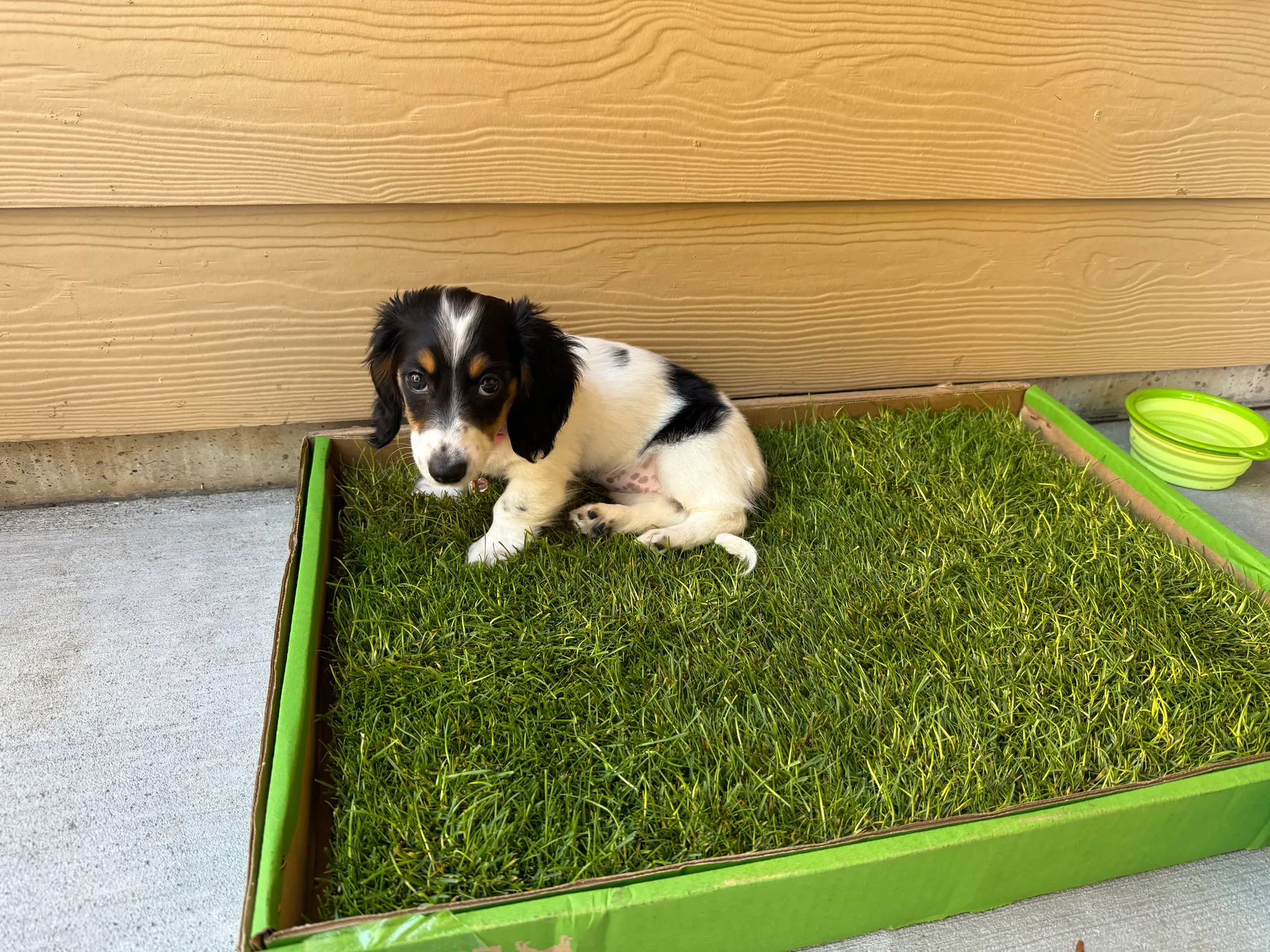
- If you use an indoor emergency option (like a porch potty or turf), treat it as a stepping stone and keep it in one consistent place.
They seem scared to go outside
Some puppies get spooked by wind, cars, or nighttime shadows. Keep it gentle.
- Choose a quieter potty spot and go at calmer times when possible.
- Bring extra good treats just for being outside.
- Do short, neutral trips rather than long stressful ones.
- If fear is intense or getting worse, loop in your vet or a qualified trainer.
Accidents
It is frustrating. Still, the response is always the same:
- If you catch them mid-stream: calmly scoop them up and take them outside. If they finish outside, reward.
- If you find it after: say nothing to your puppy. Clean with enzymatic cleaner.
- Then adjust the plan: more frequent potty breaks, tighter supervision, or a smaller safe area indoors.
Scolding does not teach “outside.” It teaches “do not pee in front of my human,” which can create sneaky accidents and anxious puppies.
Health red flags
If potty training is suddenly getting worse or never improves despite a solid routine, check in with your vet. Training can only do so much if something physical is going on.
- Straining to pee or poop
- Blood in urine or stool
- Very frequent urination or accidents that feel out of character
- Vomiting, diarrhea, or a painful belly
- Sudden regression after a week or more of progress
When it is working
You are in a great place when:
- Your puppy consistently potties outside on the first or second trip
- Accidents are rare (think: once a week or less, then fading out)
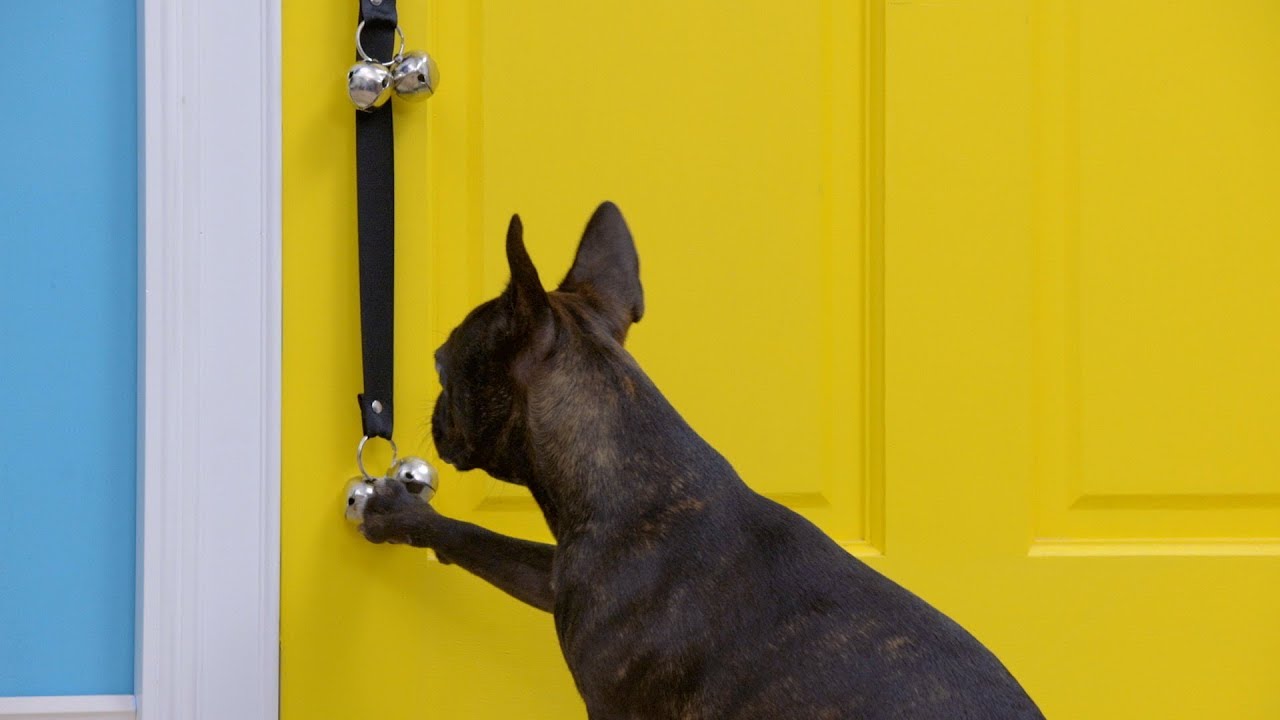
- Your puppy starts signaling they need to go (hovering by the door, whining, ringing a bell if you trained one)
Even after things feel solid, keep rewarding outdoor potty for a while. Treating for a few weeks after the last accident helps protect a habit that is worth keeping.
FAQ
How long does it take?
Many puppies make big progress in 1 to 3 weeks, but full reliability can take longer depending on age, schedule, fearfulness outdoors, and how long pads were used. Faster is not always better if it creates confusion.
Should pads stop all at once?
Some puppies do great with a clean break, especially if you can supervise closely and take frequent outdoor trips. If your puppy is very pad-reliant or you live in a high-rise, the gradual “move the pad toward the door” method is often smoother.
Do potty training sprays help?
They can help a little by encouraging sniffing in the right spot, but they are not a substitute for timing, supervision, and rewards. If you try one, pair it with your cue and immediate reinforcement.
My puppy only pees on pads, not poop
Pooping usually has a pattern. Track when it happens (often after meals or play), then take your puppy out right before that window and wait them out. Reward heavily when they poop outside and give a little decompression sniff time after.
Consistency wins
You do not need to out-stubborn your puppy. You need a routine that makes outside potty the easiest, most rewarding option. Stack up small wins, keep the schedule predictable, and forgive the occasional slip-up. Your puppy is learning a whole new rulebook with a brain that is still very much in the “ooh, leaf!” stage of development.