Apartment potty training is its own sport. You have distance, doors, elevators, neighbors, weather, and a puppy who believes gravity is optional. The good news is that puppies do not need a yard to become reliably housebroken. They need clear rules, predictable timing, and a fast route to the potty spot.
This guide walks you through an apartment-friendly plan I have used while fostering wiggly, high-energy pups in upstairs units. We will keep it simple, realistic, and kind to your sanity.
What changes in an apartment (and why accidents happen)
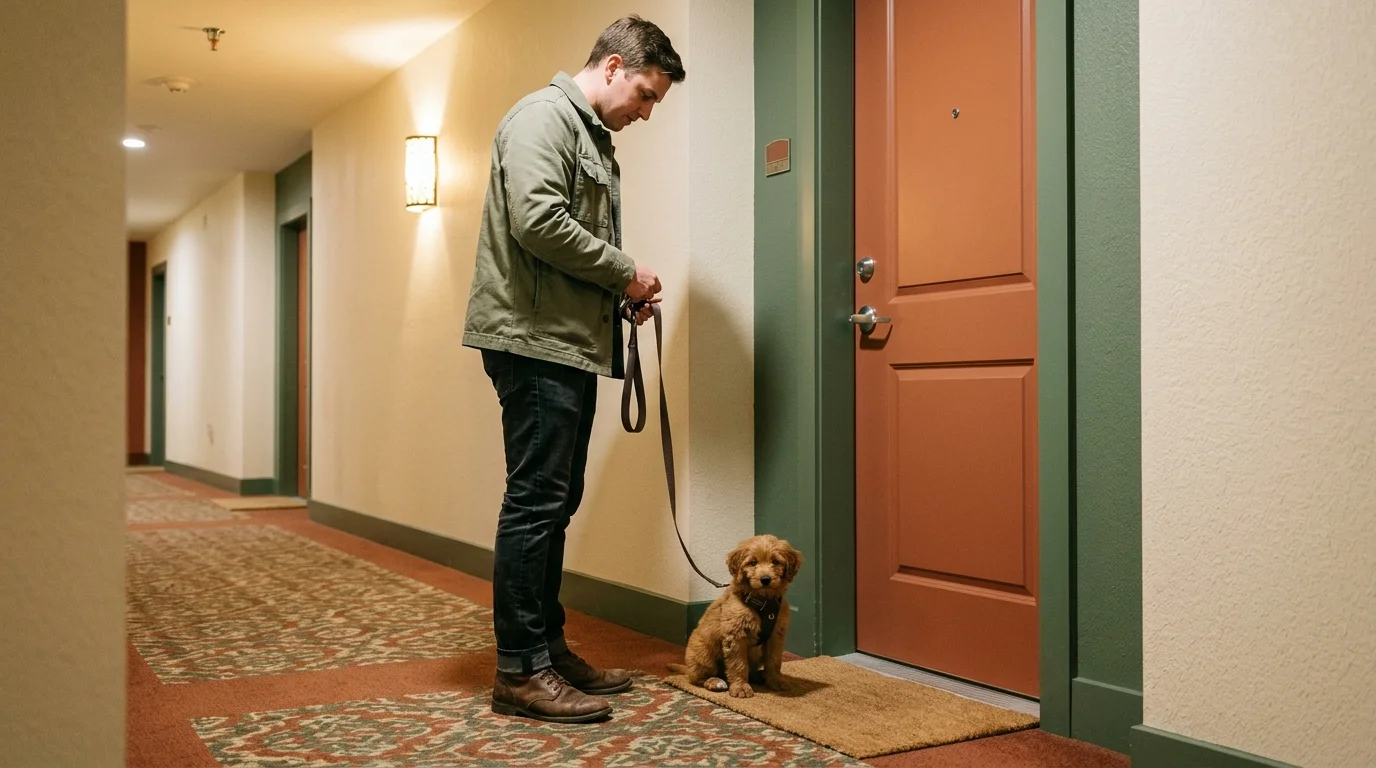
In a house, many people can scoop a puppy straight into the yard in 10 seconds. In an apartment, that same trip might take 2 to 6 minutes, and those minutes matter.
- Distance delay: Leash, keys, elevator, lobby, sidewalk. A puppy can go from "fine" to "too late" in one hallway.
- Distractions: People, dogs, noises, and smells can interrupt potty time.
- Fewer chances to notice: If your puppy is roaming, you may miss the tiny signals.
- Accidents can feel bigger: Carpets, neighbors, and shared spaces add pressure.
The solution is not harsher rules. It is a tighter routine and fewer opportunities to make a mistake.
Pick your potty plan: outdoors only or hybrid
You have two workable paths. The best choice depends on your schedule, your building setup, and your puppy's age.
Option A: Outdoors only
This is the cleanest long-term plan if you can get outside frequently, especially during the first 2 to 4 weeks. You will still want an emergency backup for storms or illness, but your main message is consistent: potty happens outdoors.
Option B: Hybrid (outdoors + an indoor station)
This is common for high-rises, long elevator waits, tiny puppies, or owners with limited mobility. You use an indoor potty station as a bridge, not a forever crutch (unless you truly need it long-term, which is okay).
Best indoor station choices:
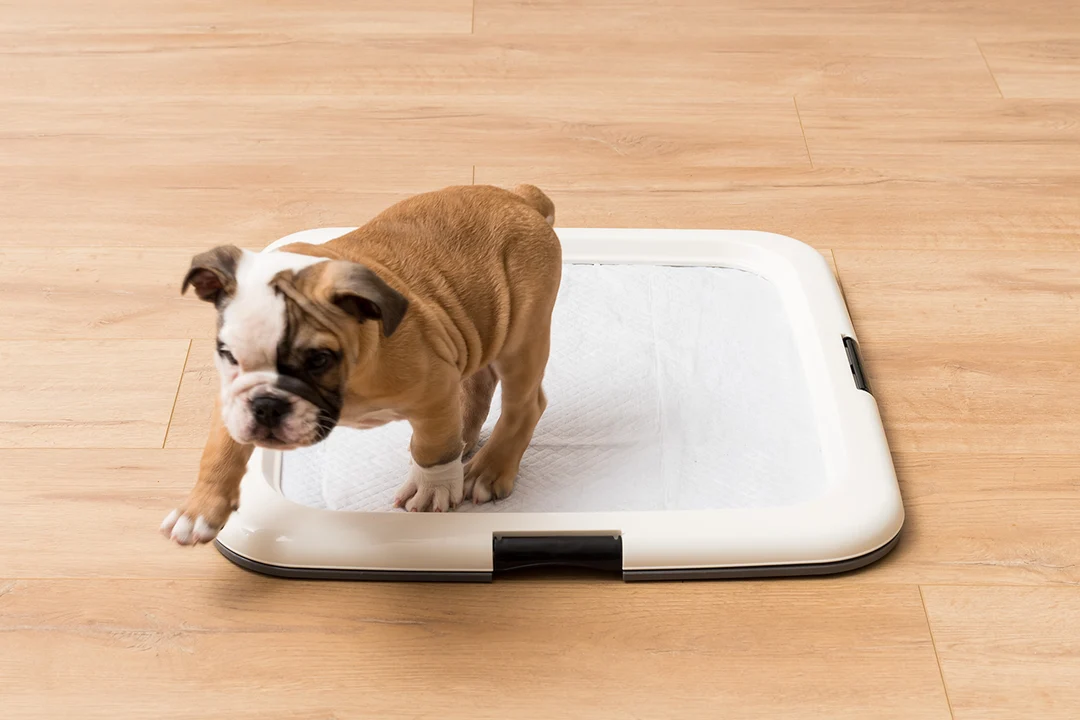
- Disposable pads in a holder (helps prevent pad shredding and tracking).
- Washable pee pad (more eco-friendly, still needs frequent washing).
- Dog litter box (surprisingly effective for some small breeds).
- Grass patch on a balcony (only if allowed and safe, with a drainage and cleaning plan). Check your lease, HOA rules, and building policies before setting up anything on a balcony or shared outdoor space.
Avoid: placing pads all over the apartment. That teaches "potty can happen anywhere." One spot only.
The apartment setup that makes training faster
Before you obsess over schedules, set up the environment so your puppy is either supervised or safely confined. This prevents silent accidents that slow everything down.
1) Use the puppy triangle: crate, playpen, potty spot
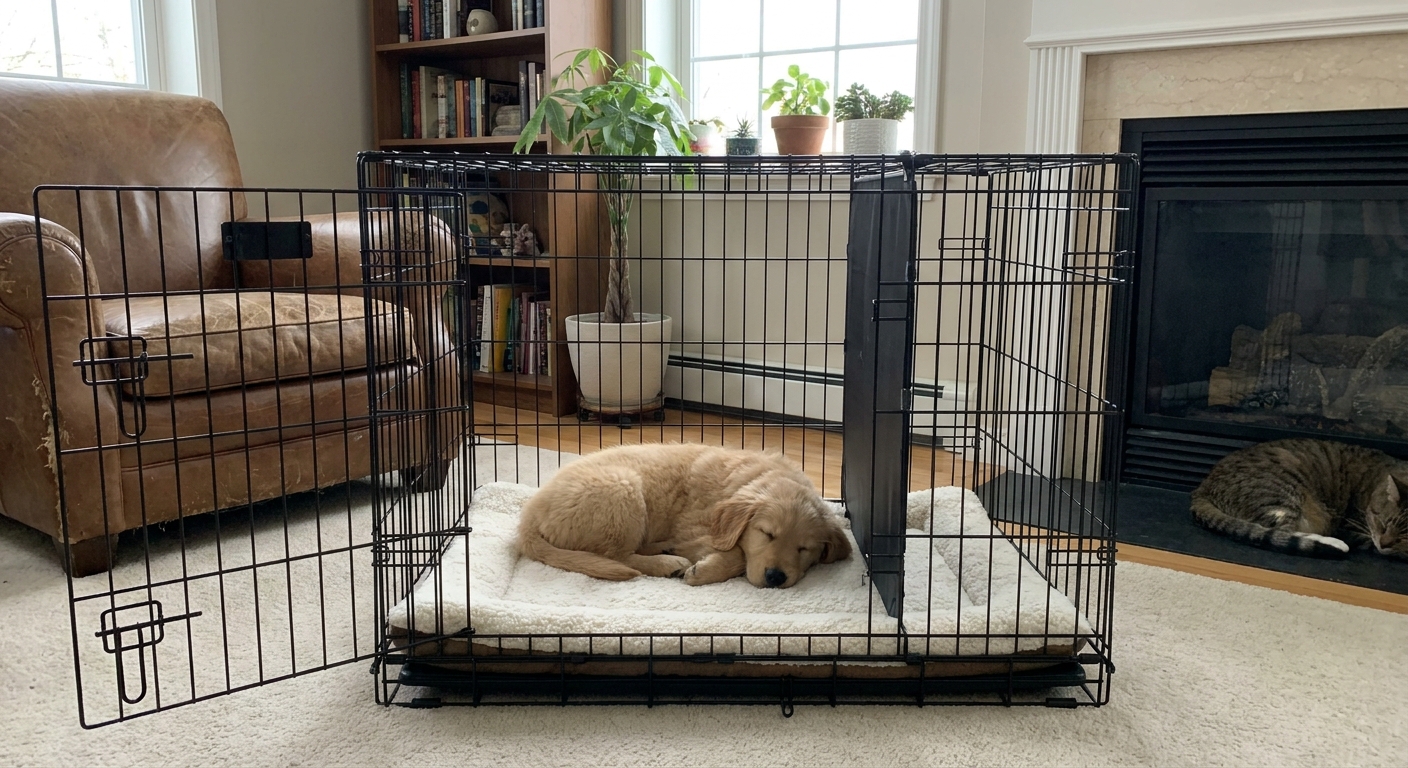
- Crate: for naps and short downtime. Most puppies avoid soiling where they sleep if the crate is the right size.
- Playpen or gated area: for awake time when you cannot actively watch.
- Potty spot: an outdoor location and/or an indoor station.
2) Block off rugs at first
Soft surfaces feel like grass to many puppies. If you can, roll up rugs for a few weeks. If you cannot, supervise like it is your job.
3) Stage your exit like a fire drill
Apartment success is about speed. Create a "go bag" by the door:
- Leash and harness
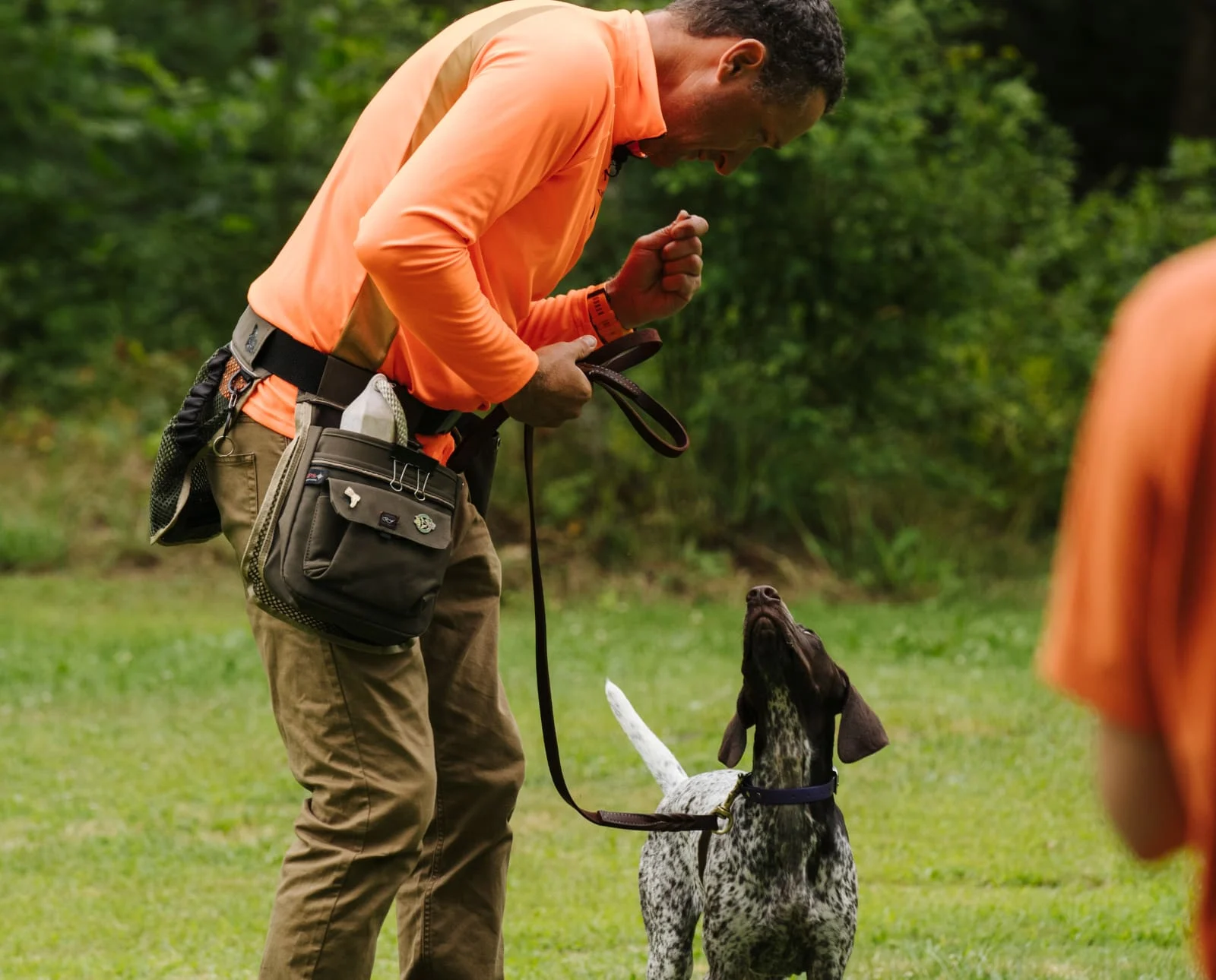
- Treat pouch with high-value treats
- Poop bags
- Paper towels and enzyme cleaner
- Slip-on shoes or sandals you can grab fast
How to tell they need to go
In apartments, the tiny signals matter because you have a longer runway to the potty spot. Common "I have to go" signs include:
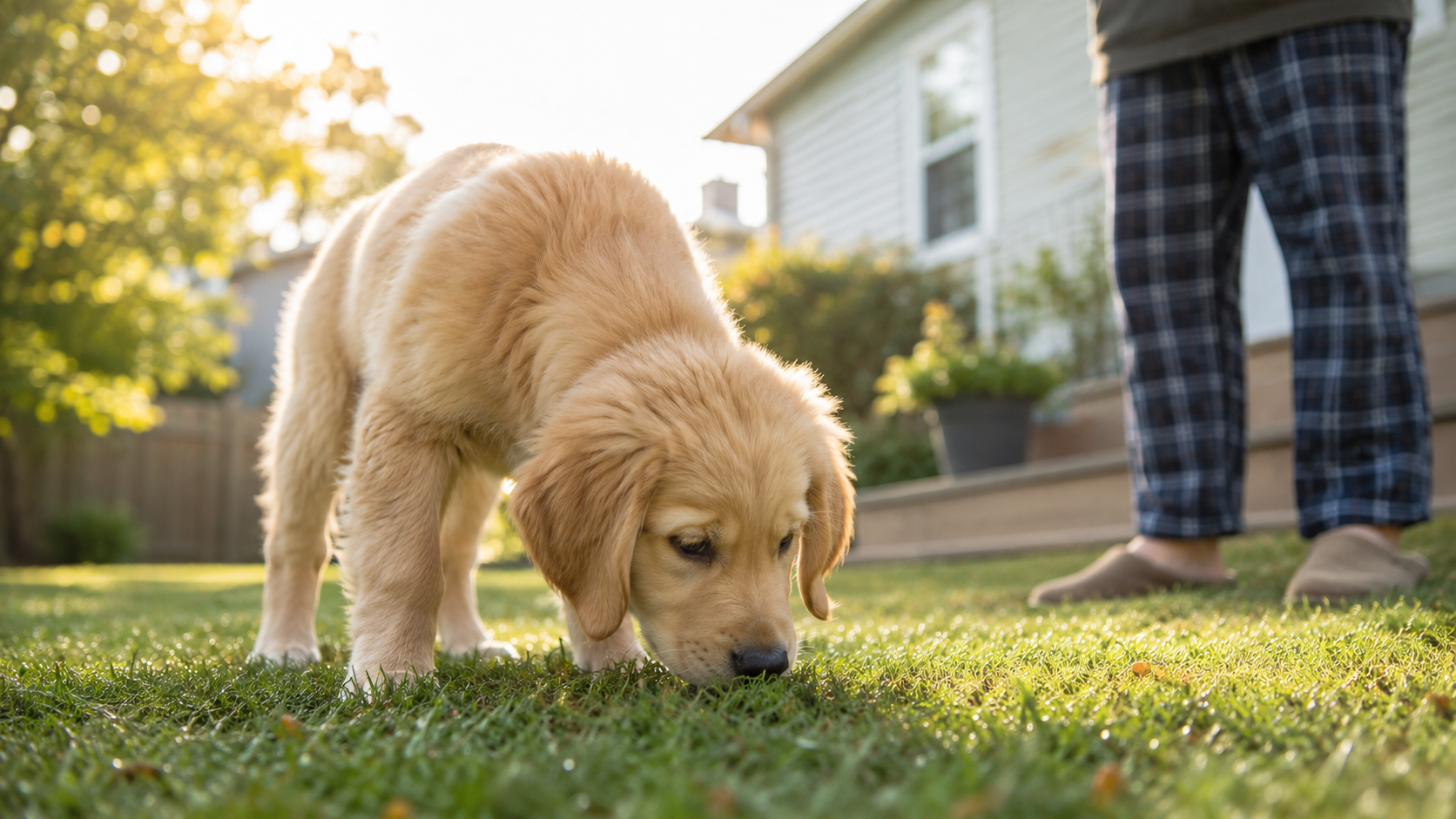
- Sudden sniffing or nose-to-floor vacuum mode
- Circling
- Wandering away from you or leaving play abruptly
- Heading toward the door or the pad area
- Restlessness after waking up (pacing, popping up and sitting back down)
If you see any of these, treat it like a now problem, not a soon problem.
Apartment potty schedule by age
These are starting points. Bladder capacity varies by size, breed, and the individual puppy, and training goes faster when you err on the side of more trips early on.
General timing rule
Take your puppy out:
- Right after waking
- After eating (often within 5 to 30 minutes)
- After drinking a lot
- After play
- After training excitement (yes, even sit-stay can trigger a pee)
- Before crating and right after uncrating
Suggested trip frequency
- 8 to 10 weeks: every 30 to 60 minutes when awake, plus 1 to 3 night trips
- 10 to 12 weeks: every 60 to 90 minutes when awake, plus 1 to 2 night trips
- 3 to 4 months: every 90 to 120 minutes when awake, possibly 0 to 1 night trip
- 4 to 6 months: every 2 to 4 hours when awake (training still needs structure)
Remember: elevators and hallways add time. If it takes you 3 minutes to get outside, treat it like your puppy needed to go 3 minutes earlier.
Your step-by-step potty trip routine (keep it boring)
Puppies learn fastest when the routine is predictable and low-drama.
Step 1: Leash up and go straight to the potty spot
No hallway greetings, no lobby social hour. You can be friendly after the potty happens.
Step 2: Stand still and give one cue
I use “go potty” in a calm voice. Then I wait. Sniffing is part of the process.
Step 3: Reward like you mean it
The second your puppy finishes, say “yes” or “good,” then deliver a treat. Outdoors only, reward outdoors. This is how your puppy learns that potty outside makes great things happen.
Step 4: Add a tiny freedom bonus
If your puppy potties, they earn 2 to 5 minutes of relaxed sniffing or a short walk. If they do not potty, we go back in and try again soon. This prevents "hold it so I get a longer walk" games.
The elevator and hallway strategy
These small tweaks can significantly reduce accidents and make your timing feel doable.
Carry your puppy when you can
If your puppy is small enough, carrying them to the elevator and down to the exit reduces excitement pees and sniff-stops. It also prevents lobby accidents that you will remember forever.
Teach a “let’s go” hallway hustle
Practice when your puppy does not urgently need to go:
- Say “let’s go”
- Take 3 to 5 quick steps
- Reward for following
This gives you a polite, fast movement pattern for real potty emergencies.
Choose one closest exit and one potty spot
Consistency helps your puppy understand the mission. Use the same door, same route, same patch of grass whenever possible.
Pee pads in apartments: how to do it without confusing your puppy
Pee pads can be a lifesaver, but they can also teach “soft stuff is for peeing.” If you use pads, make them very black-and-white.
Rules for pad success
- One pad location only, ideally on a hard floor.
- Use a pad holder to reduce shredding and tracking.
- Walk your puppy to the pad on leash at first, just like outdoors.
- Reward immediately after they go on the pad.
- Do not leave old pads down. Smell invites repeat business.
How to transition from pads to outdoors
Over 1 to 2 weeks:
- Move the pad closer to the door every few days.
- Then move it just outside the door (only if your building rules allow it).
- Finally, remove the pad and reward outdoor potty heavily.
If you cannot move the pad (high-rise hallway rules, weather, safety), you can still teach outdoors by keeping the pad as the emergency option and heavily reinforcing outdoor success whenever you can.
Nighttime potty training in a no-yard home
Night training is where apartment living can feel extra intense. Plan for it like you would plan for a newborn.
Crate placement matters
Keep the crate near your bed at first. You want to hear stirring before it becomes crying, spinning, and then an accident.
Make night trips all business
- Leash on
- Quiet cue
- No play, no chatting
- Back to bed
If you use an indoor station at night, keep it in one consistent location and still treat it like a calm, boring potty trip.
When can your puppy sleep through the night?
Many puppies start stretching sleep around 12 to 16 weeks, but it varies. Smaller breeds often need overnight trips longer. If your puppy is waking regularly and soaking the crate, talk to your vet to rule out medical issues and double-check that the crate is the right size.
Health and safety for young apartment puppies
Apartment living usually means high-traffic potty areas where lots of dogs pass through. For young puppies who are still working through vaccines, follow your vet's guidance on parvo and other disease risks. In the meantime:
- Choose a lower-traffic potty spot if you can, even if it adds a little walking once your puppy is older.
- Avoid obvious dog congregation zones (building dog runs, popular corners, heavily used pet relief areas) until your vet says it is appropriate.
- Carry your puppy through the busiest areas when possible.
Accidents: what to do (and what not to do)
Accidents are information. They mean the schedule was too loose, the route was too slow, the puppy had too much freedom, or the signals were missed.
If you catch them mid-accident
- Interrupt gently with a calm “oops”
- Pick up or leash up immediately
- Go straight to the potty spot
- Reward if they finish there
If you find it after the fact
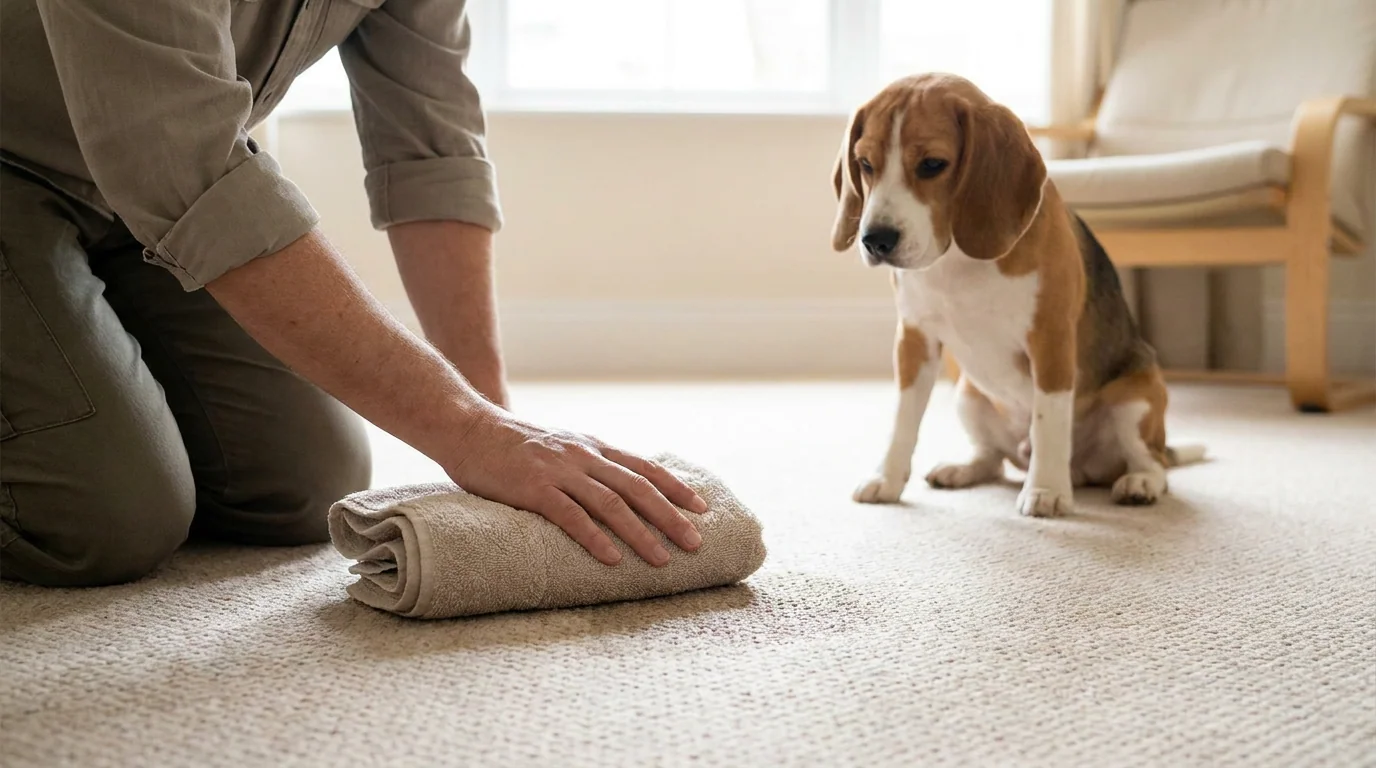
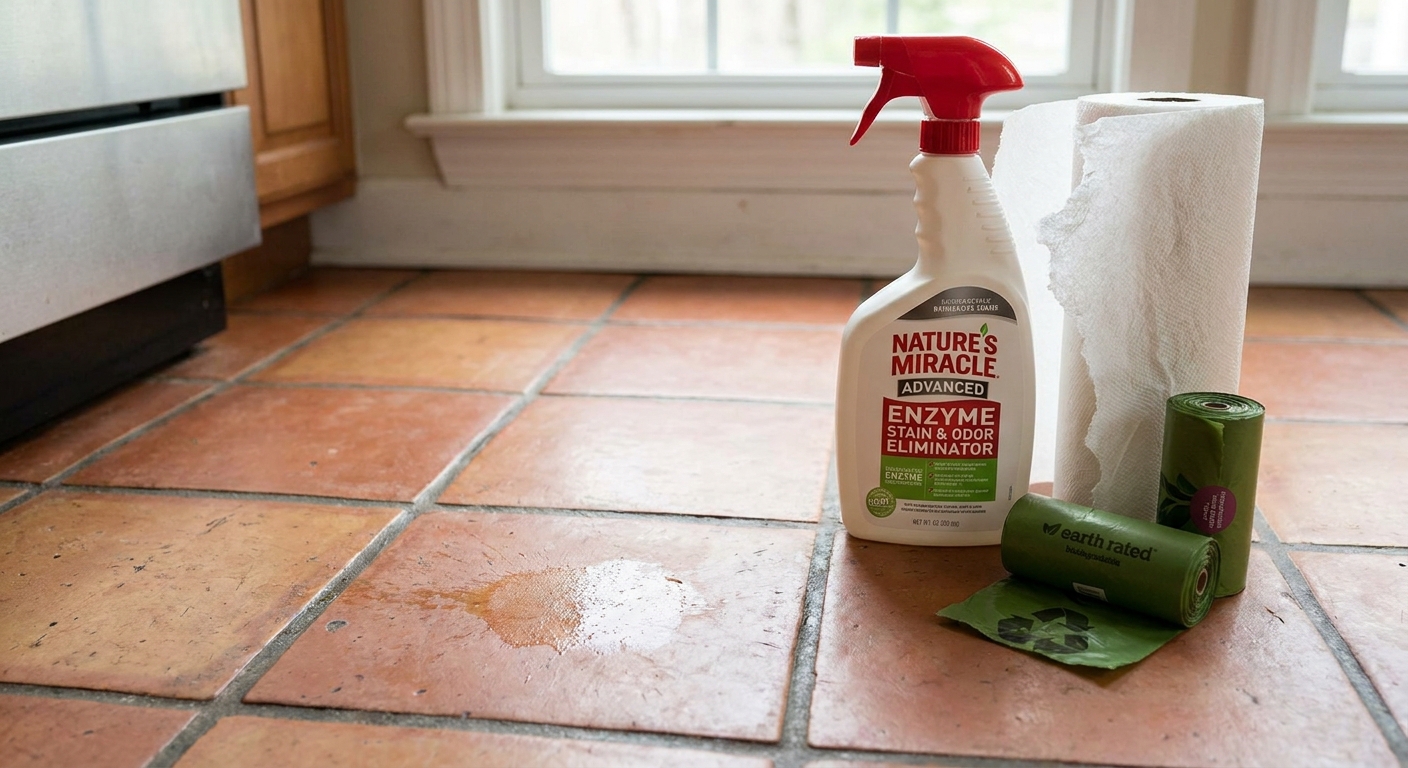
Say nothing to your puppy. Clean it thoroughly with an enzyme cleaner. Regular cleaners often leave scent behind, and puppies have impressive noses.
Absolutely skip
- Rubbing their nose in it
- Yelling
- Punishing after the fact
Punishment usually teaches one thing: hide from you to potty. That is the opposite of helpful in an apartment.
Indoor station hygiene
If you use pads, a litter box, or a grass patch, hygiene is what keeps it from turning into a smell problem and a repeat-marking magnet.
- Replace or wash frequently: change pads promptly and wash reusable pads on a hot cycle when the manufacturer allows it.
- Clean the surrounding floor: even good aim is still puppy aim.
- Use enzyme cleaner on misses: especially along baseboards and corners.
- For grass patches: follow the product cleaning instructions, rinse if directed, and stick to a regular replacement schedule so odors do not build up.
Troubleshooting apartment-specific problems
“My puppy pees as soon as we reach the lobby.”
- Take them out more often for a few days.
- Carry them through the lobby if possible.
- Do not stop for greetings until after they potty.
“They won’t potty outside because it’s loud.”
- Pick a quieter time of day for practice trips.
- Stand farther from traffic and slowly move closer over days.
- Bring high-value treats and keep sessions short.
“Bad weather makes everything fall apart.”
- Use a rain jacket for you and consider a puppy raincoat if they tolerate it.
- Choose a covered spot near the building if available.
- If you must use an indoor station temporarily, be consistent and return to outdoors as soon as possible.
“My puppy thinks the balcony is a bathroom.”
Close access for now. If you want a balcony potty setup, make it intentional with a single potty station. Random balcony access often creates random balcony accidents.
“They pee the second we get back inside.”
This usually means they were distracted outside. Try this:
- Go to the potty spot and stand still for up to 5 minutes.
- If no potty, return inside and crate for 5 to 10 minutes.
- Try outside again.
This prevents free-roam accidents and teaches that outside time has a purpose.
A simple sample schedule for apartment puppies
Adjust to your life, but keep the pattern.
Sample day (10 to 12 weeks)
- 6:30 AM wake up, immediate potty trip
- 6:45 AM breakfast, water
- 7:00 AM potty trip
- 7:15 AM play and training (supervised)
- 7:45 AM potty trip
- 8:00 AM nap in crate
- 9:30 AM potty trip, short walk sniffing bonus
- 10:00 AM playpen time with chew
- 10:45 AM potty trip
- 12:00 PM lunch (if feeding 3 meals), then potty
- Afternoon repeat cycle: potty after waking, eating, playing
- 9:30 PM last call potty trip
- Overnight 1 to 2 quick potty trips if needed
If you are thinking, “That is a lot,” you are right. The early phase is intense. The payoff is a puppy who understands the rules and gives you their adult freedom sooner.
Potty training tools that actually help in apartments
- Crate sized so your puppy can stand and turn around, not a studio apartment
- Playpen or baby gates
- Enzyme cleaner (non-negotiable)
- Treat pouch by the door
- Harness and leash for quick exits
- Pad holder if using pads
- Bells by the door (optional, only after your puppy is reliably going outside)
FAQ
How long does apartment potty training take?
Most puppies show big improvement in 2 to 4 weeks with a solid routine, but "reliably accident-free" often takes a few months. Apartment distance can slow the early phase, so be patient and stay consistent.
Should I use a pee pad in a high-rise?
If elevator time and distance make frequent outdoor trips unrealistic, a hybrid plan can prevent daily accidents. Just keep the pad in one location and treat it like a structured potty spot, not a free-for-all.
Is my puppy being stubborn when they pee inside?
Almost never. It is usually timing, freedom, or distraction. Puppies do what works in the moment. Our job is to make the right choice easy and rewarding.
When can I stop taking my puppy out so often?
When your puppy has been consistently clean for at least 2 weeks, you can widen the time between trips gradually. Increase by 15 to 30 minutes at a time, not by hours overnight.
One last apartment-friendly mindset shift
In the beginning, success is not “my puppy never has accidents.” Success is “I am preventing most accidents, and my puppy is practicing the right habit every day.”
Keep your route fast, your schedule boring, and your rewards generous. In a few weeks, you will realize you have not cleaned up an accident in days. That is the moment apartment living starts feeling easy again.