Why puppies pee in the same spot
If your puppy has decided that one corner of the rug is their personal restroom, you are not imagining things. Dogs experience the world through scent, and urine odor is like a bright neon sign that says, “Bathroom this way.”
Even when you cannot smell anything anymore, your puppy often still can. If any trace of urine is left behind in carpet pad, floor seams, or fabric, your puppy may return and “refresh” the spot.
What is actually in pee (and why soap is not enough)
Puppy urine is more than just water. It contains:
- Urea and uric acid salts/crystals that cling to fibers and can re-activate with humidity
- Proteins and other organic material that bacteria love to snack on
- Bacterial byproducts that create that lingering “dog pee” smell over time
Regular cleaners may mask odor and clean the surface, but they often do not break down the components that keep the smell anchored in place.
Why enzymatic cleaners matter
An enzymatic pet cleaner uses enzymes (and sometimes beneficial bacteria) to digest the organic material in urine and feces. That is the key difference. Instead of covering odor with perfume, it removes what is causing the odor in the first place.
Enzyme cleaner vs. “pet odor remover”
Not every bottle with a cute paw print is truly enzymatic. Many are detergents with fragrance. Look for wording like enzymatic, bio-enzymatic, or instructions that mention letting the product sit to work. Enzymes need time, not elbow grease and a quick wipe.
Common mistakes that make enzyme cleaners fail
- Not using enough product. If the accident soaked into padding, the cleaner has to reach the same depth.
- Not waiting long enough. Some products work in 10 to 15 minutes, but many need longer contact time or full air-drying. The label is the boss.
- Using heat too soon. Hot water, steam, and high heat drying can make some residues bind, can push moisture deeper, and can intensify odor as it warms up.
- Mixing chemicals. Bleach, ammonia, and some disinfectants can deactivate enzymes and create unsafe fumes.
- Rubbing. Scrubbing pushes urine deeper and spreads it wider, especially on carpet and upholstery.
The exact cleanup process (the one I use with fosters)
When you are tired, it is 2 AM, and your puppy just peed in the hallway again, you want a routine you can do on autopilot. Here it is.
Step 1: Blot, do not scrub
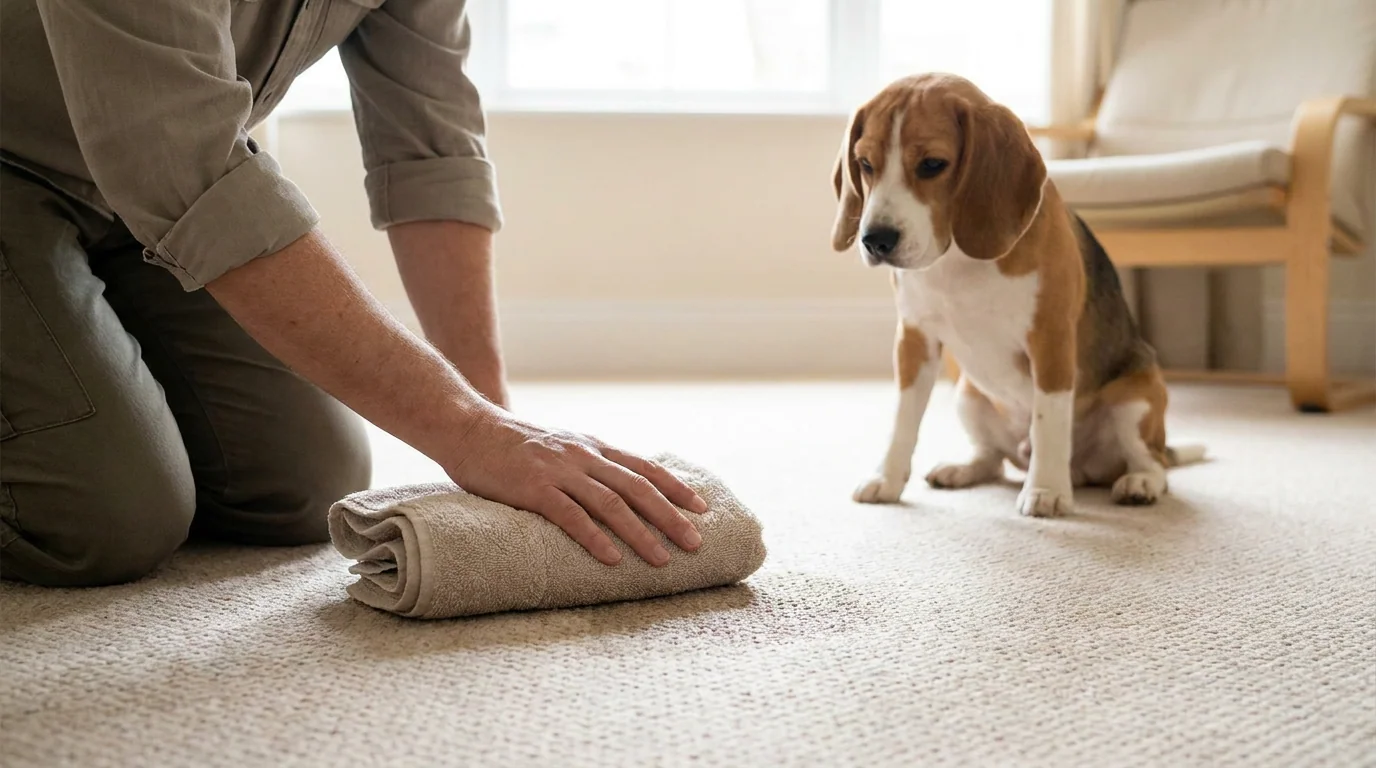
Grab paper towels or an old absorbent towel. Press straight down with your body weight, then lift, move to a dry area, and repeat.
- If it is fresh pee, keep blotting until the spot is barely damp.
- If it is poop, pick up solids first, then blot any moisture.
Tip from the trenches: Stand on a thick stack of paper towels. Your feet do the work and you stay less grumpy.
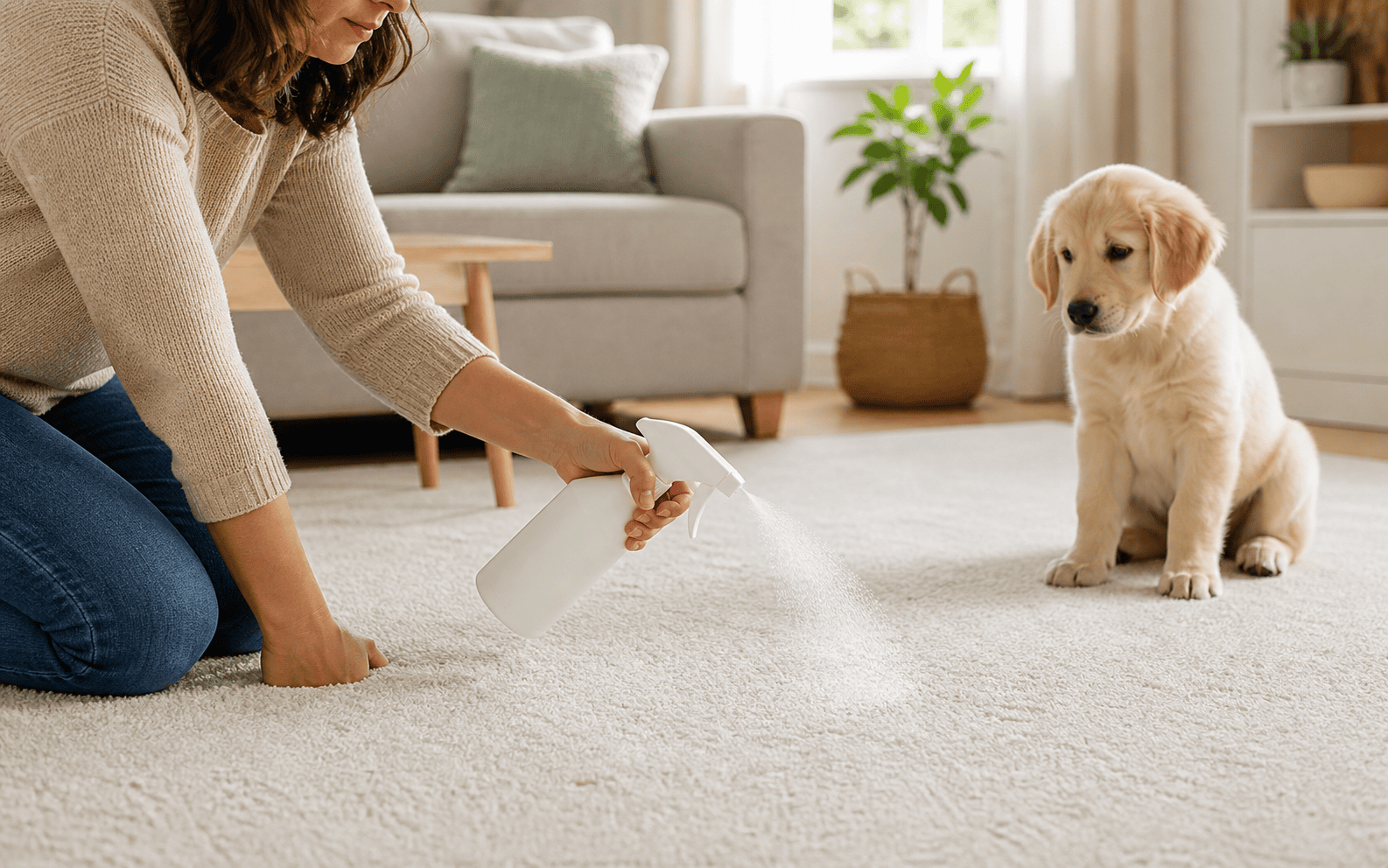
Step 2: Apply enzymatic cleaner generously
Soak the affected area with enzyme cleaner. On carpet, that usually means applying beyond what you can see. Urine spreads.
- Carpet rule: Treat at least 2 to 3 inches past the edge of the visible spot.
- Deep soak rule: If the accident likely reached padding, you need enough cleaner to reach padding too.
Step 3: Let it dwell (follow the label)
Check the label first. For many products, a safe general starting point is 10 to 15 minutes for a fresh accident, but some cleaners work best with longer dwell time or by fully air-drying without blotting.
If your cleaner’s directions say “do not blot” or “let air dry,” do that. If it recommends extraction, do that. Enzymes often work while the area stays damp and as it dries.
Step 4: Blot or extract (only if the label allows), then air dry
After dwell time, blot up excess liquid if your product directions allow it. Then let it dry completely. You can speed drying with a fan. Avoid heat.
If you use a wet/dry vac or carpet machine for extraction, do it only if the enzyme cleaner label says extraction is compatible.
Step 5: Block access until it is fully dry
This part is boring and it matters. If your puppy revisits the damp spot, they may top it off with a “just in case” pee.
- Close a door
- Use a baby gate
- Flip a laundry basket over the area
Quick safety note
Ventilate the area if you can, and keep pets and kids away while the spot is wet. Do not let your puppy lick treated surfaces.
Surface-by-surface instructions
Different materials need slightly different handling. Here is how to do it without accidentally making the smell permanent.
Carpet and rugs
- Blot thoroughly first.
- Saturate with enzyme cleaner deep enough to match how far the urine traveled.
- Let it dwell based on the label.
- Blot or extract only if directed, then air dry completely.
For repeat accidents on the same spot: You may be dealing with urine in the pad or subfloor. In that case, you often need multiple rounds, or you may need to pull back the rug and treat from both sides if possible.
Hardwood, laminate, and vinyl floors
These surfaces seem easy, but pee can sneak into seams and edges.
- Wipe up immediately.
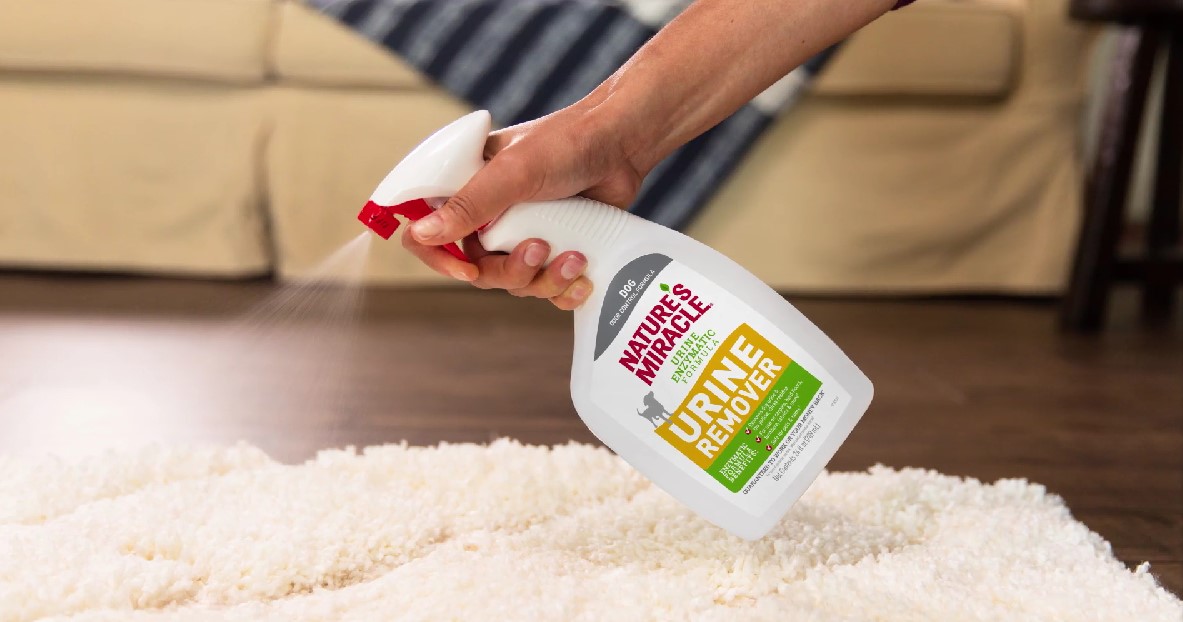
- Spray enzyme cleaner and let it sit the recommended time.
- Wipe dry promptly and keep the area dry.
Important: Do not flood hardwood or laminate. Use enough cleaner to reach cracks, but do not let liquid pool. When in doubt, follow your flooring manufacturer guidance for moisture exposure and cleaning products.
Tile and grout
Tile itself is usually fine. Grout is the troublemaker because it is porous.
- Apply enzyme cleaner and let it dwell.
- For grout lines, a soft brush is okay after dwell time if needed.
- Wipe up and rinse lightly if the label allows.
Couches, dog beds, and upholstery
Fabric holds odor beautifully, which is not a compliment.
- Blot first.
- Test enzyme cleaner on a hidden spot to be sure it does not discolor.
- Saturate the affected cushion area as deeply as the pee went.
- Let it dwell, then blot or extract only if directed, and air dry with a fan.
If the cover is removable and washable, treat with enzyme cleaner first, then wash according to the fabric instructions. Skip high heat drying if odor is still present. Heat can lock in leftover residue.
Crate trays and plastic surfaces
- Wash with mild soap and water.
- Then apply enzyme cleaner and let it sit.
- Rinse and dry completely.
Plastic loves to hang onto smell in tiny scratches, so the enzyme step is what keeps the crate from smelling like “oops.”
What to avoid
Ammonia-scented cleaners
Dog urine starts as urea, which breaks down into ammonia as it sits. Strong ammonia-scented cleaners can smell urine-like to many dogs, and that can make a previously soiled area more interesting again. It is not guaranteed, but it is an easy variable to remove.
Steam cleaners on urine spots
Steam and high heat can worsen urine odor problems by driving moisture deeper, warming up odor compounds, and making some residues harder to remove. If you want to use a carpet machine, treat with enzymes first, let it work, and follow the product guidance on whether extraction is recommended.
“Just vinegar” as the main solution
Vinegar can help in a pinch, but it does not reliably break down uric acid salts/crystals. If your goal is “my puppy never uses this spot again,” enzymes are usually the heavy hitters.
Covering the spot with fragrance
Strong scents can fool humans, not puppies. If the pee smell is still there underneath, your puppy will find it.
How to find old accident spots
If accidents keep happening in “random” places, there is a good chance your puppy is revisiting a spot you did not fully treat.
- Use a UV flashlight at night. Dried urine often shows up under UV light, but some detergents and cleaners can also fluoresce, so use it as a clue, not a verdict.
- Check edges. Corners, furniture legs, rug borders, and near doors are common targets.
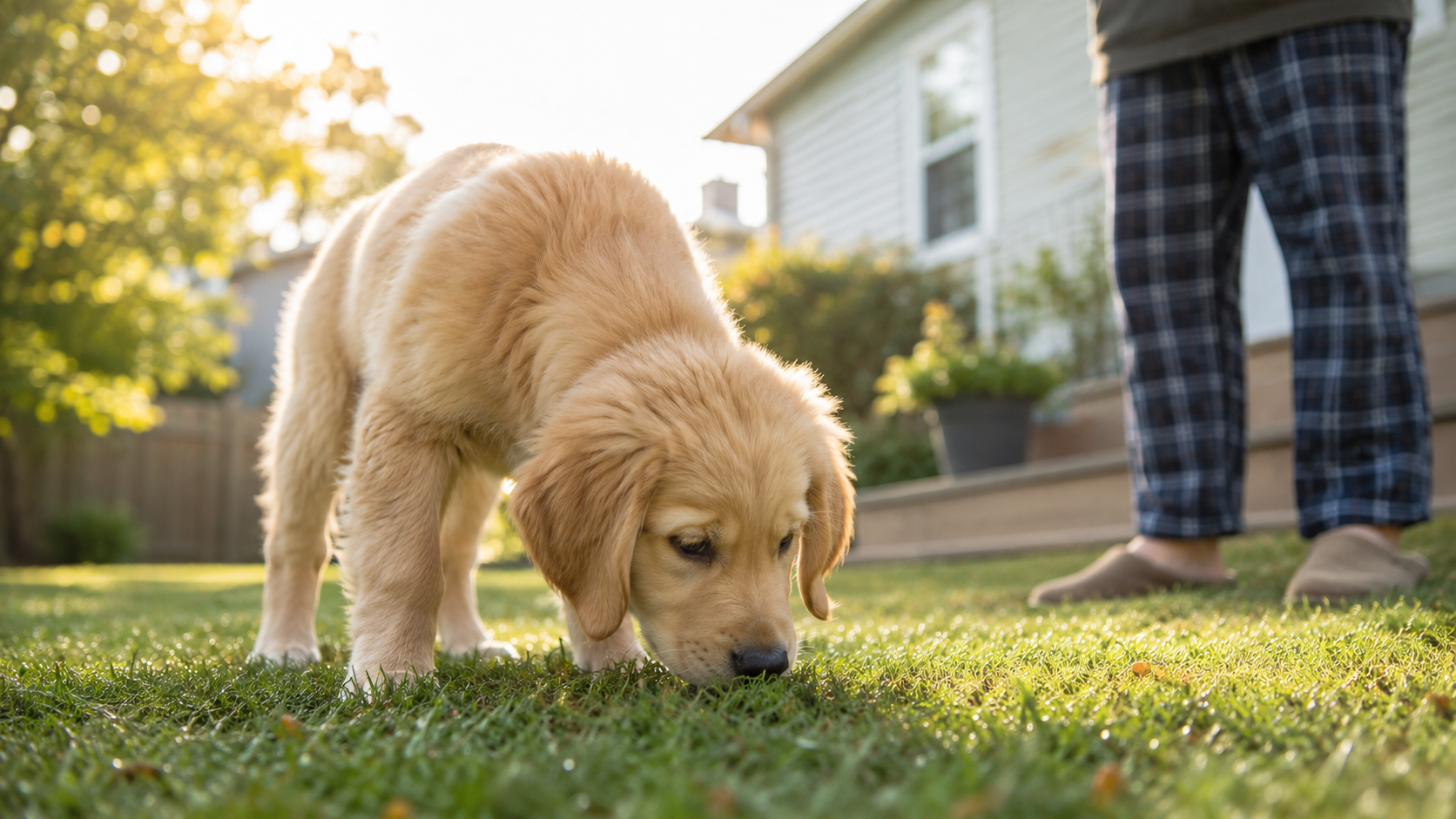
- Follow your puppy’s nose. If they suddenly get intense about sniffing one area, believe them.
After cleaning: stop the pattern
Cleaning removes the invitation. Training prevents the encore.
Reset supervision for a few days
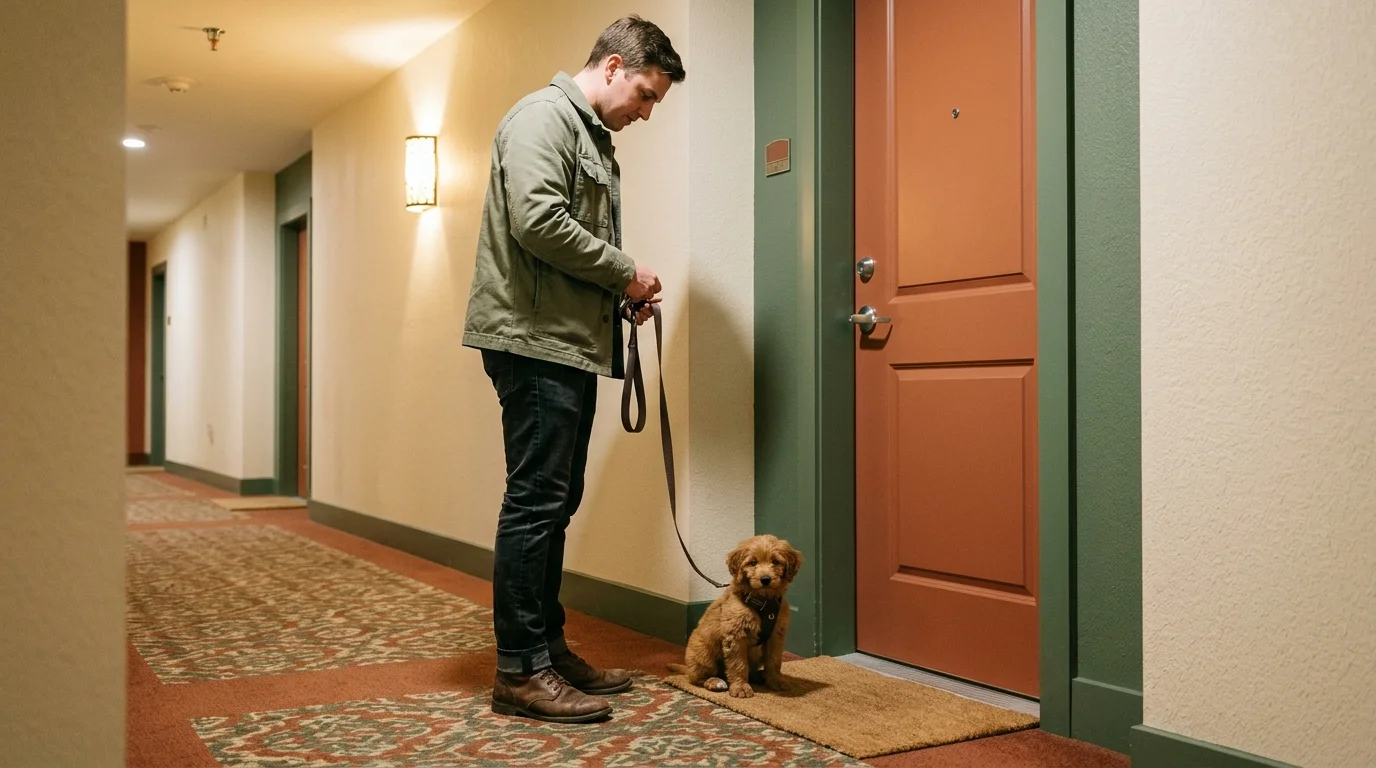
- Use a leash indoors if needed
- Close off problem areas with gates
- Stick to a predictable potty schedule
Hit the high-risk moments
If you want fewer accidents, take your puppy out:
- Right after waking up
- After eating or drinking
- After play sessions and zoomies
- After training, chewing, or exciting visitors
Make the old spot boring
Once fully cleaned and dry, avoid letting your puppy hang out and sniff there. Redirect to a toy or a short training game. The less time they spend investigating it, the faster the habit fades.
Reward outdoor potty like it is a life achievement
When your puppy goes in the right place, pay them immediately. Treat, praise, and a few seconds of happy attention. Puppies repeat what works.
When to call the vet
Most puppy accidents are simply puppy being puppy. But cleaning will not fix a medical issue. Call your vet if you notice:
- Sudden accidents in a previously reliable puppy
- Very frequent urination, urgency, or only tiny dribbles
- Straining, discomfort, or crying when trying to pee
- Blood-tinged urine or strong odor that seems unusual
- Excessive thirst or lethargy
FAQ
How long should enzymatic cleaner sit?
Follow the label. For many fresh accidents, plan on at least 10 to 15 minutes, but some products require longer dwell time or full air-drying to work correctly. The biggest mistake I see is rushing the process.
Do I have to soak the area or just spray the surface?
If pee soaked into carpet padding or fabric filling, the enzyme cleaner has to reach that depth to work. A light surface mist usually is not enough for carpet, rugs, couch cushions, or dog beds.
My puppy peed there again after I cleaned. Did the cleaner fail?
Not necessarily. It usually means one of three things: the urine went deeper than the cleaner reached, the area was not allowed to fully dry before the puppy revisited, or your puppy was due for a potty break and that spot was the most familiar option. Re-clean thoroughly and tighten supervision and potty timing for a few days.
Is it safe to use enzymatic cleaners around puppies?
Most pet-labeled enzymatic cleaners are designed for homes with animals, but always read the bottle. Keep your puppy away while the area is wet, and do not let them lick the surface. If your puppy has sensitive skin or allergies, choose a cleaner without added fragrance.
What if the smell will not go away?
If you have cleaned multiple times and the smell keeps coming back, it is often in the carpet pad or subfloor. At that point, you may need a deeper treatment from both sides, a pad replacement, or professional help. It is annoying, but it is also very normal in the puppy months.
My quick accident kit
If you build a little cleanup station now, you will thank yourself later.
- Enzymatic pet cleaner (the star of the show)
- Paper towels or absorbent cloths you do not love
- Disposable gloves (optional, but nice at 2 AM)
- Small trash bags
- Baby gate or something to block the area while it dries
- UV flashlight for hunting old spots
Puppy potty accidents are part of the deal, like tiny shark teeth and sudden silence that is always suspicious. The good news is that with the right cleaner and the right steps, you can remove the scent as thoroughly as possible and shut down the “same spot” habit before it turns into a routine.