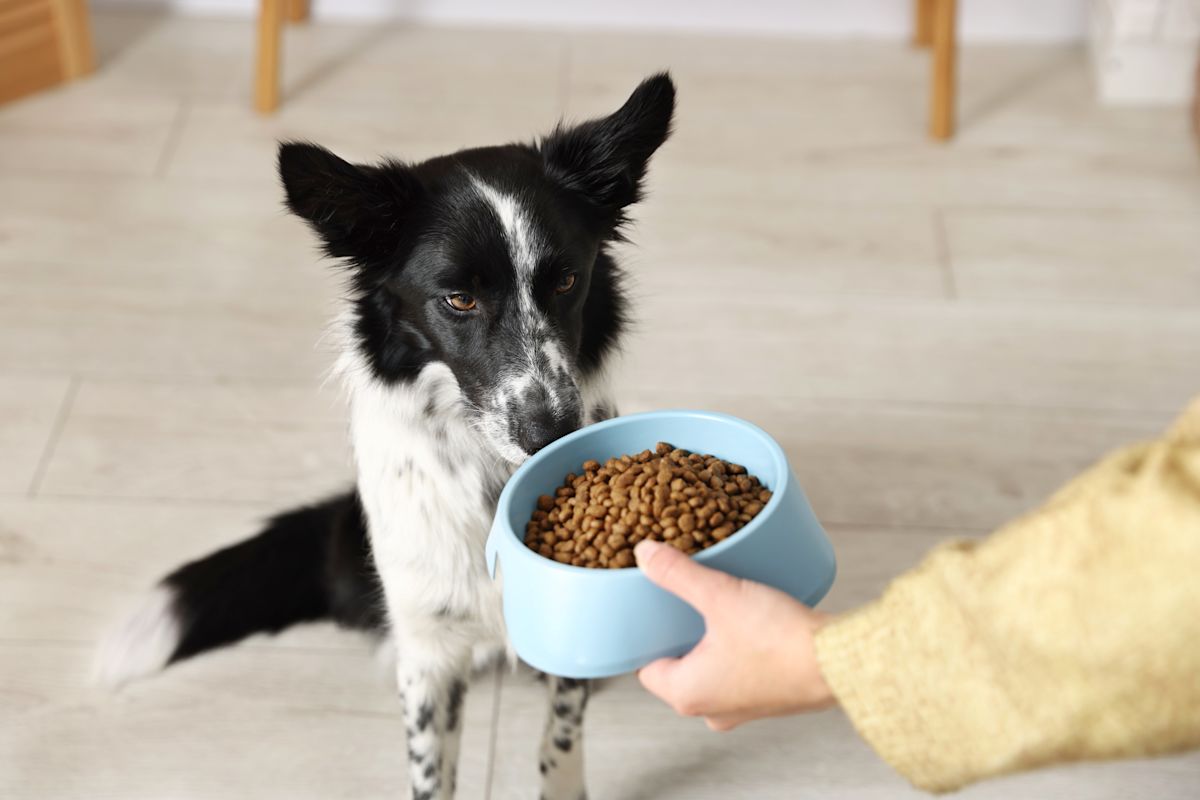

Feeding a puppy should be simple. Then you walk into the pet store (or open a dozen browser tabs) and suddenly you are choosing between dry kibble, canned wet food, refrigerated fresh meals, frozen raw patties, freeze-dried raw nuggets, and sprinkle-on toppers that promise to make your puppy read Shakespeare.
After fostering a whole parade of hungry little gremlins, here is what I have learned: most healthy puppies can thrive on more than one diet style, as long as the food is formulated to be complete and balanced for growth and you feed it consistently. The “best” choice is usually the one you can do safely, affordably, and long-term, without turning mealtime into a daily negotiation.
What matters in year one
Before we compare formats, let’s anchor on the big nutrition priorities for puppies. The first year is a rapid-growth sprint, which means small mistakes can matter more than they do in adulthood.
- Growth-ready nutrition statement: Look for an AAFCO (or equivalent) adequacy statement that the food is complete and balanced for growth (or “all life stages”). For large breed puppies, ideally it says including growth of large size dogs, often written as “(70 lb or more as an adult).”
- Calories and portion accuracy: Puppies need enough energy to grow, but overfeeding can fuel fast weight gain and orthopedic stress, especially in large breeds.
- Calcium and phosphorus balance: This is huge for large breed puppies. Too much calcium is not better, and big pups are especially sensitive to excess minerals plus extra calories.
- Adequate protein and amino acids: Puppies need enough high-quality protein, but they still need a balanced overall formula, not a meat arms race.
- Digestive tolerance: Whatever you choose, consistency and slow transitions help avoid the classic foster-home horror: 3 AM diarrhea.
Quick rule I live by: If a product is marketed as a “topper,” “complementary,” or “intermittent feeding only,” it is not designed to be the whole diet. It can still be useful, but it cannot be the foundation.
Dry kibble for puppies
Dry kibble is the most common choice for a reason. It is convenient, cost-effective, and usually the easiest way to meet puppy nutrition standards without a lot of math.
Why kibble works well
- Budget-friendly for most families, especially for medium and large breed puppies who eat a lot.
- Easy to measure, which helps with training treats and weight management.
- Stable and practical: simple storage, easy for pet sitters, and less mess.
- Great for training: many puppies will happily work for their kibble, which turns meals into a built-in reward system.
Potential downsides
- Lower moisture than wet or fresh foods. Most puppies do fine with normal water access, but some pups benefit from adding water or a little wet food.
- Picky eaters sometimes protest. This is often more about routine and learned habits than the kibble being “bad.”
- Quality varies. Marketing can be louder than nutrition.
My foster-home tips for kibble
- Use a kitchen scale for accuracy if your puppy is gaining too fast or too slow.
- Try “kibble soup” for young puppies: add warm water, wait 5 to 10 minutes, then serve. Great for teething phases.
- Do not free-feed unless your vet specifically recommends it. Scheduled meals make potty training easier and help you notice appetite changes fast.
Wet (canned) puppy food
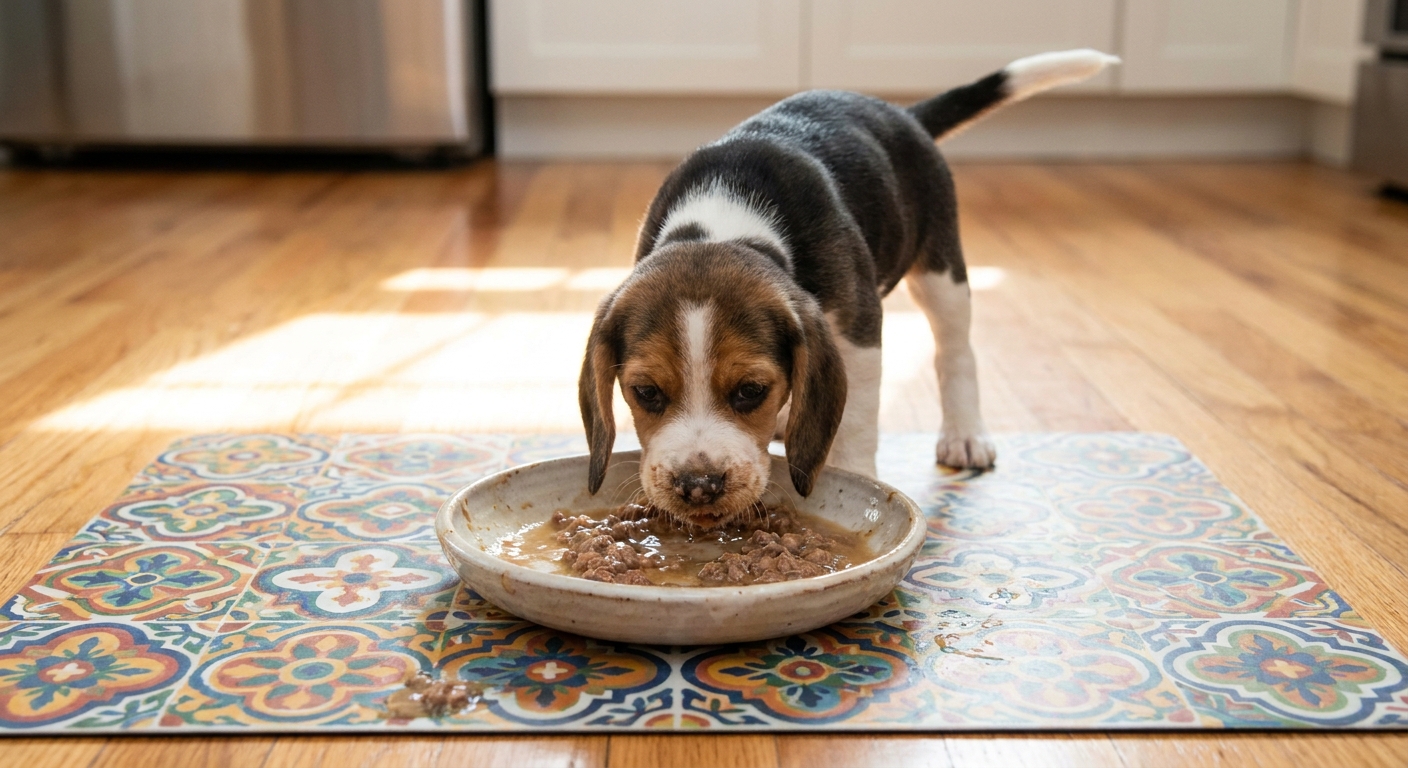
Wet food can be a lifesaver for puppies who struggle with appetite, are underweight, or need a softer texture during teething. It is also extremely effective at making kibble seem more exciting.
Why wet food can be a great choice
- High moisture, which can help hydration.
- Often highly palatable, useful for picky pups or post-illness appetite slumps.
- Soft texture for sore mouths and tiny teeth.
Trade-offs to consider
- Cost adds up quickly if you feed only canned, especially for larger puppies.
- Storage and waste: opened cans need refrigeration and have a shorter safe window.
- Stool changes: some puppies get looser stools with richer canned foods, particularly during transitions.
Smart ways to use wet food
- As a topper: Mix a spoonful into kibble to boost smell and taste while keeping meals balanced.
- In food puzzles: A little wet food smeared inside a Kong and frozen can buy you 20 peaceful minutes.
- For medication: it hides pills like a pro.
Fresh cooked puppy food
Fresh cooked diets are usually sold as refrigerated packs or frozen portions. They tend to look like “real food” because, well, they are. When formulated correctly, fresh food can absolutely support healthy puppy growth.
Where fresh food shines
- Palatability: many puppies find fresh meals irresistible.
- Moisture and texture: easier for some pups to eat and digest.
- Ingredient transparency: you can often recognize what you are looking at.
The cautions I want you to take seriously
- Not all fresh foods are appropriate for puppies. Some are meant for adult maintenance only, or are “supplemental.” Puppies need a growth formulation.
- Large breed growth needs precision. If you have a future 60 to 120 pound dog, you want a company that specifically formulates for growth and is clear about calorie density and nutrient balance.
- Cost and consistency: fresh feeding is usually the priciest option, and running out can force an abrupt switch that upsets stomachs.
- Food safety and handling: keep cold foods cold, wash bowls, and do not leave fresh meals sitting out for long.
Fresh feeding without going all-in
If you love the idea of fresh but not the price tag, consider using fresh food as 10 to 25 percent of calories and keep a solid puppy kibble as the main diet. Your puppy still gets the benefits of moisture and variety, while you keep nutrition simpler and your wallet less sad.

Raw diets for puppies
Raw diets are a whole separate conversation. Some owners choose them, and some dogs do appear to do well on them, but puppies are also the age group where I am the most cautious. Growth demands are high, and young dogs can be more vulnerable if nutrition is imbalanced.
For clarity, I am talking here about raw meat-based diets, whether they are homemade, commercial frozen raw, or freeze-dried raw. The form changes, but the main risks and requirements do not disappear.
Main concerns in the first year
- Food safety: raw meat can carry bacteria. That risk applies even with commercial raw, and puppies can shed pathogens even if they look fine.
- Household risk: many vets recommend avoiding raw in homes with young children, elderly family members, pregnant people, or anyone immunocompromised.
- Nutrient balance: “meat and bones” is not the same as a properly formulated growth diet. Calcium and phosphorus balance is easy to get wrong, especially with homemade raw.
If you are committed to raw, do it with professional formulation support and strict handling hygiene. For most first-time puppy owners, a high-quality commercial puppy food (kibble, wet, or properly formulated fresh) is the lower-stress path.
How to judge quality
If you are staring at ten bags that all claim to be “premium,” focus on signals that a company takes nutrition and safety seriously.
- Clear adequacy statement for growth or all life stages (and large breed growth wording if relevant).
- Veterinary nutrition expertise: look for evidence the diet was formulated by qualified professionals and supported with real nutrition oversight, not just marketing copy.
- Feeding trials and quality control: companies that run feeding trials, publish nutrient analyses, and have robust manufacturing standards tend to be more consistent, batch to batch.
You do not need a perfect brand. You do want a brand that can explain how their puppy food is formulated and tested.
Pros and cons at a glance
| Diet format | Big wins | Common drawbacks | Best for |
|---|---|---|---|
| Dry kibble | Affordable, easy to portion, convenient, training-friendly | Lower moisture, some pups get picky, quality varies | Most households, predictable routines |
| Wet canned | Moist, very tasty, soft for teething | More expensive, storage mess, can loosen stools | Picky eaters, underweight pups, topper use |
| Fresh cooked | High palatability, moist, appealing texture | Costly, handling and storage, must be growth-formulated | Owners who want fresh and can be consistent |
| Raw | Chosen by some for ingredient preferences | Food safety risk, easy to imbalance nutrients for growth | Advanced feeders with pro guidance and strict hygiene |
How to choose
If you feel stuck, here are the questions that usually clarify the decision quickly.
1) How big will your puppy get?
For large breed puppies, prioritize foods that explicitly support large breed growth, often defined on labels as dogs expected to reach 70 lb or more as adults. This is less about brand popularity and more about careful mineral and calorie balance.
2) How sensitive is your puppy’s stomach?
If your puppy has frequent loose stool, gas, or dramatic “digestive opinions,” a simple, consistent diet is your friend. Kibble-only or kibble plus a small amount of wet can be easier to stabilize than rotating multiple rich foods.
3) Are you solving a real problem or just adding variety?
Variety can be fun, but it can also create a puppy who holds out for the “good stuff.” If your puppy is healthy, growing well, and eating fine, you do not need to fix what is not broken.
4) What can you maintain on your busiest week?
The best food is the one you can buy reliably, store safely, and feed consistently. Puppies do not care if their dinner is artisanal. They care that it shows up on time.
Mixing foods safely
Mixing kibble and wet or fresh is common and can work beautifully. The key is to treat it like a plan, not a daily improv show.
- Keep the base consistent: pick one complete-and-balanced puppy food as the foundation.
- Limit toppers: as a general rule, aim for toppers making up 10 percent or less of daily calories unless your vet says otherwise.
- Measure everything: toppers count. They are not “free.”
- Do not upgrade every time they hesitate: if you keep escalating tastiness, you will train your puppy to stall.
If your puppy suddenly refuses food, check for other causes (stress, teething pain, too many treats, illness). When in doubt, call your vet, especially for very young puppies.
Switching foods
Most puppies need a slow transition when changing brands, proteins, or formats.
- Days 1 to 2: 75% old, 25% new
- Days 3 to 4: 50% old, 50% new
- Days 5 to 6: 25% old, 75% new
- Day 7: 100% new
If stool gets soft, pause at the current ratio for a couple of days. If you see vomiting, watery diarrhea, lethargy, or blood, stop the transition and call your vet.
First-year feeding questions
How many times a day should my puppy eat?
Many puppies do well with three meals a day until around 6 months, then many can move to two meals. Very young puppies (often 8 to 12 weeks) may do better with 3 to 4 smaller meals depending on size and your vet’s guidance. Tiny breeds may benefit from more frequent meals due to blood sugar sensitivity.
Is grain-free better for puppies?
Not automatically. Many puppies thrive on diets that include grains. Unless your vet has identified a specific reason to avoid grains, you do not need to default to grain-free.
Do puppies need variety to prevent allergies?
There is no reliable guarantee that rotating proteins prevents allergies. What helps most families is consistency, balanced nutrition, and slow changes when you do switch.
Should I add supplements?
Usually, no. A complete-and-balanced puppy diet should not need extra calcium, vitamins, or oils added on top. Supplements can create imbalances. Ask your vet before adding anything beyond simple toppers.
How many treats is too many?
As a general rule, keep treats to about 10 percent or less of daily calories. Treats are not “bad,” but they add up fast in a growing body, and too many can crowd out balanced nutrition.
How do I know my puppy is growing well?
Use the mirror test and the scale. You should be able to feel ribs under a light layer of tissue, and your puppy should have a visible waist from above. Regular weigh-ins (at home or at the vet) help you catch “growing too fast” early, especially for large breeds.
When should I worry about appetite?
Puppies can skip a meal here and there, especially during teething or after a big exciting day. But call your vet promptly for very young puppies who are not eating, or any puppy with appetite loss plus vomiting, diarrhea, weakness, or dehydration signs.
My bottom line
Dry kibble is the easiest, most economical “set it and forget it” option for most puppies. Wet food is a fantastic tool for appetite, hydration, and teething, especially as a measured topper. Fresh cooked food can be great if it is truly formulated for growth and you can be consistent with budget and storage. Raw requires extra caution and professional guidance, particularly during the first year.
If you want the simplest path with the least mealtime drama, pick a reputable puppy formula, feed on a schedule, keep treats and toppers measured, and change foods slowly. Your puppy will do the rest, usually while trying to eat a sock.