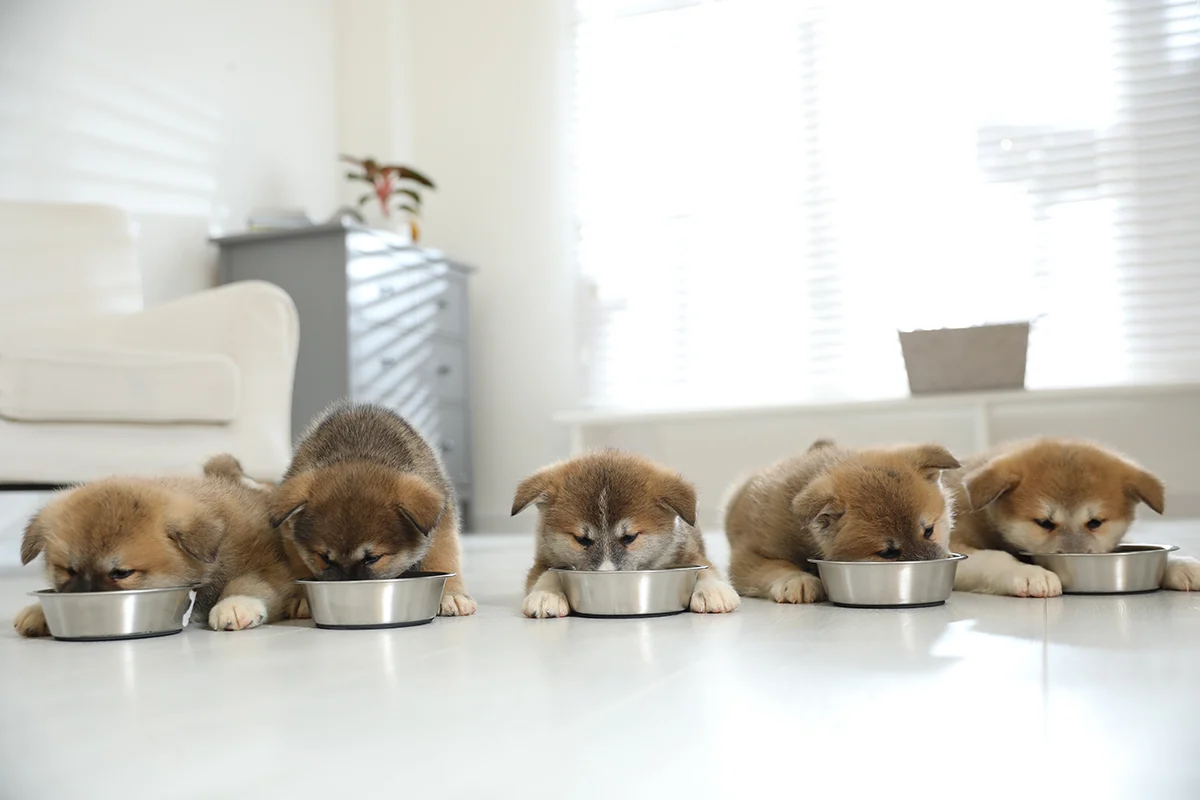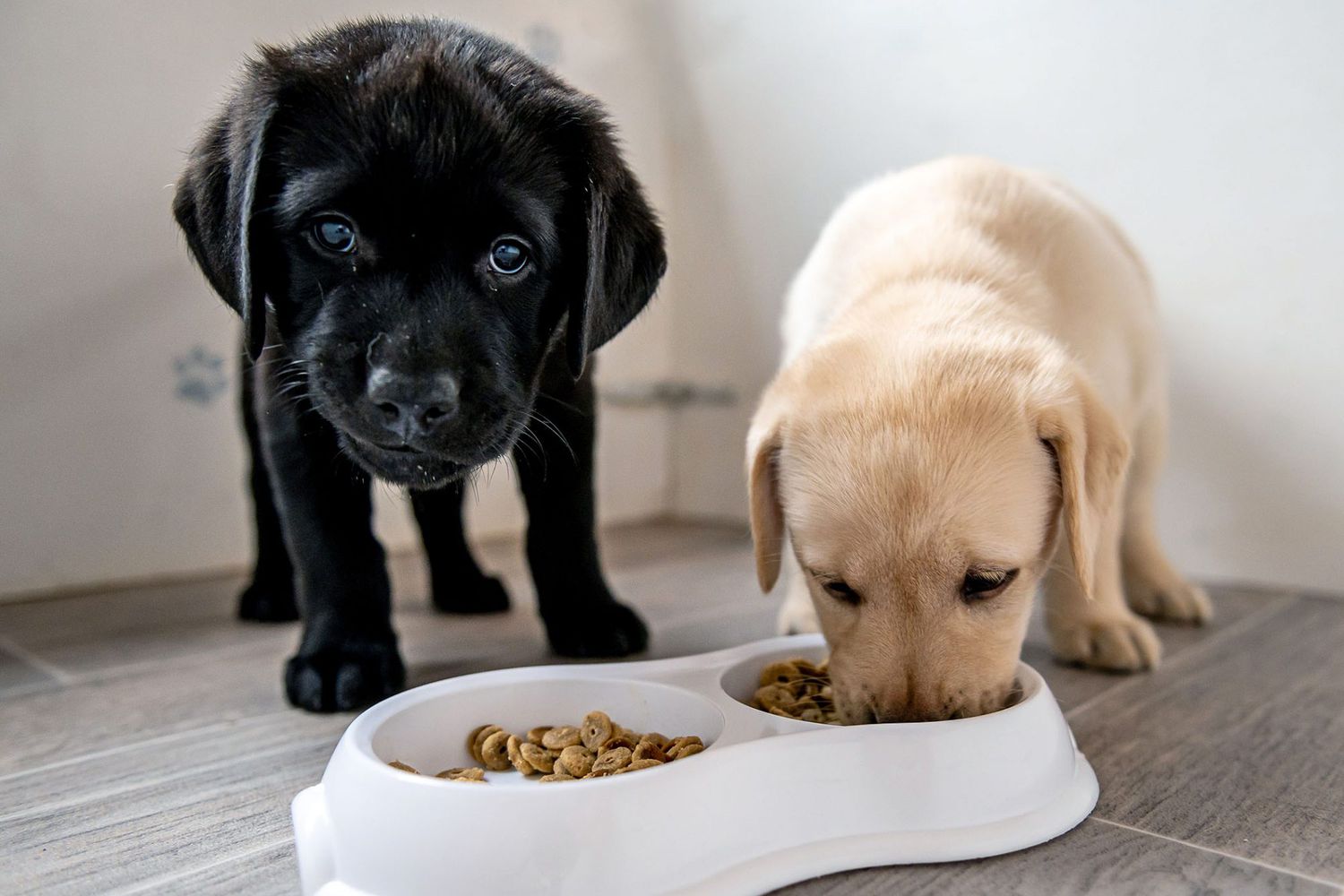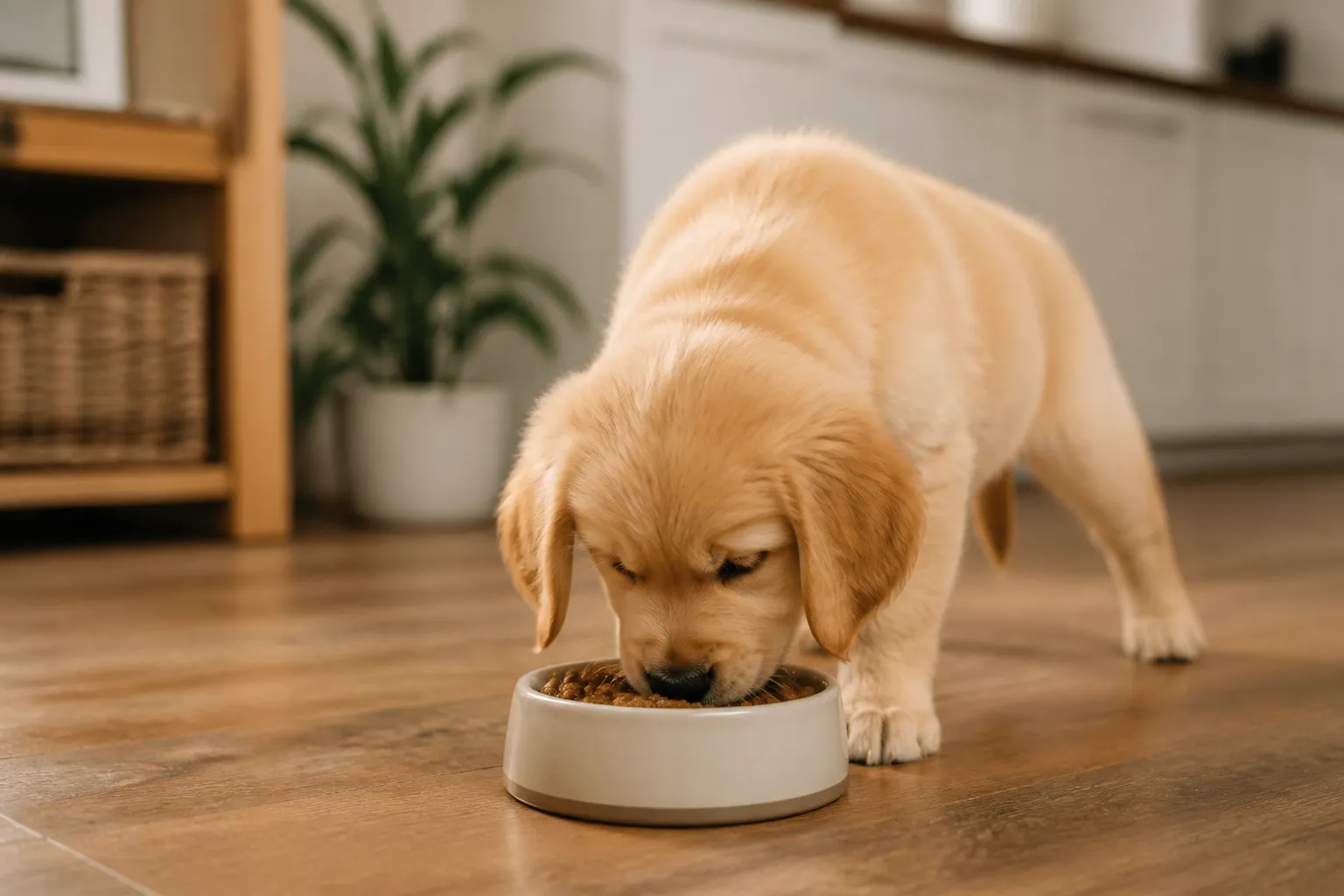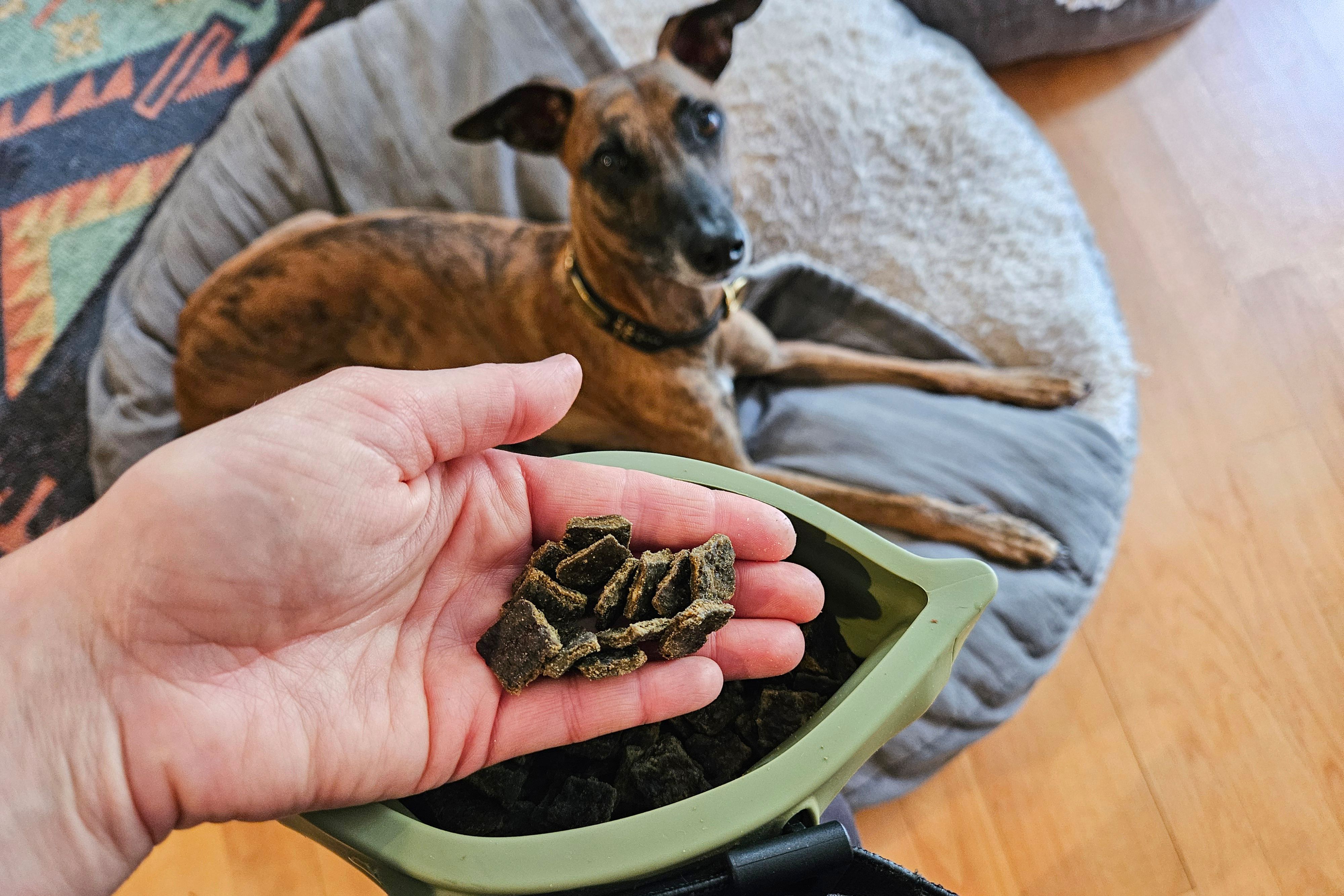
Feeding a puppy feels like trying to hit a moving target. One week they are a sleepy potato, the next they are a bottomless pit with shark teeth and opinions. The good news is you do not need a perfect number carved in stone. You need a starting point plus a simple way to adjust based on how your puppy is actually growing.
This guide will help you:
- Pick a safe starting portion using your food label and your puppy’s expected adult size
- Split meals by age so blood sugar and potty schedules stay sane
- Use a quick body condition check (no math degree required) to fine-tune portions
- Spot common feeding mistakes that quietly cause underfeeding or puppy obesity
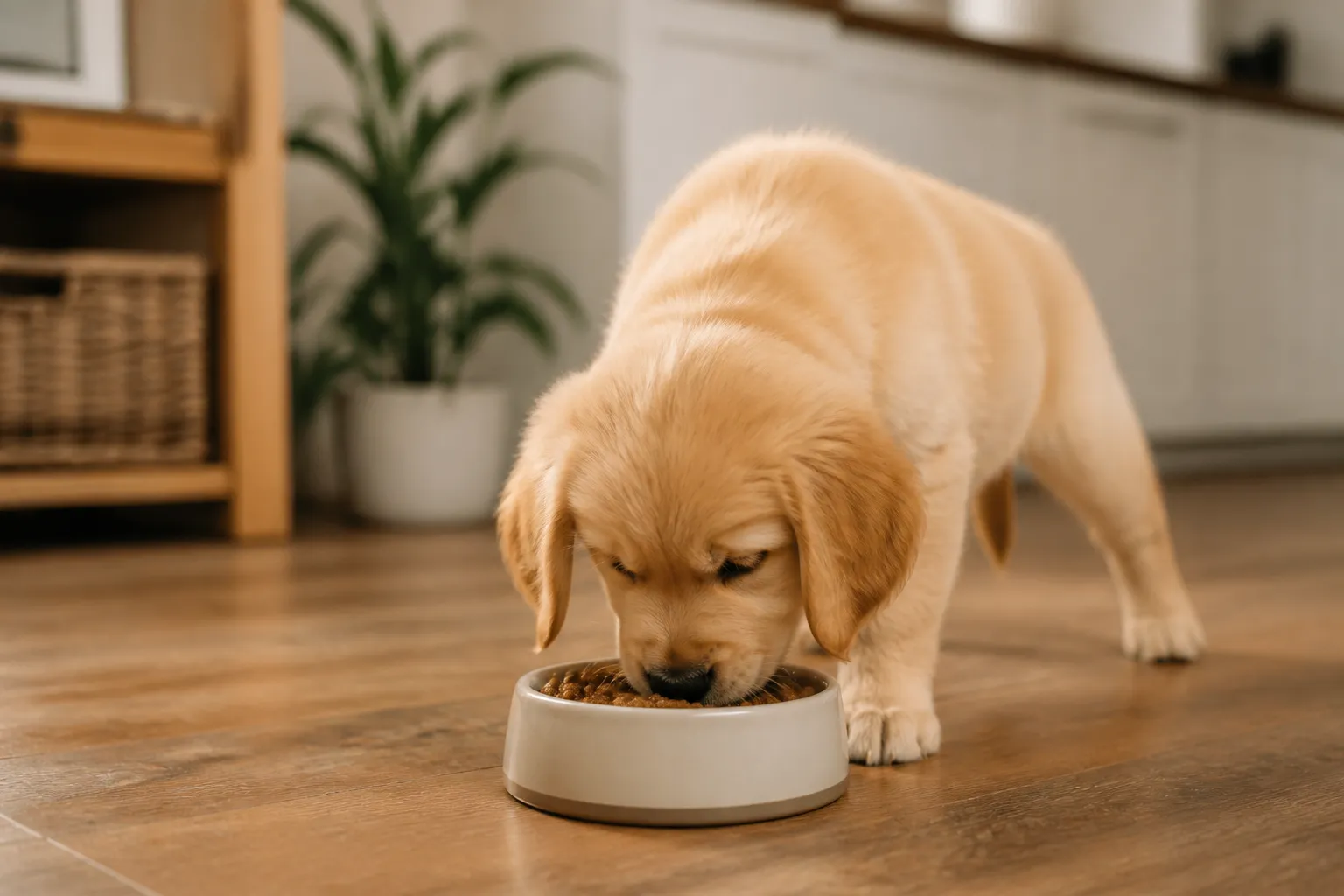
Start with the bag, then verify
Most puppy foods include a feeding chart based on current weight and either age or expected adult weight. That chart is the best place to begin because it is built around that food’s calorie density.
But charts are not magic. Two puppies can weigh the same and need different portions because of:
- Metabolism (some pups run hot)
- Activity level (fetch monster vs. couch cuddler)
- Breed and build (slender sighthound shape vs. sturdy retriever shape)
- Neuter/spay timing (needs can shift afterward)
- Treats and chews (they count, even the “tiny” ones)
- Health basics (parasites, tummy trouble, and recovery from illness can all affect appetite and weight)
So we use the chart to choose a starting portion, then we use body condition to confirm we are on track.
Step 1: Pick food and adult size
Choose a puppy formula
Look for a food labeled for growth or all life stages. For extra confidence, check for an AAFCO statement indicating the diet is complete and balanced for growth.
Large-breed puppies are a special case: they do best with formulas designed for large breed growth. Those diets are typically balanced to support steady bone development rather than rapid growth, and the label should note they meet AAFCO nutrition profiles for growth including growth of large size dogs.
If your puppy is a mix, estimate adult weight
For mixed breeds, your veterinarian can help you estimate adult size, but here are practical clues I use when fostering:
- Paw size and leg length usually tell the truth
- Parents (if known) are the best predictor
- Rescue guess is often a range, which is fine
If you are between two adult-size categories on the bag, start in the middle and let body condition scoring decide the final portion.
Step 2: Make a daily plan
Daily total first, then meals
Most feeding charts give a daily amount. Your job is to divide that into meals your puppy can handle.
- 8 to 12 weeks: typically 4 meals per day
- 3 to 6 months: typically 3 meals per day
- 6 to 12 months: often 2 meals per day (some small and toy breeds do better staying on 3)
Very young puppies and toy breeds can be more prone to tummy upset and low blood sugar if they go too long between meals. More frequent meals also help with housetraining because potty timing becomes more predictable.
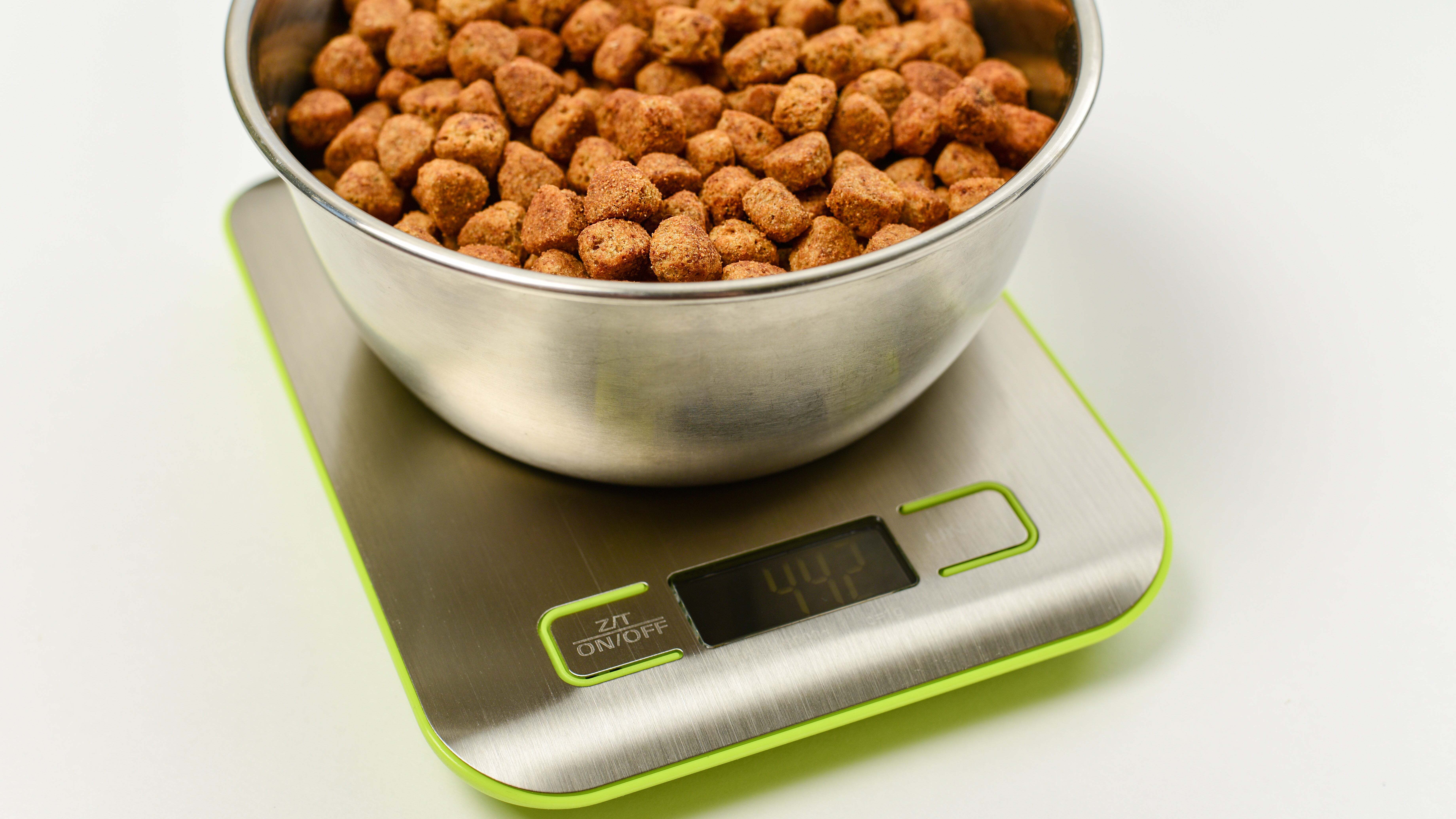
Measure with a standard measuring cup or a scale
“A cup” can mean wildly different things depending on the scoop. If you can, weigh your puppy’s food for a week or two. It is boring, yes, but it is the easiest way to stop accidental overfeeding.
Step 3: Watch calories when switching
When you change foods, the portion often changes even if your puppy’s needs do not. That is because different foods have different calories per cup.
Check the label for kcal per cup (or kcal per kilogram). If one food has 350 kcal per cup and another has 450 kcal per cup, feeding the same volume will quietly add a lot of calories.
A simple switch check
- Look at the new food’s feeding chart for your puppy’s weight and expected adult size
- Start at the low to middle of the recommended range
- Re-check body condition and stool quality in 10 to 14 days
The body check that matters
If you learn one skill from this article, make it this. Body condition scoring helps you catch weight drift early, before you have a chunky puppy who is suddenly “just big-boned.”
How to do a quick at-home check
Pick a calm moment. Use your hands more than your eyes, especially on fluffy puppies.
- Ribs: You should be able to feel ribs easily with light pressure, like feeling the ridges on the back of your knuckles. If you have to press hard, your puppy likely needs less food. If ribs feel sharp and there is no padding, they may need more.
- Waist (top view): Behind the ribs, you should see a gentle waist indentation.
- Tuck (side view): The belly should tuck up a bit behind the ribcage, not hang straight across.
What “too thin” and “too heavy” look like
Puppies are allowed to be a little awkward. Many go through lanky phases where they look like they were assembled in a hurry. That is normal. What we are avoiding is:
- Too thin: multiple ribs clearly visible on a short-coated breed, prominent hips or spine, low energy, poor coat, or constant hunger that seems frantic
- Too heavy: ribs hard to feel, no waist, tiring quickly, or a round belly that is not just “puppy shape”
If you are torn between “thin” and “lanky,” take photos once a week from the side and above. Growth is easier to judge over time than in a single mirror moment.

Adjust portions safely
Once you have a starting portion, adjustments should be small and slow. Puppy bodies are building bone and muscle fast, so we want steady trends, not sudden swings.
My foster-home adjustment rule
- If your puppy feels a bit too thin: increase daily food by about 10 percent
- If your puppy is getting soft or losing a waist: decrease daily food by about 10 percent
- Hold that change for 10 to 14 days, then reassess
If you make big jumps, you risk loose stool, constant hunger, or overshooting in the other direction.
Do not forget treats
Treats are not “free calories,” even when they are tiny. A helpful rule of thumb for most puppies is keeping treats and chews to around 10 percent of daily calories or less.
My favorite trick for training-heavy weeks: measure out the day’s kibble portion in the morning, then use part of it as training treats. Your puppy still feels rewarded, and your portions stay honest.
Age-by-age expectations
8 to 12 weeks: tiny stomach, big needs
Young puppies need frequent meals. This is also the stage where overfeeding can cause messy stools fast, so keep portions consistent and avoid rich add-ons “to help them grow.” Growth happens from balanced nutrition, not extra extras.
3 to 6 months: the hungry era
Appetite often ramps up. This is when people accidentally create pudge by increasing food for hunger that is actually boredom. Make sure your puppy has:
- Enough structured exercise for their age
- Enrichment like sniff walks, food puzzles, and short training sessions
- A nap schedule (overtired puppies act starving)
6 to 12 months: growth slows
Many puppies start needing fewer calories per pound as they mature, even if their appetite does not get the memo. Keep doing body condition checks every couple of weeks.
When do you switch to adult food?
This depends on expected adult size:
- Small breeds: often around 9 to 12 months
- Medium breeds: often around 12 months
- Large and giant breeds: commonly 12 to 18 months (sometimes up to 24 months for giant breeds)
Your veterinarian is the best tie-breaker here, especially for large-breed puppies.
Wet food and toppers
Mixing wet and dry can be perfectly fine, but it is easy to accidentally double calories when you “just add a little.”
Portion rule for mix-feeding
Decide the total daily calories (or follow the chart for one food), then substitute. Example: if you replace part of kibble with wet food, reduce kibble accordingly.
If you do not want to do calorie math, keep toppers truly small. Think: a spoonful, not a second meal.
Be cautious with rich human foods
Fatty add-ins can trigger stomach upset or pancreatitis in some dogs. If you want a simple, puppy-friendly topper, talk to your vet about safe options for your pup, especially if they have a sensitive stomach.
Common problems
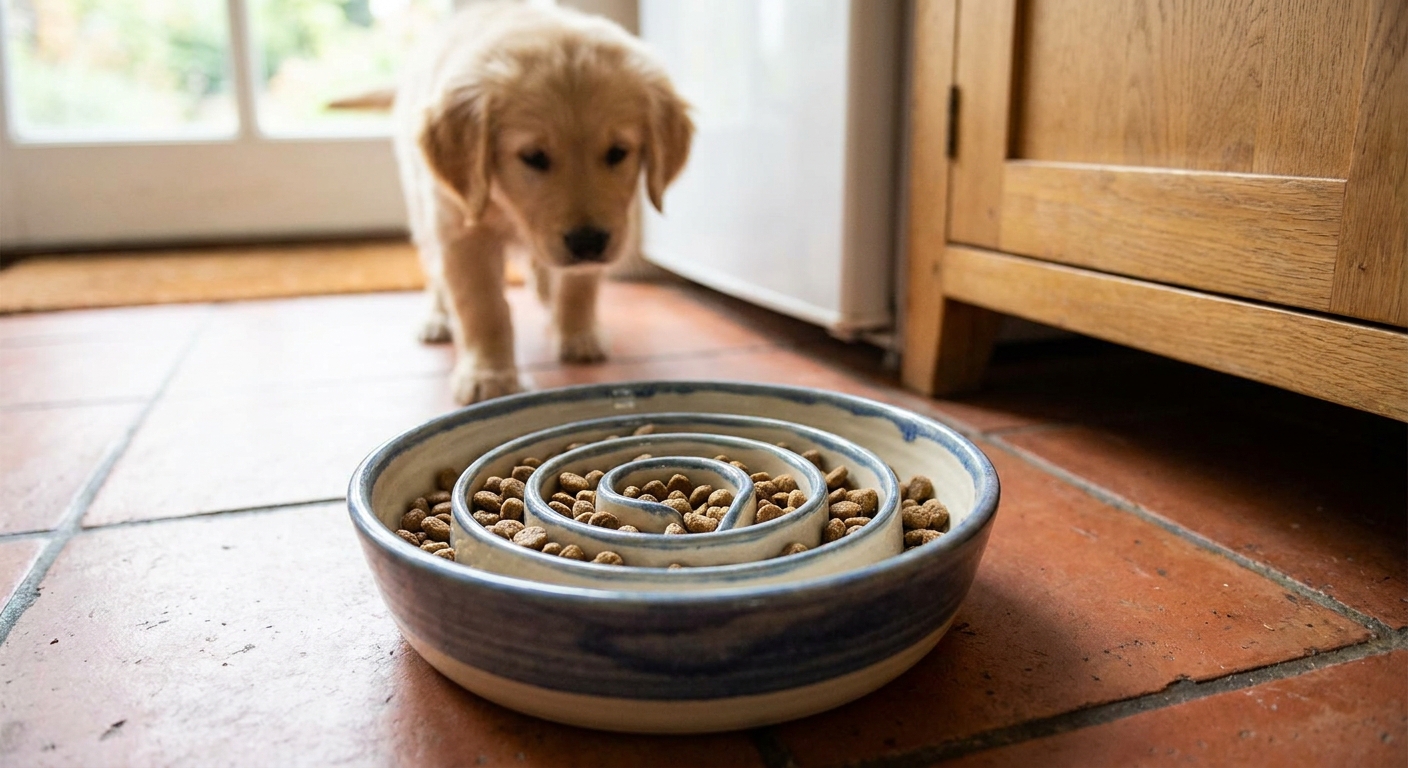
My puppy inhales food in 12 seconds
Very normal. Try:
- A slow feeder bowl
- Scatter feeding in the yard
- A food puzzle toy
- Feeding part of meals through training
Fast eating can cause gulping air, regurgitation (spit-up), and poor satiety.
My puppy acts hungry all the time
First, rule out the simple stuff: are you underfeeding, feeding too few meals, or doing marathon training sessions with lots of treats but no kibble reduction?
If portions are appropriate and your puppy is still ravenous, ask your vet about parasites (very common in puppies) and whether your food is the right fit.
My puppy has a round belly
A little puppy belly can be normal, but a potbelly plus poor coat, soft stool, or slow growth can be a red flag for parasites. A sudden round belly plus vomiting or lethargy is an urgent vet situation.
My puppy is gaining too fast
For many pups, the fix is not “more exercise.” It is slightly smaller portions and fewer extra calories from treats and chews. Rapid growth, especially in large breeds, is not the goal. Steady growth is.
Portion tools I use
- Kitchen scale: the simplest way to stop scoop creep
- Measuring cup: fine if you use the same one consistently
- Treat jar rule: pre-portion treats for the day so training does not become a buffet
- Weekly photo check: top view and side view, same spot, same lighting
When to call your vet
Food amounts are normal to tweak, but certain signs should not be handled with guesswork:
- Weight loss or poor growth despite eating
- Ongoing diarrhea, vomiting, or frequent regurgitation
- A very distended belly, especially with low energy
- Refusing food for 12 to 24 hours (sooner for very young puppies and toy breeds)
- Any concern about large-breed growth, limping, or joint pain
Bring your food bag (or a photo of the label), your current daily portion, and your treat list. That information helps your vet adjust a plan quickly.
Quick FAQ
Should I free-feed my puppy?
Most puppies do better with scheduled meals. It supports housetraining, prevents picky habits, and makes it easier to spot appetite changes. Free-feeding can work for some dogs, but it often leads to accidental overfeeding.
How do I know if I am underfeeding?
Look for multiple ribs clearly visible on a short-coated breed, prominent hips or spine, low energy, poor coat quality, slow growth, or a puppy who seems frantic around food even after meals. Confirm with your vet, especially for very young puppies.
Is it okay if my puppy looks a little skinny?
A slightly lean, athletic puppy is typically healthier than a chubby one, especially for growing joints. Lanky is normal. What you want is ribs that are easy to feel but not dramatically visible on a short-coated breed.
How often should I reassess portions?
In fast-growth stages, I like a quick body condition check every 1 to 2 weeks, plus a weigh-in monthly or at routine vet visits.
My puppy is on the label’s recommended amount and is still chubby. Now what?
Use body condition as the deciding vote. Reduce the daily portion by about 10 percent, tighten up treat calories, and reassess in 10 to 14 days. If weight continues to climb, talk with your vet about calories, activity, and whether the food is too calorie-dense for your pup.
Take-home message
The “right” amount is the amount that keeps your puppy growing steadily with a visible waist and ribs you can feel with light pressure. Start with your food’s chart, split it into age-appropriate meals, then let body condition scoring guide small adjustments.
If you are feeling stuck, bring your puppy’s current weight, age, and food label to your veterinarian. A quick body condition score and a simple calorie plan can save you months of guessing, and it helps keep growing joints happier along the way.