If you feel like your puppy is either starving or plotting a kitchen heist at all times, you are not alone. A consistent feeding schedule is one of the fastest ways to make puppy life feel less chaotic. It supports healthy growth, steadier energy, and (my personal favorite) more predictable potty breaks.
This guide walks you through how often to feed your puppy from 8 weeks to 1 year, how to space meals for potty training, and what to do when your puppy acts like meals are a suggestion.
Quick answer: how often to feed by age
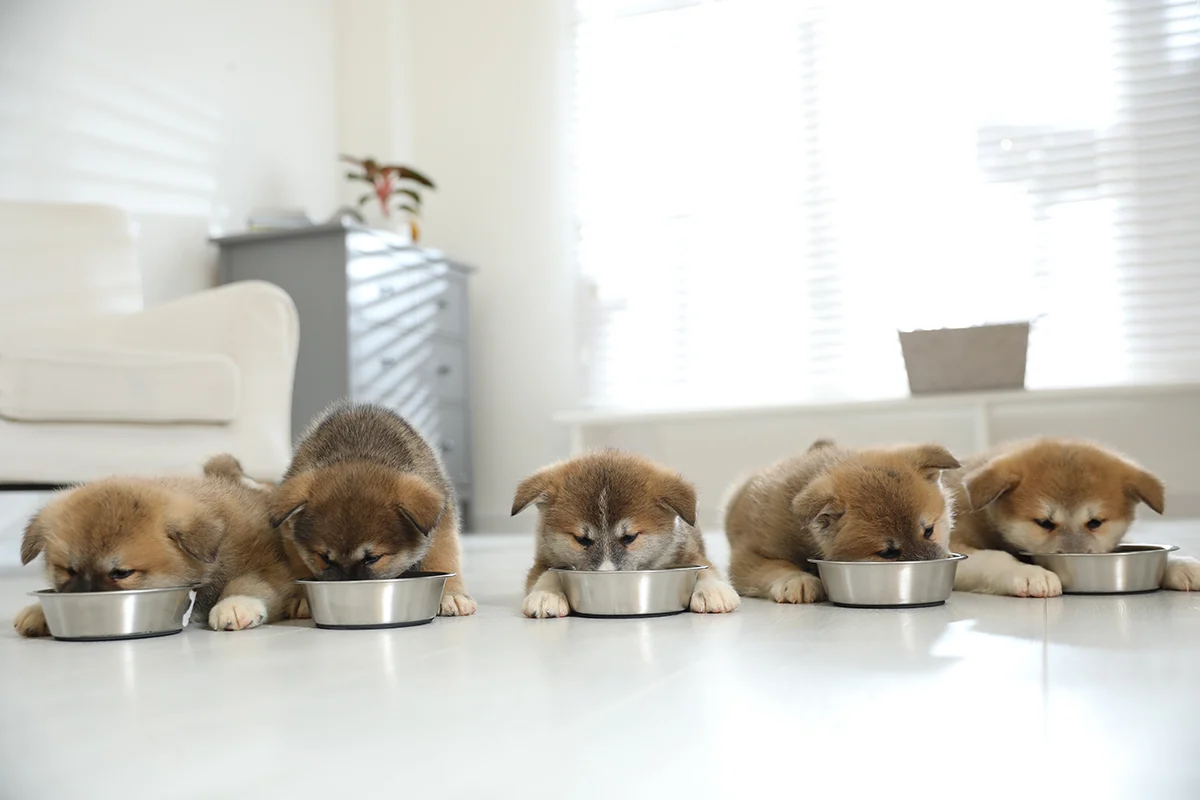
Most puppies do best on a schedule that gradually shifts from three meals a day to two. Tiny breeds may need extra support a little longer. Large and giant breeds often do best with good portion control, calmer post-meal routines, and slow-feeding strategies, and some do well with smaller portions per meal. If bloat risk is a concern, your vet is the best source of guidance.
- 8 to 12 weeks: 3 to 4 meals per day
- 3 to 6 months: 3 meals per day
- 6 to 12 months: 2 meals per day (some small breeds stay at 3 a bit longer)
- After 12 months: usually 2 meals per day for adults
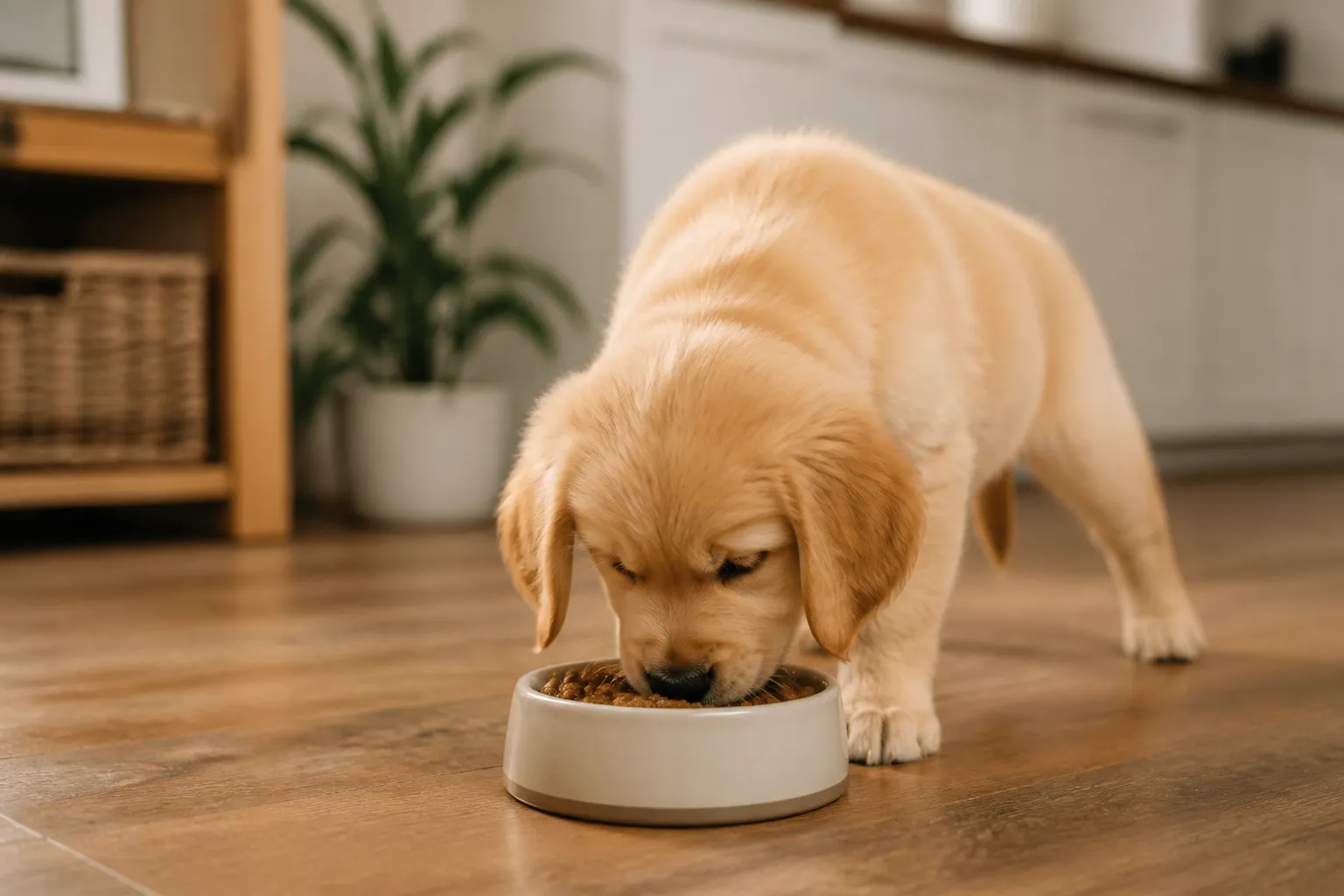
Best rule of thumb: feed at the same times daily, pick up the bowl after 15 to 20 minutes (unless your vet has advised otherwise or your puppy needs free access for medical or weight reasons), and plan a potty break soon after.
Why schedules help (especially potty training)
Puppies run on tiny bodies with big opinions, but their digestion can be wonderfully predictable when we are consistent.
- More predictable poops: Meals in, potty out. Consistent food timing often creates a reliable bathroom window.
- Easier housetraining: When you can predict when your puppy is likely to need a bathroom trip, you can prevent accidents instead of reacting to them.
- Less snacky chaos: Free-feeding can make intake harder to track and potty timing harder to predict, and it can contribute to weight gain in some puppies.
- Training fuel: Scheduled meals let you use part of breakfast or dinner kibble for training without overfeeding.
Expect your biggest poop windows after meals, plus after naps and big play sessions. In foster life, the biggest “schedule fix” is usually this: same meal times, same potty routine, every day. It does not make you rigid. It makes you sleep.
8 to 12 weeks: 3 to 4 meals
This is the tiny-baby stage. Your puppy’s stomach is small, their metabolism is speedy, and their bladder is basically a leaky balloon with optimism.
Sample schedules
- Option A (3 meals): 7:00 a.m., 12:00 p.m., 5:00 p.m.
- Option B (4 meals): 7:00 a.m., 11:00 a.m., 3:00 p.m., 7:00 p.m.
Potty training tie-in: Many puppies will need to go out within 5 to 30 minutes after eating, and some go sooner. Start with a potty trip 5 to 15 minutes after each meal, then offer another chance 30 to 60 minutes later if they are playing hard.
Should you feed 4 meals?
Four meals can help very small breeds, sensitive tummies, or puppies who get “hangry” and turn into ankle sharks. If your puppy does fine on three meals, three is totally acceptable.
Last meal timing
Aim for the last meal at least 3 hours before bedtime when possible. You cannot always avoid a late potty break at this age, but you can reduce the odds of a 2 a.m. encore.
3 to 6 months: 3 meals
This is the growth-spurt, teething, and “I found a sock and now it’s my whole personality” phase.
Sample schedule
- Breakfast: 7:00 a.m.
- Lunch: 12:00 p.m.
- Dinner: 5:30 p.m.
If your household runs later, that is fine. What matters most is that you keep meal times consistent and space them fairly evenly.
Potty training tie-in
At this age, many puppies still need a potty trip after meals, after waking up, after play, and after training. Feeding on schedule helps you notice patterns like, “Lunch equals poop within 20-ish minutes,” which is gold for housetraining.
6 to 12 months: 2 meals (usually)
Most puppies can transition to two meals a day sometime between 6 and 9 months. Some small breeds do better staying at three meals longer, especially if they are prone to hypoglycemia or need steadier calories throughout the day. Also, some dogs (of any size) may vomit foamy or yellow bile when their stomach stays empty too long. If that is happening, ask your vet about adjusting meal timing.
Sample schedule
- Breakfast: 7:00 a.m.
- Dinner: 5:30 p.m.
Why two meals can work: It supports adult routines, keeps appetite stronger at meal times, and often lines up nicely with morning and evening potty walks.
How to switch from 3 meals to 2
- Pick a long-term dinner time you can keep.
- Move lunch later by 30 to 60 minutes every few days.
- Fold lunch calories into breakfast and dinner gradually.
- Watch stool and energy during the change. If stools get loose, slow down.
Simple example: If lunch was about 1/3 of your puppy’s daily food, start by shifting a small portion of that lunch amount into breakfast and dinner for a few days, then keep shifting until lunch disappears.
If your puppy starts waking up nauseous, vomiting bile, or acting ravenous, it can be a sign you switched too early, need an earlier breakfast, or need vet input.
Sample daily routines
Below are two realistic day plans I have used with fosters (and recommended to new adopters) because they build potty breaks into the schedule naturally.
Routine A: 8 to 12 weeks (3 meals)
- 6:30 a.m.: Wake up, potty
- 7:00 a.m.: Breakfast
- 7:10 a.m.: Potty
- 9:00 a.m.: Potty, play, short training
- 12:00 p.m.: Lunch
- 12:10 p.m.: Potty
- 3:00 p.m.: Potty, play
- 5:30 p.m.: Dinner
- 5:40 p.m.: Potty
- Evening: Potty every 1 to 2 hours while awake
- Bedtime: Potty, crate
Routine B: 6 to 12 months (2 meals)
- 6:30 to 7:30 a.m.: Wake up, potty, breakfast
- Morning: Walk or play, potty as needed
- Midday: Potty break and quick training snack if you use one
- 5:00 to 6:30 p.m.: Dinner
- After dinner: Potty, then another potty break before settling
- Bedtime: Potty, sleep
Notice what is missing: random bowl refills and guessing games.
How much to feed (keep it simple)
How often you feed is only half the picture. How much matters too, and it changes as your puppy grows.
- Start with the feeding guide on your puppy food bag or can. It is not perfect, but it is a workable starting point.
- Adjust based on body condition, not just “they look hungry.” You should be able to feel ribs with light pressure and see a waist when viewed from above.
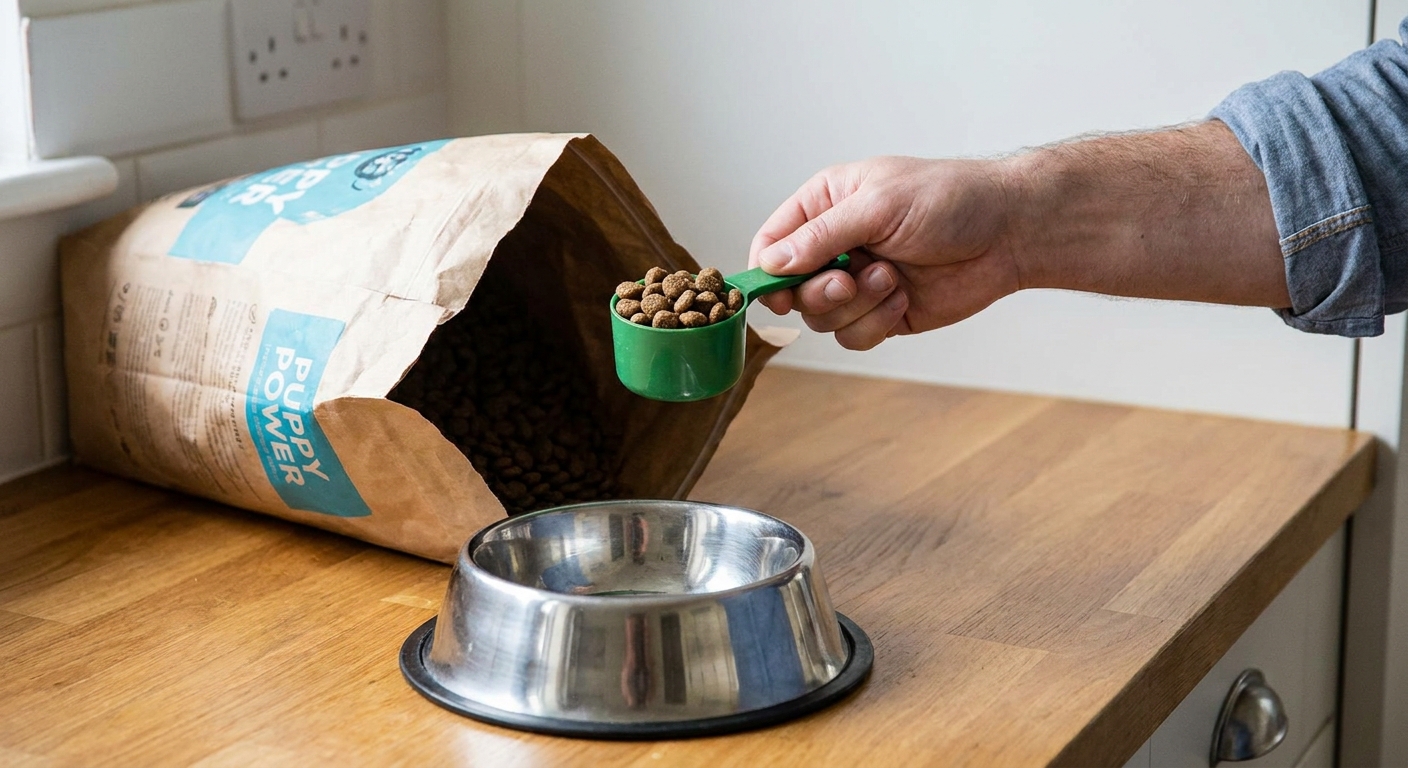
- Use a measuring cup or kitchen scale. Eyeballing is how puppies accidentally become little sausages.
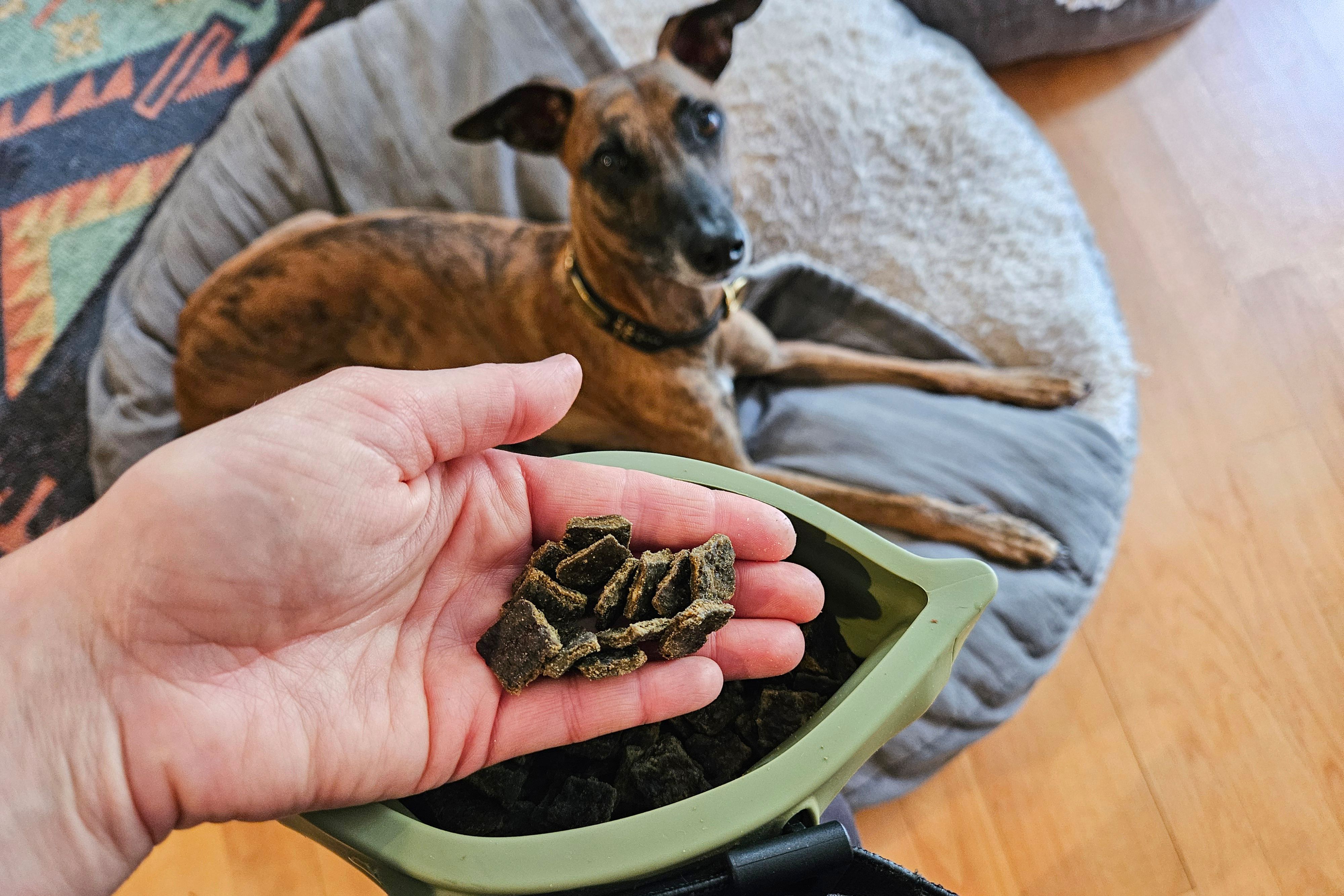
- Include treats in the daily total. If you are training a lot, pull some kibble from meals and use it as rewards.
Heads up: Large-breed puppies often need a large-breed puppy formula to support controlled growth. If you have a big pup, it is worth checking with your vet about the right type of food.
Meal timing basics
You do not need the “perfect” schedule. You need the schedule you can repeat on weekdays and weekends.
My simple guidelines
- Keep breakfast consistent (within about an hour)
- Space meals evenly when feeding three or four times
- Feed dinner early enough that your puppy has time for a couple calm potty trips before bed
- Pick up the bowl after 15 to 20 minutes to prevent grazing (unless your vet has told you not to, or your puppy is underweight or managing a medical issue)
- Fresh water stays available unless your vet says otherwise
If you are working on potty training, I would rather you have slightly boring meal times and fewer accidents than flexible vibes and carpet shampoo.
Common problems (and fixes)
“My puppy won’t eat at mealtime.”
Assuming your puppy is otherwise healthy and your vet is not concerned, treat meals like meals:
- Offer food for 15 to 20 minutes.
- Pick it up calmly.
- Try again at the next scheduled meal.
Most puppies figure it out quickly. If your puppy skips multiple meals, seems lethargic, vomits repeatedly, or has diarrhea, call your vet.
“My puppy eats too fast.”
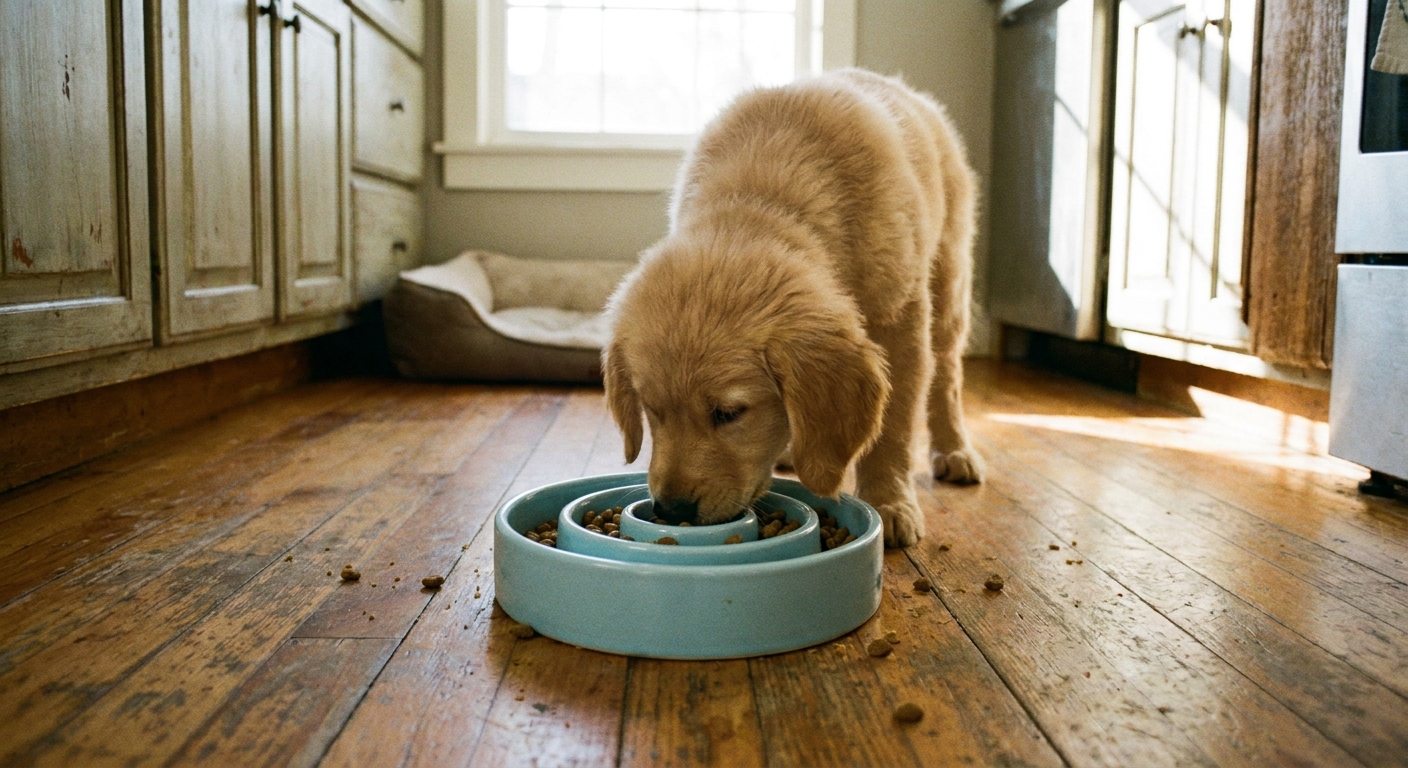
Fast eating can cause choking, vomiting, and a whole lot of regret.
- Use a slow feeder bowl or a puzzle feeder.
- Scatter kibble in the grass (supervised) for a quick sniffy game.
- Feed in smaller portions with short pauses.
“My puppy begs all day.”
Begging is normal puppy behavior, not a nutritional emergency. Help your puppy succeed:
- Stop hand-feeding from the table.
- Use part of meals for training to give them something productive to do.
- Offer a chew after dinner (age-appropriate and supervised).
- Make sure naps are happening. Tired puppies beg and bite more.
“My puppy wakes up hungry at night.”
First, make sure dinner is not too early. Also consider:
- A slightly larger dinner (within the daily total).
- A later potty break right before bed.
- For some very small puppies, a tiny bedtime snack can help. Ask your vet if you suspect hypoglycemia or low blood sugar issues.
“My puppy has soft stool after changes.”
Schedule changes are usually fine, but food changes or bigger meal sizes can upset tummies.
- Transition slowly.
- Keep treats minimal while adjusting.
- If diarrhea is persistent, severe, or your puppy seems unwell, call your vet.
Wet, dry, or mixed food
Not really. The schedule is about routine and digestion timing. Whether you feed kibble, canned, fresh, or a mix, keep meals at consistent times and measure portions so total calories stay appropriate.
If you use wet food or fresh food, be extra mindful about:
- Food safety: do not leave it out for long periods
- Dental support: ask your vet about dental chews and brushing
- Stool changes: richer foods can change poop fast
When to call the vet
Trust your gut. Puppies can go downhill faster than adult dogs, especially when they are very young or very small. Call your vet if you notice:
- Repeated vomiting, bloating, or obvious abdominal pain
- Refusing food for a full day, or skipping multiple meals in a young puppy
- Diarrhea that is severe, persistent, or has blood
- Signs of dehydration (sticky gums, weakness, sunken eyes)
- Shaking, wobbliness, or sudden weakness, especially in toy and small puppies (possible hypoglycemia)
- Weight loss or a sudden change in appetite
- Suspected parasites (worms in stool, potbelly with poor weight gain)
Also, do not try to “fix” frequent accidents by restricting water. Water should generally be available. If potty accidents are constant, talk to your vet about medical causes and your trainer about management.
Frequently asked questions
Should I free-feed my puppy?
In most homes, I do not recommend it. Free-feeding can make potty training harder because you cannot predict the poop window as well, and it can make it harder to track how much your puppy is actually eating. A schedule is simpler for you and clearer for your puppy.
How long after eating does a puppy need to poop?
Many puppies poop within 5 to 30 minutes after a meal, especially in the morning, but there is plenty of individual variation. The more consistent the schedule, the easier it is to predict your puppy’s timing.
When can puppies switch to adult food?
Breed size matters, and these are general ranges. Many toy and small breeds transition around 9 to 12 months. Many medium to large breeds transition around 12 to 18 months. Some giant breeds may stay on puppy food up to 18 to 24 months. Your vet and your food manufacturer can help you choose the right timing and formula.
Is it okay to change meal times on weekends?
A little flexibility is fine, but big swings can create bathroom surprises. If you want to sleep in, consider shifting gradually or keeping bedtime and breakfast consistently later.
Consistency beats perfect
If you take nothing else from this: feed at consistent times, measure portions, and plan a potty trip soon after meals. That single habit can do more for potty training and daily sanity than most people realize.
You are not failing if your puppy still acts like they have never eaten in their entire life. They are puppies. Their job is to be dramatic. Your job is to be consistent.