There are two kinds of new puppy homes: the ones that are already puppy-proofed, and the ones that think they are. If you are deciding between a crate and a playpen, you are already ahead of the game. The right containment setup prevents accidents, protects your stuff, and gives your puppy a clear routine they can actually understand.
Here’s the honest answer from someone who has cleaned up plenty of surprise puddles: many puppies do best with both a crate and a playpen. But the best starting point depends on your puppy’s age, potty training stage, breed tendencies, and how closely you can supervise.
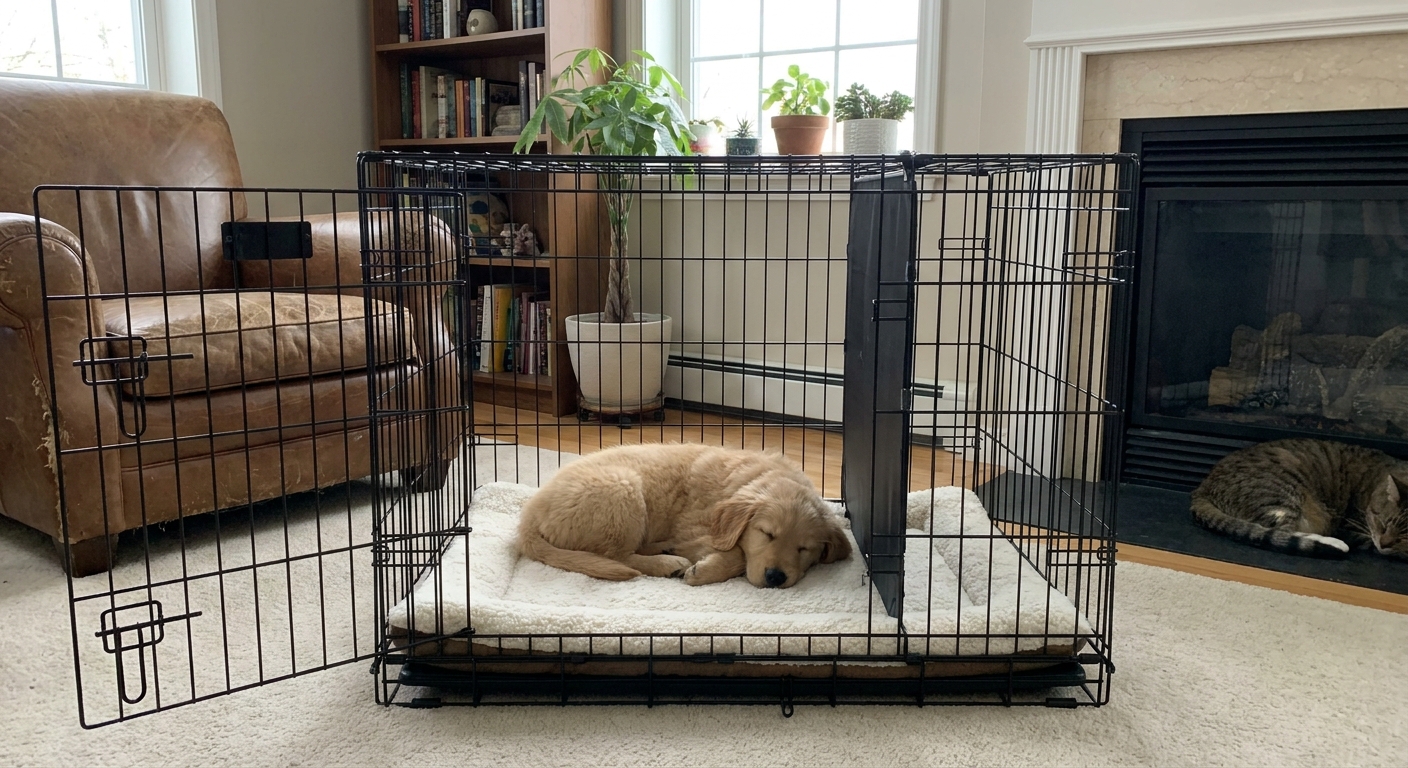
Crate vs. playpen: the quick difference
Think of the crate as your puppy’s bedroom and the playpen as their baby gate plus living room.
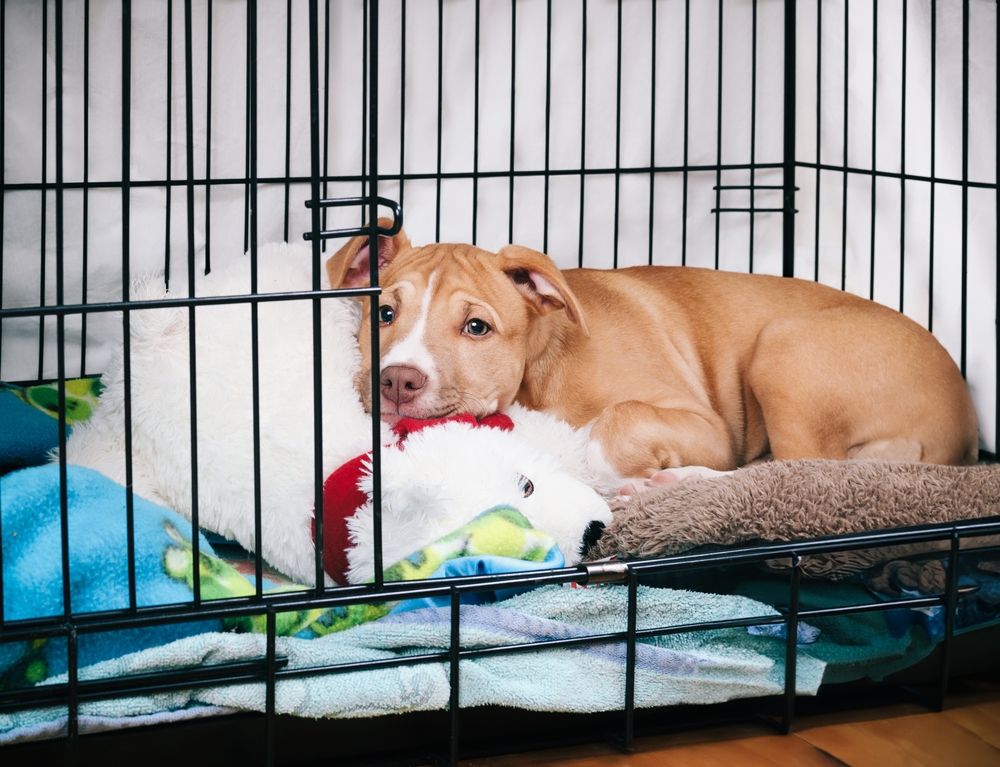
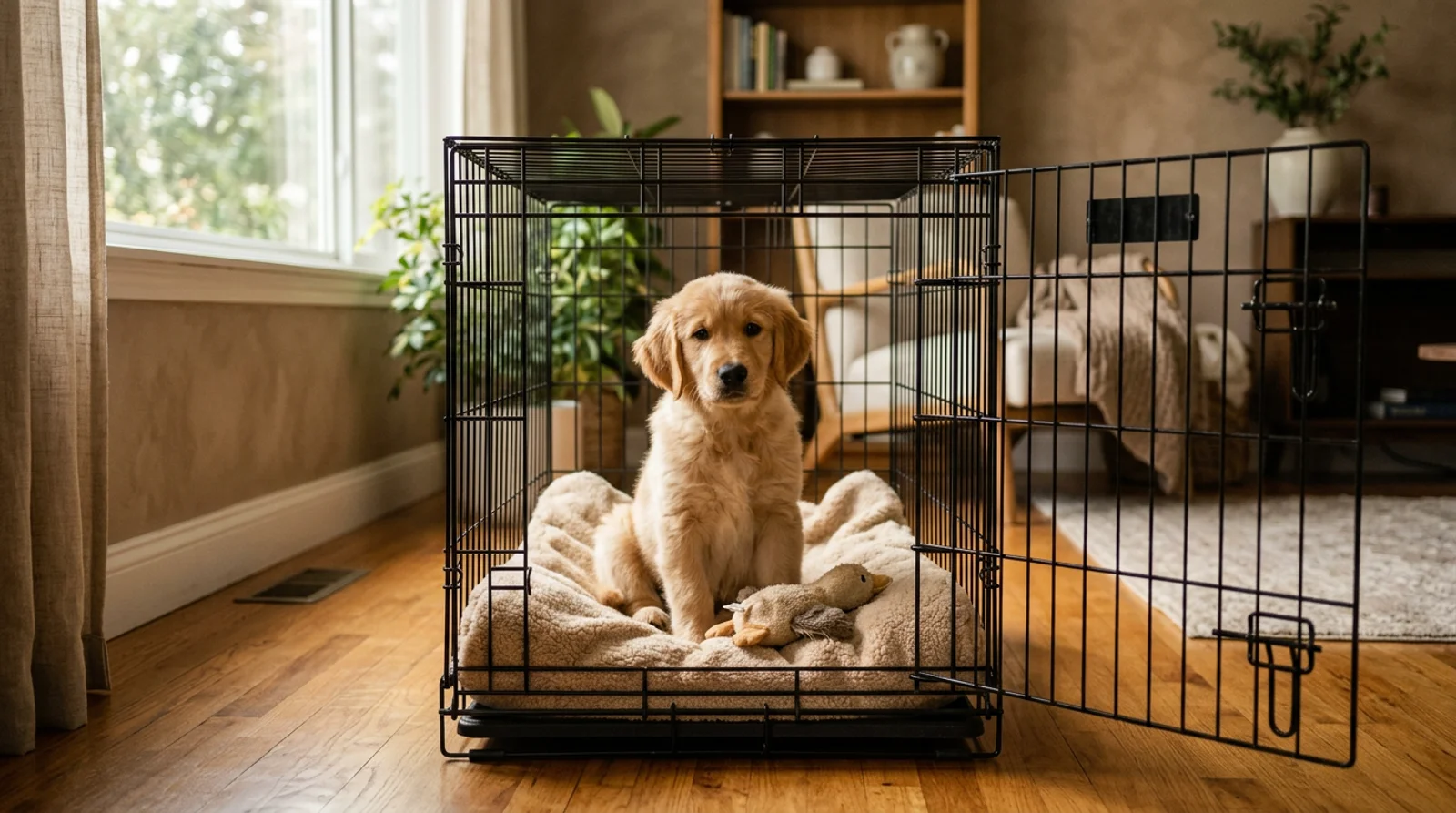
- Crate: Smaller, den-like space designed for rest and short, supervised confinement. It is a powerhouse for potty training and building an off switch.
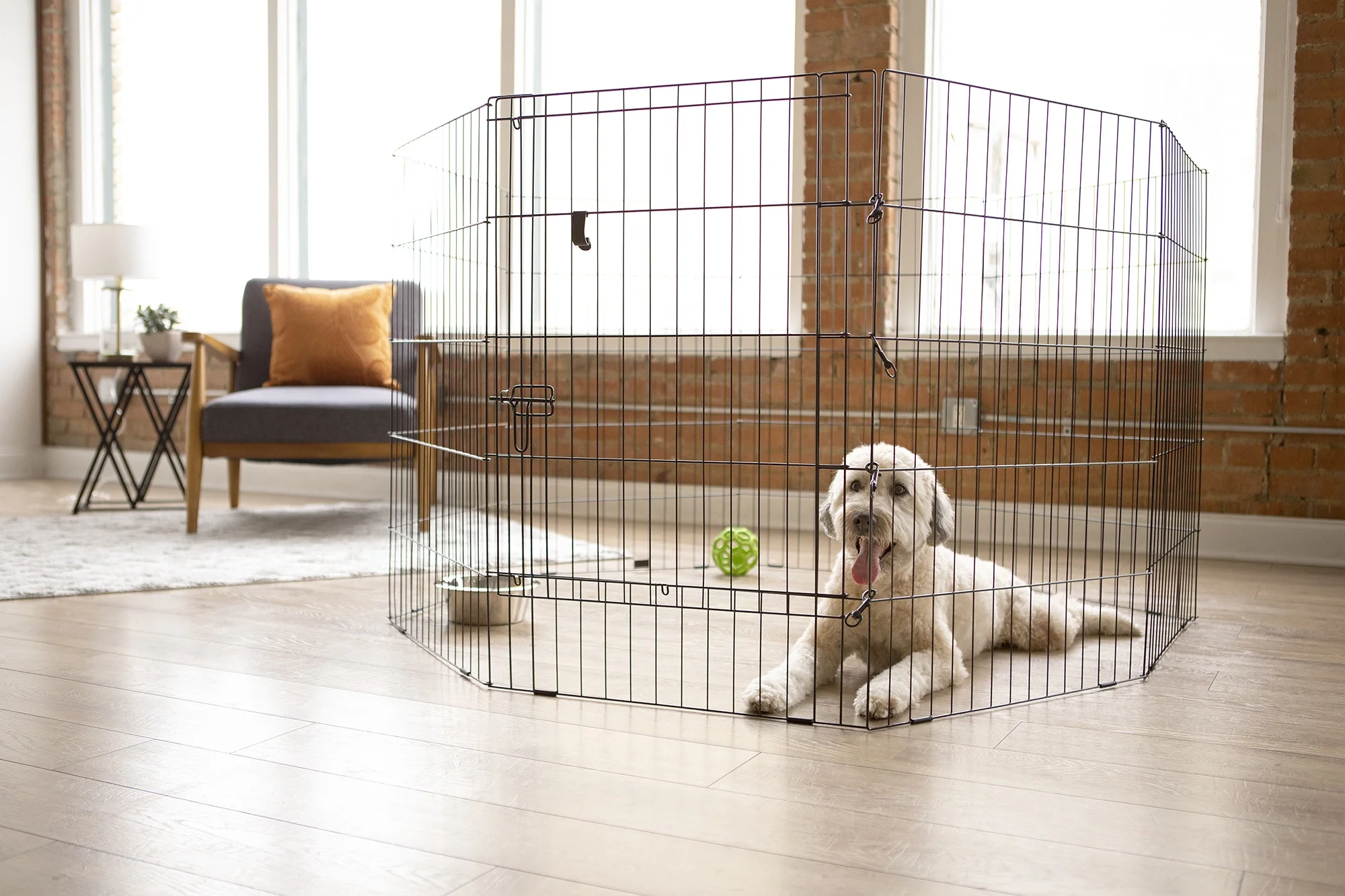
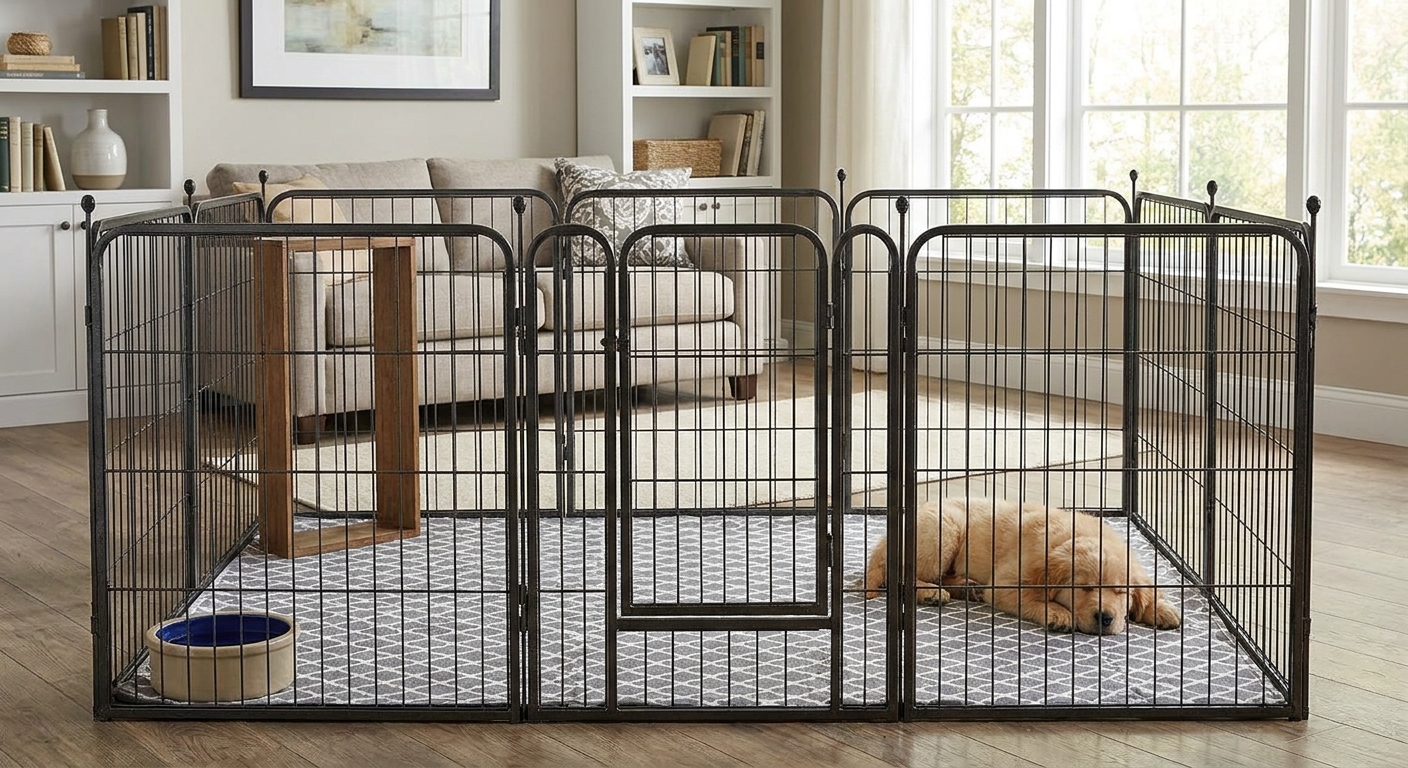
- Playpen (exercise pen): A larger enclosed area where your puppy can move around, play, and hang out safely when you cannot be laser focused on them.
Both can be kind and puppy-friendly when used correctly. Neither should feel like punishment.
When a crate is the better choice
If potty training is your main goal, the crate tends to do more heavy lifting. Many puppies naturally avoid soiling the space where they sleep, which gives you an advantage in building bladder and bowel habits. That said, it is not universal, especially with very young puppies or pups who had to live in messy conditions early on.
Pros of crate training
- Speeds up potty training: A properly sized crate encourages your puppy to hold it until you take them out.
- Prevents roaming accidents: No wandering behind the couch to pee where you will not notice for two days.
- Builds a rest routine: Overtired puppies get bitey and wild. A crate helps them actually nap.
- Travel and vet readiness: Many dogs need to be crated at the groomer, vet, or for travel. Practicing early is a gift to Future You.
- Safety: Great for preventing chewing cords, swallowing socks, or practicing parkour off furniture.
Cons of crates
- Too much crate time backfires: Puppies need potty breaks, movement, and social time. Over-crating can lead to whining, stress, and accidents.
- Wrong sizing can hurt potty training: Too big, and your puppy may potty on one side and sleep on the other.
- Some puppies need slower crate introduction: Especially rescue pups or sensitive pups who panic at confinement.
Crate is usually your best pick if…
- Your puppy is under 6 months and still having frequent accidents.
- You are actively working on a nap schedule and bitey overtired behavior.
- You need a safe spot during meals, deliveries, cooking, or kid chaos.
- Your puppy chews everything like it is their full-time job.
When a playpen is the better choice
A playpen shines when you need a safe area for your puppy to exist without being glued to your ankle. It is also a great middle step for puppies who are not ready to roam, but struggle with being closed in a crate while you work or take a shower.
Pros of a playpen
- More freedom without full house access: Your puppy can stretch, play, and move around safely.
- Great for supervised play and independence: Puppies can learn to entertain themselves with a chew while you are nearby.
- Helpful for multi-dog homes: Allows safe separation during meals, high energy moments, or when you cannot referee.
- Flexible setup: You can attach it to the crate, block off a section of a room, or use it outdoors (with supervision).
Cons of playpens
- Not as strong for potty training: A pen is big enough for some puppies to potty in one corner and keep playing.
- Escape artists exist: Some puppies climb, tip, or bulldoze lightweight pens.
- Chewing the bars or pushing the edges: Especially during the first week as they test boundaries.
- Requires more puppy-proofing inside the pen: Anything in that area can become a chew project.
A playpen is usually your best pick if…
- You work from home and need your puppy nearby but not underfoot.
- Your puppy gets stressed in a closed crate when awake.
- You want a safe zone for play between potty breaks.
- You need containment that feels less intense than a crate during the day.
The best answer for most homes: use both
If you want the smoothest day-to-day routine, set up a crate attached to a playpen, or place them side by side. This gives you a sleep space and a hangout space, which mirrors how puppies naturally live: bursts of play, then a hard crash.
The crate + pen combo setup
- Crate door opens into the playpen so your puppy can choose to nap or chew a toy.
- Put the playpen on easy-clean flooring like tile, vinyl, or a washable mat.
- Keep the playpen boring in a good way: bed, a couple of safe toys, and 2 to 4 chew options.
- Rotate, do not overload: too many items can rev some puppies up instead of settling them.
- Use the crate for naps and nighttime, and the playpen for daytime management.
This combo helps you avoid a common trap: giving almost free roam before your puppy has earned it. Puppies are adorable, but they are also tiny chaos interns with no experience.
Potty training impact
Potty training is mostly about preventing accidents and rewarding the right place so often that it becomes a habit.
Crate and potty training
- Best for holding between potty trips and creating a predictable schedule.
- Most effective when the crate is correctly sized: just enough room to stand up, turn around, and lie down.
- Works beautifully with the rhythm of: crate, potty, play, potty, food, potty, crate.
Playpen and potty training
- Best for supervised downtime between potty trips.
- Can slow training if your puppy is allowed to potty in the playpen and then keep playing.
- Works best when potty breaks are frequent and you do not leave your puppy in the playpen past their current bladder capacity.
A playpen setup that helps potty training
- Keep it near you: if you are in the room, you will spot circling, sniffing, and sudden silence faster.
- Keep it near the exit you use for potty: fewer steps means fewer accidents on the way out.
- Use the crate for short breaks you cannot supervise: the playpen is management, not a replacement for eyes-on time.
If your puppy is repeatedly having accidents in the playpen, it is usually a sign to do one of these: shorten the time between potty trips, increase supervision, reduce playpen size, or use the crate more strategically.
Behavior and confidence
Crates build calm if the puppy feels safe
A crate should be introduced like a cozy bedroom, not a sudden lockdown. Feed meals in or near the crate, toss treats in for exploration, and start with short, easy sessions.
If your puppy is panicking, drooling, or trying to break teeth on the door, pause and get help. That is not being stubborn, that is distress, and it needs a gentler plan.
Pens build independence, but can trigger barking
A playpen is great for teaching you can be near me without being on me. The flip side: some puppies learn to bark for attention because they can see you and want you back in the playpen with them.
My favorite fix is boring consistency: potty first, then a chew, then you step away briefly and return before they spiral. Independence is a skill, not a personality trait.
Whining vs. true panic
Some noise is normal with a new puppy. The key is whether your puppy is upset but settling, or escalating into panic.
Normal protest whining
- Complains for a bit, then starts chewing, sniffing, or lying down.
- Intensity trends down over a few minutes.
- Recovers quickly when you return.
Signs of distress (get help)
- Escalating screaming, drooling, frantic scratching, or repeated attempts to escape.
- Self-injury risk: breaking teeth on bars, bloody paws, bent nails.
- Does not settle with a gradual training plan.
If you see distress signs, involve a certified trainer and your veterinarian. Some puppies need a customized approach, and pushing through can make it worse.
Size and style
Crate sizing tips
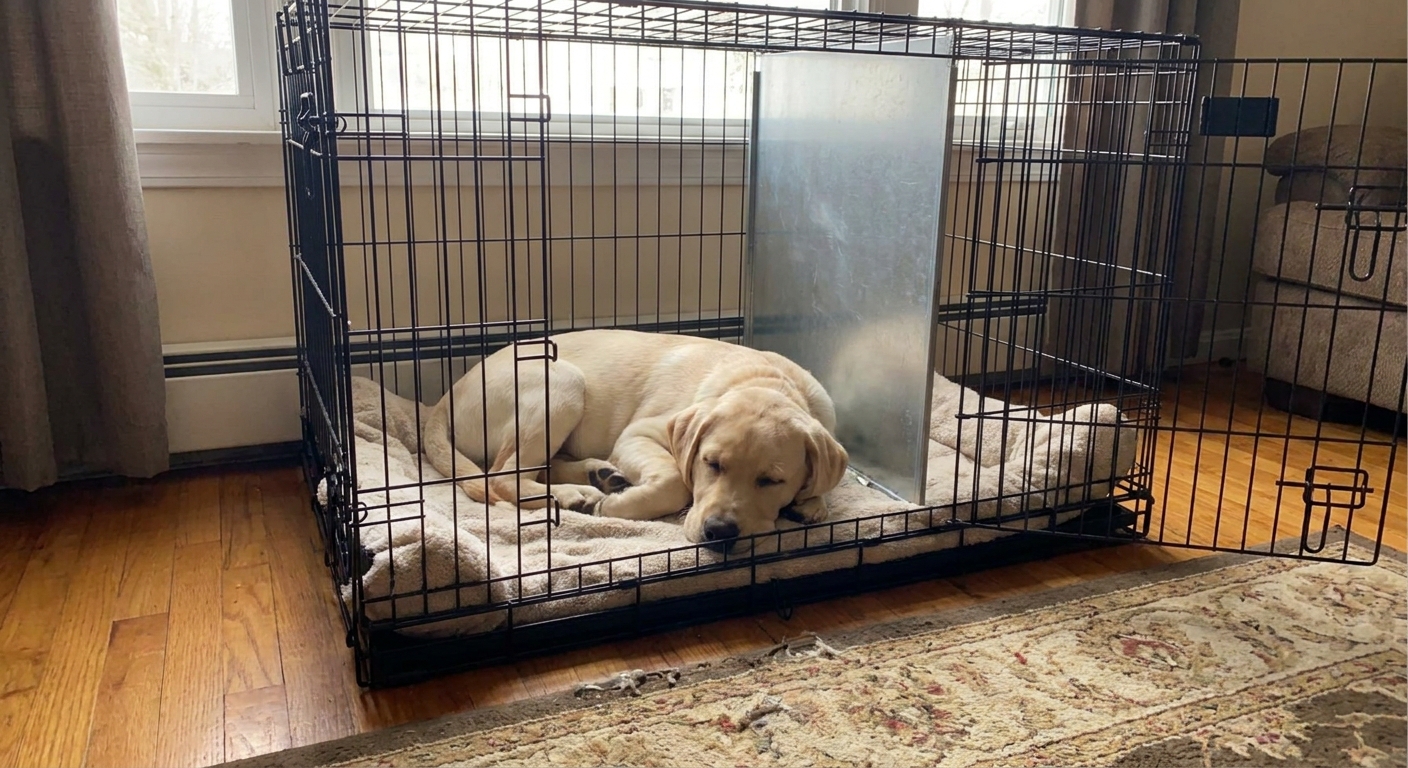
- Wire crates with a divider are a popular, flexible option for growing puppies. You can adjust the space as they get bigger.
- Plastic airline-style crates feel den-like for some puppies and can be calmer for travel.
- Soft crates are for puppies who are already trustworthy and not chewers. Most young puppies are not ready.
Playpen tips
- Height matters: if your puppy can put paws on the top rail, assume climbing is coming.
- Stability matters: heavier pens or pens secured to a wall are harder to tip.
- Flooring matters: slippery floors make puppies feel insecure and can increase frantic behavior. Use a grippy, washable surface.
Breed and body type notes
- Tall, athletic puppies (and the surprisingly springy small ones) are more likely to climb a playpen. Plan for height and stability.
- Giant breeds often need a larger crate sooner than you think. A divider lets you buy one crate and adjust as they grow.
- Flat-faced breeds can struggle more with heat and heavy panting. Prioritize cool airflow, shade, and comfortable temperatures in any confined space.
Safety checklist
- No dangling cords near the crate or playpen.
- No collars or dangling tags when your puppy is unattended in a crate or playpen, due to snag risk.
- Bedding safety: if your puppy shreds and swallows fabric or stuffing, skip fluffy beds at first and use a safer mat or nothing until they are trustworthy.
- Chew basics: choose size-appropriate chews, avoid anything that splinters easily, and supervise long-lasting chews until you know your puppy’s style.
- Water access: do not routinely restrict water. If spills are the issue, use a heavy crock, a crate-mounted bowl, or offer water right before and right after crate naps. For longer crate time, water should be available unless your vet advises otherwise.
- Keep it cool and quiet enough for naps: overtired puppies are tiny goblins. Let sleep happen.
Sample daily routine
This is a simple structure you can adjust based on your puppy’s age and energy level:
- Wake up and go straight outside to potty.
- 10 to 20 minutes play or training, then potty again.
- Breakfast, then potty.
- Nap in the crate (start with 45 to 90 minutes for young pups).
- Potty immediately after waking.
- Playpen time with a chew while you work nearby, then potty.
- Repeat: short play, potty, nap.
If you are thinking that is a lot of potty trips, yes. Welcome to puppyhood. It is temporary, and it works.
Troubleshooting
My puppy screams in the crate
- First, rule out basic needs: potty, thirst, too hot, too cold.
- Go slower: crate games, meals in the crate, door open practice.
- Try covering three sides of a wire crate to reduce stimulation.
- If it looks like true panic or it is escalating, talk to a certified trainer or your vet.
My puppy pees in the playpen
- Shorten time between potty breaks.
- Increase supervision: if you cannot watch, use the crate for short stretches instead.
- Make the playpen smaller or remove absorbent bedding temporarily.
- Clean accidents with an enzymatic cleaner so the scent does not invite a repeat performance.
My puppy keeps flipping or dragging the playpen
- Choose a heavier playpen or add stabilizers.
- Anchor it to a wall or sturdy furniture where safe.
- Meet their needs first: a tired puppy is less likely to redecorate your home with the playpen.
My puppy chews the bars
- Increase exercise and enrichment before confinement.
- Offer a better chew option, and rotate to keep novelty.
- If it is frantic or obsessive, reduce time in that setup and work on calmer, shorter sessions.
Which should you buy first?
If you can only pick one today, here’s my practical take:
- Pick a crate first if potty training and safe naps are your biggest struggle, or if your puppy is a champion chewer.
- Pick a playpen first if you need a safe daytime zone while you are home, and you can commit to very frequent potty breaks and active supervision.
But if your budget and space allow, the crate + playpen combo is the closest thing I have found to a puppy raising cheat code.
FAQ
Is a playpen a replacement for a crate?
For some adult dogs, a playpen can be enough. For most puppies, a playpen does not replace a crate for potty training and nap structure. It is more like a helpful partner.
Can I potty train using only a playpen?
You can, but it typically takes more supervision and tighter scheduling. If your puppy is allowed to potty in the playpen even once in a while, progress often slows.
How long can a puppy stay in a crate?
It varies by age, training, health, and the individual dog. In general, think in terms of short naps and breaks, not marathon confinement. If you need longer stretches, plan for potty breaks and consider a playpen setup, pet sitter, or dog walker.
Should I put pee pads in the playpen?
Pee pads can be useful in specific situations, but they can also teach it is okay to potty indoors. If your goal is outdoor potty training, it is usually better to take your puppy out more often and reserve pads for special circumstances.