If your puppy looks at their crate like it is a tiny doggy jail, you are not alone. A lot of pups need a little help understanding the crate is actually their safe, cozy “nothing bad happens here” spot. One of the quickest ways for many puppies to flip that opinion is to stop making the crate only mean separation and start making it mean games, snacks, and wins.
Below are five crate games I use with foster puppies who are skeptical, clingy, or just wildly offended by doors. They are quick, treat-based, and designed to build positive association without turning crate training into a wrestling match.
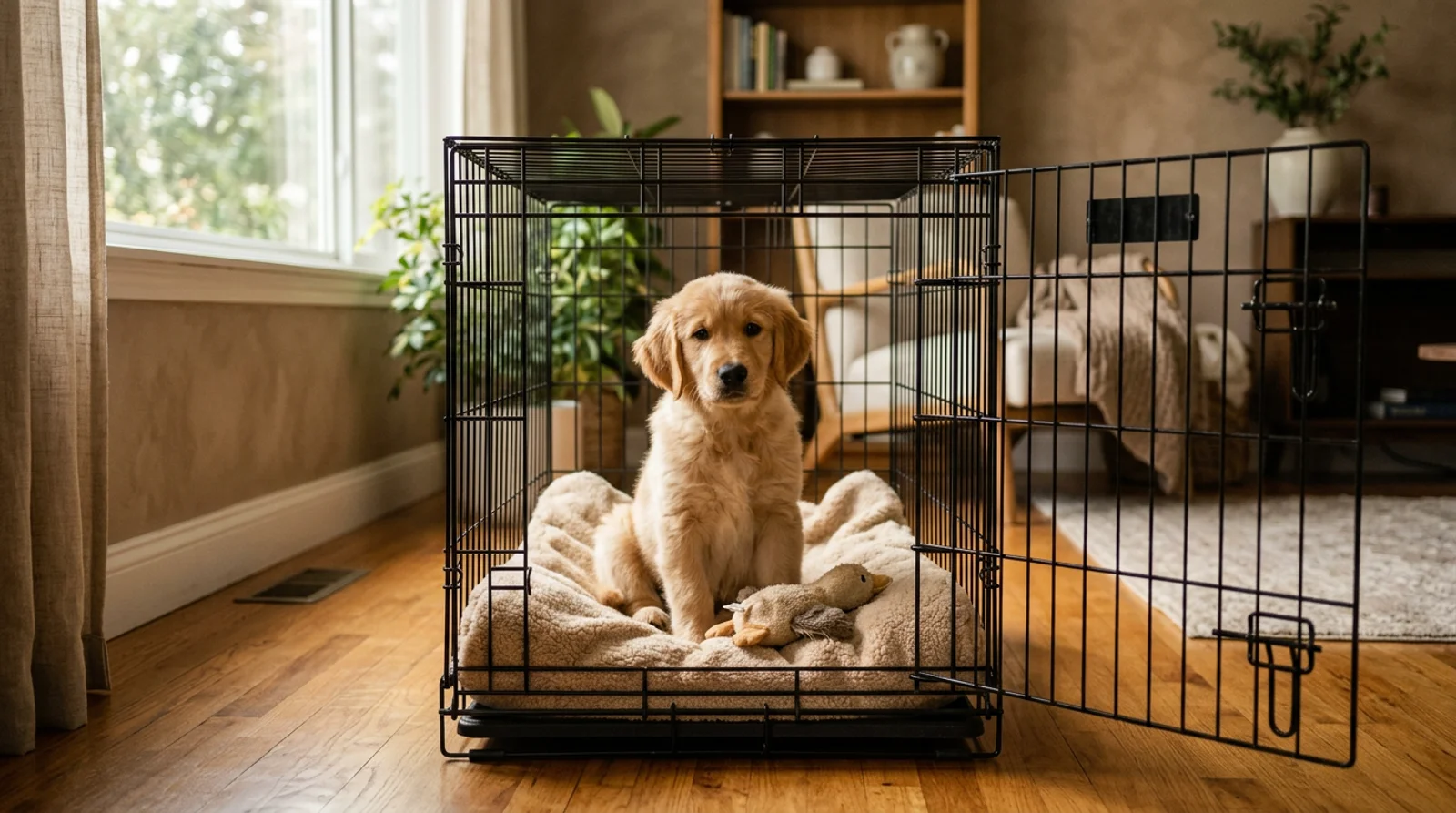
Before you start: easy wins
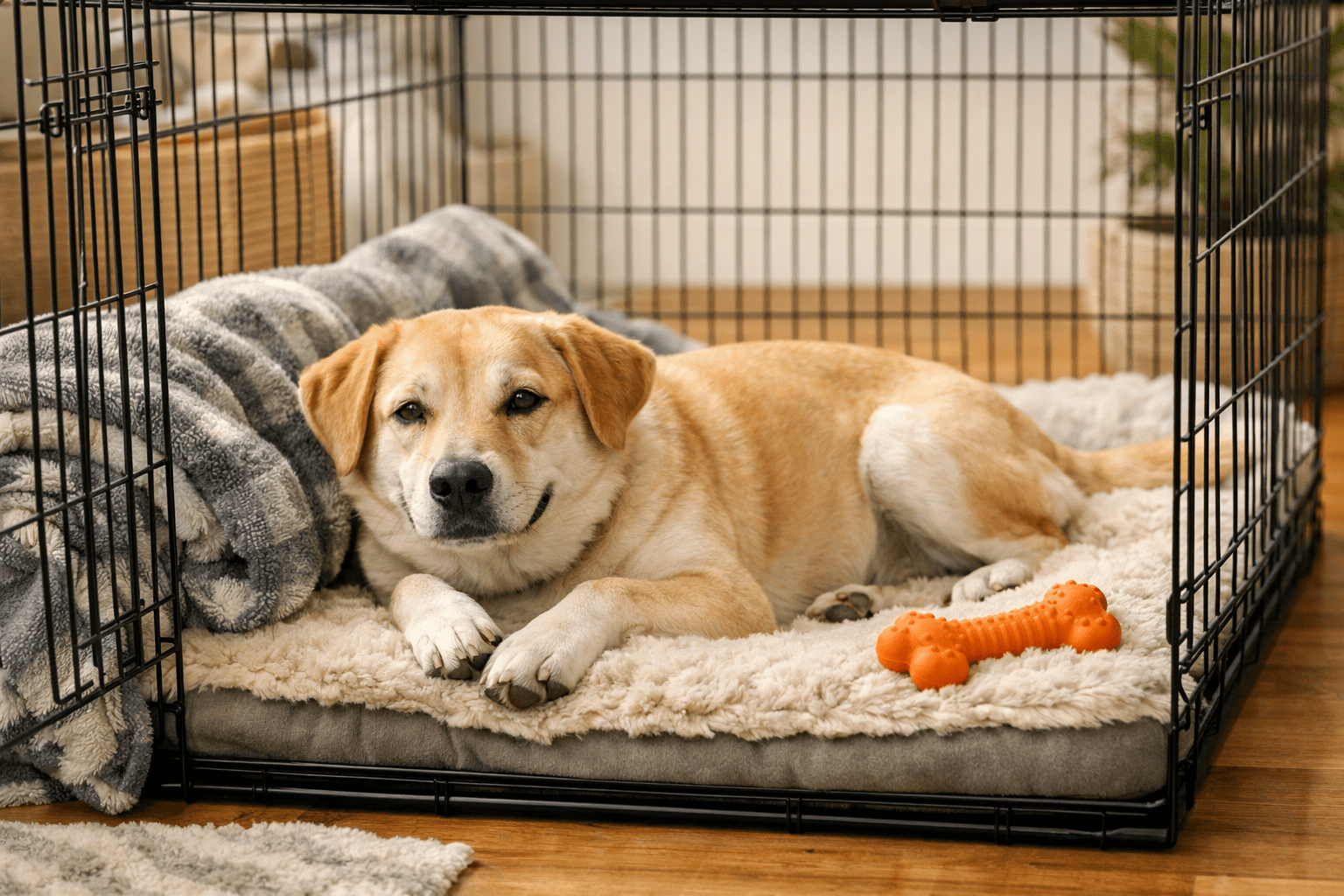
- Right-size the crate. Your puppy should be able to stand up, turn around, and lie down comfortably. Too big can make potty training harder.
- Keep the door open for the first rounds of every game. We are building trust first.
- Use tiny treats. Think pea-sized. You want lots of repetitions without a tummy ache.
- Pick a “crate only” reward if possible, like freeze-dried liver, chicken, or a special soft treat.
- Stop while your puppy still wants more. Two minutes of fun beats ten minutes of frustration.
- Location matters. In early days, put the crate where you spend time so your puppy does not feel isolated.
- Quick safety check. For crate time, remove collars and harnesses to reduce snag risks, and only offer chews you trust your puppy to handle safely.
Safety note: If your puppy has a history of panic in a crate, injures themselves trying to escape, or shows intense drooling, biting bars, or screaming that escalates, talk with your vet or a qualified trainer. Crate games still help, but you may need a slower plan.
Game 1: Treat Toss Party
This is the simplest game, and it works because it lets your puppy choose to go in. Choice is powerful, especially for reluctant pups.
How to play
- Stand a few feet from the crate with the door open.
- Toss a treat just inside the doorway. Let your puppy step in and eat it.
- Toss the next treat a little farther back, then another.
- After a few treats, toss one away from the crate so your puppy comes back out.
- Repeat: in, snack, out, snack. Make it bouncy and fun.
Make it easier
- If your puppy will not enter, toss treats right at the threshold and reward any leaning or paw steps.
- Feed one treat at a time so they keep choosing to re-enter.
Level up
- Add a cheerful cue like “Crate!” right before you toss the treat.
- Once your puppy is running in happily, briefly touch the door (do not close yet). Treat. Repeat.
Game 2: Crate Peekaboo
This game teaches the skill most puppies struggle with: “My human can leave and come back, and I am still okay.” We start so small it feels almost silly, and that is the point.
How to play
- With the crate door open, toss a treat into the crate.
- As your puppy eats it, take one step to the side so you are briefly out of view.
- Step back into view immediately and toss another treat into the crate.
- Repeat, gradually increasing your out-of-sight time from one second to two, then three.
Rules that keep it smooth
- Return before your puppy starts to worry. If they pop out to follow you, you went too fast.
- Keep your energy calm. We want “boring safe,” not “hype and then heartbreak.”
- Do several tiny reps throughout the day instead of one long session.
- If your puppy cannot settle quickly or their distress escalates, stop and drop back to an easier step.
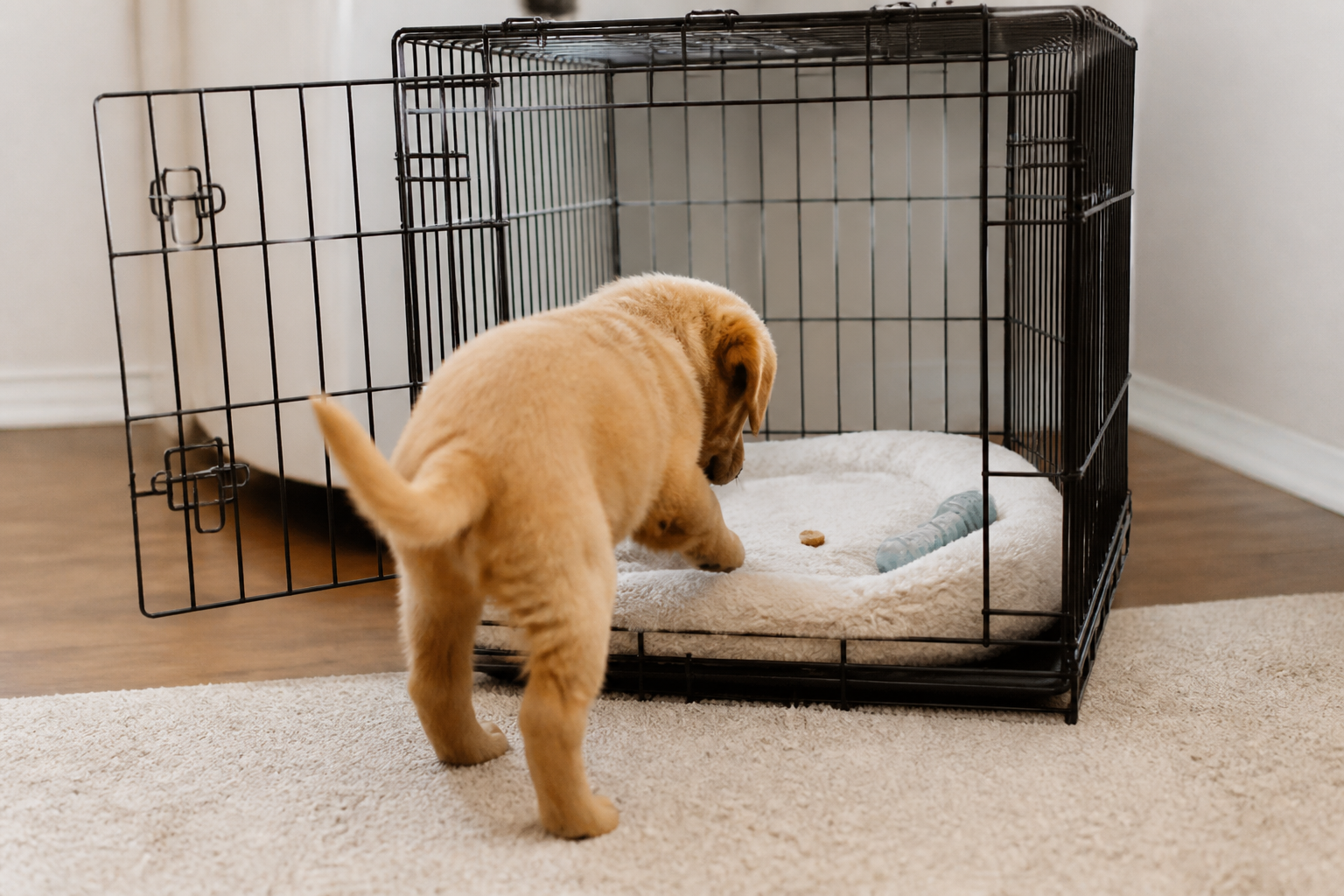
Game 3: Crate Treasure Hunt
If your puppy loves sniffing (most do), this one turns the crate into a mini enrichment zone. Sniffing is often calming for many dogs, which is a lovely side effect when you are building daytime crate comfort.
How to play
- Start with your puppy watching. Place 3 to 6 treats in obvious spots inside the crate: on the bed, near the back corner, beside a toy.
- Say “Find it!” and let them hop in and sniff them out.
- When they are done, toss a treat a few feet away so they wander back out without you luring or grabbing.
- Repeat with the treats slightly more hidden, like tucked under the edge of a blanket.
Make it puppy-proof
- Use soft bedding that will not slide, so your puppy does not feel unstable.
- If your puppy tries to drag the entire bed out, anchor it or use a fitted crate pad.
- Keep treat count small for tiny tummies, especially after meals.
Game 4: Lick and Relax
Licking is often self-soothing for many puppies. This game helps your pup learn the crate is where good things happen slowly, not just fast snack attacks.
What you need
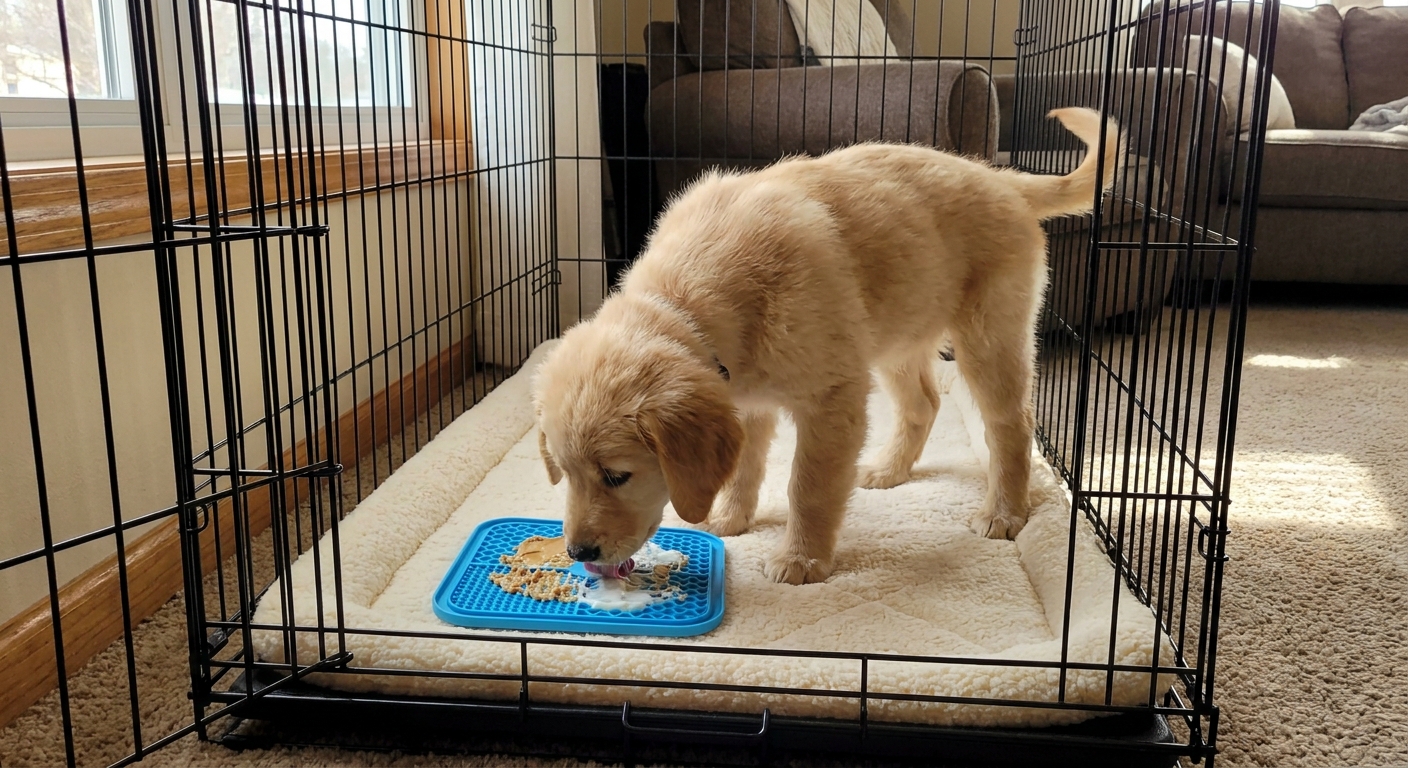
- A lick mat or a rubber food toy
- A smearable treat: canned puppy food, plain yogurt, pumpkin, or a little peanut butter (xylitol-free)
Food note: Introduce new foods gradually, keep portions small, and skip dairy if your puppy gets a sensitive-stomach protest.
How to play
- Prepare the lick item and place it in the back half of the crate.
- Let your puppy go in to enjoy it with the door open.
- Sit nearby and be boring. This is the rare moment when boring is a skill.
- When they finish, toss a treat just outside the door so they can choose to step out.
Level up (gently)
- Once your puppy happily stays in the crate licking, briefly swing the door partway closed, then open again, and drop a treat. Do not latch it at first.
- Later, close and latch for one second, treat, then open. Build in tiny steps.
Game 5: Calm Settle
This one looks simple, but it is pure gold for teaching your puppy how to settle in the crate instead of waiting for the next exciting thing. It is also my favorite “I need you to chill for five minutes” skill.
How to play
- With the crate door open, toss a treat inside.
- When your puppy steps in, wait quietly for any calm behavior: standing still, sitting, or even just pausing.
- Mark it with a gentle “Yes” (a marker word that means “that is what I want”) and drop a treat between their paws.
- Now wait for something slightly calmer, like a sit, then a down. Treat each win.
- If your puppy lies down, feed a few treats slowly, one every couple seconds, while they stay relaxed.
If your puppy will not lie down
- Reward the calmest thing they can do today, even if that is simply standing with four paws inside.
- Try this game after a potty break and a short play session, not when they are in full zoom mode.
When to close the door
Door work goes best when your puppy is already choosing the crate and staying in there to eat or lick. A simple rule I use is: if your puppy can stay relaxed while you touch and move the door a few times, you can start closing it for one second, then three, then five, always opening it again before they worry. If stress shows up, shorten the step and make the next rep easier.
Simple daily routine
You do not need a fancy schedule. You just need consistency and short sessions.
- Morning: Treat Toss Party for 1 to 2 minutes.
- Midday: Treasure Hunt (3 to 6 treats) plus one minute of Calm Settle.
- Afternoon: Crate Peekaboo while you move around the house for 1 minute.
- Evening: Lick and Relax while you watch TV or cook.
Over time, you will notice your puppy start choosing the crate on their own, especially if comfy bedding and a safe chew live there.
Common mistakes (and fixes)
Mistake: Only using the crate when you leave
Fix: Do one fun crate game when you are home every day. Your puppy should see the crate as part of normal life, not the goodbye machine.
Mistake: Closing the door too soon
Fix: Build value first with an open door. When you do close it, start with one second and work up gradually.
Mistake: Big emotional hellos and goodbyes
Fix: Keep arrivals and departures low-key. Calm in, calm out. Save the party for the backyard.
Mistake: Crate is uncomfortable
Fix: Check basics: appropriate crate size, good airflow, not too hot, not in a scary high-traffic spot, and something soft to lie on. Some pups prefer a crate cover for a den feel, others hate it. Let your puppy vote.
FAQ
How long should my puppy stay in the crate during the day?
It depends on age, potty training progress, and the individual puppy. As a general guide, many puppies can manage about 1 to 2 hours at a time during the day, but very young puppies often need less, and older puppies may handle longer. If accidents, frantic behavior, or escalating crying happen, shorten the time and add more potty breaks. If you are unsure what is appropriate for your puppy’s age or health needs, ask your vet or trainer.
What if my puppy cries as soon as the door closes?
Go back a step. Practice with the door open, then closed for one second, then open again, feeding treats through the bars. If your puppy is escalating into distress, do not try to “tough it out.” Use smaller increments and add more calming crate activities like licking and sniffing.
Should I feed meals in the crate?
Often yes, especially for reluctant puppies. Feeding in the crate is a built-in positive association. Start with the bowl near the entrance, then gradually move it farther inside as your puppy is comfortable.
Is it okay if my puppy naps outside the crate instead?
Totally okay. The goal is not “crate 24/7.” The goal is that the crate is a safe option your puppy can relax in when you need it. Keep playing the games and you will usually see voluntary crate naps increase.
A final pep talk
Crate training is not a personality test or a measure of how “good” your puppy is. Some pups love a den instantly, and some act like you are asking them to move into a haunted closet. If you keep the crate paired with tiny wins, tasty rewards, and calm repetition, most puppies come around faster than you expect.
Pick one game to start today, keep it short, and celebrate the small stuff. In my house, that is basically the puppy parenting motto.