If you’re a working pet parent, you’ve probably stared at a crate and thought, “Please let this be the right thing.” Good news: crate training can be a loving, practical tool. The not-so-fun news: puppies have tiny bladders, busy brains, and very strong opinions about being bored.
Below is the crate-time reality check I use with my fosters, plus a few strategies that make a normal workday possible without asking your puppy to do the impossible.
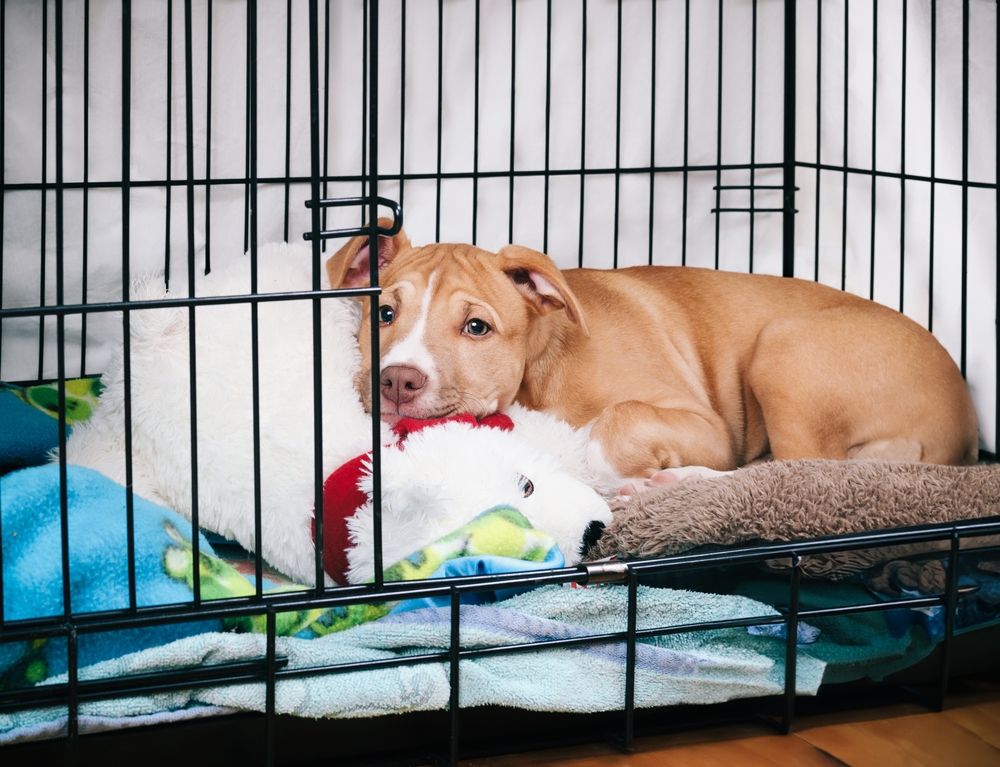
The short answer (with an asterisk)
A common rule of thumb is about one hour between potty breaks per month of age during the day. That is a potty guideline, not a promise that your puppy can calmly tolerate that much crate time on demand.
For crating specifically, many puppies do best with short daytime stretches, building toward 3 to 4 hours at a time as they mature and settle well. Some older puppies (especially 6 to 12 months) can comfortably do 4 to 6 hours with proper exercise, training, and a reliable routine.
The asterisk matters because crate time is not just about age. It also depends on:
- Potty training progress (a puppy who still has frequent accidents needs shorter stretches)
- Size and individual bladder capacity (tiny pups often need breaks sooner)
- What happened right before crating (potty break, play, water, meal)
- Your puppy’s comfort with the crate (panic and stress shorten any “limit”)
- Whether they can settle (some puppies need a calmer pre-crate routine)
Think of the guidelines as a starting point, then adjust based on what your puppy is telling you.
Puppy crate time by age
Here’s a practical range for daytime crating. Nighttime is often longer because most puppies sleep more deeply overnight, especially with a bedtime potty break and a consistent routine.
One important nuance: puppies often last longer when they are asleep than when they are awake and bored. A calm nap stretch and an awake stretch are not the same thing, even if the clock says they are.
| Puppy age | Common max daytime crate stretch | Notes for working parents |
|---|---|---|
| 8 to 10 weeks | 30 to 60 minutes | Many pups need very frequent breaks when awake. Some can nap closer to an hour (sometimes a bit more), but plan your day around the lower end until your puppy proves otherwise. |
| 10 to 12 weeks | 1 to 2 hours | Some pups can do 2 hours after a big play and potty, but do not assume it’s reliable yet. |
| 3 months | 2 to 3 hours | A solid mid-day break becomes more realistic, but many puppies still need two breaks in a workday. |
| 4 months | 3 to 4 hours | Many can handle two blocks of about 3 to 4 hours with a mid-day visit, assuming the crate is truly comfortable for them. |
| 5 to 6 months | 4 hours (sometimes 5) | Some puppies can stretch a bit more, but boredom and restlessness become the bigger issue. |
| 6 to 12 months | 4 to 6 hours | Depends heavily on exercise and training. Long daily crating without breaks can backfire, even if they can physically hold it. |
My rule of thumb: if you wouldn’t reasonably expect a toddler to hold it and stay calm that long, don’t expect it from a baby dog.
What “too long” looks like
Puppies do not always bark politely when they’ve hit their limit. Watch for these signs that crate stretches are too long, too frequent, or too stressful:
- Accidents in the crate (especially urine) or constant stress drooling
- Frantic barking, biting bars, or trying to escape instead of settling after a few minutes
- Soiling the crate and stepping in it, which can set back potty training
- Rebounding into chaos after release: zoomies, mouthiness, inability to calm down
- Refusing the crate when they previously went in happily
Some whining is normal early on. But sustained panic, self-injury risks, or repeated crate-soiling means it’s time to change the plan.
Why crate duration matters
1) Potty limits are real
Puppies physically cannot “be good” for long stretches. When they are forced to hold it too long, they either have an accident or they learn they must sit in their own mess. Neither helps your training.
2) Stress creates bad associations
If the crate always predicts long loneliness, your puppy may start fighting it. We want the crate to mean: safe, boring, cozy.
3) They need to move and learn
Puppies need opportunities to move, explore, chew appropriate things, and practice being a normal dog in your home. Too much crating can create pent-up energy that explodes when you are tired and just trying to eat dinner.
Working schedules that work
Let’s talk logistics. If you work outside the home, your best strategy is to plan crate time in shifts, not marathons.
Option A: One mid-day break
This is often the sweet spot for many puppies around 4+ months (and occasionally a mature 3-month-old who naps well).
- Morning: potty, breakfast, short play or training, potty again
- Crate: about 3 to 4 hours
- Mid-day: potty break, a quick sniff walk or 10 minutes of play
- Crate again: another 3 to 4 hours
- After work: straight outside, then decompression time
Option B: Two breaks
If your puppy is under 4 months, two breaks is often the difference between progress and daily accidents.
- Crate: 2 to 3 hours
- Break: potty plus a few minutes of movement
- Crate: 2 to 3 hours
- Break: potty plus a tiny play session
- Crate: 1 to 2 hours until you’re home
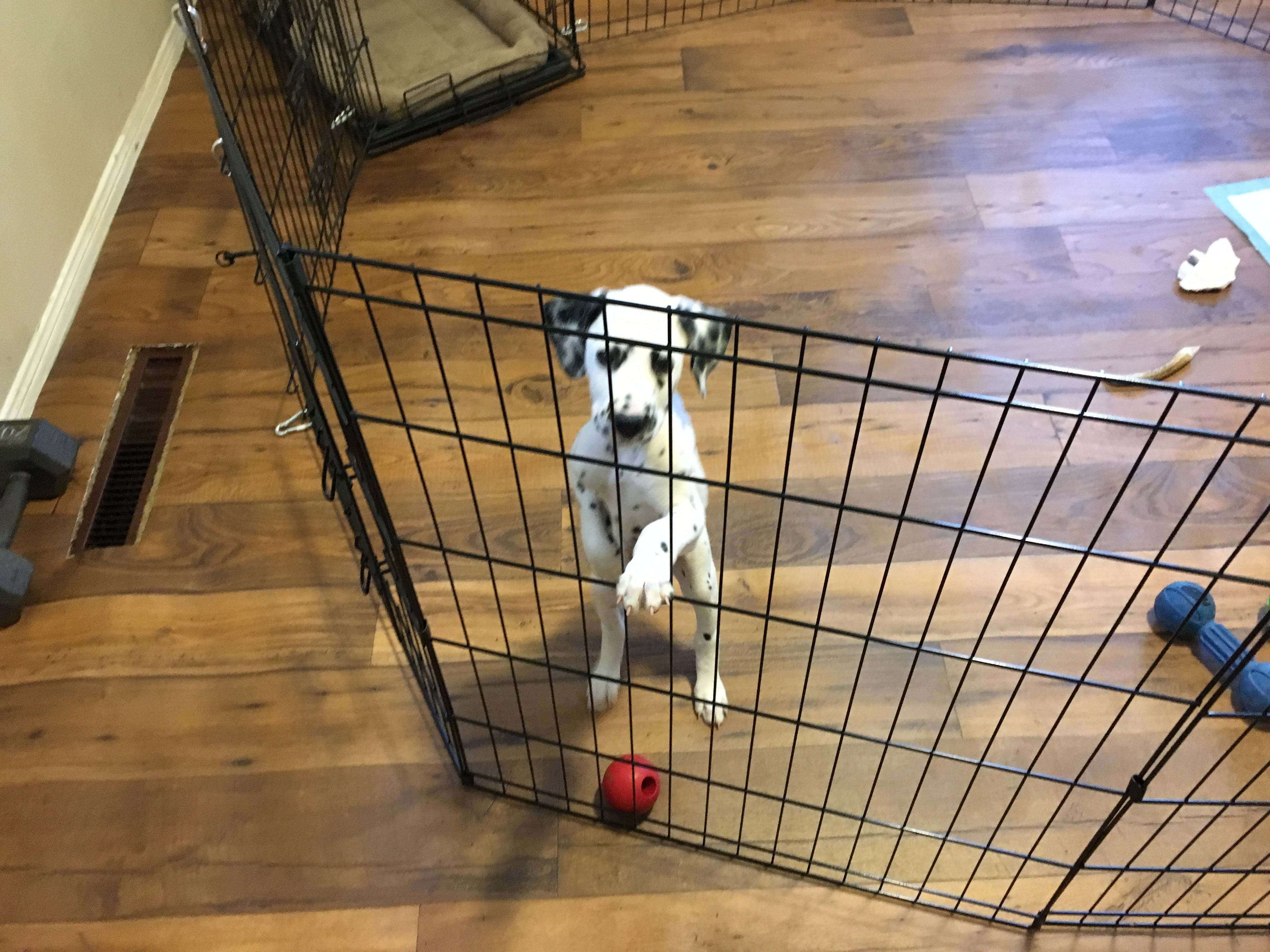
Option C: Crate plus a puppy-proofed pen
If the workday is long, consider an exercise pen attached to the crate (or a separate pen) so your puppy can stretch, play, and access water. For potty training, many people use a designated potty area in the pen. This can slow “hold it” training a bit, but it can be kinder and cleaner than expecting an 8-hour miracle.
Stretch crate time safely
If your goal is longer stretches, earn them gradually. Here’s what helps most puppies settle and stay comfortable.
Make the pre-crate routine predictable
- Potty (do not skip this)
- Short play or a sniff walk to take the edge off
- Calm minute (scatter a few kibble pieces, do a couple sits)
- Into the crate with something to do
Use “busy” items strategically
Food puzzles and long-lasting chews can buy you a peaceful start. A few options many puppies love:
- A stuffed rubber toy with part of breakfast (use puppy-safe fillings)
- A snuffle mat session before crating
- A lick mat (supervised first to ensure they do not shred it)
Safety note: Always match chews to your puppy’s chewing style, and supervise new items until you trust them. If your puppy destroys soft toys in minutes, do not leave them unattended with something they can swallow.
Keep the crate setup comfortable
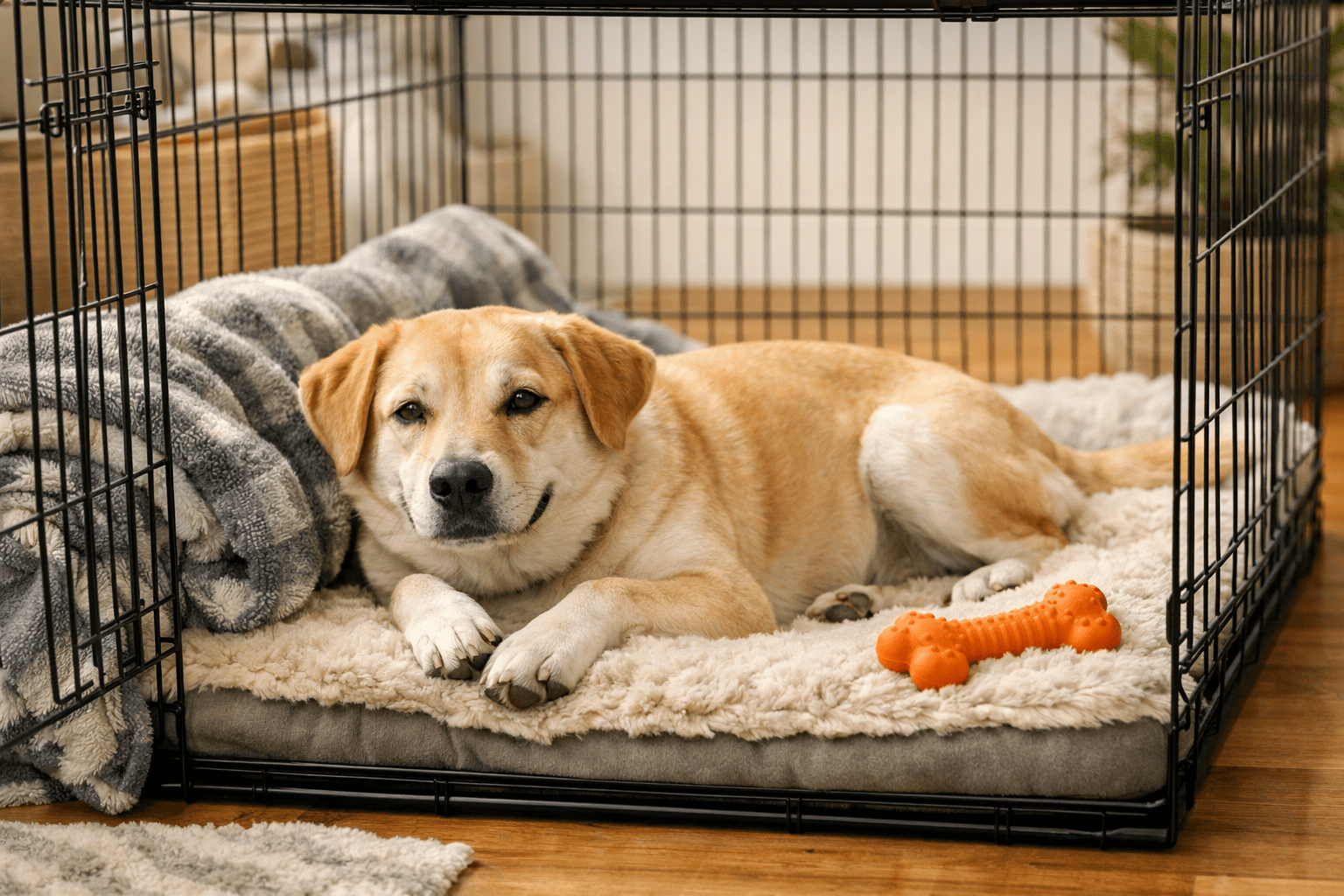
- Size: big enough to stand, turn, and lie down, but not so big they can potty in one corner and sleep in the other
- Temperature: pups overheat easily, especially in warm rooms
- Water: for longer stretches, consider a clip-on bowl (some puppies spill everything for sport, so test it first)
- Noise: a fan or white noise can help some pups nap
Quick crate safety check
- Remove collars and harnesses before crating to reduce snag risks.
- Skip tags that can rattle or catch, especially in wire crates.
- Check bedding choices: some puppies eat blankets. If yours does, use a safer mat or go without until chewing improves.
Daytime vs nighttime
Many puppies can sleep longer at night than they can crate during the day. That’s normal. Sleep pressure is higher, the house is quiet, and you are nearby.
For young puppies, nighttime might still include a 2 AM potty trip for a while. It’s not forever, even though it feels like it.
If your puppy wakes at night:
- Keep it boring: leash, quick potty, back to bed
- Do not add playtime, lights, or big cuddles
- Make sure the last potty break is right before you sleep
If you work 8 to 10 hours
You’re not a bad owner for having a job. You just need a plan that fits the puppy you have today, not the dog you’ll have in six months.
Realistic solutions
- Dog walker or neighbor help: even one consistent mid-day visit is a game changer
- Daycare (when age and vaccines allow): great for social pups, but not necessary every day
- Split schedule with a partner: staggered shifts can reduce crate hours dramatically
- Pen setup: more space, less pressure to “hold it” for a full workday
- Take a temporary step back: a puppy is a short season of intense logistics
If your puppy is under 4 months and alone for 8+ hours without a break, you will likely see accidents and stress. That is not a training failure. It is a schedule and biology problem, and it can be solved with more breaks or a different setup.
Common mistakes
Mistake: Crating a puppy with a full tank
Do instead: potty, then wait 5 minutes, then potty again. Many puppies need that second chance.
Mistake: Using the crate only when you leave
Do instead: do short “crate naps” while you’re home so the crate does not equal abandonment.
Mistake: Treating crate time like a substitute for crate training
Do instead: assume the duration guidelines only apply after your puppy has been properly acclimated. If your puppy is not comfortable in the crate yet, focus first on short, positive sessions and build up slowly.
Mistake: Expecting the crate to fix separation anxiety
Do instead: build independence with tiny absences and calming routines. True separation anxiety often needs a structured behavior plan and professional help. If your puppy panics hard, talk to your veterinarian and a qualified trainer. Panicking in a crate can be dangerous.
Mistake: Letting a puppy out while they’re screaming
Do instead: if it’s mild protest, wait for a brief pause, then reward calm. If you suspect it’s a potty need, take them out calmly, no party, then back in. If it’s full panic (thrashing, relentless screaming, self-injury risk), prioritize safety and get professional help rather than trying to “wait it out.”
FAQ
Can I crate my puppy while I’m at work?
Yes, as long as your puppy’s age and potty needs are respected, and they get breaks. Most working households need help from a dog walker, neighbor, family member, or a pen setup, especially in the early months.
Is it okay for a puppy to be in a crate for 8 hours?
For most puppies, not as a regular routine. Even many adult dogs struggle with 8 hours daily without a break. If you have no choice on certain days, aim for a mid-day break and keep the rest of the day low-stress with exercise and calm time.
How long can a puppy hold pee?
A common daytime guideline is about one hour per month of age between potty breaks, but individual puppies vary. Your puppy’s accident pattern is the truth teller.
Should I put water in the crate?
For short naps, many people skip water. For longer stretches, water is often kinder. Use a clip-on bowl and test it when you are home first to make sure your puppy does not flip it.
My puppy poops in the crate. What does that mean?
It can mean the crate is too big, the puppy is crated too long, the schedule needs adjusting, or the puppy is stressed. Also consider diet changes or tummy issues if stools are loose. If it keeps happening, talk with your veterinarian and tighten up the timing around meals and potty breaks.
A kind takeaway
If you remember one thing, make it this: crate time should match your puppy’s body and brain right now. Start with short, successful stretches. Build slowly. Get help during the workday if you can. And on the days it feels like your schedule is held together by kibble and hope, you are not alone.
Your puppy is not giving you a hard time. They are having a hard time, and with the right routine, it really does get easier.