First, a little reassurance
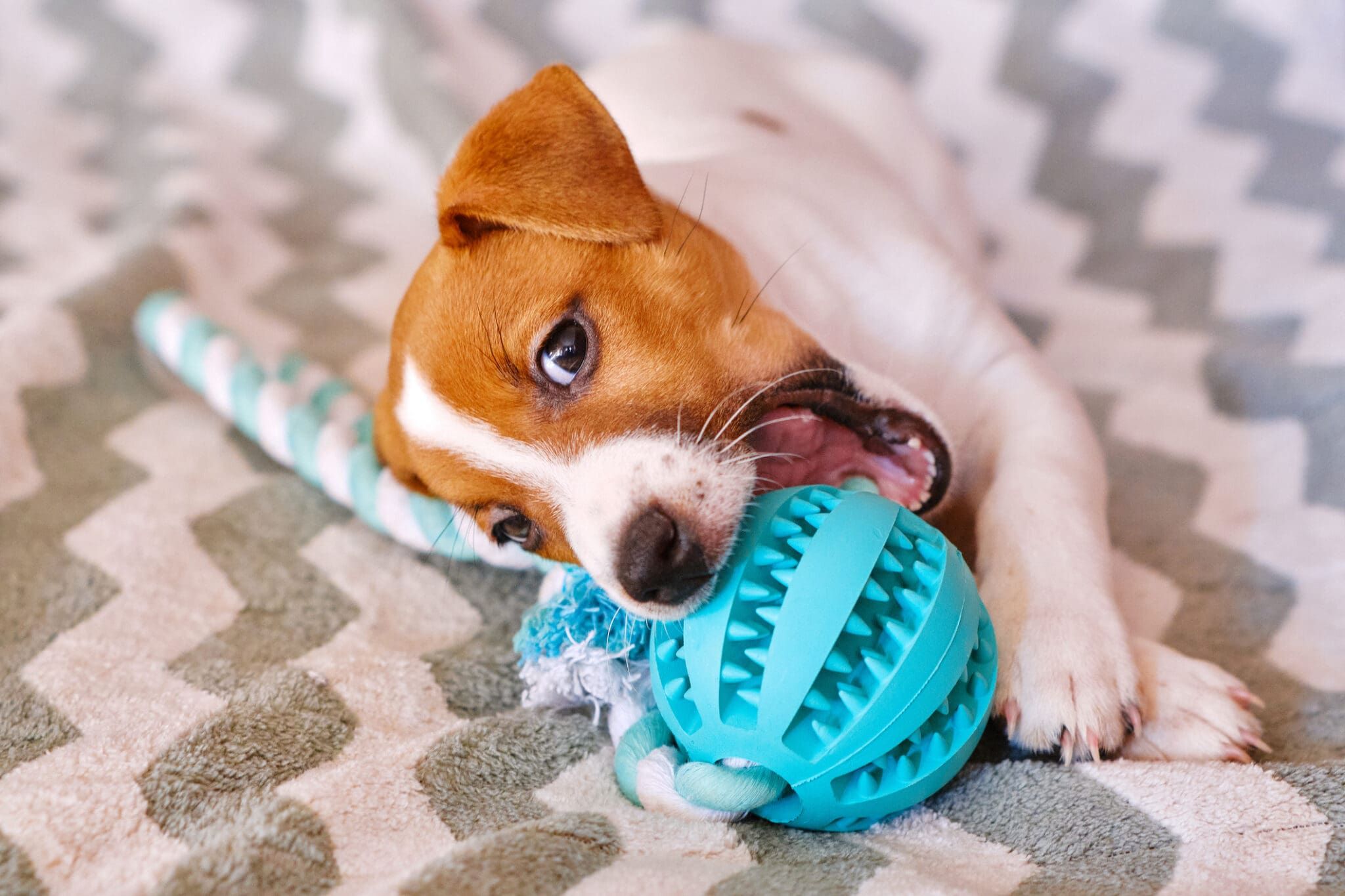
If your puppy is biting your hands, ankles, sleeves, shoelaces, and occasionally your soul, you are not failing. Puppy biting is normal. Puppies explore with their mouths, they play with their mouths, and when their gums hurt during teething, their mouth becomes their whole personality.
Your job is not to magically stop all mouthiness overnight. Your job is to teach bite inhibition (how gentle is gentle) and give your puppy better outlets so the nipping phase passes faster and with fewer band-aids.
Below are seven force-free methods I have used with dozens of foster pups. They tend to work best when everyone in the home follows the same rules, but every puppy is an individual, so think of this as a toolkit you can mix and match.
Why puppies bite
Before we fix it, we need to know what your puppy is trying to accomplish. Most nipping comes from one of these buckets:
- Play: Puppies play like puppies, not like humans. Their “hands” are their teeth.
- Teething discomfort: Sore gums make them seek pressure and cool relief.
- Overtired zoomies: Many puppies bite more when they are tired, not less.
- Overstimulation: Fast movement, squealing kids, and exciting environments can rev them up.
- Accidental reinforcement: If biting makes you squeak, wave your arms, chase, or engage, it can feel like a game.
The good news is that the solution is usually less about “discipline” and more about teaching, managing, and meeting needs.
1) Teach bite inhibition
Bite inhibition is your puppy learning that human skin is delicate. Even if you eventually want “zero teeth on skin,” teaching gentleness first makes everything safer, especially if your puppy gets startled later in life.
How to do it
- Start play with a toy in your hand or nearby.
- If teeth touch skin, freeze for 1 to 2 seconds. Keep your face and body neutral. Calmly say a consistent cue like “Too bad” or “Gentle”.
- Redirect immediately to a toy. If your puppy switches to the toy, keep playing. That is the lesson.
- If your puppy clamps down hard or keeps coming back to skin, end the fun (see method #2).
What you are rewarding is: soft mouth or toy mouth equals play continues. What you are removing is: hard teeth on skin equals play stops.
2) Use a reverse timeout
Most puppies bite because they want interaction. So we use the most humane consequence: interaction disappears. No yelling. No pushing them away (many puppies think that is wrestling). Just “party’s over.”
How to do it
- The moment biting escalates, stand up and calmly step behind a baby gate or into another room and close the door for a moment.
- Count 10 to 20 seconds. Come back quietly and resume calm play with a toy.
- If puppy bites again, repeat. Consistency is what makes this work.
This is often called a reverse timeout because you leave, not the puppy. It avoids turning the crate into a punishment and it is crystal clear communication.
3) Redirect early
Redirection sounds simple, but timing matters. If your puppy is already latched onto your sleeve, you are late. The goal is to catch that “I’m about to pounce” look and offer a better option first.
Make it easy on yourself
- Stash toys in the rooms where you hang out most: living room, kitchen, near the back door.
- Choose a mix: a tug toy, a soft toy, and a chew item.
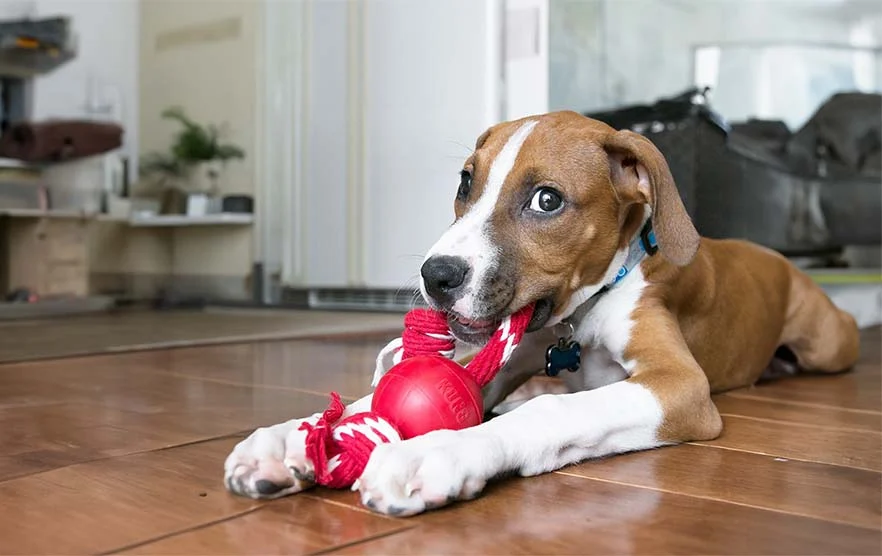
- When puppy approaches your hands or ankles, present the toy first and move it like prey: low, a little wiggly, and away from your hands.
If you only redirect after the bite, some puppies learn “bite human, toy appears.” Getting ahead of it flips the script.
4) Plan daily chew time
Teething is uncomfortable. When gums hurt, puppies need appropriate chewing or they will invent their own solutions (table legs, fingers, baseboards).
For most puppies, teething ramps up around 3 to 6 months, and improves as adult teeth finish coming in. If your puppy seems unusually painful, extra bitey, or suddenly reluctant to eat, it is worth a quick vet check.
Chew options that help
- Rubber chews sized appropriately for your puppy (not so small they can swallow it).
- Food-stuffed toys (like a classic stuffable rubber toy) with puppy-safe fillings.
- Chilled items: a damp washcloth twisted into a rope and chilled can soothe gums. Supervise and take it away if they shred it.
Avoid giving random household items “just this once.” Puppies are not great at generalizing rules, and it can create confusion about what is fair game.
Safety note: With any chew, supervise, choose the right size, and ask your vet if you are unsure what is appropriate for your puppy’s age and teeth. Many vets recommend skipping very hard chews that can crack teeth (for example, antlers, weight-bearing bones, or extra-hard nylon) and avoiding anything that splinters.
5) Teach “Take it” and “Drop it”
Many nipping problems get worse when puppies grab and you try to pry something from their mouth. Teaching “take” and “drop” turns mouth behavior into a controlled skill. Think trade, don’t pry.
Two-minute training game
- Offer a toy and say “Take it”. Let puppy grab it.
- Hold a treat at nose level, then move it slightly away as you say “Drop”. The moment they release the toy, give the treat.
- Immediately offer the toy again. Repeat 5 to 10 times.
This builds trust. Your puppy learns that humans approaching their mouth is not scary, and letting go makes good things happen.
6) Use naps and calm breaks
In my foster house, the worst biting is almost always an overtired puppy pretending they are not overtired. A tired puppy can get mouthy, wild, and oddly offended by everything.
What to try
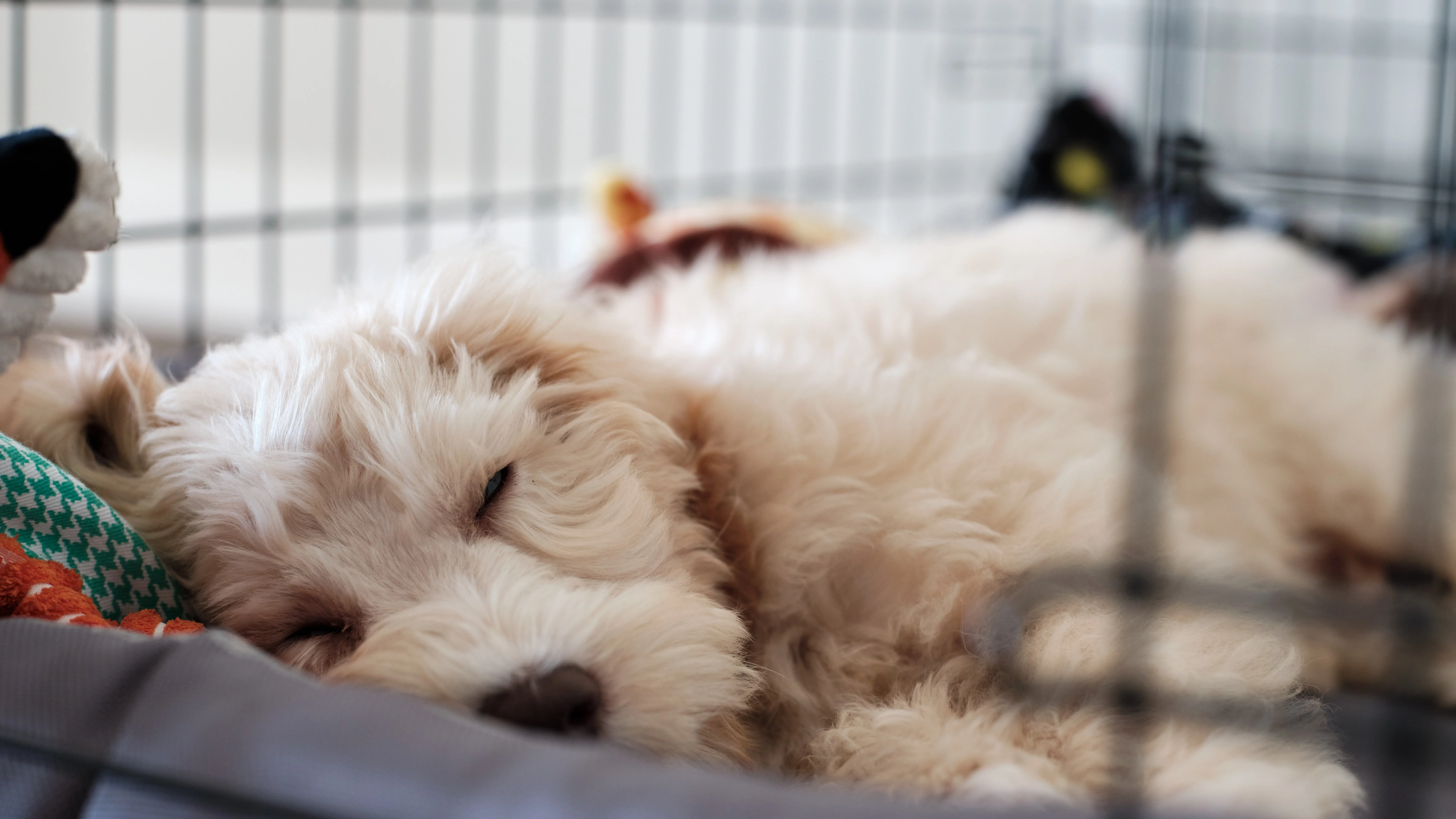
- After a play session, guide your puppy into a calm chew (stuffed toy) or a nap.
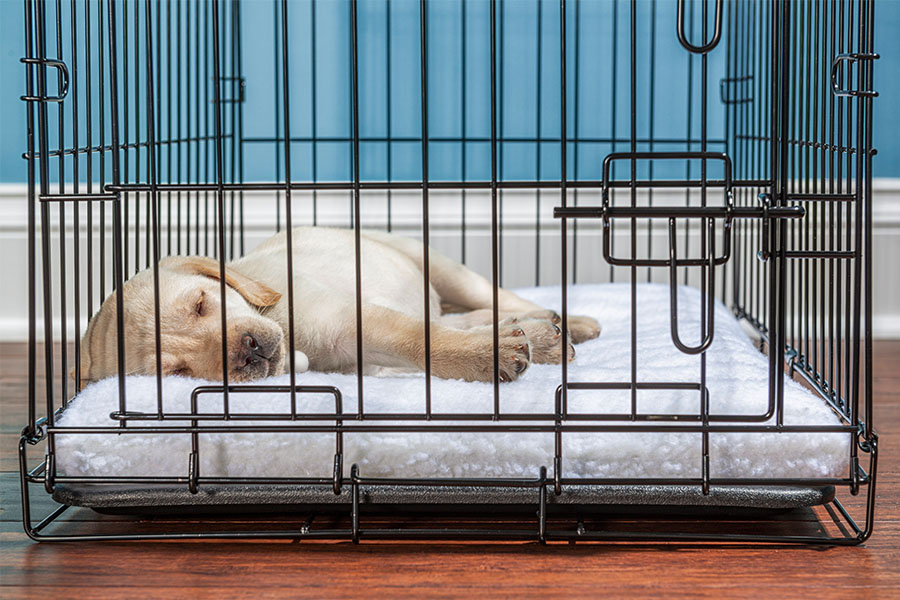
- If your puppy is spiraling into bitey chaos, that is often your cue for a quiet break in a puppy-proofed pen or crate with something soothing to chew.
- Keep stimulation appropriate: short play bursts, short training sessions, then decompress.
This is not punishment. Think of it as the puppy version of “You need a snack and a nap.”
7) Reward calm choices
If we only react when teeth happen, we miss the most powerful training opportunity: rewarding the exact opposite behavior. Puppies repeat what works.
Catch your puppy being gentle
- When your puppy approaches you without biting, calmly say “Yes” and drop a treat.
- When they lick instead of nip, reward it.
- When they choose a chew on their own, praise softly and offer a bonus treat.
- Practice a default behavior like sit for greetings. A sitting puppy is much less bitey than a pogo-stick puppy.
You are building a habit: “Keeping my mouth to myself makes humans wonderful.”
Management that helps
Training is the long game. Management is how you survive this week without looking like you wrestle tiny piranhas for fun.
- Use gates and playpens early so your puppy cannot rehearse chasing and nipping laps around the house.
- Try an indoor drag line (a lightweight leash with the handle removed or secured) so you can guide your puppy away from trouble without grabbing at their collar.
- Dress for the season: long pants, socks, and shoes during peak bitey times can save your ankles while you train.
What not to do
I get it. Puppy teeth are sharp. But a few common responses can backfire and make biting worse or create fear.
- Do not hit, flick, or hold the mouth shut. It can scare your puppy and increase defensive biting.
- Do not use harsh “alpha” tactics. Pinning, scruffing, and intimidation are not necessary for learning.
- Skip yelling. Many puppies interpret loud noises as excitement, not correction.
- Avoid chasing. If your puppy nips and you chase them around for the toy or your sock, you just invented a new game.
- Be cautious with yelping. Some puppies do back off, but many get more hyped. Freezing, redirecting, and reverse timeouts are usually clearer and calmer.
Quick troubleshooting
My puppy only bites me
This is extremely common. Puppies often bite the person who moves faster, plays rougher, squeals more, or is around them the most. Make sure everyone uses the same rules: redirect, reverse timeout, reward calm.
My puppy bites on walks
That is often overstimulation or overtired behavior. Bring a tug toy on walks, practice short training breaks (sit, touch), and keep walks age-appropriate. If it happens, stand still, shorten the leash for safety, and redirect to a toy or scatter a few treats in the grass to reset their brain.
My puppy growls while biting
During play, growling can be normal. Look at the whole picture: bouncy body, play bows, and quick breaks usually mean play. Stiff body, hard staring, and guarding behavior mean you should pause and consult a qualified trainer.
Puppies and kids
Puppies and kids can be a chaotic combination because fast movement and squeals are basically a bite invitation. Keep it simple and structured.
- Adults supervise 100 percent. If you cannot supervise, separate with a gate or pen.
- No running games with the puppy. Save chase for the backyard with a flirt pole later, not the hallway with a toddler.
- Give kids a job: calm treat-tossing when the puppy has four paws on the floor, or tossing treats into a snuffle mat while puppy stays busy.
- Teach kids the golden rule: do not put hands near the puppy’s mouth, even if the puppy looks sweet.
When to get extra help
Most puppy nipping improves dramatically with consistent training and maturity, often over weeks, not days. Still, reach out to your vet or a certified force-free trainer if:
- Bites break skin frequently or seem intense for your puppy’s age.
- Your puppy shows stiff, tense body language, guarding, or snaps when handled.
- Biting is paired with fear, hiding, or sudden behavior changes.
- You notice signs of mouth pain or illness like bad breath, bleeding gums, pawing at the mouth, drooling, or reluctance to eat (retained baby teeth and oral injuries happen).
- You have kids in the home and feel unsure how to manage interactions safely.
Getting coaching early is not overreacting. It is smart puppy parenting.
A simple daily plan
If you want a straightforward routine to start today, here is a bite-reduction rhythm that works in real homes:
- Morning: potty, breakfast, 3 minutes of “take it/drop it,” then a chew toy while you get ready
- Midday: short play with a tug toy, redirect early, then nap time
- Afternoon: gentle handling practice and reward calm approaches
- Evening: age-appropriate walk or backyard sniffing, then a stuffed toy to decompress
Less chaos, more structure, fewer teeth on your ankles.