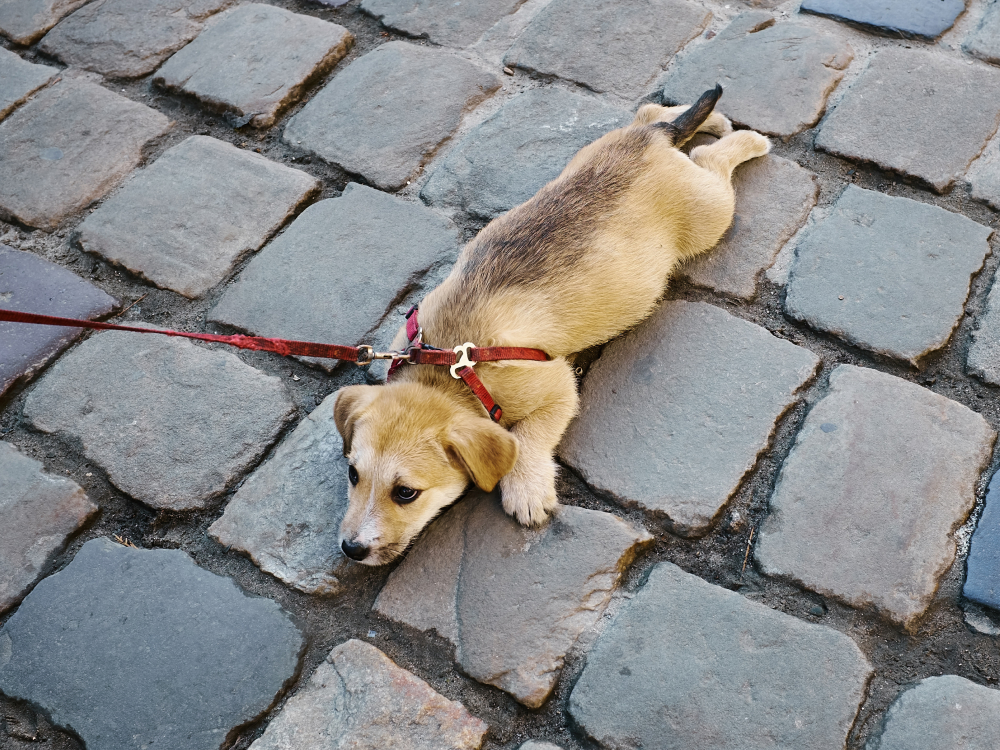
If your puppy hits the end of the driveway and suddenly transforms into a stubborn garden statue, you are not alone. I have fostered plenty of perfectly sweet puppies who were brave indoors and then absolutely baffled by the concept of: walking while attached to a string.
The good news is that most leash refusal is not defiance. It is usually confusion, overwhelm, tired baby-brain overload, or discomfort. With a few simple adjustments, you can turn those first “nope” walks into calm, confident steps.
Why puppies refuse to walk
Before you troubleshoot, it helps to figure out which bucket you are in. Different causes need different solutions.
- Overwhelm or fear: new smells, cars, people, dogs, wind, trash cans that definitely move on their own.
- Confusion: they do not understand leash pressure yet and freeze when they feel it.
- Discomfort: collar too tight, harness rubbing, leash clipped incorrectly, tags clanking or an ID tag tapping the chest, paws sensitive on hot, cold, rough, or salty ground.
- Too much, too fast: long walks are a lot for baby brains and baby bodies.
- Tired or overstimulated: missed nap, big day, post-meal slump, or they have simply hit their limit.
- Reinforced stopping: they plant, you coax, you pick them up, they learn “stopping works.”
Also worth saying out loud: a puppy refusing to walk is common right after adoption. New home, new routine, new everything. Give it a little grace.
Start with safety and comfort
When a puppy freezes, I always do these checks first because they are fast and they prevent you from accidentally training around pain.
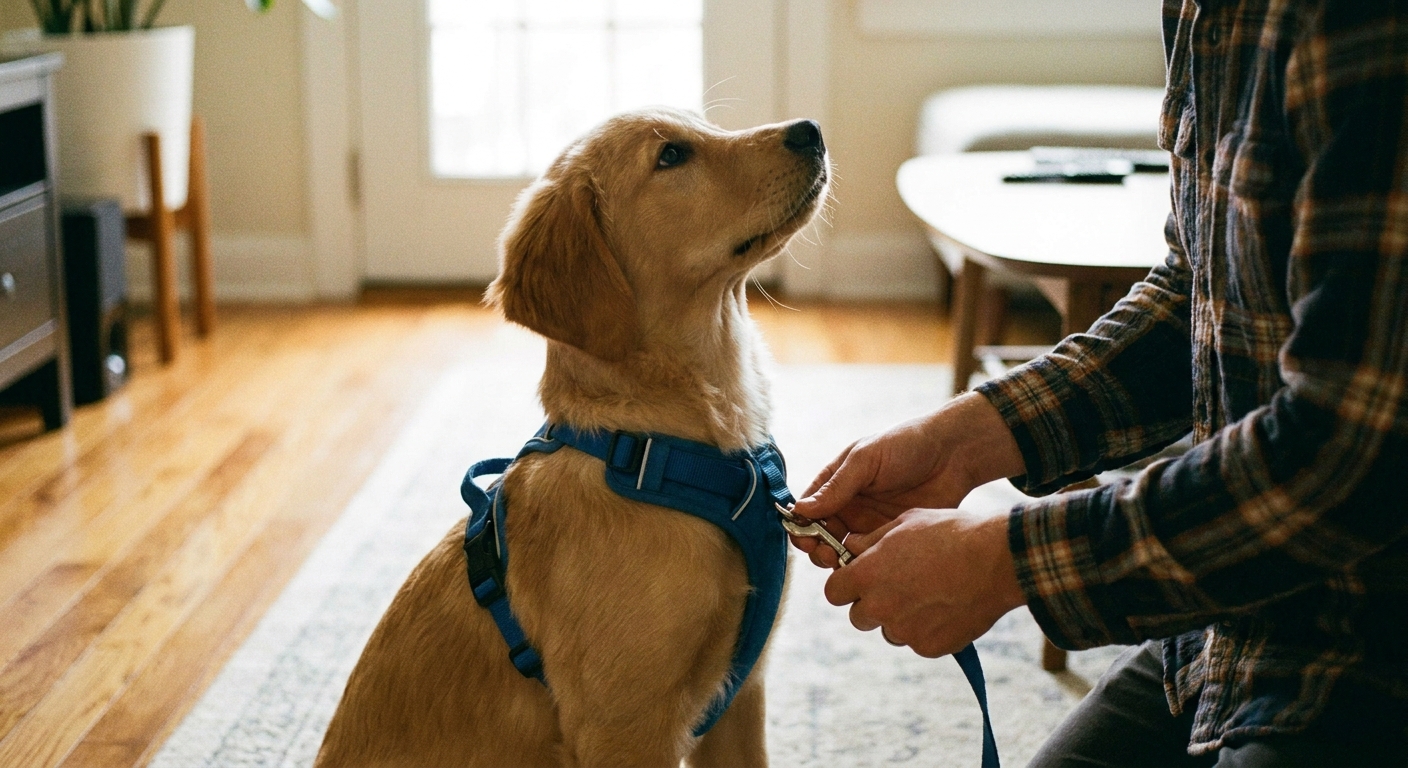
- Harness fit: You should be able to slide two fingers under straps, then adjust as needed for coat and body type. Check armpits for rubbing and make sure the puppy cannot back out.
- Collar fit: Same two-finger starting point, then confirm it will not slip over the head. For many puppies, a harness is kinder for early walking.
- Paw check: Look for debris between toes, a limp, or sensitivity on pavement, ice melt, or rough gravel.
- Temperature check: Pavement can burn. As a quick rule of thumb, if you cannot keep your palm on it for about 5 to 7 seconds comfortably, it is too hot. In winter, cold surfaces and de-icers can irritate paws too.
- Health check: If your puppy suddenly refuses after walking fine yesterday, or seems lethargic, talk to your vet.
Puppy safety note: If your puppy is not fully vaccinated, follow your vet’s guidance about where they can walk. Leash practice can happen at home, in your yard, or in low-dog-traffic areas while you avoid busy parks, pet store sidewalks, and other high-risk spots.
When your puppy freezes
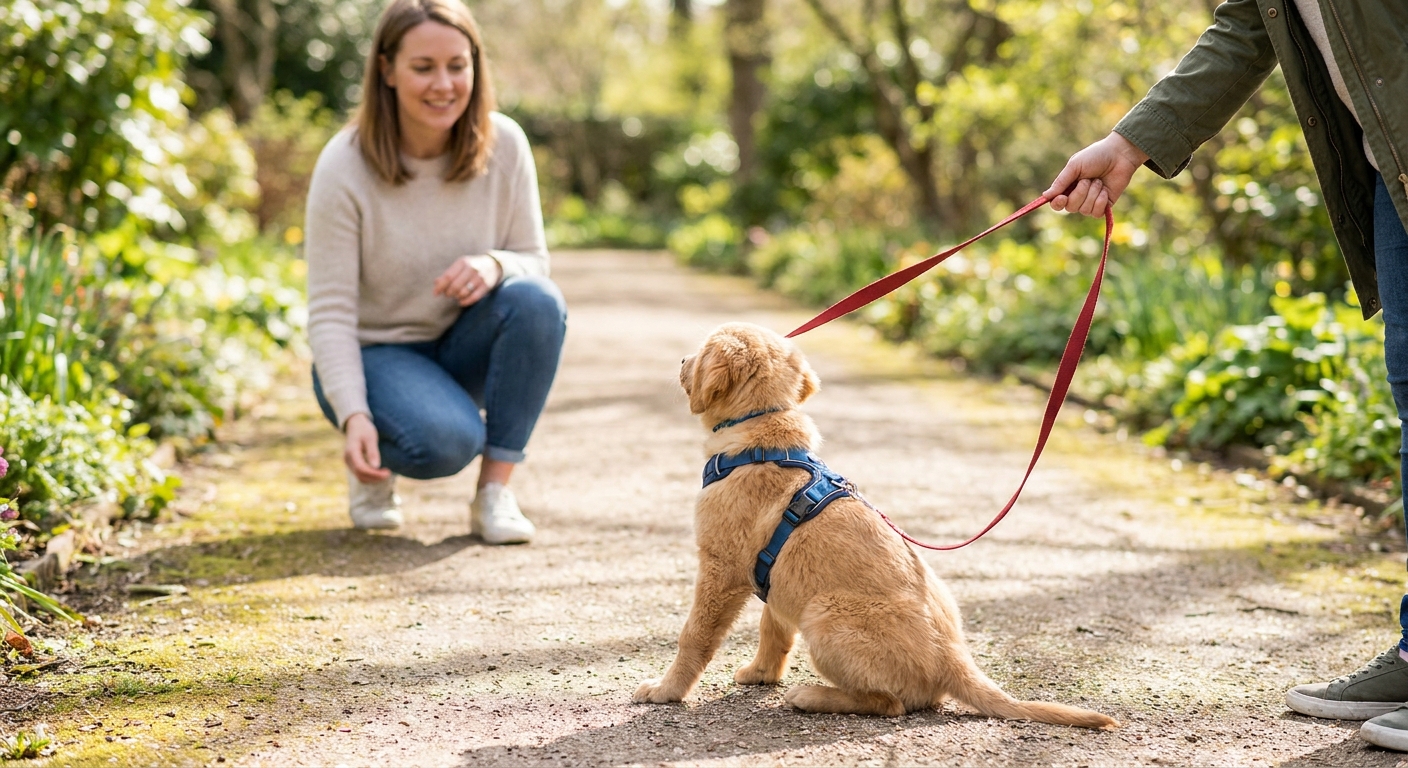
Your goal is to teach: “When I follow leash pressure or choose to move with my person, good things happen.” Your goal is not to drag a baby dog down the sidewalk like a tiny sled.
1) Stop pulling, add slack
Constant tension often makes puppies brace harder. Stand still, take a breath, and create slack. If you need to, step slightly toward your puppy to remove tension instead of leaning away.
2) Be interesting, not insistent
Turn your body sideways, crouch a little, and use a happy voice. Pat your leg. Take one step away from the puppy (not toward them) and see if curiosity kicks in.
3) Reward a tiny choice
The first win might be one paw movement. The second win might be two steps. That counts.
- Say a cheerful marker like “yes.”
- Drop a treat by your shoe or slightly behind you so the puppy turns and comes with you.
- Then take 2 to 5 steps and reward again.
4) Use a treat magnet briefly
Hold a treat at nose level, let the puppy nibble while you take a few steps for about 5 to 10 seconds, then move the treat to your pocket and reward after a step or two. The magnet is a jump-start, not the permanent engine.
5) If they are overwhelmed, retreat
If your puppy is wide-eyed, low to the ground, tail tucked, or scanning and startled, you are not in a learning zone. Back up to a quieter spot, reward, and try again later. Confidence comes from many easy reps, not one heroic walk.
When they pull backward
Backward pulling is often panic or uncertainty. This is one situation where I get very picky about gear, because slipping a collar or backing out of a harness is a real risk.
What to do now
- Do not yank forward. That often increases the scramble backward.
- Step toward your puppy to reduce tension and prevent them from hitting the end of the leash again.
- Turn and walk a few steps away from the scary thing (toward home or a quieter area), then reward when they follow.
- Scatter treats on the ground near them. Sniffing and foraging often helps dogs settle and can give you a calmer moment to reset.
Gear and handling tips
- Well-fitted harness: Many puppies do better in a Y-front harness that does not pinch the shoulders. Front-clip harnesses can help reduce pulling, but any style should be fitted to avoid rubbing. For some tiny or confident pups, a back-clip harness is perfectly fine.
- Skip retractable leashes for training: They can be harder to control, can cause rope-burns or tangles, and often give inconsistent feedback that makes loose-leash skills harder to teach.
- Martingale collar as backup only: If your puppy is an escape artist, ask your trainer or vet to help you fit it correctly. It should tighten only to snug, not choking. Use it only under supervision and never leave it on an unattended puppy. Clip the leash to the harness when possible and use the martingale as a safety connection only.
- Leash safety: Do not wrap the leash around your hand. Hold it securely with a little slack so you can respond if your puppy startles.
When they bite the leash
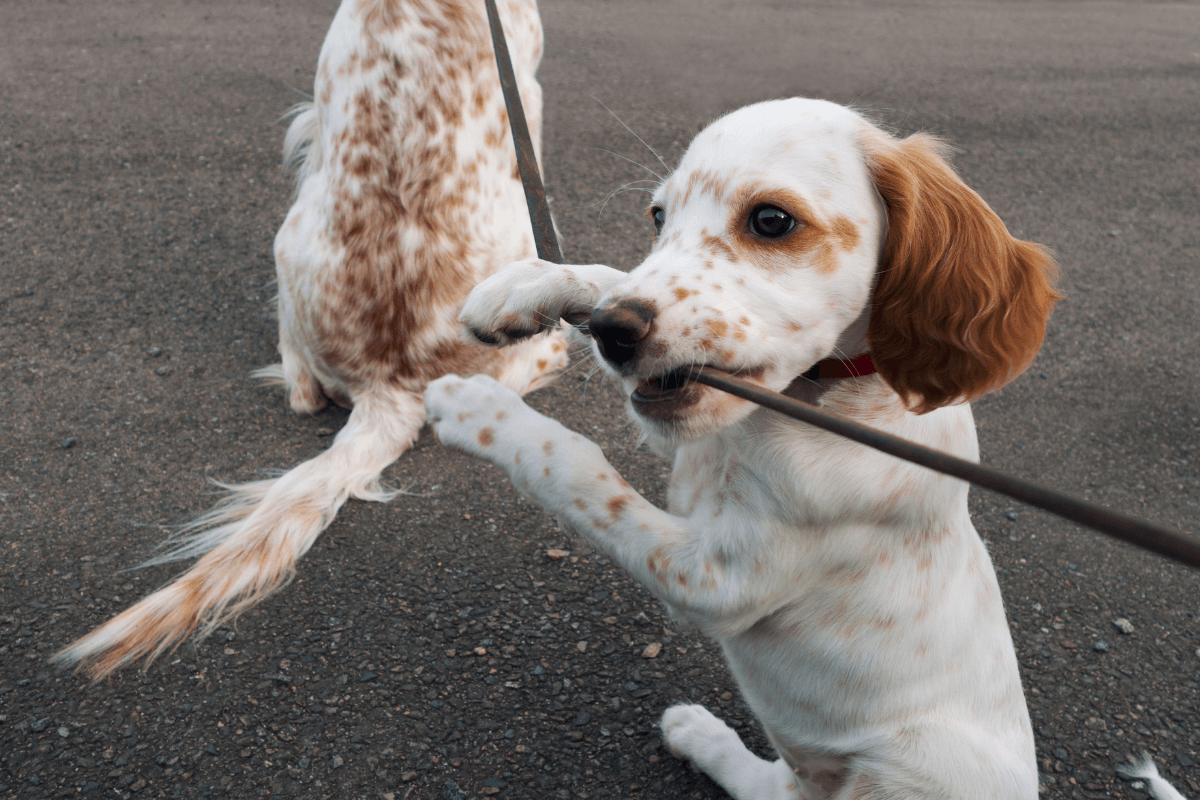
Leash biting is incredibly normal. The leash moves, it tugs, it looks like a toy, and puppies are basically professional chewers.
Fixes that work
- Become boring: Stop moving your feet. Hold the leash steady and low. Wiggly tug-of-war energy makes it worse.
- Trade, do not battle: Offer a treat at the puppy’s nose, say “drop” or “give,” and the moment they release, reward.
- Give them a legal job: Bring a small tug toy or a durable chew you can hold for 10 seconds as a reset, then put it away and continue walking.
- Reinforce loose-leash walking: If they walk two steps without grabbing the leash, reward that immediately.
Avoid: yanking the leash out of their mouth, scolding, or flicking the leash. It can increase frustration and turn the leash into an even bigger game.
Build confidence first
If your puppy struggles outside, shrink the challenge. A lot. Think of it like teaching a kid to swim in the shallow end before you head to the deep pool.
Mini sessions
- Harness practice indoors: Put it on, feed a few treats, take it off. Repeat. Make it boring in a good way.
- Leash dragging at home: Clip the leash on and let your puppy walk around supervised for 2 to 3 minutes while you reward calm movement.
- Front yard sniffari: Stand in one small area and let your puppy sniff. Reward voluntary check-ins.
- Driveway loops: Walk 10 steps out, 10 steps back, treat party, done.
For many puppies, “walks” at first are really just outdoor exposure plus sniffing. That still counts as training.
Two-week starter plan
If you love a checklist, this is the routine I use with many foster puppies who freeze, reverse, or chew the leash.
Days 1 to 3
- 2 to 4 short harness sessions per day with treats.
- 1 to 2 minutes of leash-on time indoors while you reward calm.
- One quiet outdoor potty trip that includes 30 seconds of gentle leash practice.
Days 4 to 7
- Two “walks” per day, 3 to 8 minutes each.
- Reward every few steps at first.
- If freezing happens, reset with slack leash and treat for one step.
Week 2
- Change routes slightly.
- Practice passing a mild distraction at a distance (a parked car, a neighbor across the street).
- Start spacing treats out, but keep praising and rewarding check-ins.
Common mistakes
- Dragging the puppy forward: teaches bracing and makes walks scarier.
- Only rewarding when they finally move: reward the small steps and brave moments, not just the finish line.
- Walking too far too soon: short and successful beats long and stressful.
- Using the leash to steer like a joystick: guide with your body and rewards, not constant pulling.
- Skipping sniff time: sniffing is how puppies process the world and decompress.
When to get help
Some puppies need more support, and that is okay. Consider a certified positive-reinforcement trainer or talk to your vet if you notice any of the following:
- Your puppy consistently panics, trembles, or tries to flee on walks.
- They freeze at the door and refuse to go outside at all.
- They suddenly stop walking after doing fine previously.
- You see limping, persistent scratching at gear, or signs of pain.
- Leash biting escalates into redirected nipping at your hands or legs.
You do not need to “push through” fear. There are kinder and faster ways to build confidence.
Quick FAQ
Should I pick my puppy up?
Sometimes, yes, but use it strategically. If your puppy is frightened or you need to get them out of a tough spot safely, picking them up is fine. If you always pick them up the second they stop, you may accidentally teach that stopping ends the walk. I prefer a brief reset first (slack leash, treat for one step). If that fails and your puppy is overwhelmed, carry them to a calmer area and end on a gentle win.
How long should a puppy walk be?
In the beginning, think minutes, not miles. Many puppies do best with 5 to 15 minutes of wandering and sniffing. The right length is the one where your puppy can stay curious and relaxed, not frazzled.
What if my puppy only walks toward home?
That is a confidence clue. Make your “away from home” direction easier and more rewarding. Do a few treat-heavy steps away, then turn back before your puppy gets stressed. Over time, you extend the away portion by a few steps at a time.
Is it okay to use treats every walk?
Using treats is great. The goal is to shift from constant luring (treat in front of the nose the whole time) to rewarding after good choices (walking with you, checking in, recovering from a startle). Start generous, then gradually space rewards out as your puppy understands the game.
The takeaway
A puppy who refuses to walk is not “being bad.” They are telling you something feels confusing, scary, uncomfortable, or just like too much today. Keep the leash loose, reward tiny brave choices, and shrink the challenge until your puppy can succeed. Those early wins add up fast, and before you know it, your little statue is trotting along like they invented sidewalks.