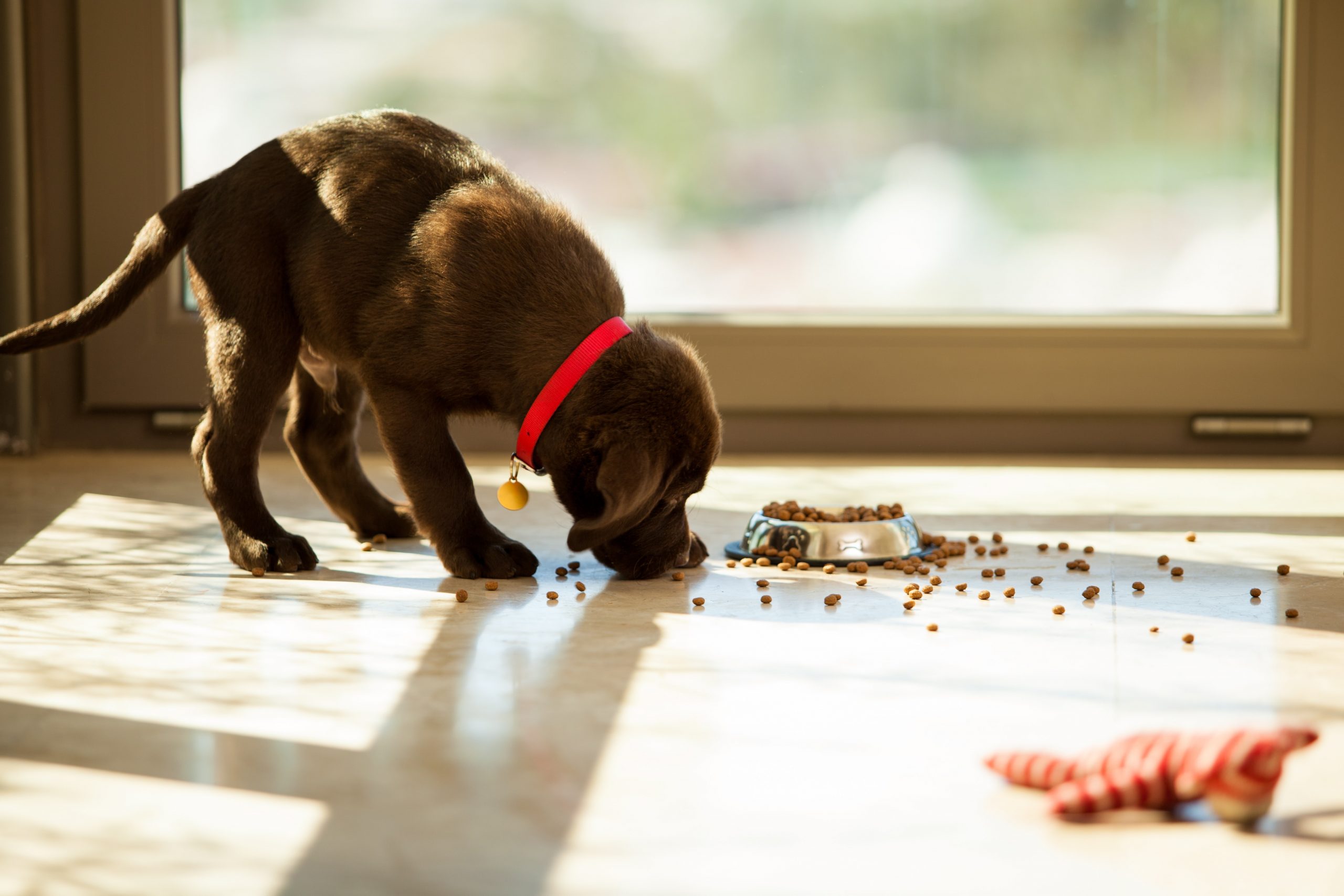
Food aggression and resource guarding can feel scary because it shows up fast, usually right when you are just trying to be a responsible human who checks bowls, picks things up, or keeps the kids safe. The good news is that with young puppies, prevention is often straightforward. You are not trying to prove you are the boss. You are teaching your puppy a simple life rule: humans approaching your stuff predicts better stuff.
I have raised a lot of rescue pups who came in worried about resources, and I can tell you this: guarding is often not “mean.” It is a puppy feeling unsure, overstimulated, in pain, or simply acting on past learning. Our job is to make food time and “I need that back” moments feel safe, predictable, and even a little delightful.
Quick safety note: If there is any bite history, if guarding is intense, or if you feel unsafe, skip the close-up exercises and work with a qualified professional.
What resource guarding looks like
Resource guarding is any behavior meant to keep someone away from something valuable. In puppies, it can be subtle at first. Catching the early whispers helps you prevent the full-volume growl later.
- Body freeze over the bowl or chew
- Eating faster when you walk by
- Head hovering low over food, shoulders tight
- Side eye when approached
- Moving away with the item, then guarding it in a corner
- Growling, snarling, snapping if someone gets closer
Growling is information, not “bad attitude.” If your puppy growls, they are saying they feel unsafe. We listen and adjust the plan so nobody has to get bitten.
Why early prevention helps
Puppies build fast associations, especially in the early months and juvenile period. If bowl approaches repeatedly lead to scary moments (hands grabbing food, kids crowding, other pets rushing in), guarding can become a learned strategy. If bowl approaches repeatedly lead to better moments (extra chicken appears, humans give space, trading is fair), your puppy relaxes and stops feeling the need to protect.
Improvement is possible at any age. It is just often easier when the habit is not well-practiced yet.
Some puppies are more predisposed to guarding, especially those who:
- Had competition for food in a litter or shelter setting
- Are naturally more cautious or easily startled
- Have had items taken without a trade
- Are in a home where other pets hover or steal food
Predisposed does not mean doomed. It just means you start the “humans bring bonuses” lesson earlier and practice it more often.
Feeding habits that help
1) Feed in a calm, protected spot
If your puppy thinks a sibling (human or animal) might swoop in, they will guard. Set them up to feel secure.
- Feed puppies separately from other pets, ideally behind a baby gate or in a pen.
- Ask kids to give the puppy space during meals.
- Keep the area quiet. Excitement can spill into frantic eating.
2) Use a schedule if it works for your home
Many puppies do well with measured meals at consistent times, and it helps you notice changes in appetite and potty needs. This is not a cure for guarding, but predictability can reduce chaos around meals.
3) Make the bowl the place where extra good things appear
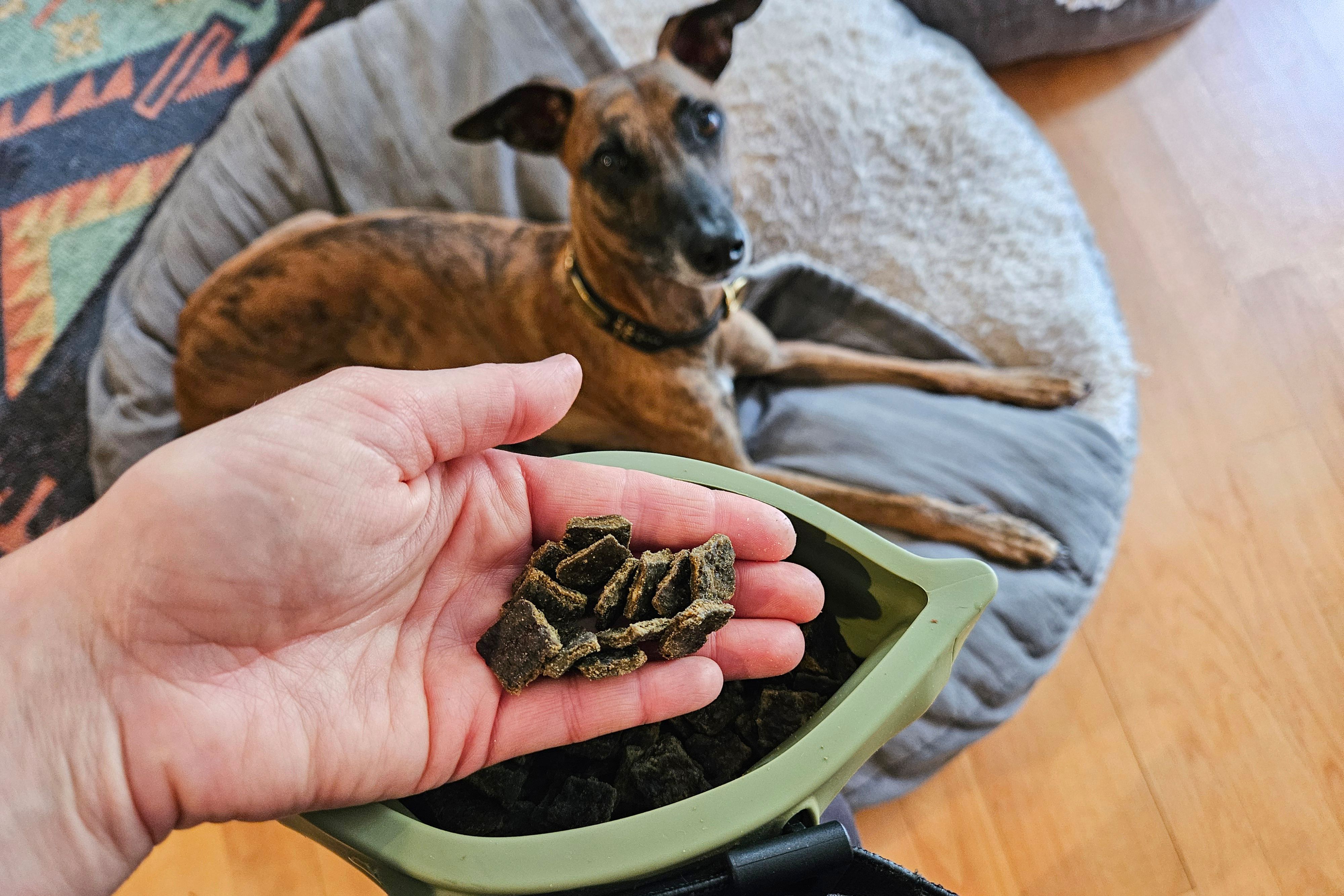
This is the golden rule. A few times a week, “drive by” your puppy while they eat and toss a high-value topper into the bowl.
- Small bits of cooked chicken, turkey, or a spoon of wet puppy food work well.
- Toss, do not reach into the bowl at first.
- Walk away after. The message is: you approach, food improves, you leave.
4) Skip the bowl messing routine
Old-school advice sometimes tells people to poke at the bowl, take it away mid-meal, or make the puppy tolerate hands in their food. In real life, this often creates the exact problem you are trying to prevent. If you repeatedly interrupt meals, you can teach a puppy that humans are food thieves.
5) Choose the right bowl setup
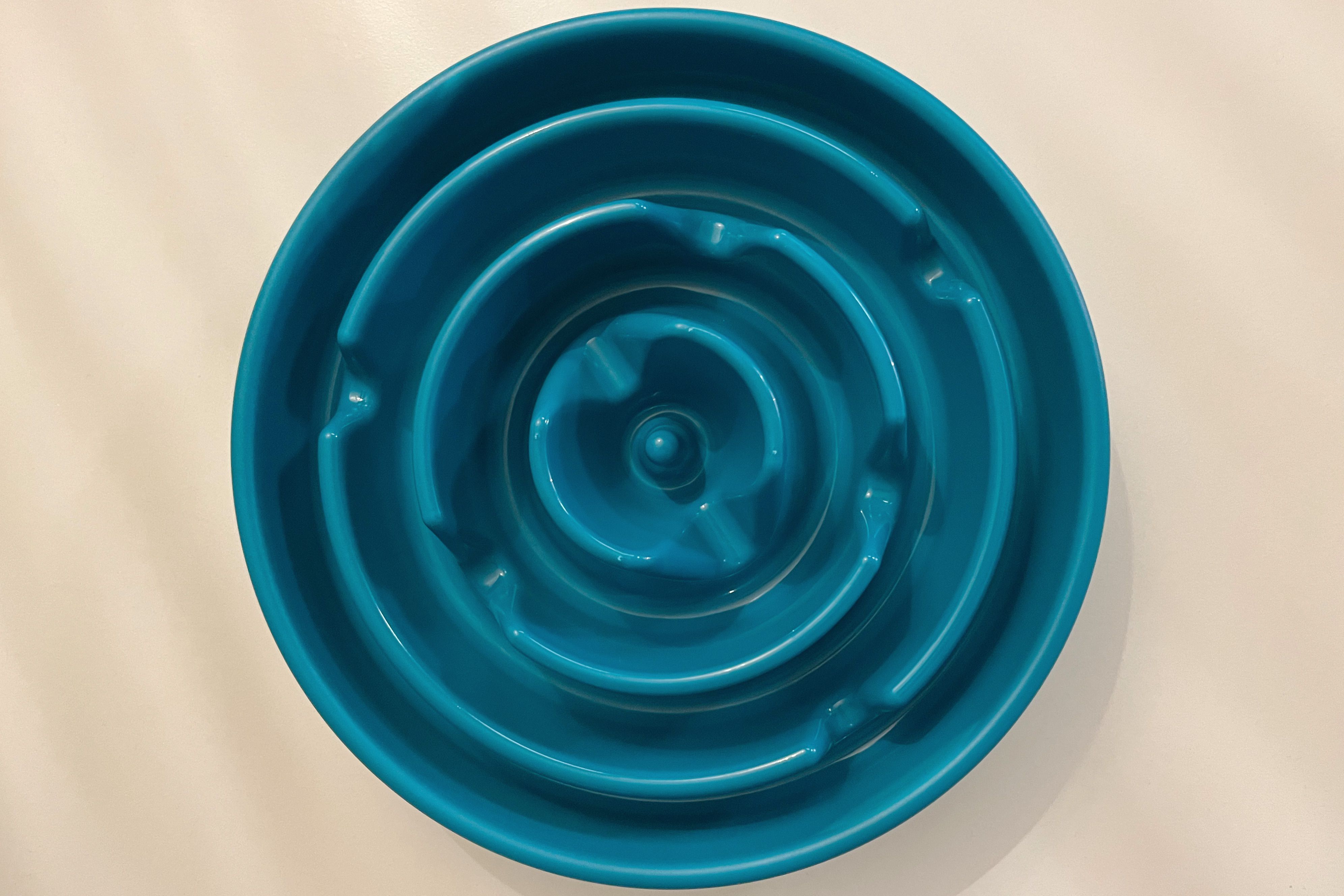
Most puppies do best with a stable, non-skid bowl. If your puppy is a frantic eater, a slow feeder or scatter feeding can help. Just monitor body language. Some dogs get frustrated when food suddenly becomes harder to access, and frustration can raise arousal.
Training games to prevent guarding
These games are short, upbeat, and easy to weave into your day. Think 30 to 90 seconds at a time. Quit while your puppy is still happy.
The Bowl Bonus Game
- Put down a mostly normal meal.
- As your puppy eats, walk by at a comfortable distance and toss a tasty bonus into the bowl.
- Keep walking. No hovering.
- Repeat 2 to 5 times over the meal.
Progression: Over days, you can step a little closer before tossing. If your puppy stiffens, speeds up, or side-eyes, you got too close too fast. Back up and make it easier again.
Touch Then Treat
This teaches your puppy that your hand coming near them predicts good stuff, without you grabbing anything.
- While your puppy is chewing a toy (not their most prized chew yet), briefly touch their shoulder or chest.
- Immediately drop a treat right in front of their nose.
- Remove your hand and pause.
Do not pet for a long time. This is a clean cause and effect: touch, treat appears, hand goes away.
Trade Up
“Drop it” is great. “Drop it because you get something better” is even better. Trading prevents a lot of conflict, especially during the puppy “I found a treasure outside” phase.
- Offer your puppy a low-to-medium value item like a toy.
- Show a high-value treat at their nose.
- When they release the toy to take the treat, say a cheerful cue like “trade” or “drop”.
- Give the treat, then give the toy back right away.
Giving it back is what builds trust. It tells your puppy you are not a thief. Later, when you truly need to take something away, your puppy is already comfortable with the pattern.
Hand Near Bowl
Once your puppy stays loose and waggy during the Bowl Bonus Game, you can add gentle hand movement near the bowl.
- Walk up, pause, and drop a treat into the bowl.
- Next reps: drop the treat closer to your hand.
- Eventually: briefly touch the edge of the bowl while dropping the treat.
Keep it boring and quick. If you feel tempted to stir the food with your fingers, take a deep breath and choose calm instead.
What progress looks like
You want to see your puppy get softer, not just quieter. Signs you are on the right track include:
- A looser body and relaxed shoulders when you walk by
- Pausing eating to glance at you, then returning to the bowl
- Soft eyes, a neutral tail, or a gentle wag
- Willingness to move away from an item when you cue “trade”
Stop and add distance if you see stiffening, hovering harder over the item, whale eye, growling, or a sudden increase in speed eating. Those are your puppy telling you the steps are too hard right now.
Chews and other treasures
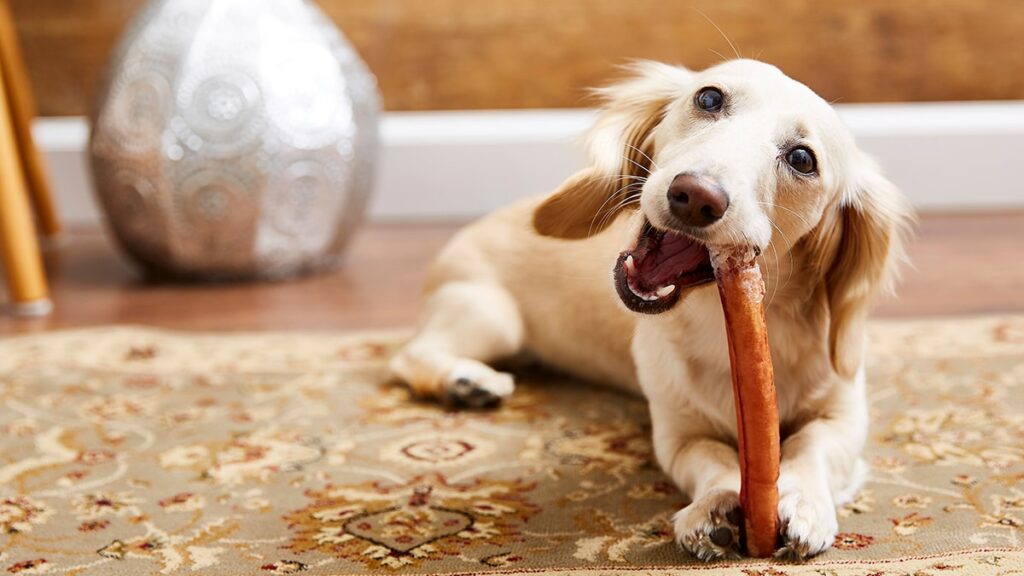
Food bowls are only one piece of the guarding puzzle. Many puppies guard chews, bully sticks, lick mats, and stolen socks with even more intensity.
Rules for chew time
- Start with lower-value chews and practice trading before introducing the most prized chew.
- Give chews in a defined spot like a bed, crate (door open), or pen so the puppy is not defending the whole living room.
- No crowding. Kids should not sit nose-to-nose with a chewing puppy.
- Practice bonus drops. Walk by and toss a treat without reaching for the chew.
A quick note about crates
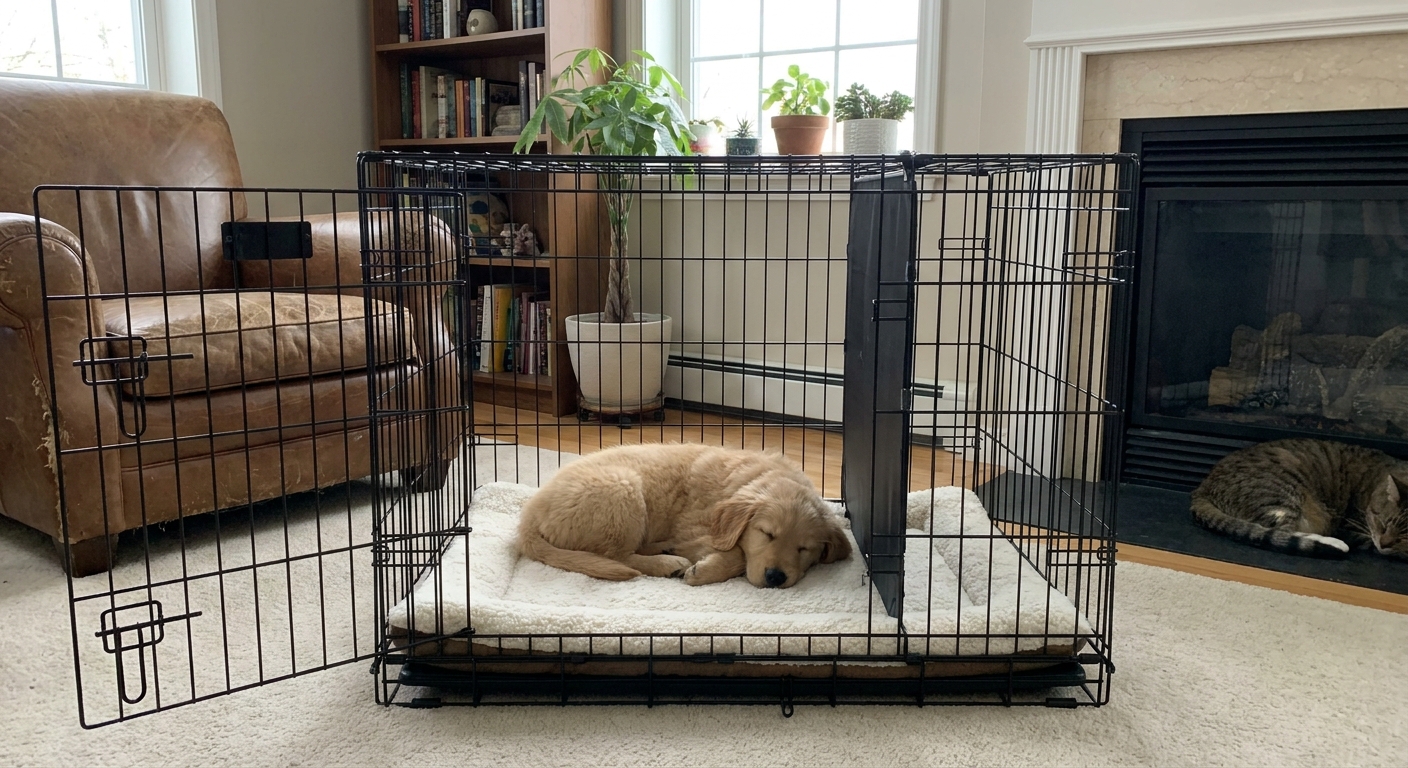
Crates can be a wonderful calm eating and chewing zone, but only if everyone respects it. Teach kids that a puppy in the crate is off-limits unless an adult says otherwise. If a puppy learns that hands invade their safe space, guarding can pop up there too.
Multi-dog homes
In foster homes, I assume space, access, and food can feel limited, even in friendly groups. A little management keeps everyone polite.
- Feed dogs in separate areas with physical barriers.
- Pick up bowls when meals are done.
- Give chews only when dogs are separated, especially early on.
- Do not allow drive-by stealing of toys or food. Intervene calmly and trade.
If one dog guards and the other is pushy, you have the perfect recipe for a scuffle. Management is not failure. It is smart.
What not to do
- Do not punish growling. Punishment can suppress the warning and increase the chance of a bite.
- Do not alpha-roll, pin, or “show them.” This adds fear and conflict around resources.
- Do not take food away to prove a point. Take things away only when necessary, and trade up.
- Do not let kids test the puppy. Kids should never take items from dogs. Adults manage trades and safety.
If you already see guarding
If your puppy has stiff body language, growls, or snaps around food or chews, you can still make big improvements. You just want to shift from “prevention” to “safety plus a plan.”
Immediate safety steps
- Stop approaching the bowl closely for now. Use the toss-a-treat method from a distance.
- Feed in a separate space where nobody will surprise the puppy.
- Pause high-value chews until you have a trade routine in place.
- If you must remove a chew, do not snatch it. Trade for something better, then calmly pick it up.
- Supervise all kid-dog interactions, especially around anything edible.
Consider a vet check
If guarding appears suddenly, escalates quickly, or comes with other behavior changes, talk with your veterinarian. Pain, illness, and dental issues can make a puppy more irritable and more likely to guard.
When to call a pro
Please get help from a qualified force-free trainer or a veterinary behavior professional if:
- Your puppy has snapped or bitten.
- Guarding is escalating quickly or happening in multiple contexts (food, couch, toys).
- You feel nervous handling your puppy around resources.
Look for credentials you can verify, such as CPDT-KA, KPA-CTP, or IAABC (Associate, Certified, or Consultant). For medical-level behavior cases, a board-certified veterinary behaviorist (DACVB or your country’s equivalent) is the gold standard.
This is not a “wait and see” issue. Early coaching can change the whole trajectory.
FAQ
Should I hand-feed my puppy?
Hand-feeding can be helpful for bonding and training, especially for shy puppies. But it is not required, and it is not a magic cure. What matters most is the association: your presence makes food better, not scarier. You can do that with bowl bonus tosses, trades, and calm management.
Is it bad if my puppy growls near the bowl?
It is a signal that your puppy is uncomfortable. Do not punish it. Create distance, switch to tossing treats from farther away, and start a structured plan to change how your puppy feels about approaches.
My puppy steals things and guards them. What now?
Do not chase. Chasing turns it into a game and increases keep-away guarding. Instead, calmly grab a super tasty treat, say “trade,” and toss the treat a few feet away so your puppy moves off the item. Then pick it up. Afterward, practice Trade Up when your puppy is not already amped.
Will my puppy grow out of guarding?
Sometimes mild behaviors fade, but more often they strengthen with practice. Prevention and early training are much easier than changing an established habit later, but progress is still possible at any stage.
A simple 7-day plan
If you like checklists, here is a gentle one-week reset that works well for many young puppies.
- Days 1 to 2: Feed separately and start Bowl Bonus Game from a comfortable distance.
- Days 3 to 4: Add Touch Then Treat during low-stakes toy time.
- Days 5 to 6: Practice Trade Up 5 times per day with toys, then with low-value chews.
- Day 7: If your puppy stays loose and happy, begin Hand Near Bowl steps.
Your puppy does not need perfection. They need repetition of the same message: you are safe, your stuff is safe, and humans approaching means good things happen.