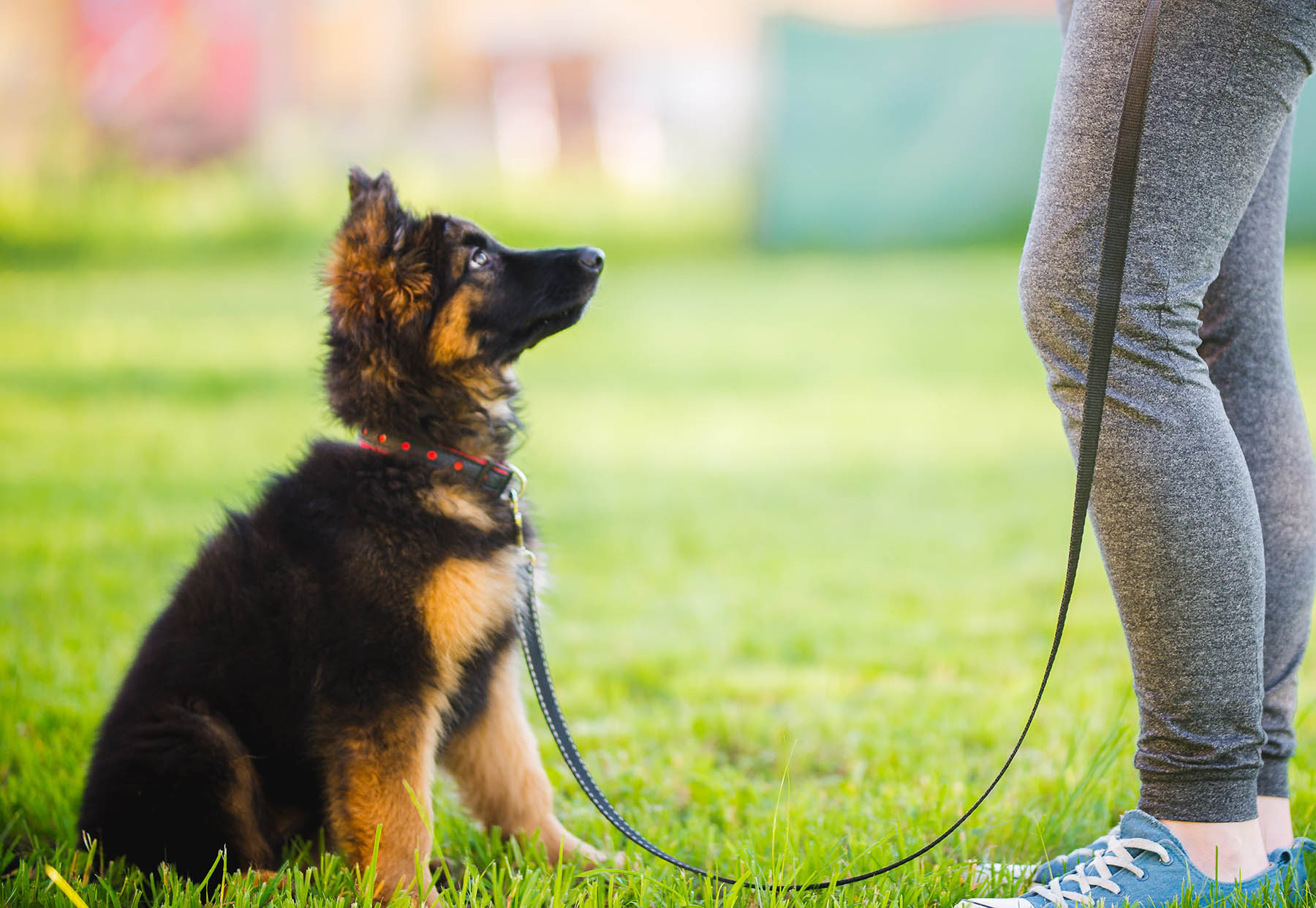
Bringing home a puppy is basically like adopting a tiny, fuzzy toddler with zoomies. They are adorable, enthusiastic, and deeply committed to putting mystery objects in their mouth.
The good news is you do not need a complicated system to get started. You just need five foundational cues, a pocketful of rewards, and a plan that fits into real life, including the days you are running on three hours of sleep.
This guide walks you through the first five cues I teach nearly every foster puppy: sit, stay, come, down, and leave it. (A lot of people call them “commands.” I will use “cue” because it feels friendlier, but we mean the same thing.) We will keep it positive, clear, and doable.
Before you teach anything: set your puppy up to win
What you need
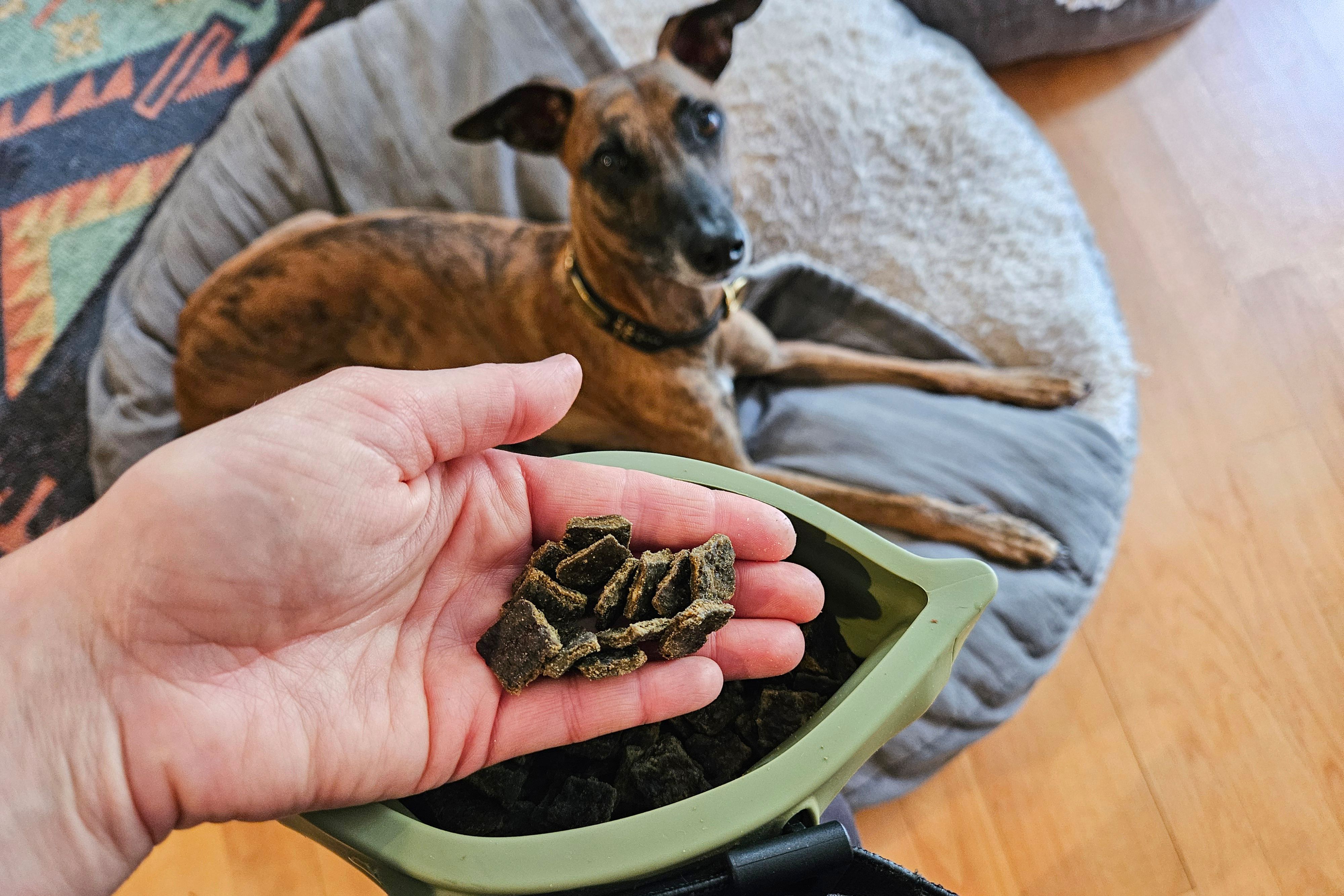
- Soft, tiny treats your puppy can swallow quickly (pea-sized for most puppies).
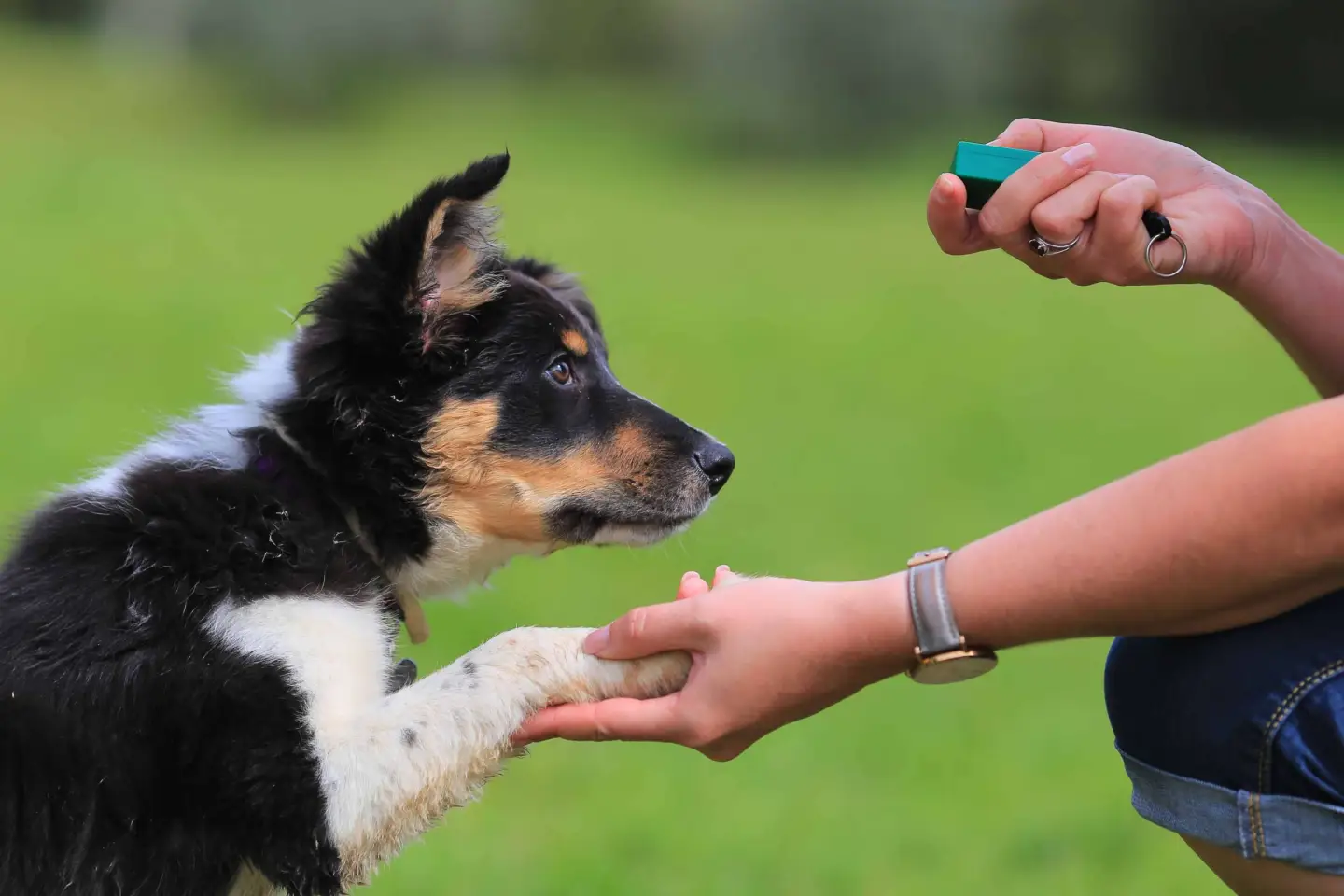
- A marker: either a clicker or a happy, consistent word like “Yes!”.
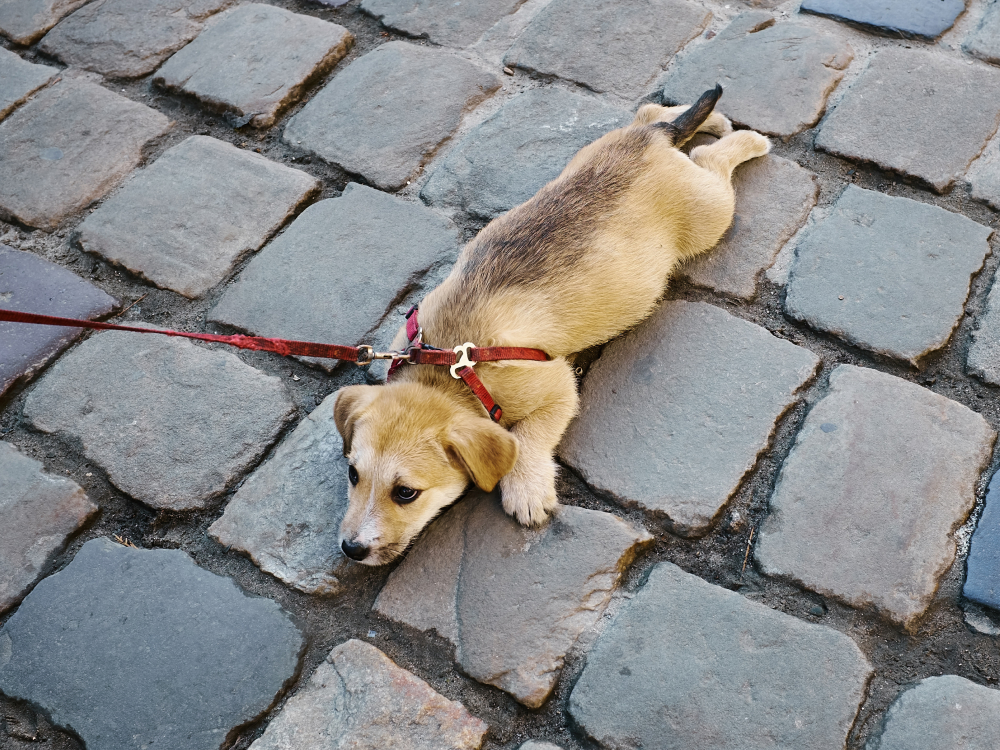
- A regular 6-foot leash for practice and safety.
- A quiet spot with minimal distractions for the first few sessions.
Two rules that make training feel easy
- Reward the moment your puppy does the right thing. Mark first (“Yes!”), then treat.
- Keep sessions short: 1 to 3 minutes, a few times a day. Quit while your puppy still wants more.
How to choose treats (and why it matters)
If your puppy is ignoring you, it is usually not “stubborn.” It is usually one of these:
- The treat is not exciting enough.
- The room is too distracting for their current skill level.
- The steps are too big and they are confused.
Try something higher value like boiled chicken, cheese crumbles, or a soft training treat. Keep pieces tiny and watch your puppy’s stomach. Rich treats can cause belly trouble, and you want treats to be a small slice of their daily calories, not half their diet.
Cue 1: Sit
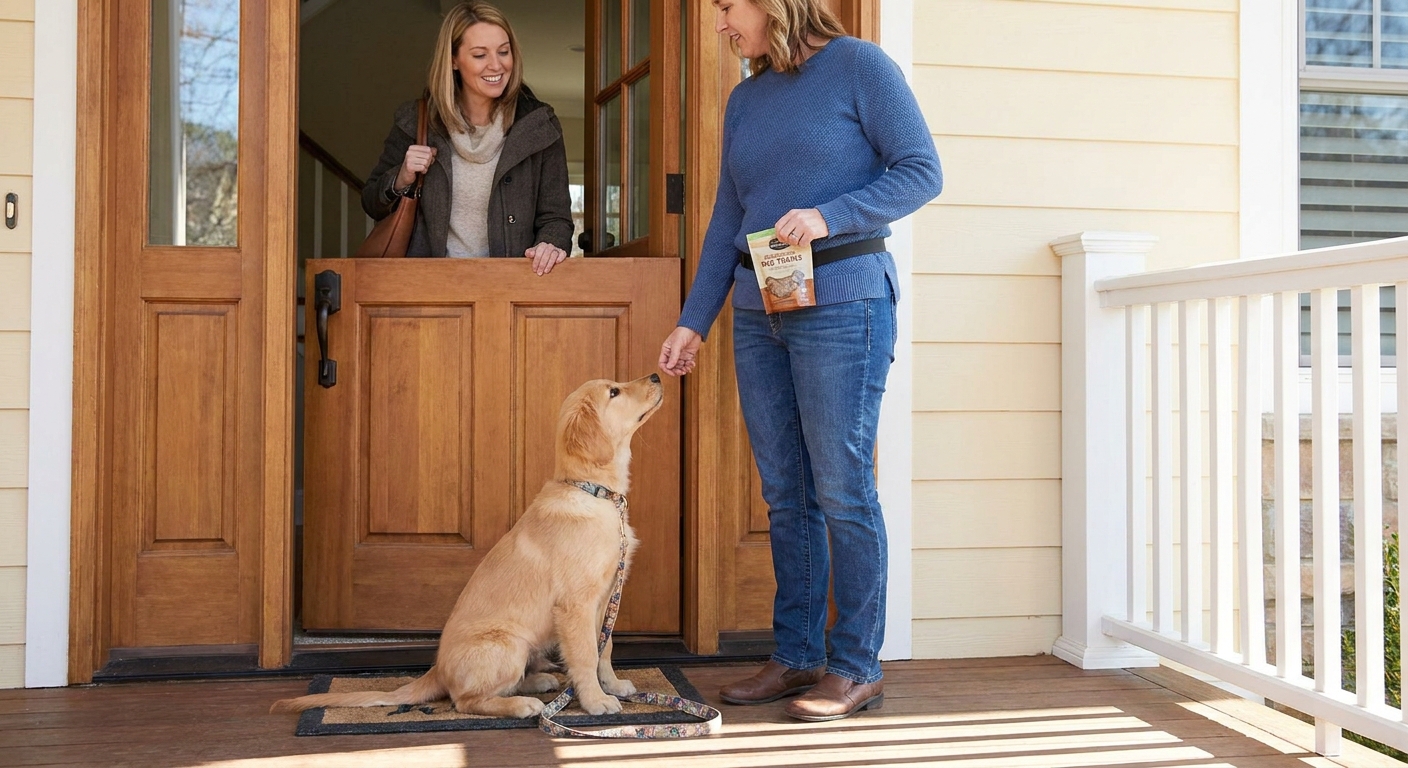
Why it matters: Sit is your puppy’s first “default polite.” It helps with greetings, leash clipping, and those moments when your puppy is vibrating with excitement.
Step-by-step
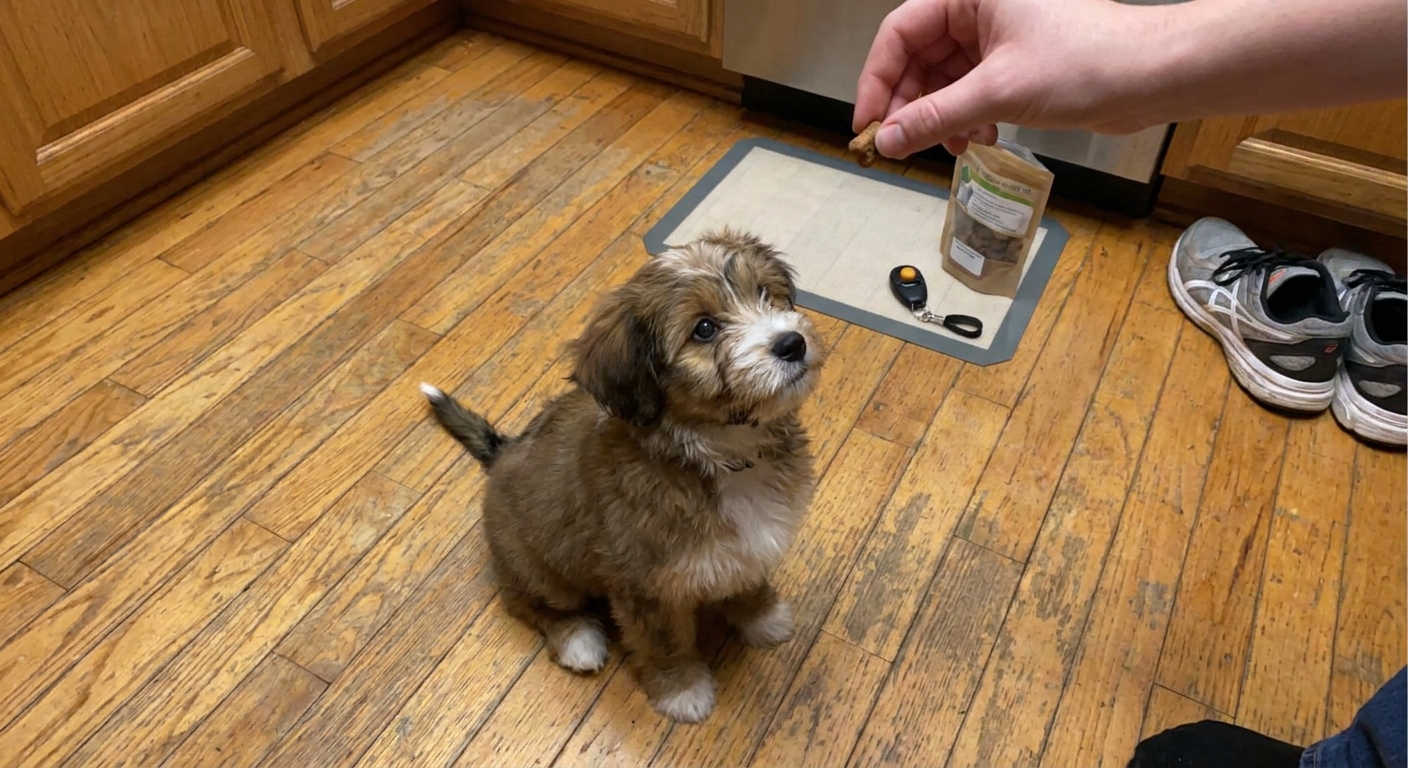
- Lure: Hold a treat at your puppy’s nose, then slowly move it up and slightly back toward their forehead.
- As their head follows, their butt will usually land on the floor.
- Mark: The instant their bottom touches the floor, say “Yes!” (or click).
- Reward: Give the treat.
- Repeat 5 to 8 reps, then take a break.
Add the word “sit”
Once your puppy is predictably sitting when you do the hand motion, say “Sit” one second before you lure. Mark and reward as usual.
Common hiccups
- Puppy jumps for the treat: Keep the treat closer to their nose and move slower. Reward more quickly.
- Puppy backs up instead of sitting: Practice near a wall so they cannot reverse away from the lure.
Cue 2: Down
Why it matters: Down helps your puppy settle, gives you a calm “pause button,” and builds body control. It is also wonderful for shy puppies who do better when they can relax on the floor.
Step-by-step
- Start with your puppy in a sit (or standing, if that is easier).
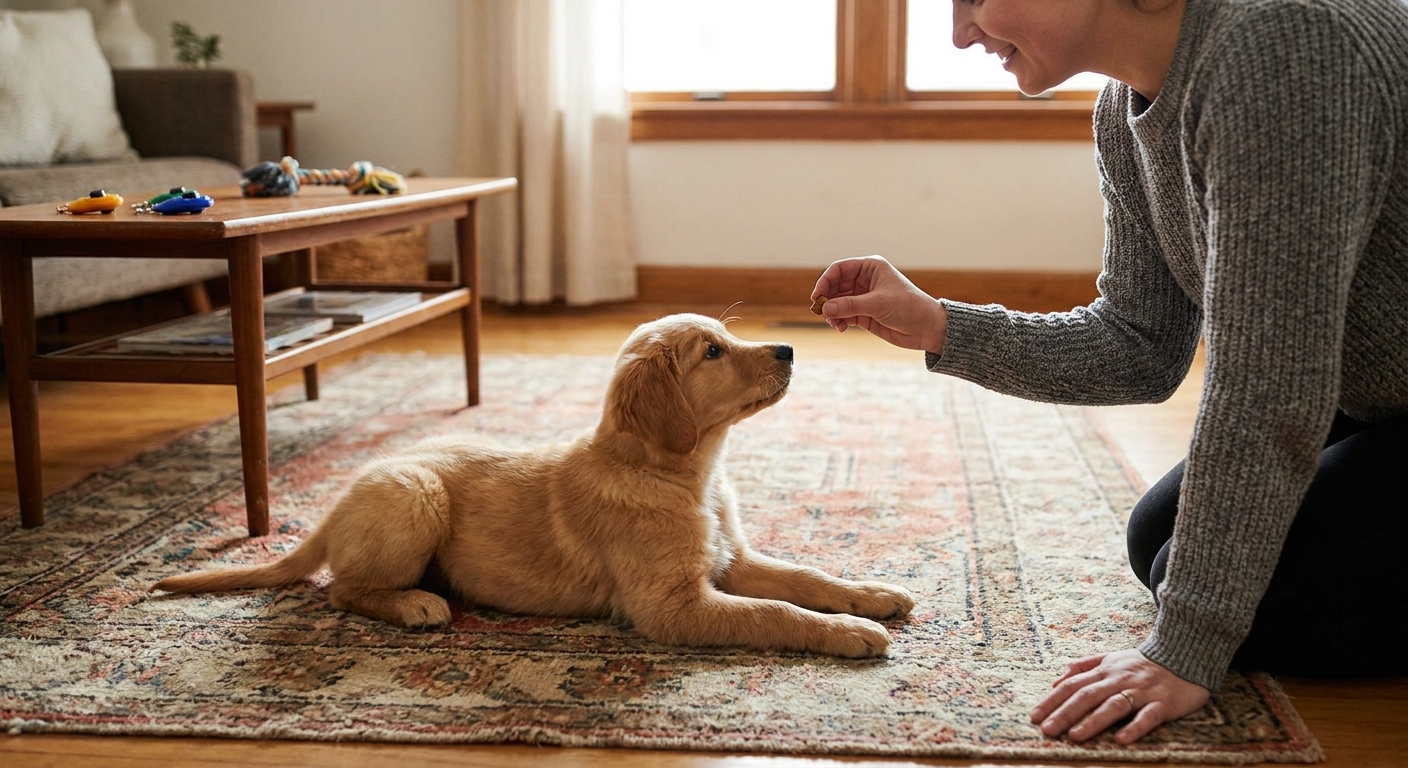
- Hold a treat at their nose, then slowly lower it straight down to the floor.
- When their nose follows the treat to the ground, slide the treat forward a few inches along the floor. This encourages elbows to drop.
- The moment their elbows hit the floor, mark and reward.
If your puppy pops back up
Reward lower, between their paws, so staying down is part of the deal. You can also feed 2 to 3 small treats in a row while they remain in position.
For short-legged or wiggly pups
Some puppies struggle with the classic lure, especially if they are stocky, very tall, or very excited. Try luring under your bent knee or a low coffee table edge so they naturally fold down to fit underneath.
Cue 3: Come (recall)
Why it matters: This is the safety cue. A strong recall can prevent accidents, lost-dog scares, and the classic “why are you eating that” moment.
Important: Avoid calling your puppy to you for something they dislike (like a nail trim) unless you can pay them well and follow it with something they enjoy. “Come” should predict good things.
Also important: Do not practice recall off-leash in an unfenced area until it is reliable. Use a leash or long line so your puppy cannot rehearse ignoring you.
Step-by-step (indoors, easy mode)
- In a quiet room, wait until your puppy is a few feet away and not staring at something irresistible.
- Crouch slightly and say their name once, then cheerfully say “Come!”.
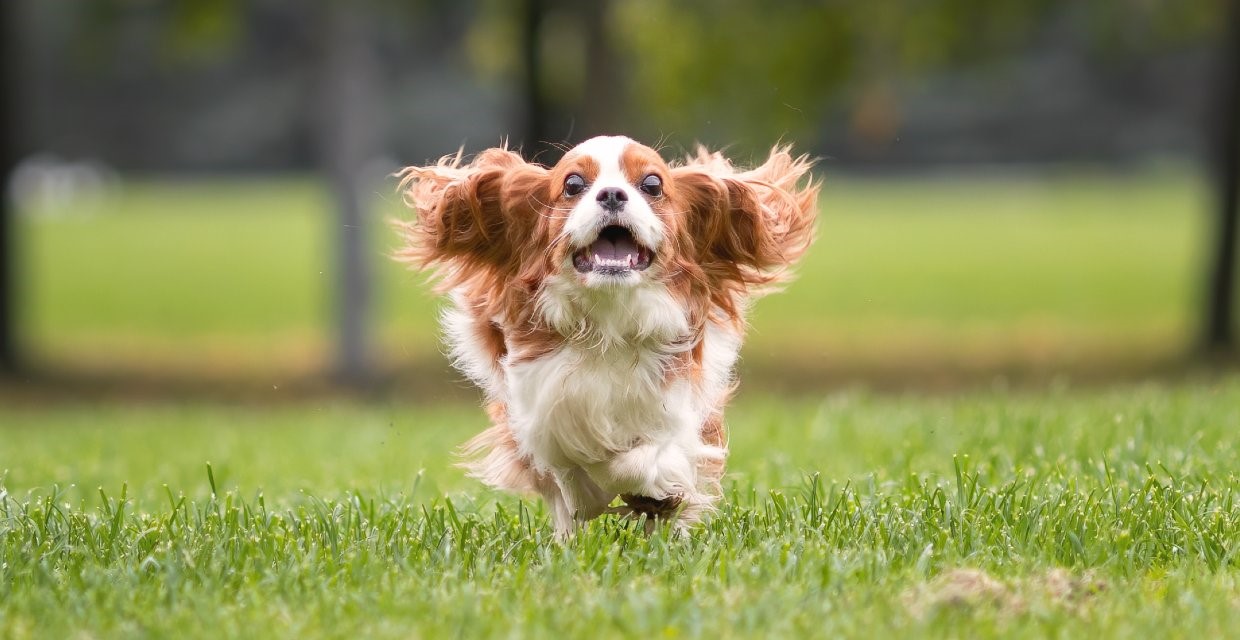
- As they move toward you, praise softly.
- When they reach you, mark, then deliver 3 to 5 tiny treats one after another.
- Release them back to exploring so coming to you does not always end the fun.
Add the “collar grab” game
A lot of puppies learn that “come” means “you are about to grab me,” then they dodge like tiny, fuzzy ninjas. Fix that by practicing gentle handling: when your puppy comes in, lightly touch their collar or harness, mark, treat, then release. Do it calmly and often so being caught predicts snacks, not disappointment.
Level up: the “come party” game
With two people, stand across the room and take turns calling “Come!” Reward every time. Puppies love it, and you get reps fast.
Recall rules that prevent heartbreak
- Do not repeat “come” over and over. If they do not respond, get closer, make it easier, and try again.
- Do not chase your puppy if they grab something and run. Run away from them instead, clap, and become extremely interesting.
- Use a leash or long line outside until recall is reliable. Puppies are fast and their brains are still loading.
Cue 4: Stay
Why it matters: Stay teaches impulse control. It helps with doorways, food bowls, greeting guests, and not launching into your lap while you are holding hot coffee.
I teach stay as a gradual skill, not a dramatic, long hold. Think seconds, not minutes.
Stay vs. wait: I use stay for “hold this position until I release you.” I use wait for quick, situational pauses like “wait at the door” or “wait for your food.” If you only teach one right now, teach stay and always use a release word.
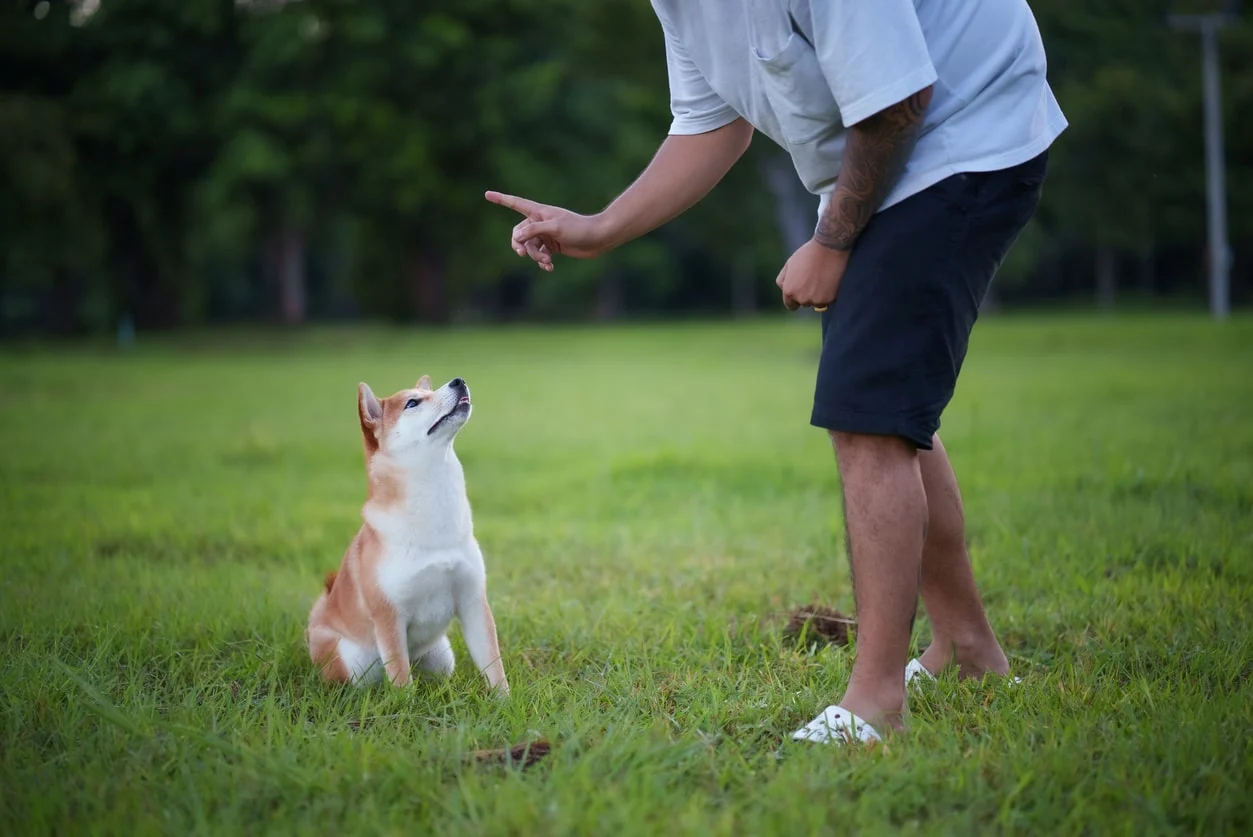
Step-by-step (the 3 D’s: duration, distance, distraction)
- Ask for a sit.
- Show a flat hand signal (like a gentle stop sign) and say “Stay”.
- Duration first: Count “one,” then mark and treat while your puppy is still in place.
- Repeat, slowly building to 2 seconds, 3 seconds, 5 seconds.
- Distance next: Take one small step back, step back in, mark and treat.
- Distractions last: Only once duration and distance are working indoors.
Release word: the missing piece
Your puppy needs to know when they are allowed to move. Pick a release word like “OK” or “Free”. After you reward, say your release and encourage them to stand up or move away.
If your puppy breaks the stay
No scolding. Just reset and make it easier. Most stay problems are simply “too much, too soon.”
Cue 5: Leave it
Why it matters: Leave it is the “please do not put that in your mouth” cue. It is also the “drop the sock, I am begging you” cue’s best friend.
Leave it means: ignore that thing, and you will get something better from me. We teach it as a trade, not a punishment.
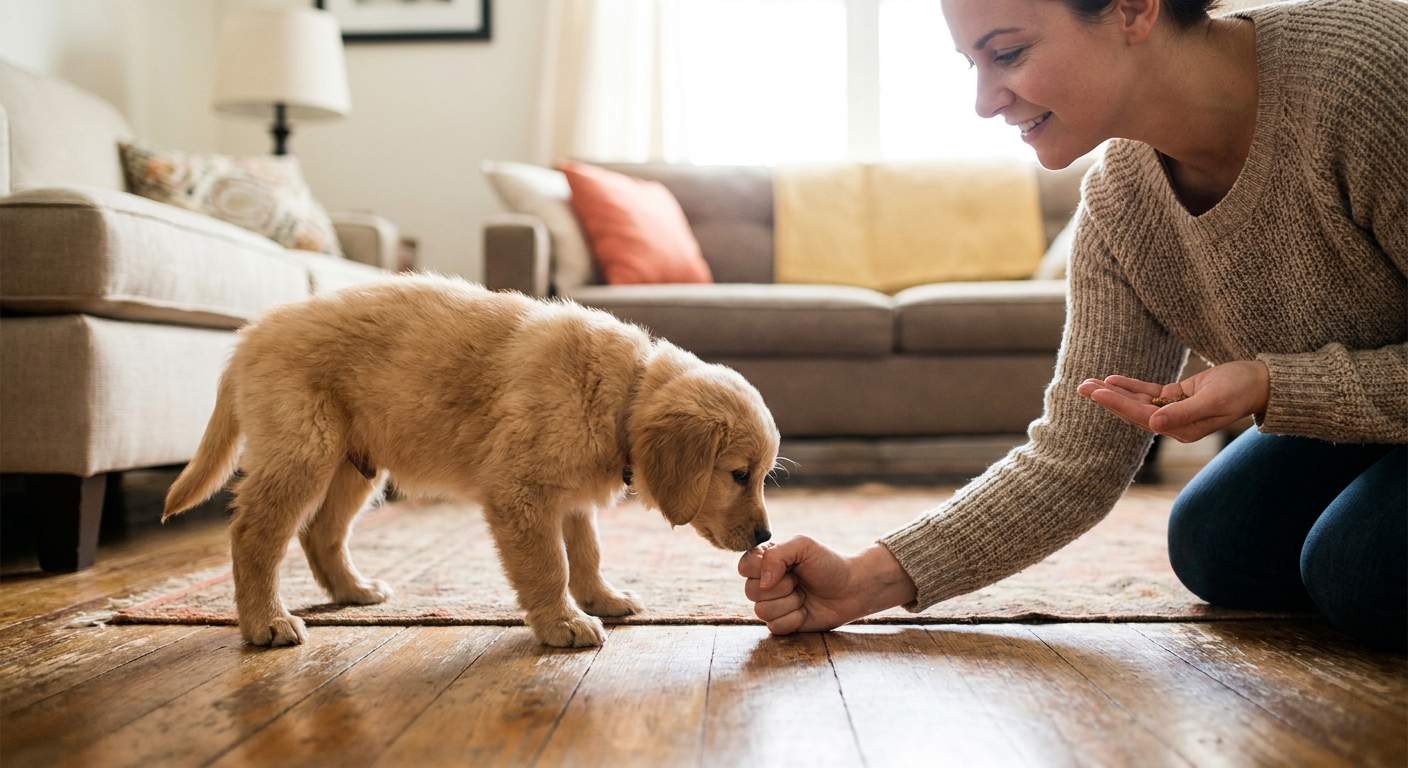
Step-by-step (closed fist version)
- Put a treat in your fist and close it. Present your fist at puppy nose level.
- Your puppy will lick, nibble, paw, and generally try to negotiate.
- Say nothing. The moment they back off or even just pause, mark.
- Open your other hand and give them a different treat. The treat in the fist does not get eaten yet.
- Repeat until they quickly stop investigating your fist.
Add the words “leave it”
Once they reliably back off, say “Leave it” right before you present your closed fist. Mark and reward from the other hand when they disengage.
Level up (open hand, then real life)
- Place a treat on your open palm. If they go for it, close your hand. When they back off, mark and reward from the other hand.
- Practice with safe household items (a boring toy, a paper towel roll) while your puppy is on leash.
- Eventually practice outside with low-value distractions before you try it around goose poop or street pizza.
A simple 7-day plan
If schedules are chaotic, follow this tiny plan. It is meant to feel doable, not heroic.
- Day 1: Sit (3 mini sessions)
- Day 2: Down (3 mini sessions)
- Day 3: Come indoors (hallway games)
- Day 4: Stay for 1 to 3 seconds (add a release word)
- Day 5: Leave it (closed fist)
- Day 6: Mix and match two cues per session
- Day 7: Practice in a slightly harder place (another room, backyard, quiet driveway)
Your puppy does not need perfection. They need repetition, clarity, and rewards that make sense.
Training tips that make everything smoother
Generalize on purpose
Puppies do not automatically understand that “sit” in the kitchen also means “sit” in the yard. Practice in a new room, then near the front door, then outside, then around mild distractions. If your puppy struggles, you did not fail. You just leveled up too fast.
Use meals as training (optional)
Instead of dumping breakfast into a bowl, you can hand-feed part of it during training or use kibble as your “everyday reward.” If your puppy gets too grabby or frustrated, use a bowl sometimes, try tossing kibble for calmer reps, or switch to a treat pouch so your hands get a break.
One cue, one time
If you say “Sit, sit, sit,” you are accidentally teaching your puppy that the cue is “sit sit sit.” Say it once, then help them succeed with an easier step or a lure.
Practice when your puppy is not in full gremlin mode
Training goes best after a potty break and a little play, not when your puppy is overtired and chewing the wall like it owes them money.
FAQ
How long should it take to teach these cues?
Most puppies can learn the basic idea of sit and down in a few short sessions. Reliability in real life takes weeks of practice in different places. Think of it as building a habit, not passing a test.
What age should I start?
As soon as your puppy comes home. Even 8-week-old puppies can learn with gentle, reward-based training and very short sessions.
Should I say “no” when they get it wrong?
You do not need to. If your puppy makes a mistake, simply reset and make it easier. Clear reps beat corrections for early learning.
My puppy only listens when I have treats. What am I doing wrong?
Nothing unusual. You are in the “payment phase.” Start fading treats gradually by mixing in praise, toys, and real-life rewards (like going outside) while still treating often enough to keep motivation high. Also, keep treats hidden in a pocket so the cue, not the visible snack, becomes the signal.
Quick safety note
If your puppy growls, stiffens, or guards items when you try to take something away, pause and focus on gentle trading games. Do not punish growling, and avoid forcibly taking items. For serious guarding or biting, work with a qualified positive-reinforcement trainer so you can address it safely and early.