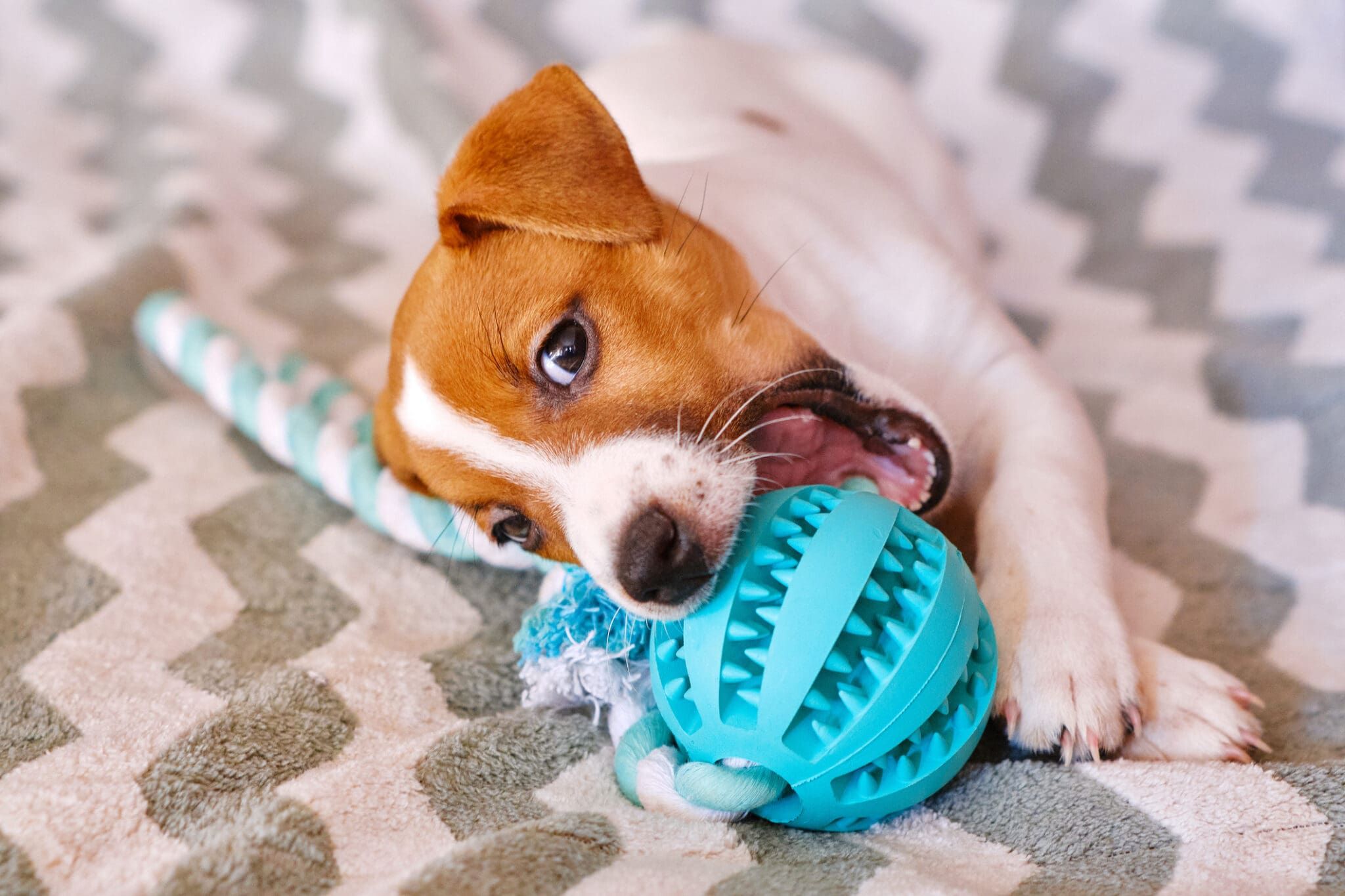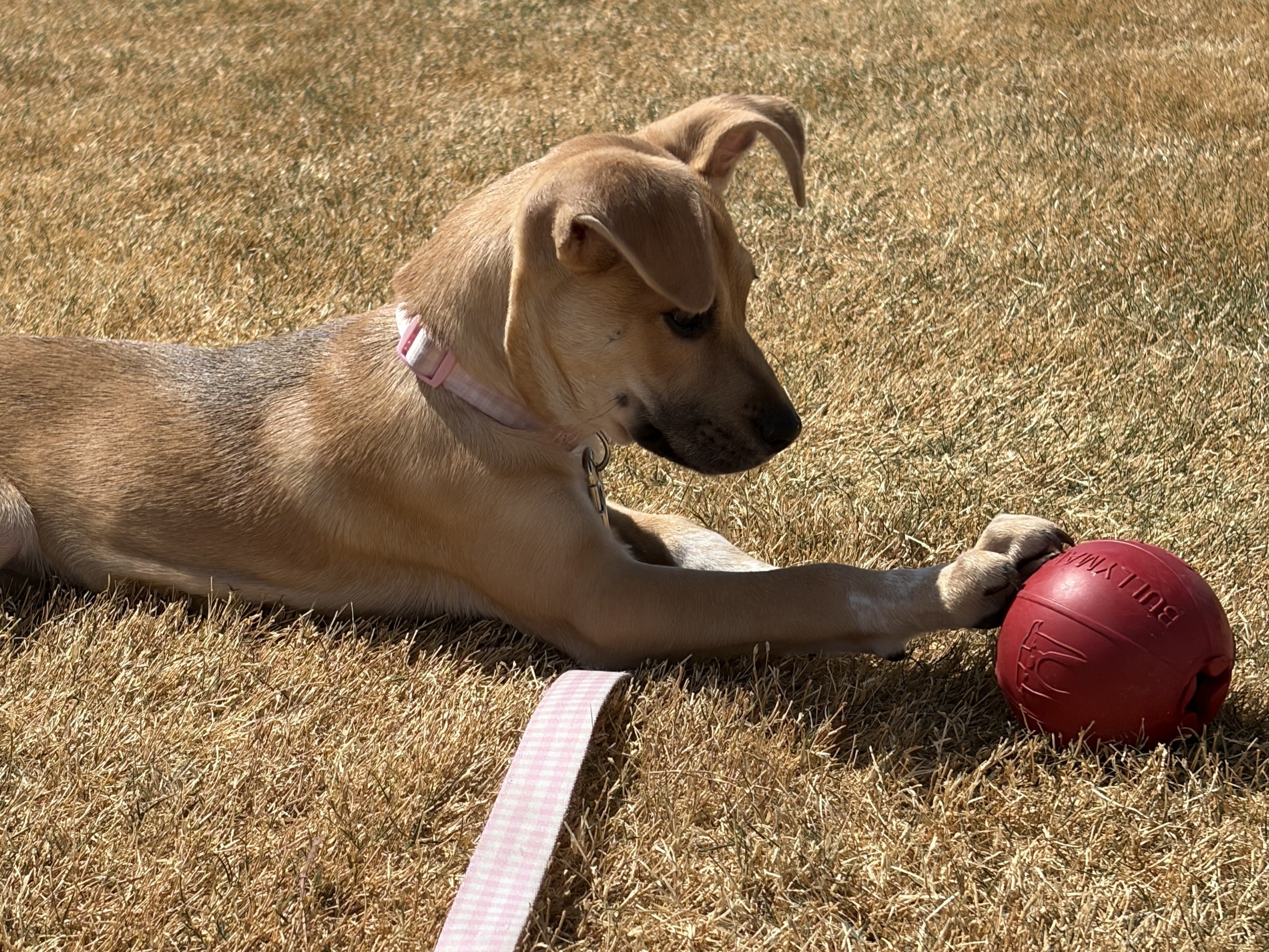
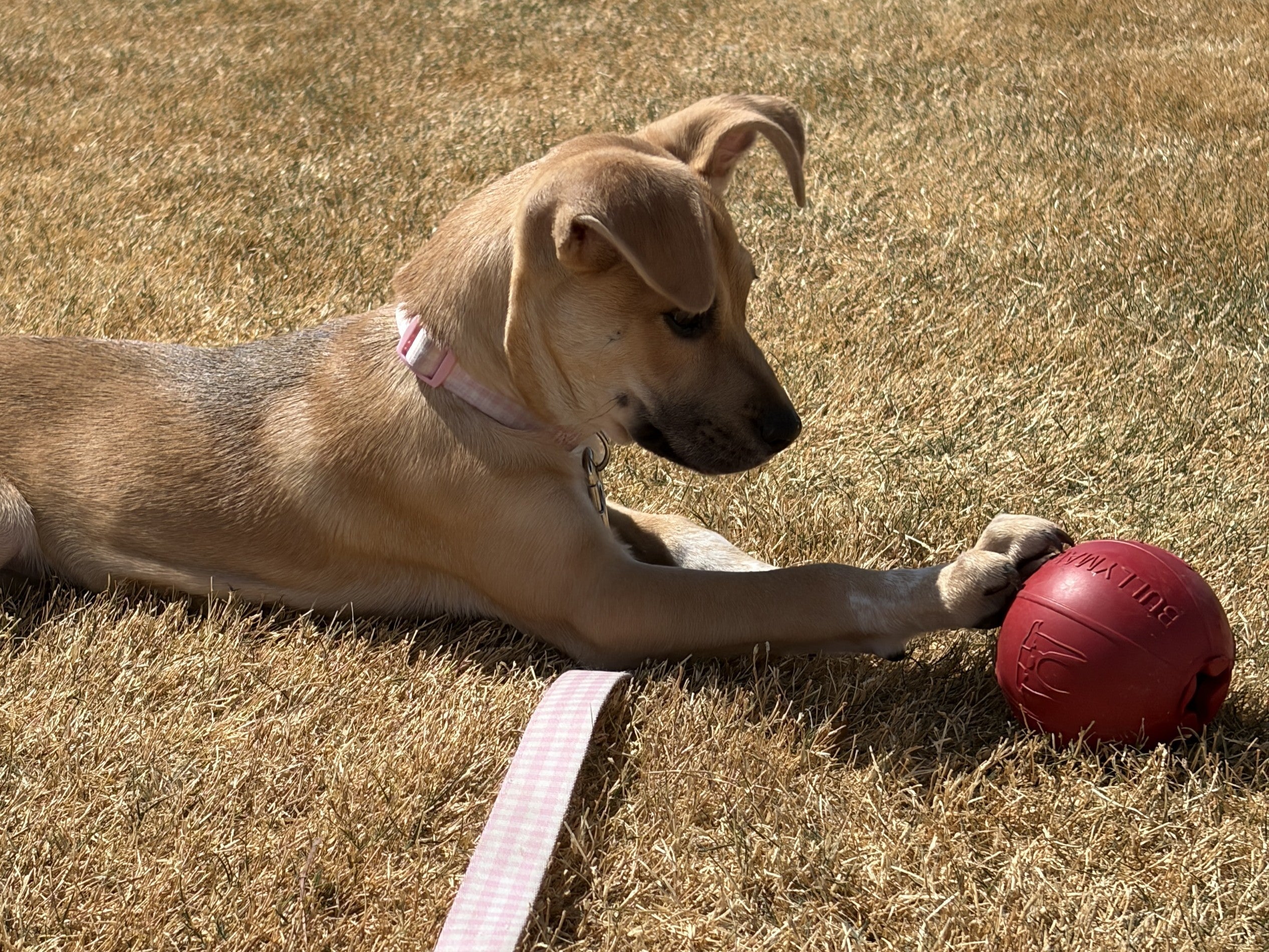
Some puppy phases are cute. Teething is… loud. And damp. And occasionally involves your pup staring directly into your soul while gently gnawing your wrist like it is a corn cob.
The good news: teething is temporary. The better news: you can make it a whole lot easier on your puppy’s sore gums and on your furniture, fingers, and sanity.
Below is the real-life, foster-parent version of what to expect, what is normal (including a little blood), and what actually helps beyond simply tossing another chew toy into the chaos.
Puppy teething timeline
Puppies go through two big dental chapters in their first year: getting baby teeth, then losing them as adult teeth come in. The “land shark” part tends to peak during the swap. (Timing varies a bit by breed and individual.)
0 to 8 weeks: baby teeth arrive
Most puppies start getting their tiny needle teeth around 3 to 6 weeks old. By 6 to 8 weeks, they usually have a full set of 28 baby teeth. If you brought your puppy home at 8 weeks, congratulations. Those sharp little gremlins are fully installed.
12 to 16 weeks: baby teeth start falling out
This is when many families first notice missing teeth, extra chewing, and little red spots on toys. Incisors (the small front teeth) often go first. After that, puppies commonly lose canines and premolars over the next several weeks. The exact order can vary.
16 to 24 weeks: peak teething
Expect the most gum discomfort and the most frantic need-to-chew energy here. Many pups lose canines (the vampire fangs) during this stretch, and they can be the drama queens of the mouth.
Adult molars (which do not have baby versions) often start coming in toward the later part of teething, frequently around 5 to 7 months. That can make chewing feel extra intense for a while.
24 to 32 weeks: adult set settles in
Most puppies have all 42 adult teeth by about 6 to 7 months. Some small breeds wrap up a bit earlier. Some large breeds take a touch longer. Chewing usually eases once those adult teeth are fully in and the gums calm down.
When teething lasts longer
If your puppy is past 7 months and still seems to be actively teething, or you are seeing crowded teeth, bad breath, or ongoing gum bleeding, it is worth a vet check. Small breeds in particular can hang onto baby teeth.
Teething symptoms
Teething looks a little different puppy to puppy. Some are mildly chewy. Others act like your coffee table personally offended them.
Common, normal signs
- Chewing rampage: More mouthing, more gnawing, more “why are you licking the wall.”
- Drooling: Often increases, especially when adult teeth are pushing through.
- Mild gum bleeding: A little blood on a toy or a rope is common.
- Red, puffy gums: Especially around teeth that are loosening.
- Finding tiny teeth: Sometimes you will spot one on the floor. More often your puppy swallows them. That is usually fine.
- Slight fussiness: A bit more clingy, more nippy, or more easily overstimulated.
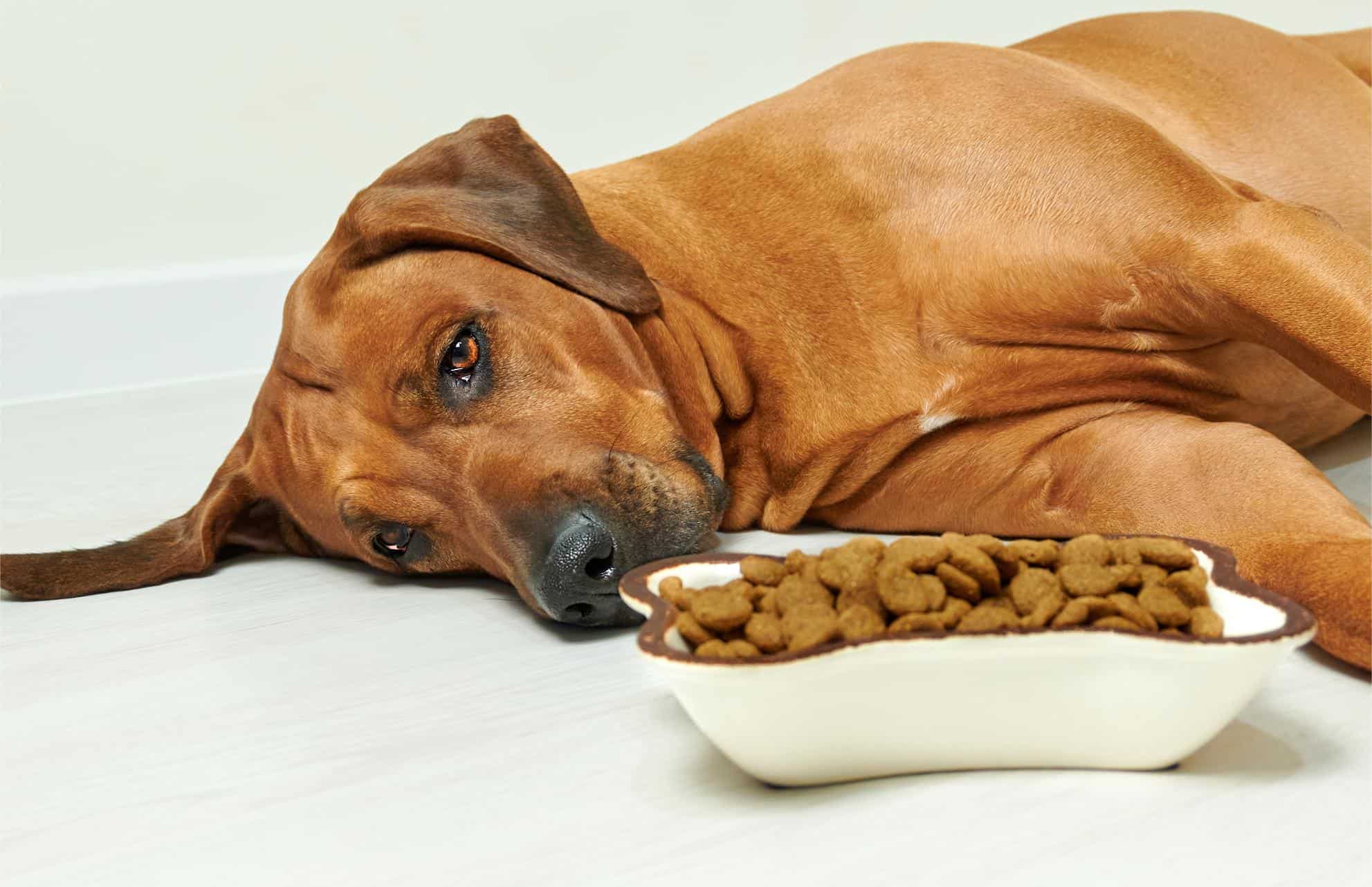
- Temporary changes in appetite: Some puppies prefer softer food for a few days.
Call your vet if you notice
Teething should not make your puppy truly sick. Contact your vet if you notice:
- Heavy bleeding that does not stop quickly
- Swollen face or one-sided swelling around the jaw
- Foul breath beyond normal puppy breath, especially with inflamed gums
- Not eating at all for more than a meal, or clear signs of significant pain
- Vomiting, diarrhea, lethargy, fever (these are not typical teething symptoms)
- A baby tooth that will not budge while an adult tooth is growing in next to it (common with canines)
- Something seems stuck in the roof of the mouth or between teeth (strings and splinters can lodge there)
What soothes sore gums
Chew toys are a great start, but when gums are tender, your puppy needs more than “go chew something else.” Here are my foster-home favorites, plus a few safety rules that can save you an emergency vet visit.
1) Cold chewing
Cold can be wonderful for inflamed gums. It gently numbs and may help reduce swelling and irritation without medication.
- Chilled rubber toys: Put a solid rubber toy in the fridge (not freezer) for 30 to 60 minutes.
- Frozen wet washcloth: Wet a clean washcloth, wring it out, tie a knot, and freeze it. Offer it supervised. This is a classic because it is soft enough for tender mouths.
- Ice, done smart: Some puppies love ice. Offer small chips or tiny cubes and supervise. If your puppy tries to chomp hard or swallow big pieces, skip ice and stick to softer cold options.
Safety note: Do not freeze very hard chews (like some nylon bones) and then hand them to an enthusiastic chewer. Cold can make hard materials even less forgiving on teeth.
2) Edible chews that are gentle
Edible chews can be amazing for gum pressure relief, but pick them like you are selecting a toddler snack in a house full of choking hazards. Supervision matters.
- Frozen KONG-style stuffed toy: Fill with wet puppy food, plain canned pumpkin, or plain yogurt (xylitol-free, low sugar), then freeze. This keeps pups busy and soothes gums.
- Frozen carrots: Many puppies love them. They are crunchy, cold, and low calorie. Expect orange shavings on the floor.
- Single-ingredient chews sized correctly: Look for reputable brands and choose a size bigger than your puppy’s mouth so they cannot gulp it.
Skip: cooked bones, antlers, and very hard chews that can crack teeth. A common rule of thumb is the fingernail test: if you cannot make any dent with a fingernail, it may be too hard for many dogs, especially puppies.
3) Softer meals for a few days
If your puppy seems hungry but backs away from kibble, you can make meals easier temporarily:
- Soak kibble in warm water for 10 to 15 minutes.
- Mix in a spoonful of wet puppy food to soften and boost smell.
- Hand-feed a portion as training rewards so meals do not feel like work.
This is not “spoiling.” It is just meeting a sore-mouthed baby where they are.
4) Gentle mouth handling
Some puppies find a gentle gum rub soothing. Use a clean finger or a puppy toothbrush and keep it short. If your puppy gets more bitey or stressed, skip it.
If they do tolerate it, this is also a great time to practice calm mouth handling for future tooth brushing. Think seconds, not minutes, and end on a win.
5) More naps, fewer bitey choices
Overtired puppies bite more. Teething puppies get overtired faster. You can reduce the chaos by adding structure:
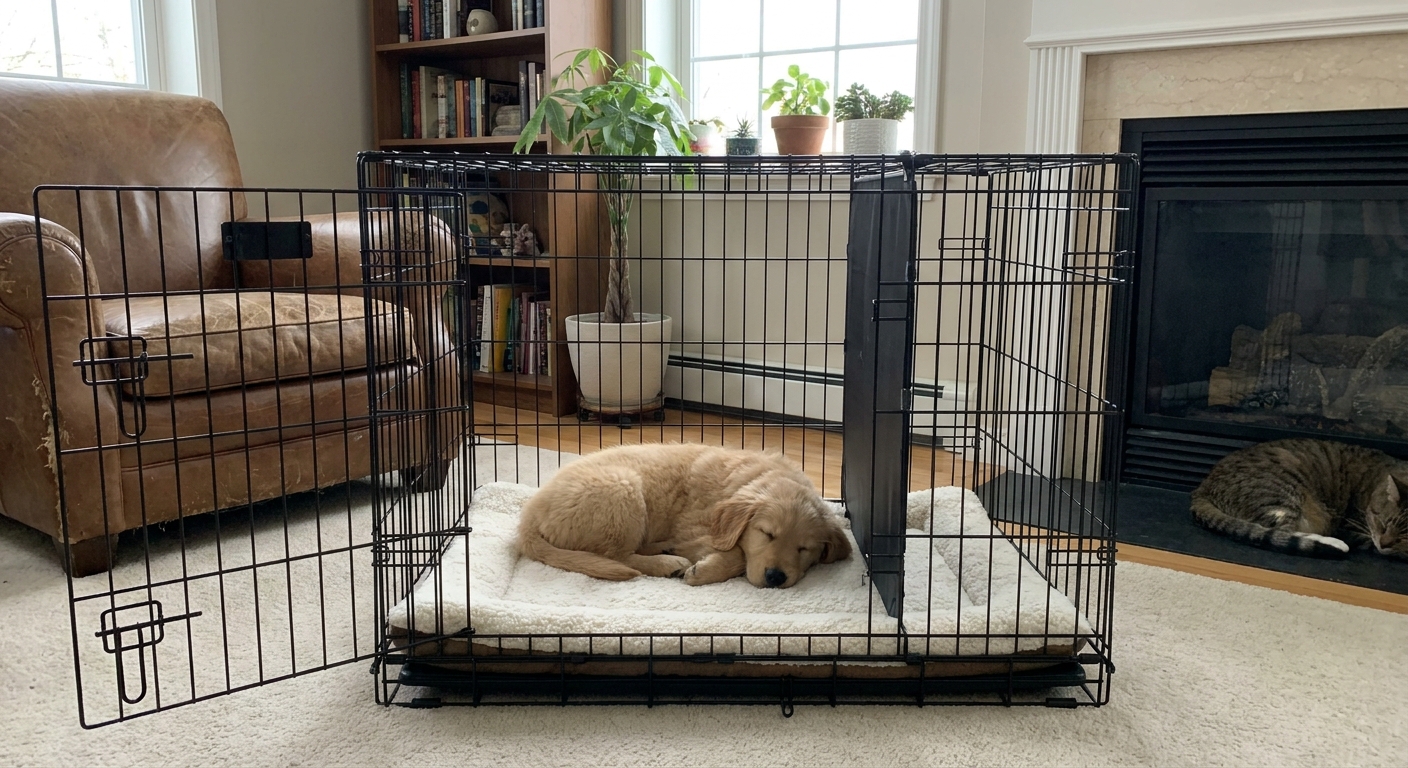
- Use a crate or pen for scheduled rest breaks.
- Give a cold chew at nap time to help them settle.
- Keep evenings calm. Many puppies hit a “witching hour” where biting spikes.
Chew safety basics
Even “safe” chews become unsafe when they are the wrong size or left unsupervised. A few guardrails:
- Go bigger than you think: Choose chews and toys larger than your puppy’s mouth.
- Supervise edible chews: Especially anything that softens, shrinks, or can be swallowed in chunks.
- Retire early: Toss a chew when it gets small enough to fit fully in your puppy’s mouth, or when it starts breaking into pieces.
- Avoid splintery stuff: If it flakes, shards, or splinters, it does not belong in a puppy mouth.
What not to do
When your puppy is gnawing your baseboards at 9:47 pm, the internet starts to look like a buffet of questionable ideas. Here are the big ones to avoid.
Do not use human pain meds
Never give ibuprofen, acetaminophen, naproxen, aspirin, or any human medication unless your veterinarian specifically instructs you. Many human pain relievers are toxic to dogs or unsafe at common household doses.
Avoid human numbing gels
Human oral numbing gels can contain ingredients that are not safe for puppies, and many are designed to be used in tiny amounts for humans, not licked and swallowed repeatedly by a determined puppy.
Skip essential oils
Essential oils can irritate mouths and some are toxic to pets. Teething is not the moment for DIY chemistry.
Watch rope toys
Rope toys can be great, but once they start fraying, puppies can swallow strings. That can cause serious intestinal issues. Supervise rope play and retire them early, not late.
If you think strings were swallowed and you notice vomiting, diarrhea, loss of appetite, belly pain, or low energy, call your vet.
Protect hands and house
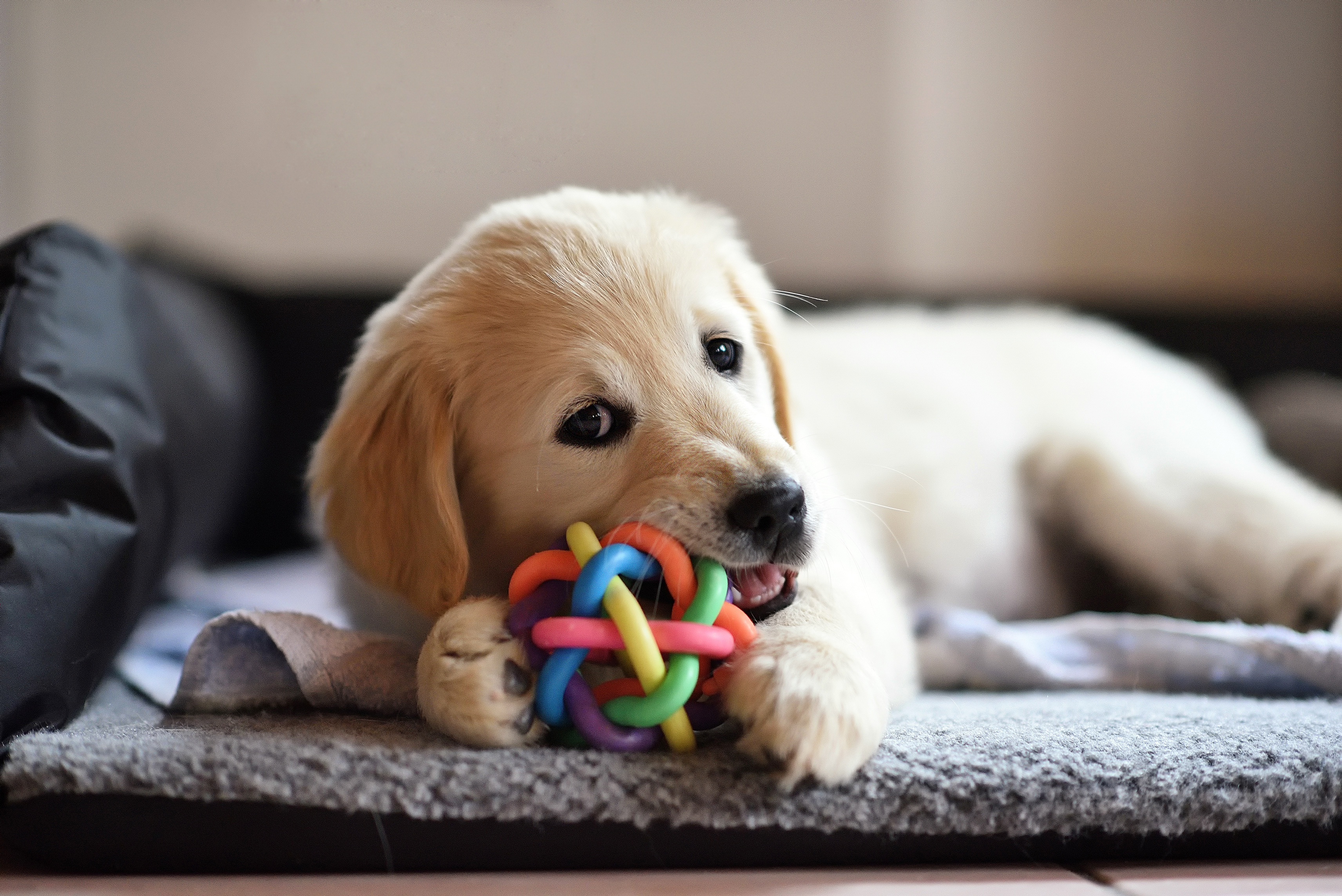
Teething pain is real, but the biting is still a behavior you can shape. The trick is to treat it like training plus pain management, not one or the other.
Keep a chew within reach
I call this “the trade, not the chase.” When teeth hit skin, calmly offer a toy to bite instead. Praise when they choose it. If you wave your hands and squeal, you become the world’s best squeaky toy.
Use the 3-step bite response
- Freeze: Stop moving your hand. Movement makes biting more exciting.
- Trade: Place a chew in their mouth or right in front of them.
- Reset: If they keep going for skin, calmly step over a baby gate or put them in a pen with a chew for 30 to 60 seconds. Not as punishment, but as a break.
Baby-proof like a fuzzy toddler
- Pick up shoes, kids’ toys, and remote controls.
- Cover cords or block access.
- Rotate toys so they stay interesting. Three toys out, the rest put away.
Put legal chews in every room
If your puppy always chews the couch leg, place an approved chew near the couch leg. It sounds almost too simple, but it works because puppies go to the same spots when they are uncomfortable.
Missing baby teeth
It is completely normal to never find most baby teeth. Puppies swallow them while eating or chewing. Those tiny teeth typically pass through without issue.
What you should keep an eye on is a retained baby tooth, where the baby tooth stays put and an adult tooth comes in beside it. This can trap food, irritate gums, and contribute to crowding.
If you see double canines (two fangs on one side), take a picture and show your vet. Retained teeth often need extraction, and timing matters. Your vet can tell you whether it is a “watch it” situation or a “let’s schedule this” situation.
FAQ
When do puppies start teething?
Most puppies start losing baby teeth around 12 to 16 weeks (3 to 4 months). That is the teething phase most owners mean.
How long does puppy teething last?
The intense part usually runs from about 3 months to 6 months, with most pups finishing by 6 to 7 months.
Is bleeding normal during teething?
Small amounts of blood on toys or a little pink drool can be normal. Heavy bleeding, persistent bleeding, or swelling needs a vet call.
Why is my puppy suddenly biting more?
Because chewing relieves pressure and pain, and because puppies also explore with their mouths. Add excitement or overtiredness and biting spikes fast.
Can I freeze a chew toy?
You can chill many rubber toys in the fridge. For freezing, choose softer options like a wet washcloth or a stuffed rubber toy. Avoid freezing very hard chews and then giving them to an intense chewer.
What is the safest “pain relief” for teething puppies?
Cold chewing (fridge-chilled toys, frozen washcloths, frozen stuffed toys) plus rest breaks and supervised chewing time. For medication, talk to your vet. Do not improvise with human meds.
A quick pep talk
Teething can make you question your life choices, especially when your puppy is sweet one minute and bitey the next. But it really is a season. If you combine safe gum soothing, lots of appropriate chewing options, and calm bite training, you will get through it without hating your puppy or replacing every chair leg in your home.
And one morning, you will realize the vampire fangs are gone. You will celebrate quietly. Your puppy will celebrate by stealing a sock.