Your puppy’s first bath is not just about getting them clean. It is a tiny, squeaky milestone that can shape how they feel about grooming for years. The goal is not “perfectly washed.” The goal is “no big deal.”
I have bathed everything from mud magnets to nervous little wiggle beans, and the pattern is always the same: when you prep well and keep it short, puppies do great. When you scramble for a towel while your puppy is doing parkour in the tub, everyone has a rough time.
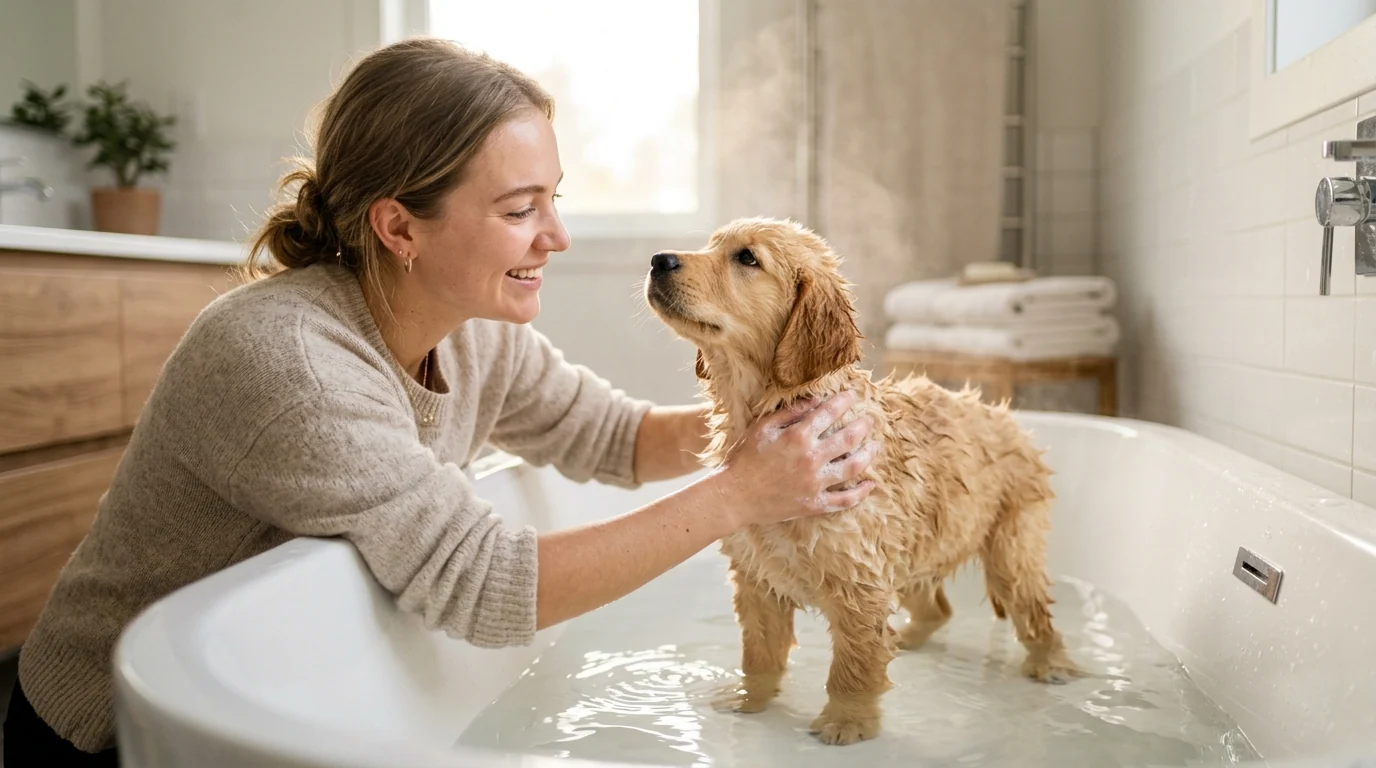
Before you start: Is it safe to bathe a puppy?
Most puppies can have a gentle bath as soon as they need one, as long as you keep them warm and use a puppy-safe product. Very young puppies can chill quickly, so if your pup is under about 8 weeks old (or small, sick, or struggling to stay warm), ask your vet before doing a full bath unless there is a true hygiene or medical need.
If your puppy is under-vaccinated, recently sick, or you just brought them home from a stressful situation, consider a warm wipe-down instead and ask your vet when a full bath makes sense.
- If your puppy is dirty: A quick bath is fine, especially if they got into something sticky or smelly.
- If your puppy has fleas: Bathing alone rarely solves fleas. Talk to your vet about safe flea treatment for your puppy’s age and weight. Many over-the-counter options are not safe for young puppies.
- If your puppy was recently spayed or neutered: Skip baths until your vet clears the incision. This is often 10 to 14 days, but follow your surgeon’s exact instructions, especially if there are sutures or staples.
If your puppy got into something dangerous: If they are covered in paint, chemicals, gasoline, essential oils, or an unknown substance, call your vet (or pet poison control) for guidance before bathing. Some substances can be harmful to handle or can absorb through skin.
What you need (gather everything first)
This is the secret to a calm first bath: set up like you are hosting a tiny spa guest who might sprint away at any moment.
Tools
- Non-slip mat for the tub or sink. A folded towel works in a pinch, but rubber grips better.
- 2 towels: one for drying, one for the floor or your lap.
- Dog-safe shampoo (ideally puppy shampoo or a gentle, fragrance-light formula).
- Pitcher, cup, or handheld sprayer for rinsing.
- Soft brush or comb matched to your puppy’s coat type.
- Cotton balls (optional) to loosely block water from entering ears. Do not push them down into the ear canal.
- Treats: tiny and high-value. Think pea-sized.
If your puppy has a long coat, a dog-safe conditioner or detangling spray can help prevent mats. Only use one you can rinse thoroughly, and skip it for the first bath if you want to keep things simple.
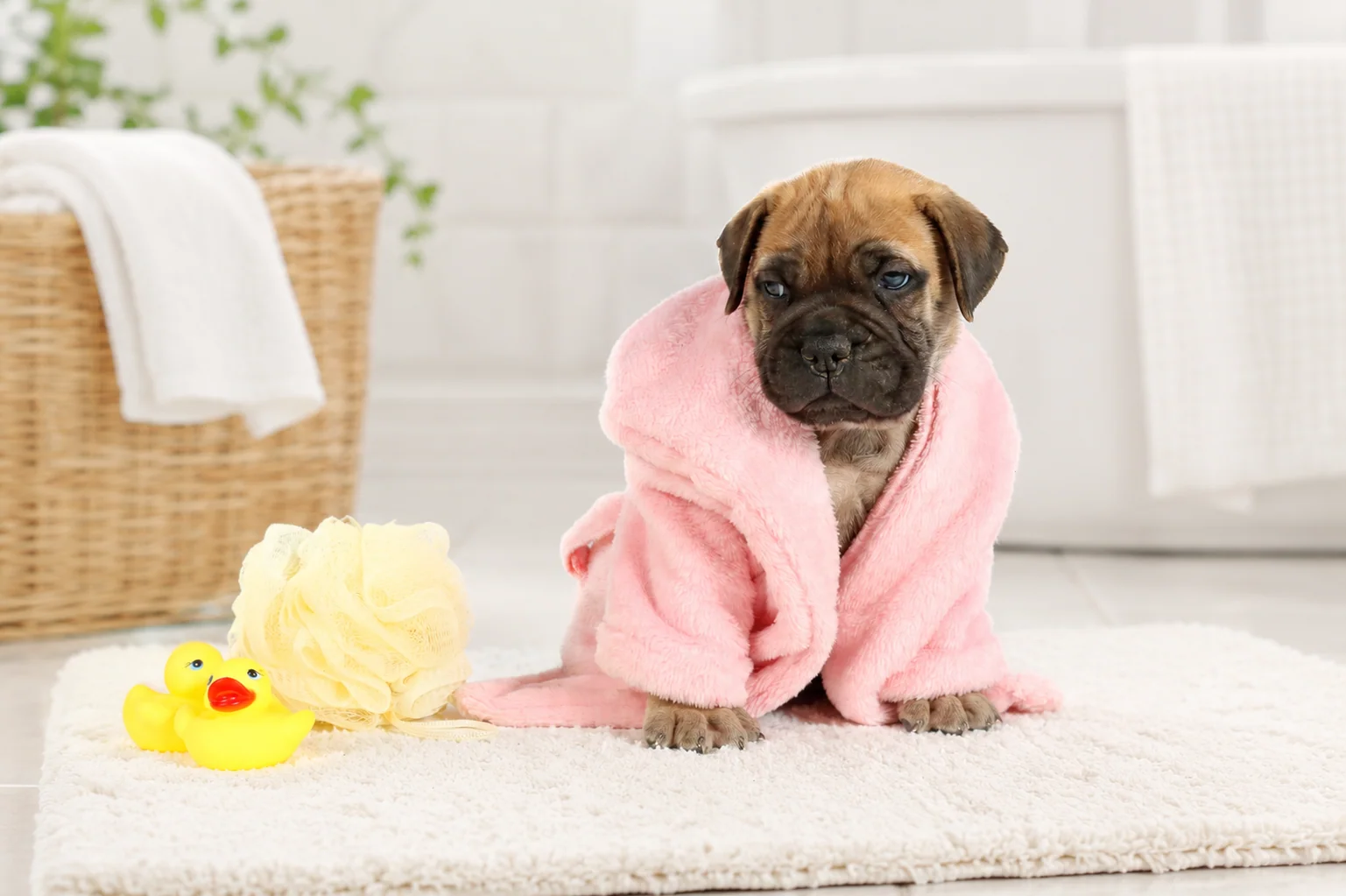
Pick the right spot: sink, tub, or shower?
Choose whatever helps your puppy feel secure and helps you stay in control without wrestling.
- Sink: Great for small puppies. Less space to slide around and easier on your back.
- Bathtub: Good for medium to large puppies. Use a non-slip mat and consider sitting on the floor next to the tub.
- Shower: Works for bigger pups who hate the tub, but keep the spray gentle and avoid blasting their face.
If you have a puppy who is unsure, the sink often feels nest-like and less overwhelming than a big echoey tub.
Water temperature: warm, not hot
Use water that feels like a warm baby bath. A good rule: if it is comfortable on the inside of your wrist, it is usually comfortable for your puppy.
- Too cold: your puppy will tense up, shiver, and decide baths are awful.
- Too hot: it can irritate skin and make them panic.
Keep the room warm, close windows, and have your towel ready so your puppy is not standing around wet and chilly.
Step-by-step: A calm first puppy bath
1) Do a quick brush-out first
Brushing before the bath helps remove loose fur and prevents small tangles from turning into tight mats once wet. Keep it light and quick. Thirty to sixty seconds is enough for many puppies.
2) Let your puppy investigate
Before any water happens, place your puppy on the mat in the empty sink or tub and feed a few treats. You are teaching: “This place is safe, and snacks happen here.”
3) Wet the body first (avoid the head)
Start at the shoulders and work back. Use a cup or sprayer on low pressure. Go slowly so the sound and sensation are not a jump scare.
- Keep one hand on your puppy for steady support.
- Aim water down the body, not into the face.
4) Shampoo: small amount, gentle lather
Use a coin-sized amount for a small puppy, and a bit more for bigger coats. Lather the neck, chest, back, belly, legs, and tail base.
Important: Do not use human shampoo. It can be too harsh and drying for canine skin.
Eye safety: “Tearless” does not mean “safe in eyes.” Try to keep all shampoo out of eyes. If any gets in, rinse with clean lukewarm water right away.
5) Face and ears: less is more
For the first bath, I usually skip washing the face with running water. Instead:
- Use a damp washcloth to wipe the muzzle, cheeks, and under the chin.
- Avoid getting water into the ears.
- Never put anything down into the ear canal.
6) Rinse longer than you think you need to
Leftover shampoo is a common cause of post-bath itching. Rinse until the coat feels squeaky clean and the water runs clear. Then rinse a little more.
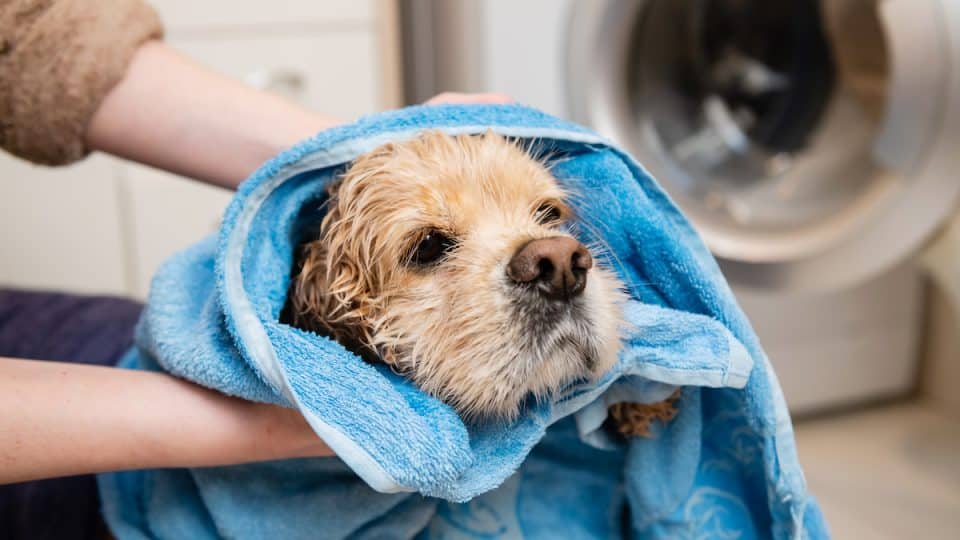
7) Towel dry right away
Wrap your puppy in a towel like a little burrito and gently press, blot, and rub. Many puppies get the zoomies after this. That is normal. Slightly chaotic. Very cute.
Choosing a dog-safe shampoo (and what to avoid)
Look for a shampoo made specifically for dogs. Puppies have sensitive skin, and a gentle formula helps keep bath time comfortable.
Good shampoo features
- Dog or puppy-specific labeling
- Mild, fragrance-light formula
- Simple ingredient list
- Moisturizing ingredients like oatmeal or aloe can be helpful for dry skin
Skip these for first baths
- Human shampoo or baby shampoo unless your vet specifically okays it
- Strong perfumes that can irritate skin and overwhelm your puppy
- Essential oil-heavy products since some oils are risky for dogs, especially if licked
- Harsh medicated shampoos unless prescribed by a vet
If your puppy has flaky skin, redness, or a persistent odor that returns fast, check with your vet before experimenting with stronger products.
How long should the first bath be?
Short. Think 5 to 10 minutes total, including drying. You can always do a more thorough bath later. The first one is about building trust.
If your puppy starts to look stressed, heavy panting, trying to climb out, freezing, or frantic scrambling, end on a good note. Rinse, towel, treats, done.
After-bath care: drying, warmth, and zoomies
Drying options
- Towel drying: best for most puppies.
- Blow dryer: only if your puppy tolerates it. Use the lowest heat, lowest airflow, and keep it moving. Never aim hot air at one spot.
Some puppies find dryers scary, so it is totally fine to skip it and towel dry well. In colder weather, keep your puppy inside until fully dry.
Reward the calm
Right after the bath, give treats, play a short game, or offer a chew. You want your puppy thinking, “That was weird, but then life got awesome.”
If your puppy panics: quick fixes
First baths do not always go smoothly. That does not mean your puppy is doomed to hate grooming forever. It just means you adjust the plan.
- Try less water: use a warm, damp washcloth bath and build up slowly.
- Try a different location: many puppies feel safer in a sink than a tub.
- Improve footing: slipping is terrifying. A sturdy non-slip mat can change everything.
- Go slower with sound: fill a cup and pour instead of using a sprayer.
- Use a helper: one person treats and steadies while the other washes and rinses.
If your puppy is truly frantic, do not force it. End the session, comfort them, and try again another day with a smaller goal, like simply standing in the empty tub for treats.
How often should you bathe a puppy?
Most puppies do not need frequent baths. Over-bathing can dry out skin and make itching worse.
- Typical range: every 4 to 8 weeks, or as needed for real messes. Some puppies can go longer, and some coats or skin conditions need a different schedule.
- In between: use a damp cloth for muddy paws, puppy-safe wipes, or a quick rinse of the feet.
Coat type matters. A fluffy, long-coated puppy may need more regular grooming sessions, even if full baths are occasional.
Safety checklist
- Never leave your puppy unattended in a tub or sink, even for a second.
- Keep the water level low. Many puppies do best with shallow water or no standing water at all.
- Prevent slips with a non-slip mat.
- Keep shampoo away from eyes and inside ears.
- Rinse thoroughly to prevent irritation.
- End the bath if your puppy is cold, shivering, or overly stressed.
FAQ
Can I bathe my puppy before all vaccines?
Usually yes, if you keep them warm and safe at home. The bigger concern is exposure to public grooming spaces or dog wash stations before vaccination is complete. If your puppy came from a shelter or has health concerns, check with your vet.
What if my puppy hates the bath?
Make it smaller. Start with treats in an empty tub, then add a damp cloth wipe-down, then a quick rinse of just the paws. You are building comfort step-by-step, not winning a wrestling match.
Can I use dry shampoo or wipes instead?
Puppy-safe wipes are great between baths. Dry shampoos can help for mild dirt, but puppies lick themselves a lot, so only use products made for dogs and follow label directions closely.
Should I clean inside my puppy’s ears during the first bath?
No. For early baths, focus on keeping water out of ears. If you think your puppy needs ear cleaning, use a vet-approved ear cleaner and learn the correct technique first, or ask your vet or groomer for a demo.
A simple first-bath plan
If you want the quick version, here it is:
- Set up towels, mat, shampoo, and treats.
- Warm room, warm water.
- Let puppy sniff the tub, treat.
- Wet body, shampoo body, rinse very well.
- Wipe face with a damp cloth.
- Towel dry, praise, treat, done.
Your puppy does not need a perfect bath. They need a calm, safe experience that tells them you have it handled. Next time will be easier. And the time after that will feel almost normal, which is the highest compliment in puppy parenting.