
There are few new-puppy decisions that come with more opinions than spay and neuter timing. Some people were told, flat-out, “Do it at 6 months.” Others hear “Wait until they’re fully grown.” And then you Google it at midnight and suddenly you are deep in the weeds of hormones, growth plates, cancer risks, and something called “orthopedic outcomes.”
Here’s the truth from the foster-parent trenches: there is no single perfect age for every puppy. The best timing depends on body size, breed tendencies, lifestyle, and your ability to prevent accidental breeding. This guide walks you through what the research generally suggests, what vets are balancing when they advise you, and a simple way to choose a timeline you can feel good about.
What spaying and neutering change
Spay typically means removing the ovaries (and usually the uterus) in a female puppy. Neuter typically means removing the testicles in a male puppy. In both cases, the surgery prevents reproduction and changes the body’s exposure to sex hormones like estrogen and testosterone.
Those hormones do more than drive mating behavior. They also affect:
- Growth and bone development (including when growth plates close)
- Muscle mass and body composition
- Heat cycles and related behaviors
- Risk profiles for certain joint problems and some cancers
So when a vet talks about timing, they are not just thinking “Can this puppy handle anesthesia?” They are weighing how long to keep those hormones on board for development versus how much risk you take on by waiting.
One important nuance: a lot of the data we lean on is breed-specific, and many studies are observational. That means we see patterns and associations, but they are not always one-size-fits-all, and correlation is not the same thing as proof of cause.
Big factors for timing
1) Breed size and growth plates
In general, larger dogs mature more slowly. Their growth plates stay open longer, and earlier removal of sex hormones is associated in multiple studies with increased risk of certain orthopedic injuries, especially in some large and giant breeds.
Small dogs often mature earlier, and the orthopedic downside of earlier altering appears smaller for many of them. That is one reason you will see a “by size” approach recommended more and more, with the reminder that there are always breed and individual exceptions.
2) Sex (male vs female)
Females have the additional consideration of heat cycles and pyometra risk (a serious uterine infection that can occur later in life if uterine tissue is present). Spaying eliminates uterine pyometra risk when the uterus is completely removed.
Spaying may reduce the risk of mammary tumors when performed early in life, but the size of that benefit varies by study, population, and individual dog. This is one of those topics where the direction of the effect is commonly taught, but the exact numbers you may see quoted online do not fit every breed or modern dataset.
Males do not have heat cycles, but intact males can be more likely to roam, mark, and get into conflicts, depending on the dog and management.
3) Your ability to prevent accidental breeding
This is the real-life factor that matters a lot. If you live in an apartment with lots of off-leash chaos, share a yard with neighbors, visit dog parks, or have an intact dog of the opposite sex in your household, waiting is much harder to do safely.
4) Your puppy’s job and lifestyle
Sport prospects, hiking buddies, working dogs, and very athletic family pets put more stress on joints. If your puppy is likely to be a high-impact athlete, the orthopedic side of the timing discussion matters more.
Pros and cons
Potential benefits
- Prevents unplanned litters, which is a major welfare issue and a common reason shelters stay full.
- Eliminates uterine pyometra risk when the uterus is fully removed.
- Reduces risk of testicular cancer in males by removing the testes.
- Often reduces roaming and some hormone-driven behaviors (especially in males), though training and management still matter.
- Can simplify household management by removing heat cycles, bleeding, and mating behaviors.
Potential tradeoffs
- Possible increased orthopedic risk with earlier altering in some breeds, particularly large and giant dogs (think: cruciate ligament tears and hip or elbow issues in predisposed dogs).
- Body composition changes: many dogs gain weight more easily after altering. This is very manageable, but it is real. Calories usually need to come down, and activity needs to stay up.
- Coat changes can occur in some dogs (more common in certain breeds and coat types).
- Urinary incontinence risk in some females: spay-associated urinary incontinence is a known consideration, especially in some larger-breed females. It is not guaranteed, but it is a common question and worth asking your veterinarian about.
- Behavior is not “fixed” by surgery: fear, reactivity, and lack of training do not disappear with neutering. Research on behavior outcomes is mixed, and in some dogs, fear-related behavior can stay the same or even worsen. Sometimes owners are disappointed because they expected a personality overhaul.
- For females, delaying spay means living through heat cycles, which can bring escape attempts and male attention.
My foster-home rule of thumb: if a family is choosing between “wait longer for growth” and “we cannot reliably prevent an oops litter,” preventing the oops litter wins. A healthy dog who was altered a bit earlier is better than a pregnant adolescent puppy or a male who bolts out a door and gets hit by a car.
Timelines by breed size
These are broad ranges used by many veterinarians and backed by the general direction of current evidence on growth and orthopedic risk. Your vet may adjust based on breed, body condition, behavior, and medical history.
Toy and small breeds (under 20 lb)
- Common window: around 5 to 7 months
- Why: small dogs tend to mature earlier, and the joint-development downside of earlier altering is often less pronounced.
- Examples: Chihuahua, Maltese, Yorkie, Toy Poodle, Shih Tzu, Dachshund

Medium breeds (20 to 50 lb)
- Common window: around 6 to 12 months
- Why: many medium dogs can be safely altered around adolescence, but waiting closer to 10 to 12 months may be considered for athletic dogs or breeds with joint risk.
- Examples: Beagle, Cocker Spaniel, Border Collie, Australian Cattle Dog, Standard Schnauzer
Large breeds (50 to 90 lb)
- Common window: around 9 to 18 months
- Why: larger dogs grow longer. Allowing more time before altering may support more complete musculoskeletal development in breeds prone to cruciate tears, hip dysplasia, or other orthopedic challenges.
- Examples: Labrador Retriever, Golden Retriever, German Shepherd, Boxer, Standard Poodle

Giant breeds (90 lb and up)
- Common window: around 12 to 24 months
- Why: giant breeds often mature the latest and can be most vulnerable to orthopedic problems tied to rapid growth and heavy body weight.
- Examples: Great Dane, Mastiff, Saint Bernard, Newfoundland, Irish Wolfhound
Important: shelters and rescues may require pediatric spay and neuter (often 8 to 16 weeks) before adoption. That approach is widely used in shelter medicine to prevent litters and is generally considered safe from an anesthesia standpoint when performed by experienced teams. Most of the debate is about long-term tradeoffs, not immediate “can they survive surgery” safety. If your puppy was altered early through a rescue, focus on what you can control now: lean body condition, smart exercise, and joint-friendly habits.
Female puppies and first heat
For many families, this is the heart of the decision. Spaying before the first heat may reduce the lifetime risk of mammary tumors compared with spaying later, but the magnitude of that benefit varies. On the flip side, for some larger breeds, waiting longer may support joint development.
What does “first heat” look like? Common signs include:
- Swollen vulva
- Bloody or straw-colored discharge
- Increased attention from male dogs
- Restlessness, clinginess, or behavioral changes
- Frequent urination or marking
Timing varies a lot. Many small dogs cycle earlier, often around 6 to 9 months. Large and giant dogs can cycle later, sometimes closer to 10 to 18 months.
If your vet recommends waiting past the first heat for a large-breed female, ask how to manage it safely. You will need a plan for strict supervision, secure fencing, leash walks only, and zero off-leash social time with unknown dogs.
Male puppies and behavior
Neutering can reduce behaviors that are strongly hormone-driven, especially roaming and some urine marking. But it is not a substitute for training, boundaries, and meeting your puppy’s needs.
In my house, adolescent males are masters of creative decision-making. If you are delaying neuter for growth reasons, put extra effort into:
- Recall training and long-line practice (so “Come” is not optional)
- Management like baby gates, secure doors, and a fenced area you trust
- Neutral socialization so your puppy learns to be calm around other dogs, not frantic
- Structured exercise that protects joints: sniffy walks, training games, controlled fetch, and avoiding endless repetitive jumping while still growing
When earlier may be best
Sometimes timing is less about an ideal chart and more about a medical or management reality. Your veterinarian may recommend earlier surgery if:
- Your male puppy is cryptorchid (one or both testicles did not descend), which can increase the risk of testicular tumors later and usually changes the surgical plan
- Your female has repeat juvenile vaginitis or vulvar issues where your vet believes a specific timing will help (this is very individual)
- There is a medical concern involving the reproductive tract, hernias, or other conditions best addressed sooner
- You cannot reliably prevent breeding due to your household, housing, or community environment
This is also a good place to remember that “fully grown” can mean different things: sexual maturity may arrive well before skeletal maturity, and growth plate closure varies a lot by breed.
Alternatives to ask about
Depending on where you live and what your clinic offers, you might be able to consider options besides traditional spay or neuter.
Ovary-sparing spay (OSS)
This procedure removes the uterus but leaves the ovaries, so the dog cannot get pregnant and cannot develop uterine pyometra if the uterus is completely removed, but still has ovarian hormones. That means the dog may still appear “in heat,” attract male dogs, and have hormone-driven behaviors. It also means OSS does not provide the same mammary tumor risk reduction associated with removing the ovaries.
Vasectomy
A vasectomy prevents reproduction while leaving testicles and testosterone in place. That means hormone-driven behaviors may remain, but it can be an option for people focused on maintaining hormones for development while preventing litters. Like OSS, it is not offered everywhere.
If you are considering an alternative, ask about the surgeon’s experience, what changes you should and should not expect, and what follow-up care looks like.
How to decide
- What is my puppy’s adult size likely to be? (Look at parents if possible, not just current weight.)
- Is my breed high-risk for joint problems? (Your vet can tell you what they see commonly in your area.)
- Can I prevent mating 100 percent of the time? If the answer is “I think so,” that is usually not enough.
- Do I have the bandwidth to manage an intact adolescent? Heat cycles, roaming, marking, and extra supervision are not imaginary problems.
- Is my puppy healthy right now? Elective surgery is safest when your puppy is feeling well. If your puppy is sick, vomiting, coughing, or not eating normally, talk to your clinic about rescheduling.
- Is my puppy’s body condition lean? Keeping your puppy fit and trim helps joints and anesthesia safety, no matter the timing.
If you want an easy conversation starter with your veterinarian, try: “Given my dog’s expected adult weight and breed tendencies, what timing best balances orthopedic health and reproductive health risks for our situation?”
Surgery and recovery
Most puppies bounce back quickly, but “quickly” does not mean “ready for a wrestling tournament tomorrow.” Plan for a calm recovery window.
Recovery basics
- Activity restriction: usually 10 to 14 days (follow your clinic’s instructions)
- Incision protection: cone or recovery suit to prevent licking
- Leash walks only for potty breaks until cleared
- No jumping off furniture or in and out of cars if you can help it
- Pain control as prescribed, not over-the-counter human meds
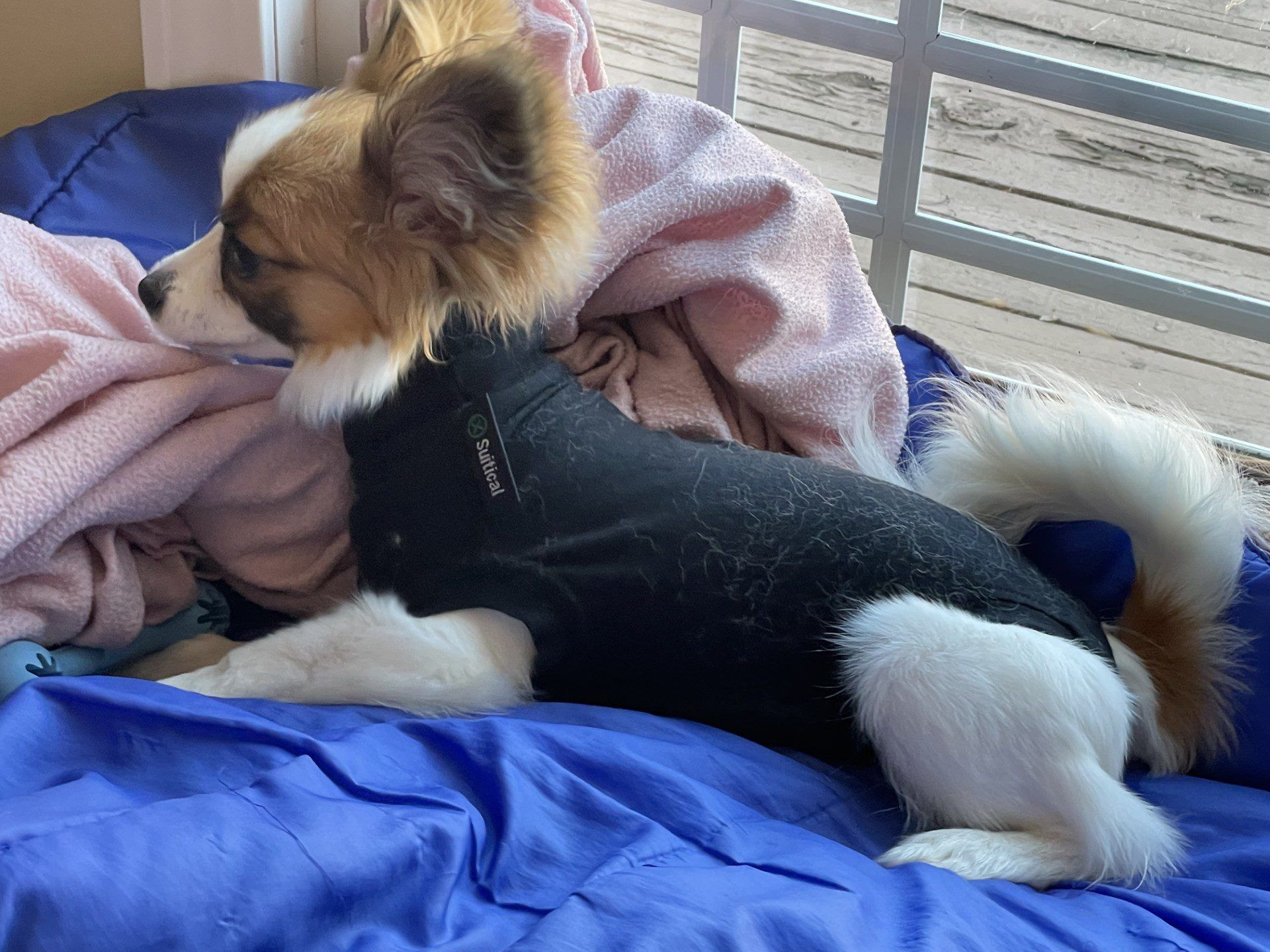
If your puppy is the type who thinks “rest” is a dirty word, prep a few quiet activities ahead of time: stuffed Kongs, lick mats, scatter feeding, and short training sessions for easy cues like sit, touch, and down.
FAQ
Will my puppy’s personality change?
Your puppy will still be your puppy. You may see changes in hormone-driven behaviors (like roaming, some marking, or heat-related restlessness), but temperament is shaped heavily by genetics, socialization, and training. Confidence and manners come from practice, not surgery.
Is it safer to wait until my puppy is fully grown?
For many large and giant breeds, waiting longer can be part of an orthopedic-friendly plan. But “safer” depends on your ability to prevent pregnancy, your dog’s environment, and medical factors. There is always a tradeoff, so it is a personalized decision.
My rescue puppy was spayed or neutered at 10 weeks. What now?
Do not panic. Focus on lean body condition, gradual age-appropriate exercise, and good footing (less slippery floors). Ask your vet about joint-friendly growth, especially if your puppy is headed toward large-breed size.
Can my puppy go to daycare or the dog park while intact?
Many daycares require spay and neuter by a certain age, especially for females after the first heat and for males once adolescent behaviors ramp up. Dog parks can be riskier for intact dogs because hormones can change group dynamics. If you delay altering, prioritize structured play with known dogs and supervised environments.
The Puppy Loom takeaway
If you remember one thing, make it this: spay and neuter timing is a balance between development and risk management, and breed size matters. Small dogs often do well with earlier timelines. Large and giant dogs may benefit from waiting longer, as long as you can reliably prevent accidental breeding and safely manage adolescence.
At Puppy Loom, our goal is not to hand you a single magic number. It is to help you walk into your vet appointment with the right questions and an honest picture of your day-to-day reality. Your veterinarian is your best partner here, and the “right” answer is the one that keeps your puppy healthy and keeps your household sane, too.