When you are training a puppy, you have two jobs: help them understand what you want, and help them feel good about doing it. Clicker training and treat luring both use positive reinforcement, but they communicate with your puppy in slightly different ways.
I have used both methods with foster pups who range from “tiny angel who stares at you thoughtfully” to “feral raccoon with legs.” The truth is, most families do best with a mix. Still, it helps to know what each method is best at so you can stop guessing and start getting those little wins that make puppyhood feel manageable.
Quick definitions
What clicker training is
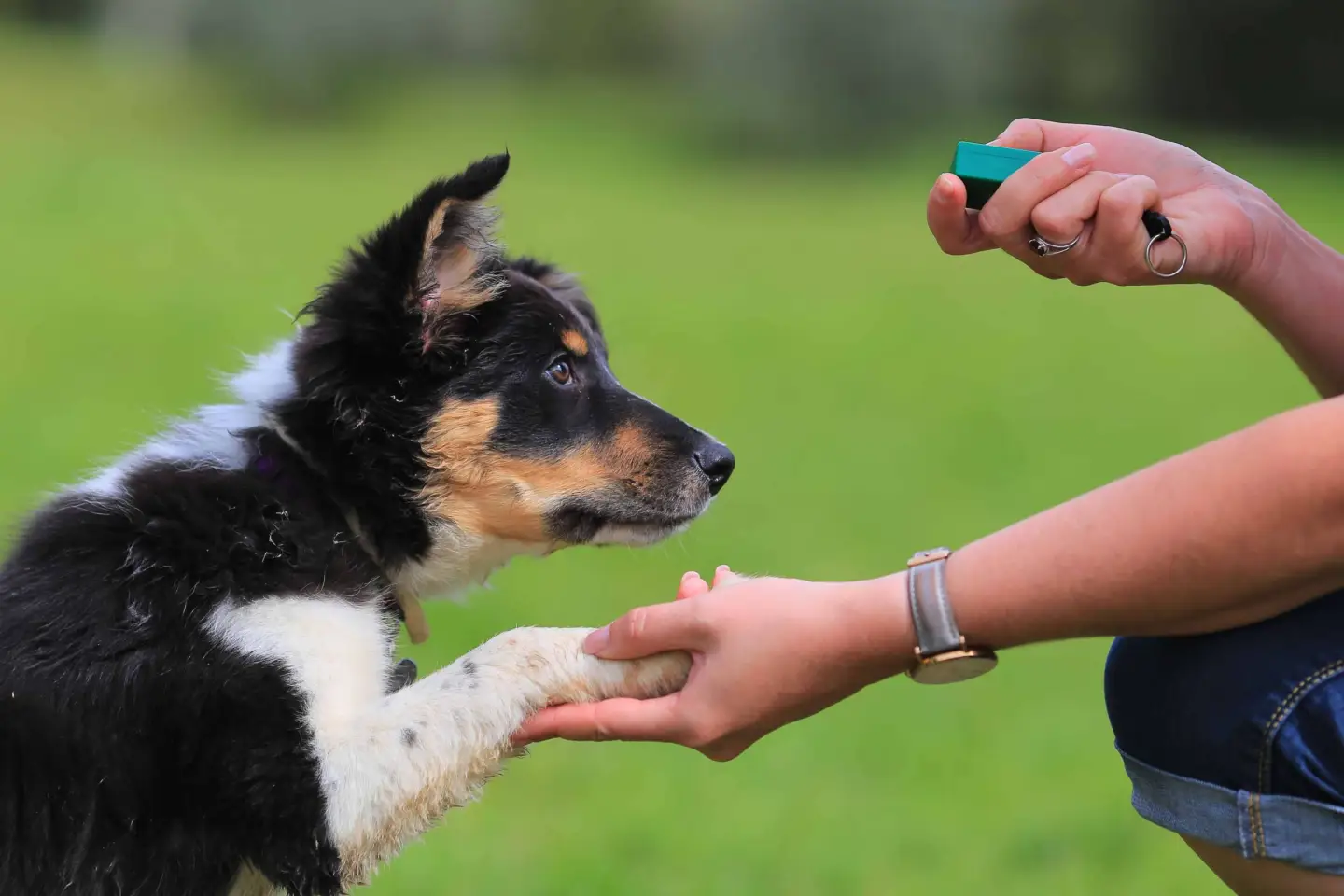
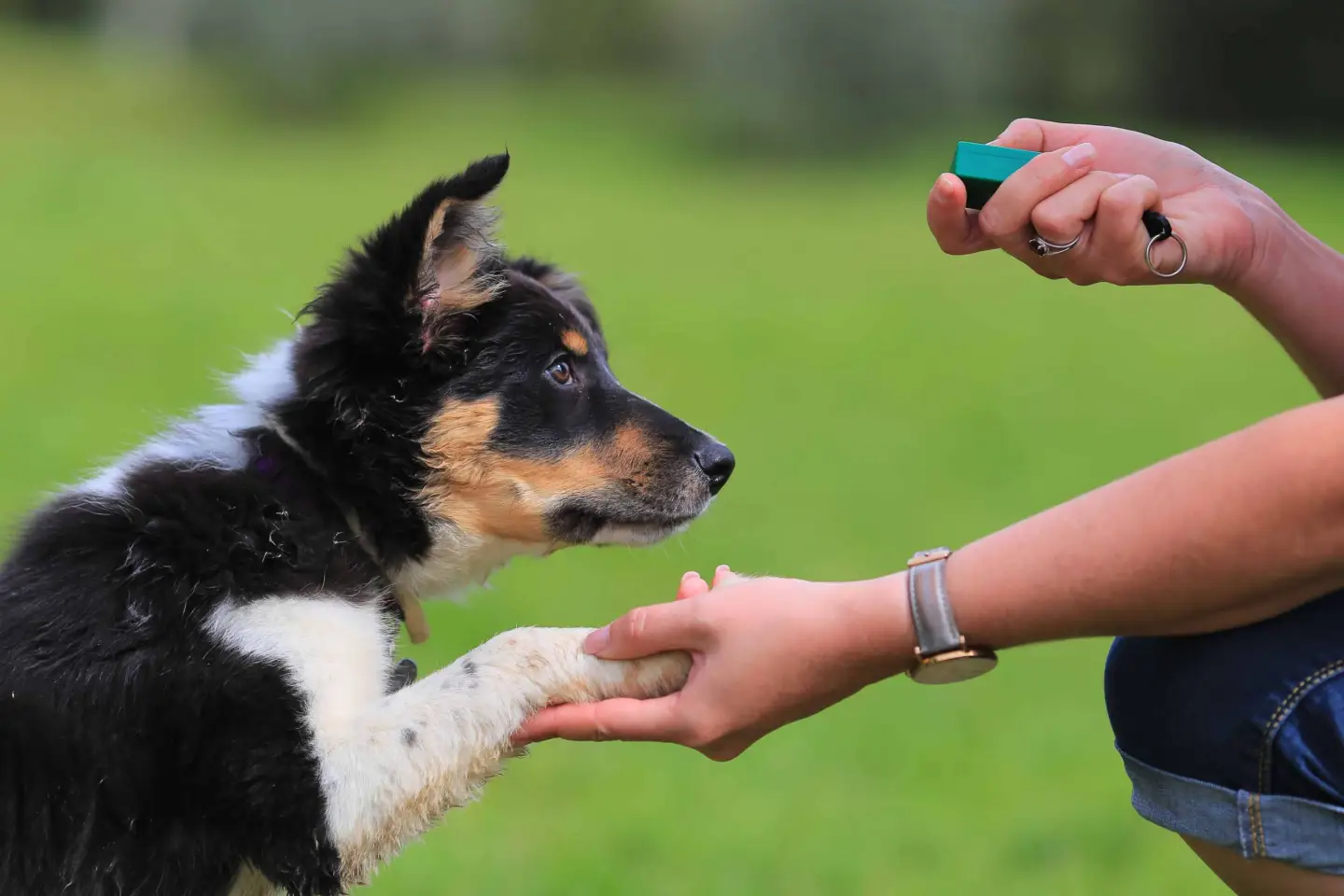
Clicker training uses a small handheld clicker to make a consistent sound (the “click”) that marks the exact moment your puppy did the right thing. The click is followed by a reward, usually a treat. Over time, the click becomes a clear, reliable “Yes, that!” for your puppy.
Charge the clicker first
If you are new to clickers, start by “charging” the sound so it has meaning. In a quiet room, click, then immediately give a treat. Repeat 10 to 20 times over a couple short sessions. You are not asking for any behavior yet. You are simply teaching: click equals reward.
What treat luring is
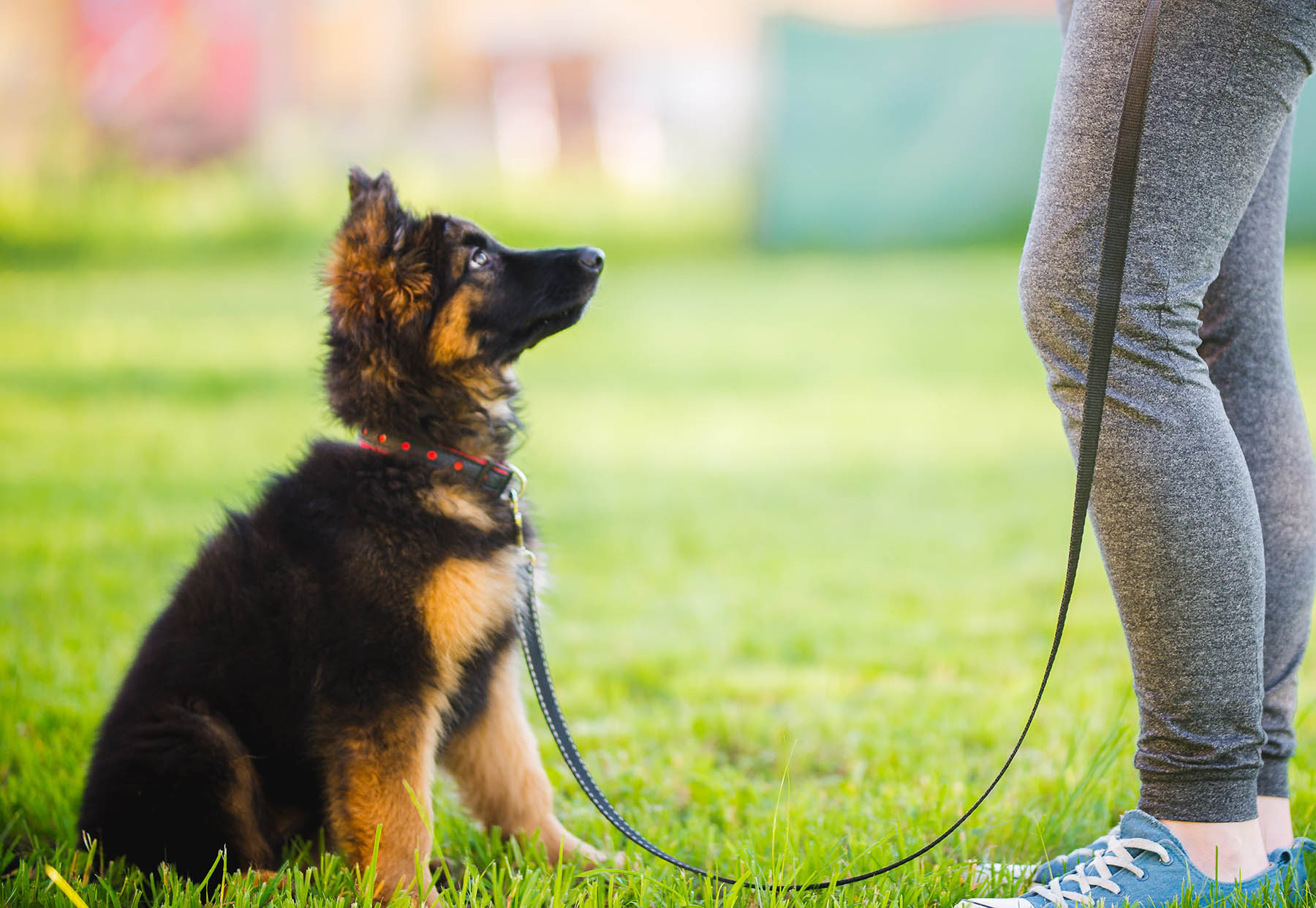
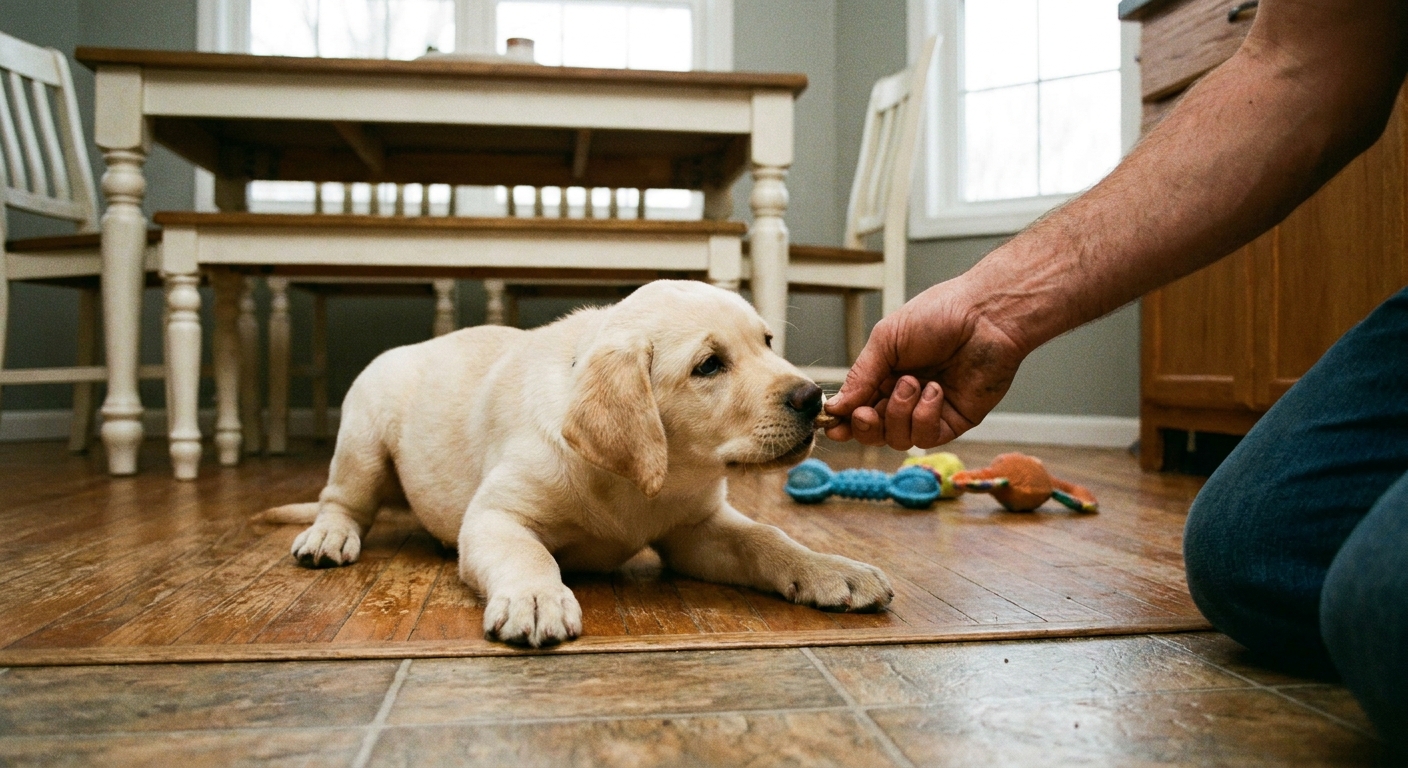
Treat luring is using a treat as a guide to help your puppy move into a position. You lure them, like leading their nose in an arc to get a sit, or walking the treat forward to get a heel position. Once they do the movement, you reward.
How puppies experience each method
Clicker training builds clarity and confidence
The click is information. It marks the exact second your puppy made the right choice, which helps them connect their action to the reward. This can be a big deal for puppies who get frustrated easily, or pups who offer lots of behaviors and need crisp feedback.
- Best feeling it creates: “I can figure this out!”
- What it encourages: problem-solving and offering behaviors (great for shaping).
- What it reduces: confusion about which part of the behavior earned the treat.
One quick caveat: a clicker can rev some puppies up, or startle sound-sensitive pups. If the click makes your puppy jumpy, switch to a softer marker like a cheerful “yes,” a tongue click, or a muted clicker in your pocket.
Treat luring teaches motion and body position fast
Luring is like giving your puppy a map. Instead of hoping they guess “sit,” you guide them into it. For brand-new puppies and new owners, it can feel wonderfully straightforward.
- Best feeling it creates: “Oh, you want me to go there.”
- What it encourages: following your hand and staying engaged.
- What it can accidentally create: a puppy who only works when they see the treat first.
Pros and cons
| Method | Big strengths | Common drawbacks | Best for |
|---|---|---|---|
| Clicker training | Clear timing, precise communication, great for shaping and tricks | Requires practice with timing, you need a marker handy, some people click and forget to reward | Puppies who get frustrated, pups who love training games, owners who want crisp skills |
| Treat luring | Fast start, simple, helps puppies understand body positions quickly | Can lead to treat-dependence if not faded, puppies may mouth hands, sloppy sits and downs if rushed | Very young puppies, shy pups who need an easy win, basic manners like sit and down |
When clicker training wins
If you want a method that scales beautifully as your puppy gets smarter (and sassier), the clicker is hard to beat.
1) Skills where timing matters
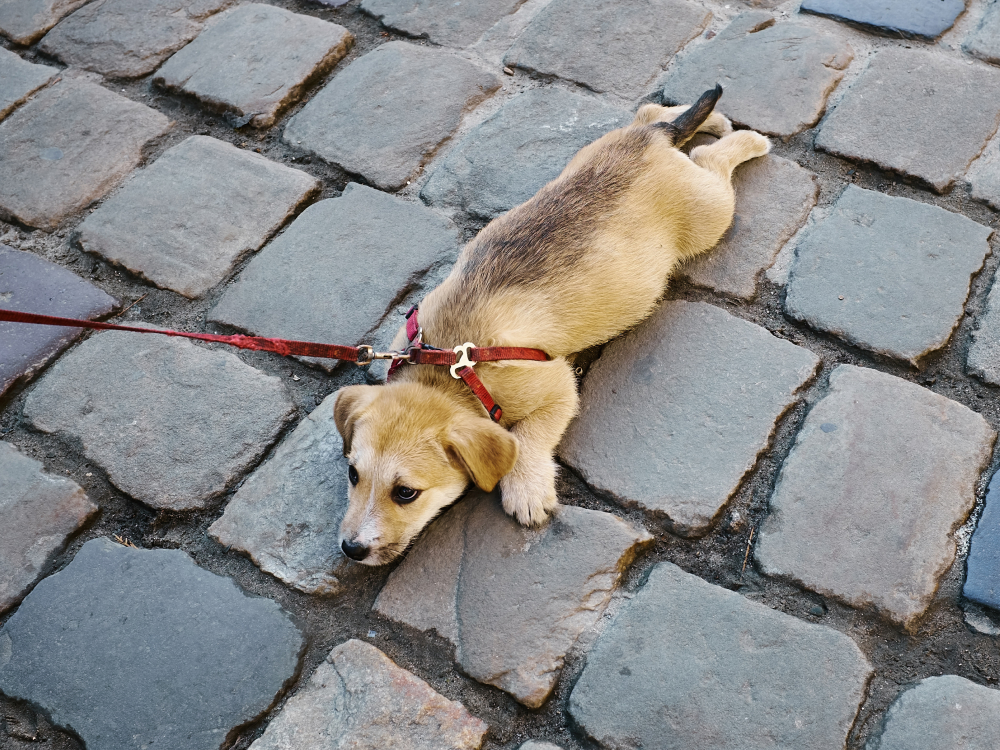
Examples: loose leash moments, polite greetings, “leave it,” eye contact, calmness on a mat. The click captures tiny good decisions, like one second of slack leash, before your puppy has time to launch at a leaf.
2) Shaping without guiding
Shaping is rewarding small steps toward the final behavior. A clicker makes this easier because you can mark micro-moments.
Examples: teaching “go to bed,” bow, spin, targeting a hand, or stepping onto a platform.
3) Puppies who get frustrated
Some pups melt down when they do not understand. Clear markers can keep sessions upbeat and reduce the guesswork.
When treat luring wins
Luring is fantastic for getting started, especially when you need your puppy to understand the basic motion of a cue.
1) Your puppy is new and distracted
In the first week home, many puppies have the attention span of a gnat riding a Roomba. A lure can help you get quick, simple repetitions without needing perfect timing.
2) Teaching first-round basics
Luring is perfect for sit, down, stand, getting into heel position, and hopping onto a scale at the vet.
3) Helping shy puppies feel safe
For a timid puppy, a slow, gentle lure can feel less pressure-filled than waiting for them to “offer” something. You are giving them a clear path to success.
Biggest mistakes
With clickers: clicking and forgetting the treat
Think of the click like a promise. If you click, you pay. Every time. If you click and then rummage around for five seconds, the click loses its meaning fast.
With luring: never fading the lure
A lure is training wheels. It is not meant to stay forever. If your puppy only sits when your fingers smell like chicken, they are not being stubborn. They are being logical.
How to choose
Pick clicker training if your puppy is...
- Quick to offer behaviors (they try lots of things and need clarity).
- Easily overstimulated and benefits from precise feedback.
- Food motivated but gets grabby when treats are waved in front of their face.
Pick treat luring if your puppy is...
- Very young and still learning how training works.
- Nervous or shut down and needs gentle guidance.
- Not offering behaviors yet and seems confused when you wait them out.
Pick a hybrid if you are...
- Teaching a new skill and want speed and clarity.
- Working on manners like loose leash walking where you may guide sometimes but also want to capture good moments.
A simple hybrid plan
If you are torn, this combo is beginner-friendly and works with most puppies:
- Start with a lure to show the basic motion (2 to 6 reps).
- Add the cue right before you lure (say “sit,” then lure).
- Shrink the hand motion with the treat hidden in your other hand or pouch.
- Use the click (or your marker word) the instant they hit the correct position.
- Reward from the other hand so the puppy stops staring at the “lure hand.”
This gives you the best of both worlds: the lure helps them understand, and the marker helps them learn exactly what earns the reward.
Fade a lure fast
If you want one simple rule, it is this: the lure should get smaller and less obvious every session.
- Step 1: Lure with the treat for a few reps to teach the motion.
- Step 2: Do the same hand motion with an empty hand, then reward from your other hand or pouch.
- Step 3: Say the cue once, pause half a beat, then use the hand signal only if needed.
- Step 4: Keep the cue and reward, but fade the hand signal too when your puppy is ready.
Step-by-step: teaching “sit”
Option A: Lure the sit
- Hold a treat at your puppy’s nose level.
- Move the treat up and slightly back, just enough that their head follows and their weight shifts back.
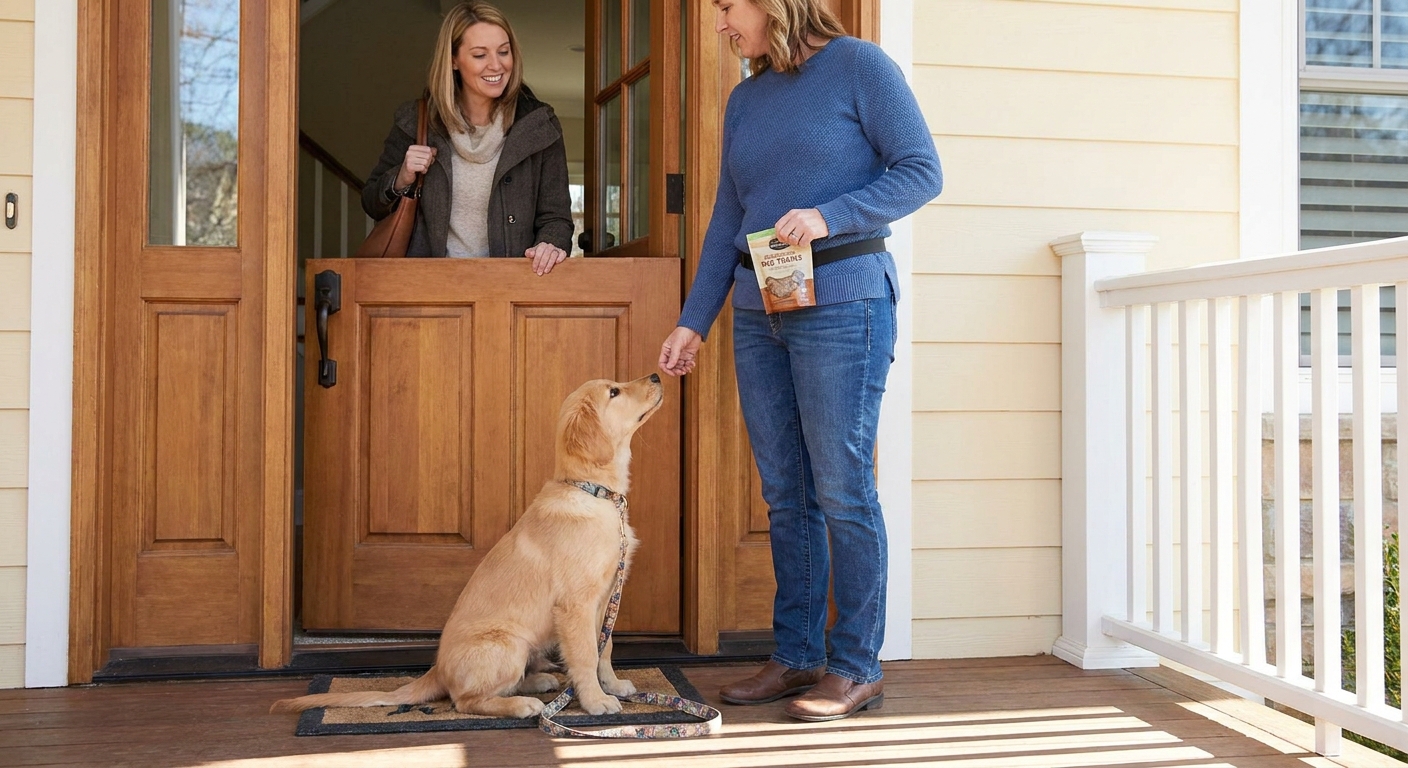
- The moment their butt hits the floor, say “Yes” (or click) and give the treat.
- After a few reps, say “sit” once before you move your hand.
Mouthy puppy tip: Use an open palm lure (treat tucked under your thumb) or a closed fist so little teeth hit your hand less. Also avoid pulling the lure so far back that your puppy hops or backs up.
Option B: Clicker-shape the sit (no lure)
- Stand or sit quietly with your puppy in front of you.
- Wait for any tiny movement toward a sit, like shifting weight back.
- Click the instant you see that weight shift and toss a treat.
- Repeat until your puppy starts offering bigger “almost sits.”
- Only start naming it “sit” when they are reliably offering the full sit.
If shaping feels slow at first, you are not doing it wrong. Your puppy is learning the game: try something, hear the marker, earn a treat. Once that clicks (pun fully intended), they often speed up dramatically.
Avoid treat dependency
This is the worry I hear most: “If I use treats, will my puppy only listen for food?” Treats are a tool, not a lifetime contract. The key is how you phase them, and that you do it gradually after the skill is solid.
Do this instead
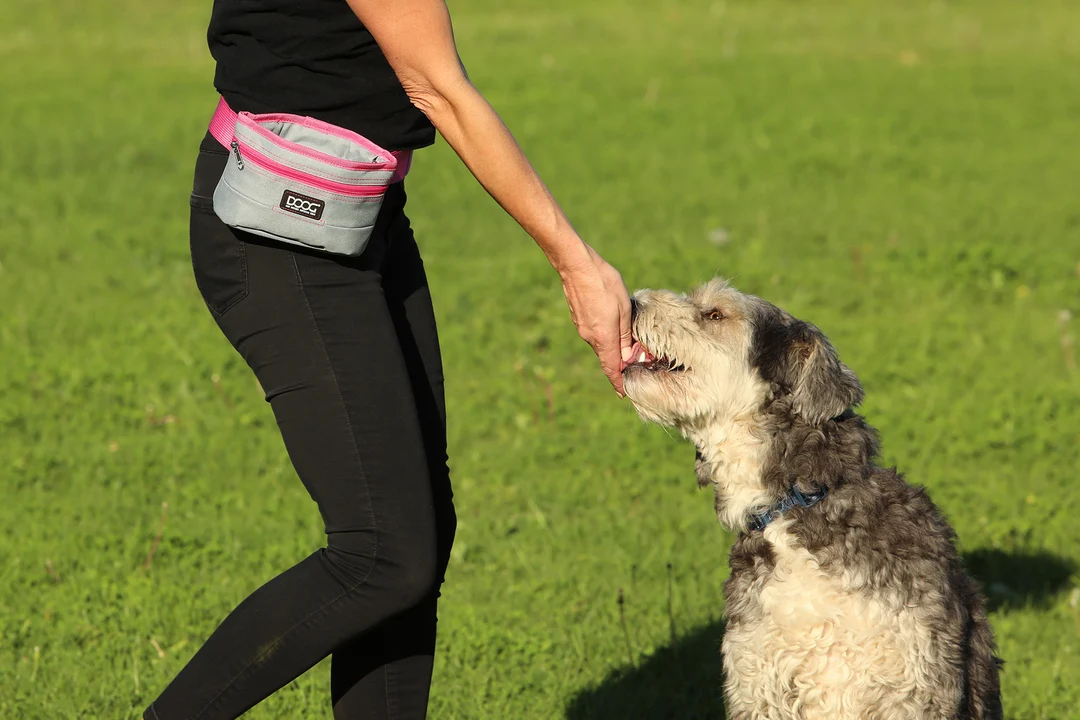
- Hide treats in a pouch or pocket so your puppy does not need to see them first.
- Reward after the behavior, not as a bribe before it.
- Keep treats frequent while learning, then reduce them slowly once the cue is fluent in easy settings.
- Switch to variable reinforcement after fluency: treat sometimes, praise or play every time.
- Use life rewards too: going outside, greeting a friend, sniffing a bush, getting the leash clipped on.
What you need
For clicker training
- A clicker (any basic one is fine)
- Soft, tiny treats (pea-sized)
- A treat pouch (optional but makes timing easier)
For treat luring
- Soft, smelly treats (easy-to-chew, not crunchy)
- Patience with mouthy puppy moments
- A plan to fade the lure quickly
FAQ
Can I use a marker word instead of a clicker?
Yes. A cheerful, consistent “yes!” can work as a marker just like a click. A clicker is often easier for humans to deliver with the same sound and timing every time, especially when you are tired, but a well-practiced marker word can be just as effective.
What if my puppy is scared of the clicker sound?
It happens. Muffle the clicker in your pocket, behind your back, or inside a soft cloth and pair it with treats. If your puppy still finds it spooky or it amps them up, switch to a softer marker word or a gentle tongue click.
Is luring cheating?
Nope. Luring is a normal way to teach. The only catch is you need to fade it. If you treat it like step one, not the whole plan, it is a great method.
Which method is better for loose leash walking?
I like a combo: use a lure briefly to show the position, then rely on marking and rewarding slack leash moments. Luring the whole walk can turn into a puppy staring at your hand instead of learning to check in naturally.
My recommendation
If you are brand new to training, start with treat luring to teach the basic shape of sit, down, and coming to you. Then bring in a click or marker word to tighten up timing and help your puppy understand exactly what you are rewarding.
And if you only remember one thing from all of this, make it this: whichever method you choose, keep sessions short, end on a win, and forgive yourself for the days your puppy acts like they have never heard the word “sit” in their whole life. Puppy brains are like that.