One of the hardest parts of raising a puppy is learning what’s “normal puppy weirdness” and what’s an actual emergency. Puppies are tiny, wiggly chaos gremlins with very little reserve. When something goes wrong, it can go wrong fast.
If you’re seeing any of the warning signs below, skip the internet spiral and call your vet or the nearest emergency clinic right now. You are not being dramatic. You are being a good puppy parent.
Before you start: what “immediately” means
In puppy terms, “immediately” means call a veterinary professional now and be ready to go in, even if it’s the middle of the night. If your regular vet is closed, call an emergency hospital. If you are not sure where to go, many areas have 24/7 ERs and pet poison hotlines that can direct you.
- If your puppy is struggling to breathe, collapses, has a seizure, has pale or blue gums, or is unresponsive: treat it as an emergency and leave for the ER while someone calls.
- If your puppy is very young (under 16 weeks), very small, or unvaccinated: be extra cautious. Their bodies cannot “power through” the way adult dogs sometimes can.
1) Trouble breathing
Breathing should be quiet and fairly easy at rest. A puppy who is working to breathe is an emergency, full stop.
What it can look like
- Rapid breathing that does not settle after 5 to 10 minutes of rest in a cool, quiet room
- Chest and belly pumping hard with each breath
- Nostrils flaring, neck stretched out, elbows held away from the body
- Wheezing, choking sounds, gagging that does not stop
- Coughing with distress, especially if gums look pale or bluish
Why it’s urgent
Breathing issues can be associated with allergic reactions, pneumonia, airway obstruction, heart problems, heat stroke, trauma, or congenital issues. Puppies do not tolerate low oxygen well.
What to do right now
- Keep your puppy calm and cool. Excitement can worsen breathing.
- Do not force water or food.
- If you suspect choking and your puppy cannot breathe, call the ER immediately for guidance while you head in.
2) Repeated vomiting
Puppies throw up sometimes, unfortunately. But there’s a big difference between a one-time barf because they inhaled dinner and repeated vomiting that keeps happening.
Emergency red flags
- Multiple episodes over a few hours, or vomiting that keeps returning after you think it has stopped
- Any blood in vomit (bright red or coffee-ground looking)
- Vomiting plus weakness, wobbliness, shaking, or “not acting like themselves”
- Vomiting plus a swollen, painful belly
- Unable to keep even small sips of water down
Why it’s urgent
Puppies dehydrate quickly. Vomiting can also happen with toxin ingestion, an intestinal blockage from a sock or toy, severe parasites, infections, or other inflammatory GI issues (pancreatitis can happen, but it is only one possible cause).
Extra-important: If your puppy is unvaccinated or not fully vaccinated, vomiting plus lethargy, loss of appetite, or diarrhea raises concern for serious viruses like parvovirus. Vomiting alone is not diagnostic, but vaccination status and exposure risk matter, and this is not a wait-and-see situation.
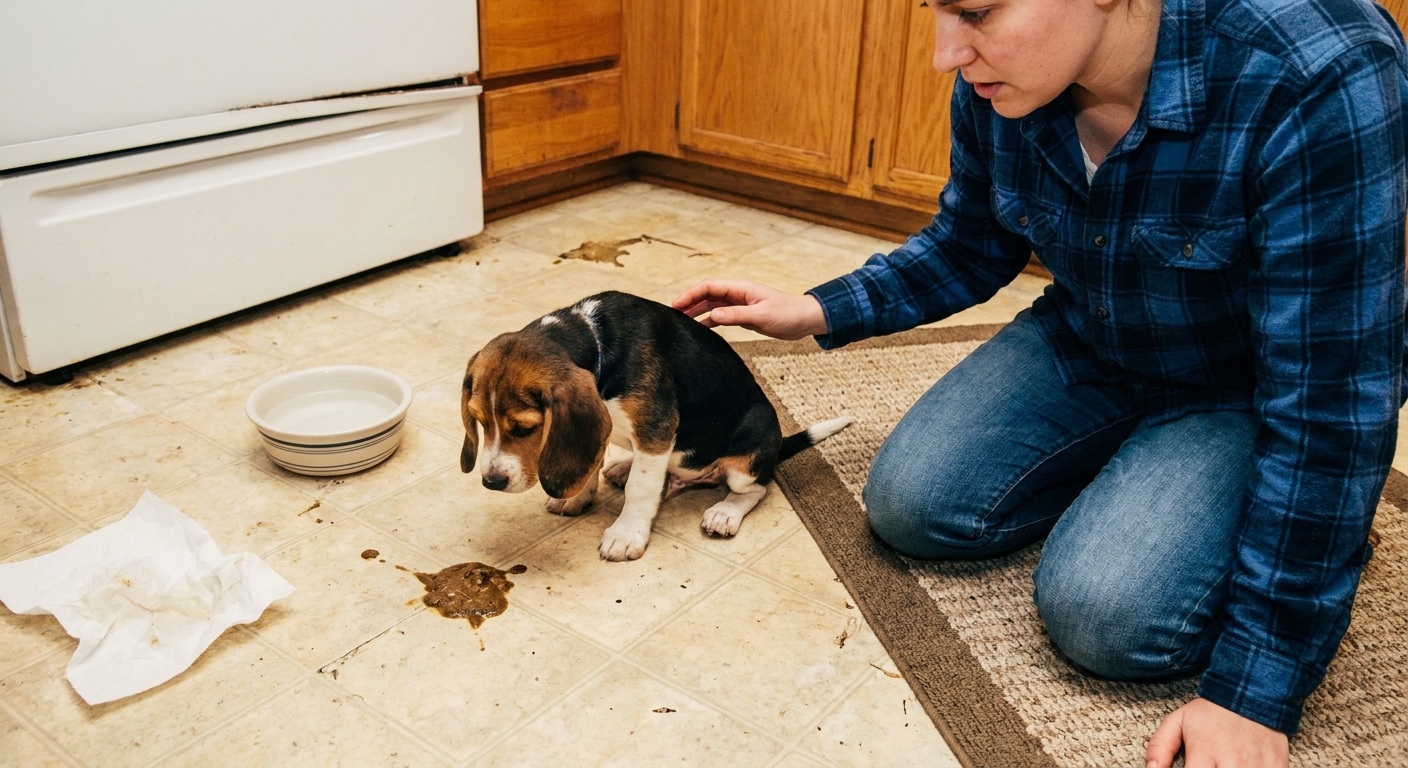
3) Severe diarrhea
Loose stools happen. But watery diarrhea that keeps coming, especially with blood or mucus, can become life-threatening in a puppy.
Call a vet immediately if you see
- Bloody diarrhea (bright red or dark, tarry stool)
- Diarrhea that is very watery or explosive
- Diarrhea plus vomiting
- Diarrhea plus lethargy, pale gums, collapse, or refusal to drink
- A very young puppy with any significant diarrhea
Why it’s urgent
Dehydration and low blood sugar can hit fast. Causes range from parasites and diet changes to toxin exposure and viral infections. In shelters and rescues, I treat bloody diarrhea as a “call the vet now” sign every time.
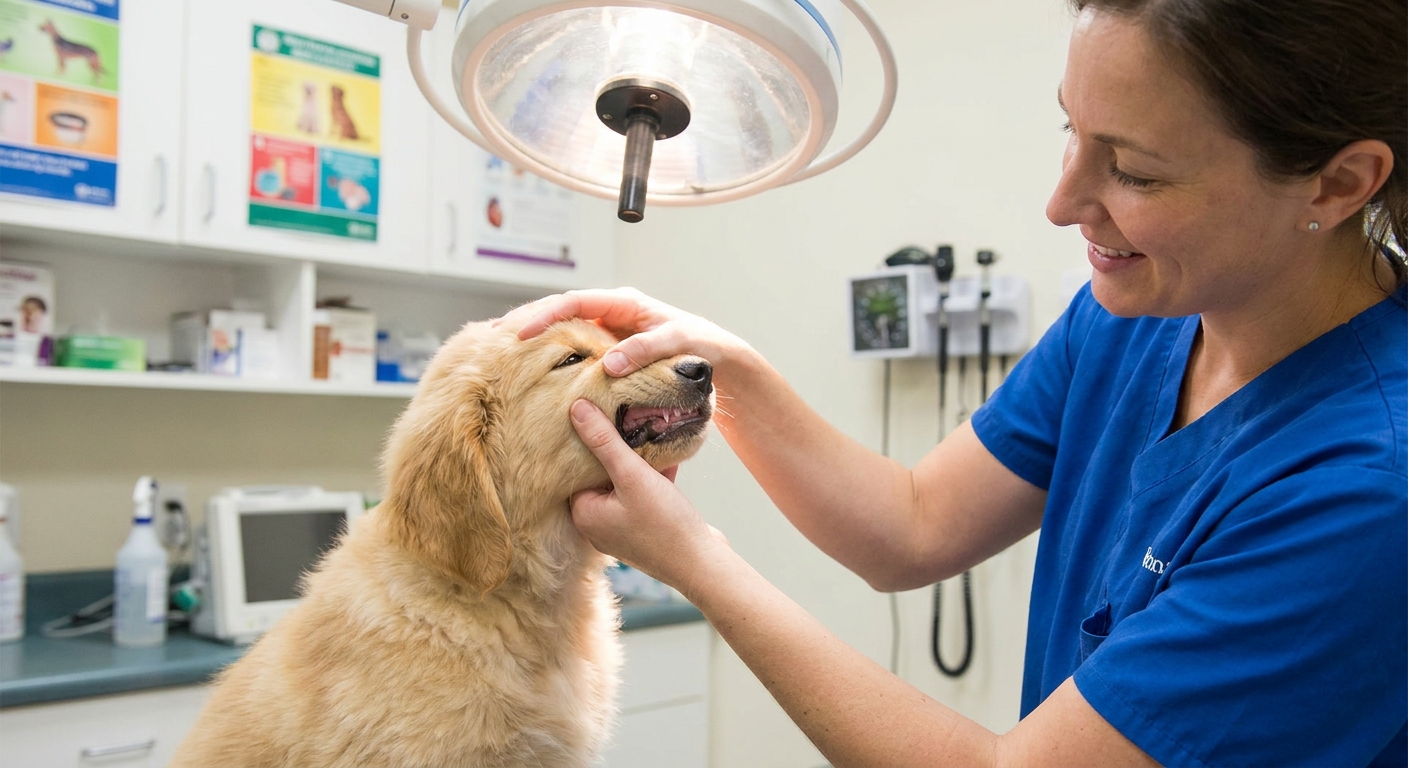
4) Pale, blue, or gray gums
This is one of those sneaky signs that tells you a lot in two seconds.
How to check
Gently lift your puppy’s lip and look at the gums above the teeth. Healthy gums are usually a bubblegum pink (some dogs have natural pigment, so focus on areas that are normally pink).
Why it’s urgent
- Pale or white gums can be associated with shock, internal bleeding, severe anemia, or poor circulation.
- Blue or gray gums suggest an oxygen problem.
If gum color looks wrong and your puppy is weak, wobbly, or acting “out of it,” go in right away.
5) Collapse or extreme weakness
Puppies nap hard, yes. But they should wake up and respond to you. If your puppy is suddenly floppy, cannot stand, seems disoriented, or is difficult to rouse, treat it as an emergency.
Common ways this shows up
- Sudden collapse or fainting
- Severe lethargy with glassy eyes and no interest in you, food, or movement
- Hard to wake, or wakes but cannot engage normally within a minute or two
- Wobbling, stumbling, or head tilt that appears out of nowhere
- Weakness after vomiting or diarrhea
Why it’s urgent
This can be low blood sugar, dehydration, toxin ingestion, severe infection, internal bleeding, heart issues, or neurologic disease. Tiny puppies and toy breeds are especially prone to dangerous drops in blood sugar.
What to do while you call
- Keep your puppy warm and quiet.
- Do not force food or water into a weak puppy.
- If your puppy is conscious but very weak and you suspect low blood sugar, ask the vet on the phone whether you should rub a small amount of corn syrup or honey on the gums while heading in. This is a short-term stopgap, not a fix. Do not do this if your puppy is unconscious or having trouble swallowing.
6) Seizures or sudden wobbliness
Watching a puppy seize is terrifying, and it is also a true emergency.
What counts
- Full body seizure (stiffening, paddling, loss of awareness)
- Repeated tremors or shaking that does not stop with comfort or warmth
- Sudden inability to walk normally, falling over, or circling
Why it’s urgent
Seizures and tremors can be caused by toxin exposure (common culprits include some human medications, nicotine products, xylitol, chocolate), infections, congenital issues, low blood sugar, or fever.
What to do right now
- Move hazards away. Do not put your hands near the mouth.
- Do not restrain your puppy and do not put anything in their mouth.
- Dim lights and keep the environment quiet if possible.
- Time the episode on your phone. Duration matters.
- Head to the ER even if it stops, especially for a first seizure.
7) Swollen belly or abdominal pain
Puppy bellies can be round after a meal, but a suddenly distended, hard, or painful abdomen is different.
Emergency signs
- Swollen or tight belly that seems to appear quickly
- Retching or gagging with little to nothing coming up
- Crying when picked up, hunched posture, “praying” position (front end down, rear end up)
- Restlessness and cannot get comfortable
Why it’s urgent
This can point to an intestinal blockage (yes, swallowed socks are a thing), severe gas and pain, abdominal bleeding, or other acute problems. While classic bloat is more common in deep-chested adult dogs, any puppy with a painful, distended abdomen needs urgent evaluation.
What to do right now
- Do not give food or water on the way unless a vet tells you to.
- Go in. Blockages and abdominal emergencies are time-sensitive.

Other urgent red flags
The seven signs above cover many of the big puppy emergencies, but these situations also deserve a call now and often an ER visit.
Possible toxin ingestion
If your puppy ate or possibly ate something dangerous, call a vet or pet poison hotline right away. Common hazards include:
- Human medications (pain relievers, antidepressants, ADHD meds)
- Rodent bait
- Grapes or raisins
- Antifreeze
- Nicotine products
- Marijuana or edibles
- Xylitol (some sugar-free gum, candy, baked goods)
- Onions or garlic
- Plants like lilies and sago palm
- Cleaners and chemicals
In the US, many vets rely on ASPCA Animal Poison Control or Pet Poison Helpline for case-specific guidance. Fees may apply, but they can be worth it for fast, targeted instructions.
Trauma
Hit by car, a fall, a dog attack, being stepped on, or any major impact is urgent, even if your puppy seems okay at first. Internal injuries and bleeding can be sneaky. Red flags include pale gums, rapid breathing, belly pain, weakness, or sudden limp.
Straining to pee
If your puppy is repeatedly squatting with little to no urine coming out, crying while trying to pee, or has a swollen painful belly, call a vet immediately. Urinary blockage is less common in young puppies than adult males, but it is high-stakes when it happens.
Eye emergencies
A sudden squint, an eye held shut, a bulging eye, a visible injury, or chemical exposure (cleaners, shampoo, pesticides) is a same-day emergency. Eyes can worsen quickly, and early treatment matters.
What to say when you call
When you call the vet or ER, you will get help faster if you lead with the big facts. I like to keep it simple.
- Age, breed, and weight (estimate is fine)
- Main symptom (for example: “trouble breathing,” “bloody diarrhea,” “collapsed”)
- When it started and whether it is getting worse
- Vaccination status (especially parvo and distemper timing)
- Possible ingestion (medications, gummies, chocolate, nicotine, plants, cleaners, toys, string)
- Photos or video if it helps (breathing noise, tremors, gait issues, vomit or stool)
While you’re getting ready to go
- Bring a stool or vomit sample if it is safe and practical, or take a clear photo.
- Bring packaging of anything your puppy might have eaten.
- Keep them contained in a crate or laundry basket with a towel to prevent falls and reduce stress.
- Do not give human meds unless a vet specifically instructed you to.
- If infectious disease is possible (vomiting or diarrhea in an unvaccinated puppy), tell the clinic before you arrive so they can protect other patients.
Trust your gut
I have fostered plenty of puppies who were dramatic about normal things, like the horror of a leaf touching their paw. But I have also seen the quiet ones who looked “a little off” and were actually very sick. If your puppy’s behavior is suddenly strange, their energy drops off a cliff, or your instincts are screaming that something is wrong, listen.
You are never wasting anyone’s time by asking, especially when the patient is a baby animal who cannot tell you what hurts.
Quick FAQ
Should I go to the emergency vet or wait for my regular vet?
If your puppy has any of the signs above, go to the emergency vet or call them for triage. If it’s after hours, do not wait until morning unless a veterinary professional tells you it is safe to monitor at home.
What counts as a fever in a puppy?
Normal canine temperature is generally around 101 to 102.5°F (38.3 to 39.2°C). Excitement, stress, and heat can bump temperature a bit. A temperature over 103°F (39.4°C) is often considered a fever, and 104°F (40°C) or higher is more concerning. If your puppy seems unwell with a fever, call your vet right away.
My puppy is sleeping a lot. Is that a red flag?
Puppies sleep a ton. The red flag is when your puppy is hard to wake, seems confused, cannot stand, or stops responding to things they normally love (food, play, you walking into the room).