If your puppy pees the second someone says, “Hiiii!” you are not alone. I have fostered plenty of puppies who could hold it perfectly fine in their crate, then promptly create a tiny puddle the moment a human made eye contact.
The good news is that this is often not a potty training failure. It is usually either excitement urination or submissive urination, and both improve with the right handling. The not so fun news is that the wrong handling (big greetings, leaning over, scolding) can keep the cycle going.
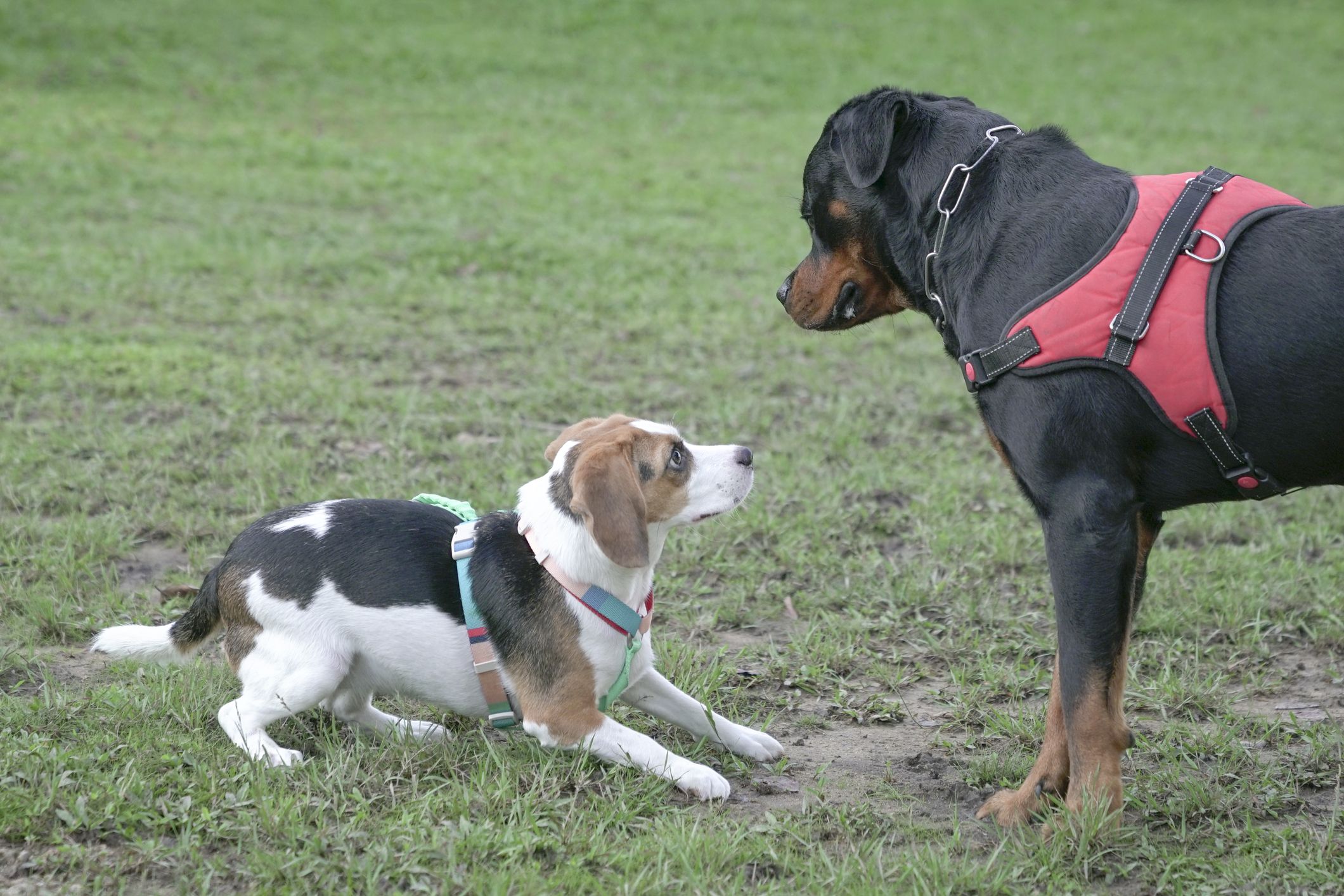
Excitement vs. submissive urination
These two look similar on your rug, but they come from different emotions. Knowing which one you are dealing with helps you choose the right approach.
Excitement urination
- What it looks like: Wiggly puppy, happy face, zoomy energy, tail going. Pee happens mid greeting.
- Common triggers: Coming home, visitors arriving, playtime starting, leashes coming out, kids squealing.
- Why it happens: Their arousal spikes and their bladder control is not fully mature yet.
- Age note: This is especially common in young puppies and often fades as they mature, sometimes lingering into adolescence.
Submissive urination
- What it looks like: Puppy lowers their body, ears back, avoids eye contact, licks lips, rolls partly over, tail may tuck. Pee happens as a “please be nice” signal.
- Common triggers: Someone looming over them, direct staring, a deep voice, fast reaching, being picked up, being scolded, intense greetings.
- Why it happens: It is a stress or appeasement response. It is not spite. It is not “dominance stuff.” It is puppy insecurity.
- Age note: This can show up in puppies and in adult dogs too, especially shy or fearful dogs, or dogs who have been punished for accidents.
Many puppies have a little of both. Either way, the main training goal is the same: make greetings boring and predictable while your puppy’s confidence and bladder control catch up.
Behavioral peeing or potty issue?
Here are quick clues I use in foster homes to separate greeting pees from true house training gaps.
Signs it is excitement or submissive urination
- It happens only during greetings, handling, or high emotion moments.
- Your puppy otherwise stays dry in their crate and can go reasonable stretches between potty breaks.
- The puddle is usually small, and your puppy may not even squat intentionally.
- It happens even if they just went outside.
Signs it might be a potty training gap
- Accidents happen throughout the day, not just during greetings.
- Your puppy is wandering out of sight, then peeing.
- Accidents are larger and look like a normal empty-the-tank pee.
- Your schedule is inconsistent or you are stretching time between potty breaks too far for their age.
When to call your vet
Any time urination seems painful, very frequent, has blood, has a strong unusual odor, or your puppy suddenly starts having accidents after doing well, check in with your veterinarian. Urinary tract infections and other medical issues can look like “training problems.”
Also call your vet if you see constant dribbling, wet bedding, leaking when asleep, or your puppy is straining or seems uncomfortable squatting. Those are not typical “hello pee” signs and can point to things like urinary tract infection, vulvovaginitis in young females, bladder stones, congenital issues (like ectopic ureters), increased thirst and urination, or medication side effects.
The golden rule
I say this lovingly because I have done it, too. We accidentally teach puppies that the moment they see us, the world becomes a squealing reunion tour.
For a puppy who pees when greeted, the best gift you can give is a greeting that feels like: no pressure, no big feelings, no sudden hands in your face.
What to do in the moment
If it happens, treat it like a weather event. Neutral face, neutral voice.
- Quietly interrupt by moving away (pressure off) and calmly guiding your puppy outside.
- No scolding and no comfort-fussing. Even “Oh noooo, it’s okay!” can be a lot of attention in a big moment.
- When you come back in, restart with a calmer, lower-energy hello.
A calm greeting routine
This is my go-to plan for fosters who sprinkle when excited. It is simple, and it works if everyone follows it consistently.
Step 1: Potty first
Before greetings, take your puppy straight outside on leash. Keep it boring, give them a chance to empty out, then head in.
Step 2: Enter quietly
- Walk in calmly.
- Use a normal voice.
- Do not bend over them.
- Do not hover face-to-face.
If you need a script: quietly say “Hi, puppy,” and keep moving.
Step 3: Cue something easy
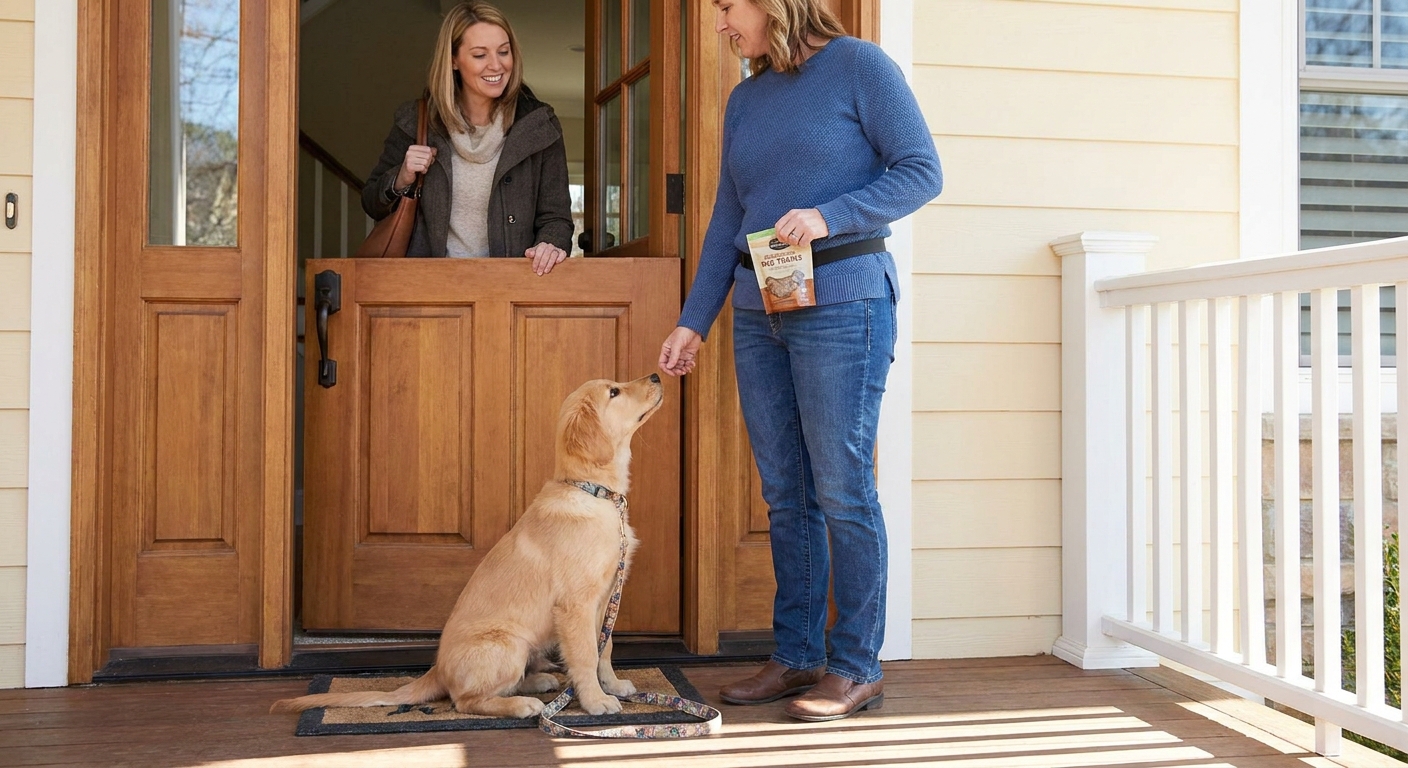
Give your puppy something predictable to do like sit or go to mat. Reward with a treat dropped on the floor (less pressure than hand-feeding right at their face).
Step 4: Pet low and slow, or not at all
If your puppy tends toward submissive urination, skip the initial petting. If you do pet, aim for under the chin or chest, not a big hand coming down over their head.
Step 5: Keep the first minute boring
After one calm minute, you can gradually increase interaction. Most “greeting pee” pups do best when the first minute is calm and predictable.
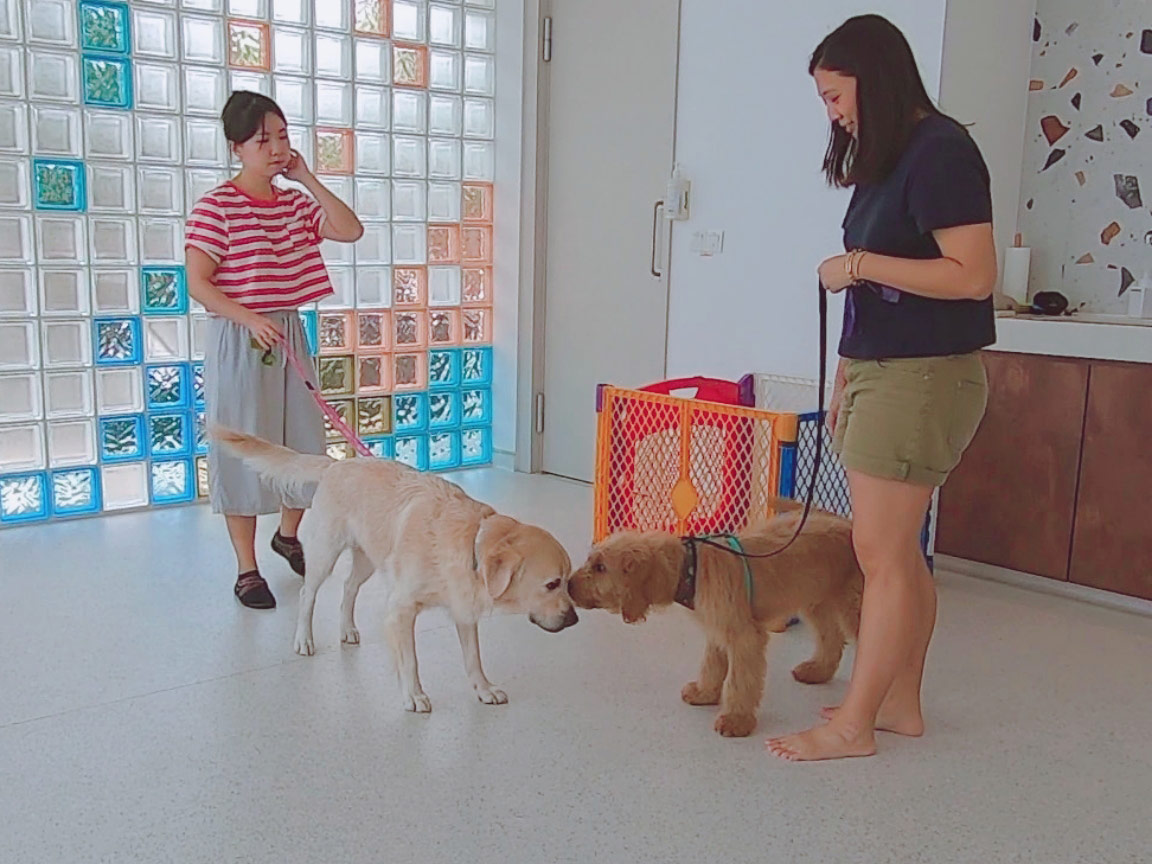
Visitor plan
Puppies do not generalize well. Even if your calm routine works for you, visitors can bring back the sprinkler effect. I like to coach guests like I am directing traffic.
Before the door opens
- Take your puppy out to potty.
- Have treats ready in a bowl by the entrance.
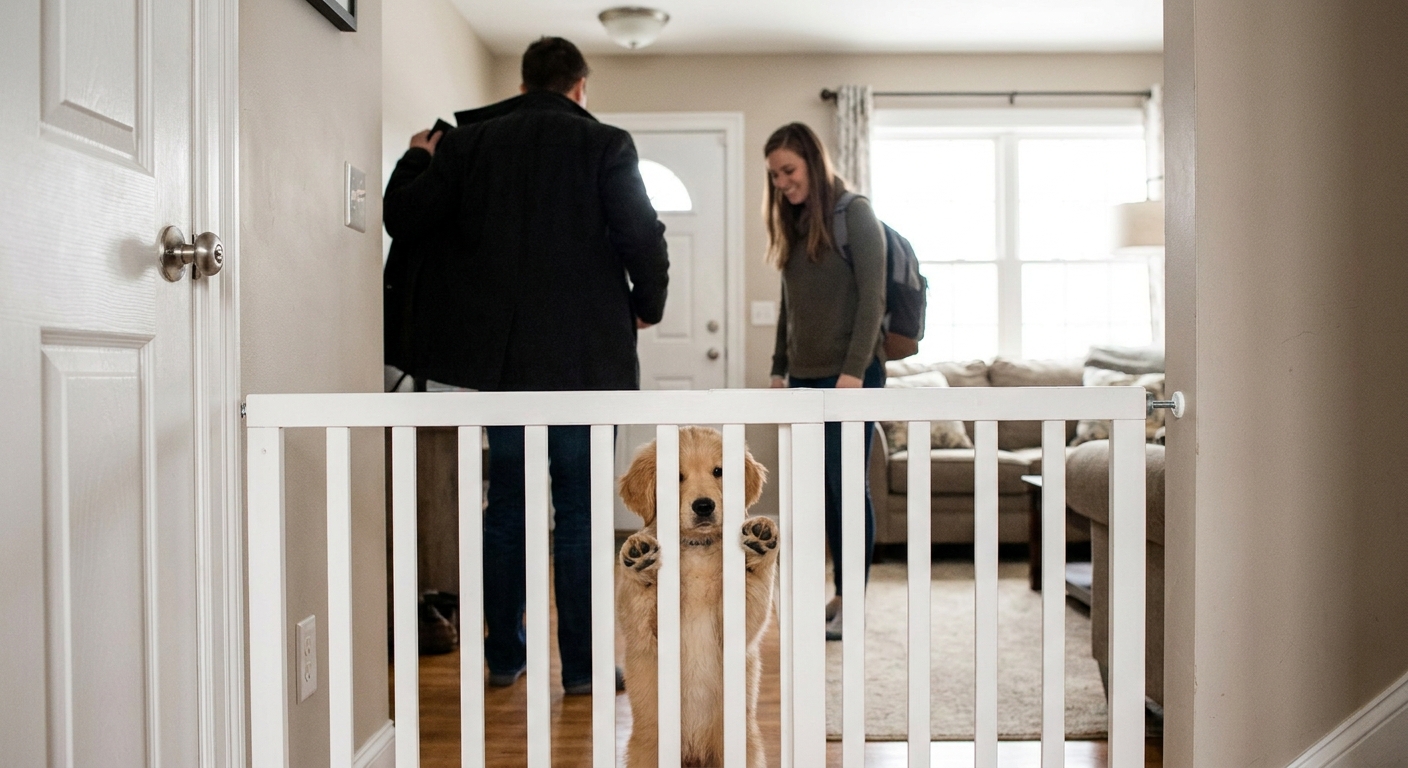
- If your puppy is extra reactive to arrivals, put them behind a baby gate or in an exercise pen with a chew.
When guests come in
- Guests ignore the puppy at first. No talking, no touching, no eye contact.
- They can toss treats away from their body, one at a time, so the puppy sniffs and moves instead of peeing in place.
- If the puppy stays dry and calm, guests can squat sideways and offer a hand low. If the puppy gets wiggly, go back to ignoring.
This is not being unfriendly. This is being kind. A puppy who pees from stress is basically saying, “That was too much.”
And one more thing: do not “flood” your puppy with intense social time to fix it faster. Short, positive, low-pressure greetings build confidence way better than forcing your puppy to endure a full-contact welcome committee.
What not to do
- Do not scold. Your puppy is not doing this on purpose, and scolding often makes submissive urination worse.
- Do not force greetings. Picking them up, holding them still, or insisting people pet them can trigger more peeing.
- Do not hype them up. Excited voices, fast movements, and rough play right after arrival are common triggers.
- Do not rub their nose in it. This damages trust and does not teach bladder control.
Confidence-building games
If submissive urination is part of the picture, confidence building pays off. Keep it gentle and reward-based.
Hand target
Teach “touch” by presenting your hand low and to the side. Mark and reward when your puppy bumps it. This gives them a safe way to approach people without pressure.
Pattern games near the door
Practice calm door routines when nobody is arriving. Walk to the door, toss a treat to the mat, reward quiet. Repeat. You are rehearsing calmness instead of chaos.
Consent-based petting
Pet for two seconds, then stop. If your puppy leans in, great. If they back away, respect it. This tiny habit prevents a lot of overwhelmed puppy moments.
Management while they grow
Most puppies improve a lot with maturity, especially as they gain social confidence and better bladder control. In the meantime, set up your home like a person who owns a puppy, not like a person who hosts dinner parties every night.
- Meet outside when possible. If you can greet in the yard or on the sidewalk, do it. Outdoor pees are emotionally easier to ignore.
- Use a gate or pen for arrivals. Calm first, then access to people.
- Remove rugs temporarily. Or put down a washable mat by the door. You can bring the nice rug back later, I promise.
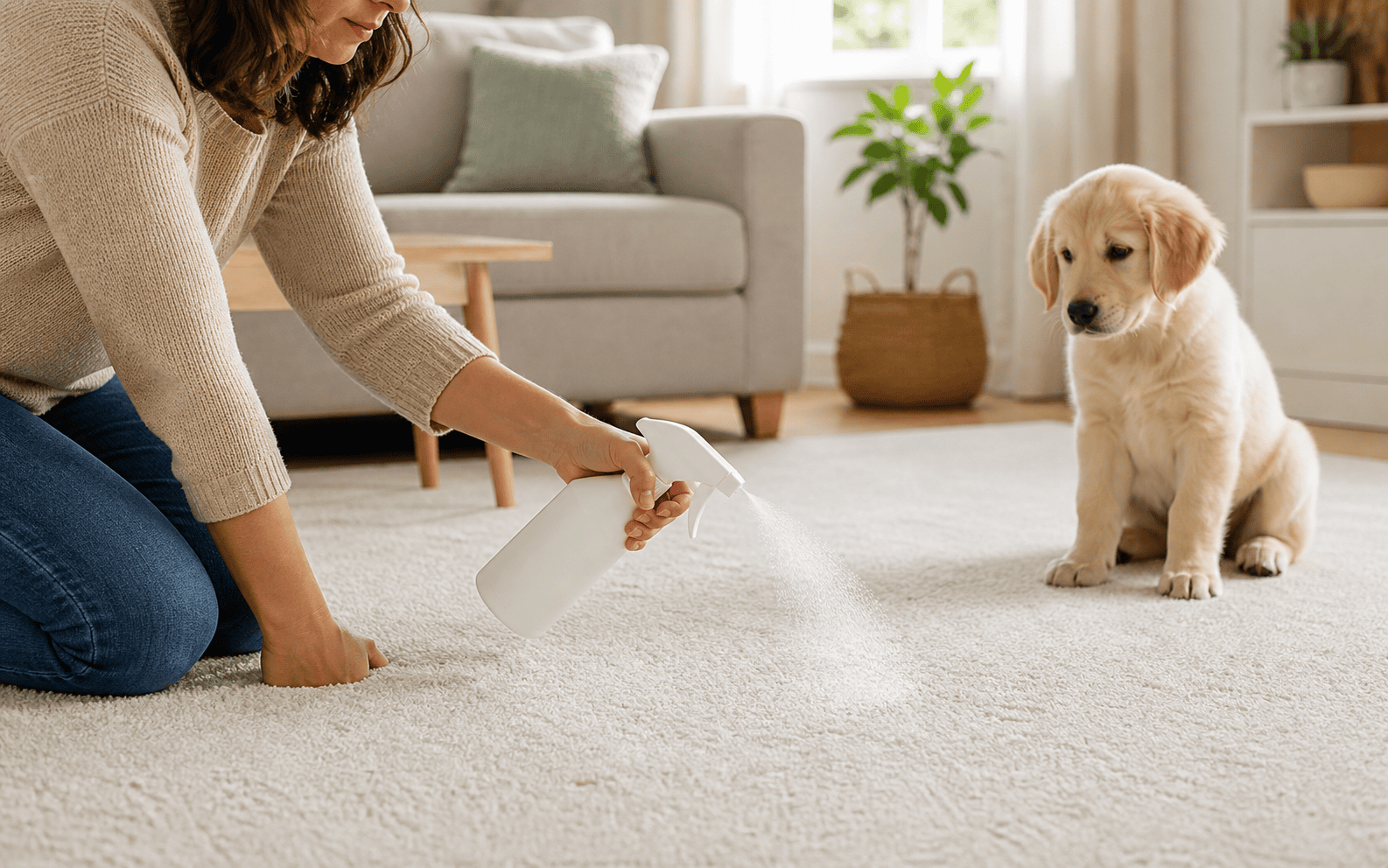
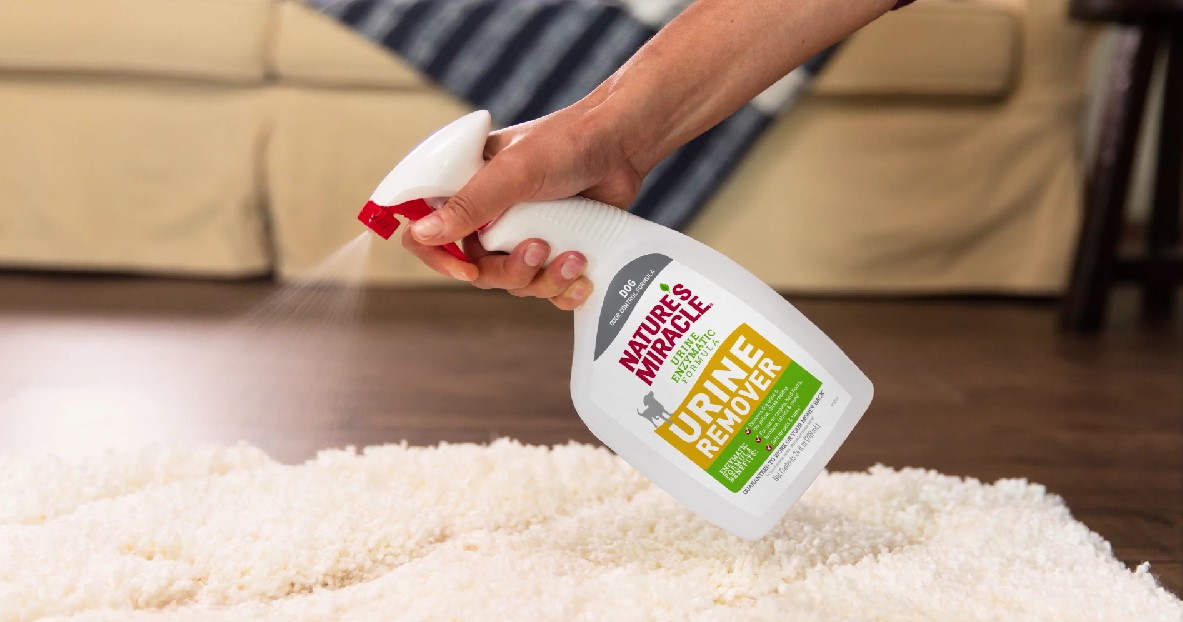
- Clean with an enzymatic cleaner. Regular cleaners often leave odor behind, which can encourage repeat peeing in the same spot.
For cleanup: blot, do not rub. Then saturate the area with an enzymatic cleaner and let it sit for the full dwell time on the label before blotting again. Also skip ammonia-based cleaners, which can smell like urine to dogs.
How long does it take?
For excitement urination, many families see noticeable improvement within a couple of weeks of calmer greetings, with big progress over a few months as the puppy matures.
For submissive urination, the timeline depends on confidence and environment. Some pups improve quickly once everyone stops looming, staring, and grabbing. Others need slower socialization and confidence work, especially if they had a rocky start.
If your puppy is still frequently peeing on greetings past adolescence, or the behavior is getting worse, it is worth discussing with your veterinarian and a qualified reward-based trainer. Sometimes anxiety, household stress, or inconsistent handling is keeping it stuck.
Quick FAQ
My puppy peed even though they just went outside. Why?
Because this is often emotion-driven, not “full bladder” driven. Excitement and stress can squeeze out a little urine even when the tank is mostly empty.
Should I make my puppy sit before anyone pets them?
Yes, if your puppy can do it calmly. The goal is not obedience for obedience’s sake. The goal is a predictable routine that lowers arousal. If “sit” makes your puppy wigglier, try “go to mat” or calmly scattering treats on the floor.
Is this my fault?
No. Many puppies do this, especially softer temperaments and young, high-energy pups. You can absolutely make it better by changing how greetings happen.
Will my puppy grow out of it?
Most do, especially with excitement urination. The fastest path is calm greetings, confidence building, and zero punishment.
The takeaway
If your puppy pees when greeted, treat it like information, not misbehavior. Your puppy is telling you the moment is too big, too fast, or too intense for their little nervous system and little bladder.
Make greetings boring, potty before hellos, coach visitors, and build confidence with gentle training games. You will get to the happy, wiggly, dry greetings. You just might need to be the chillest person in the room for a while.